
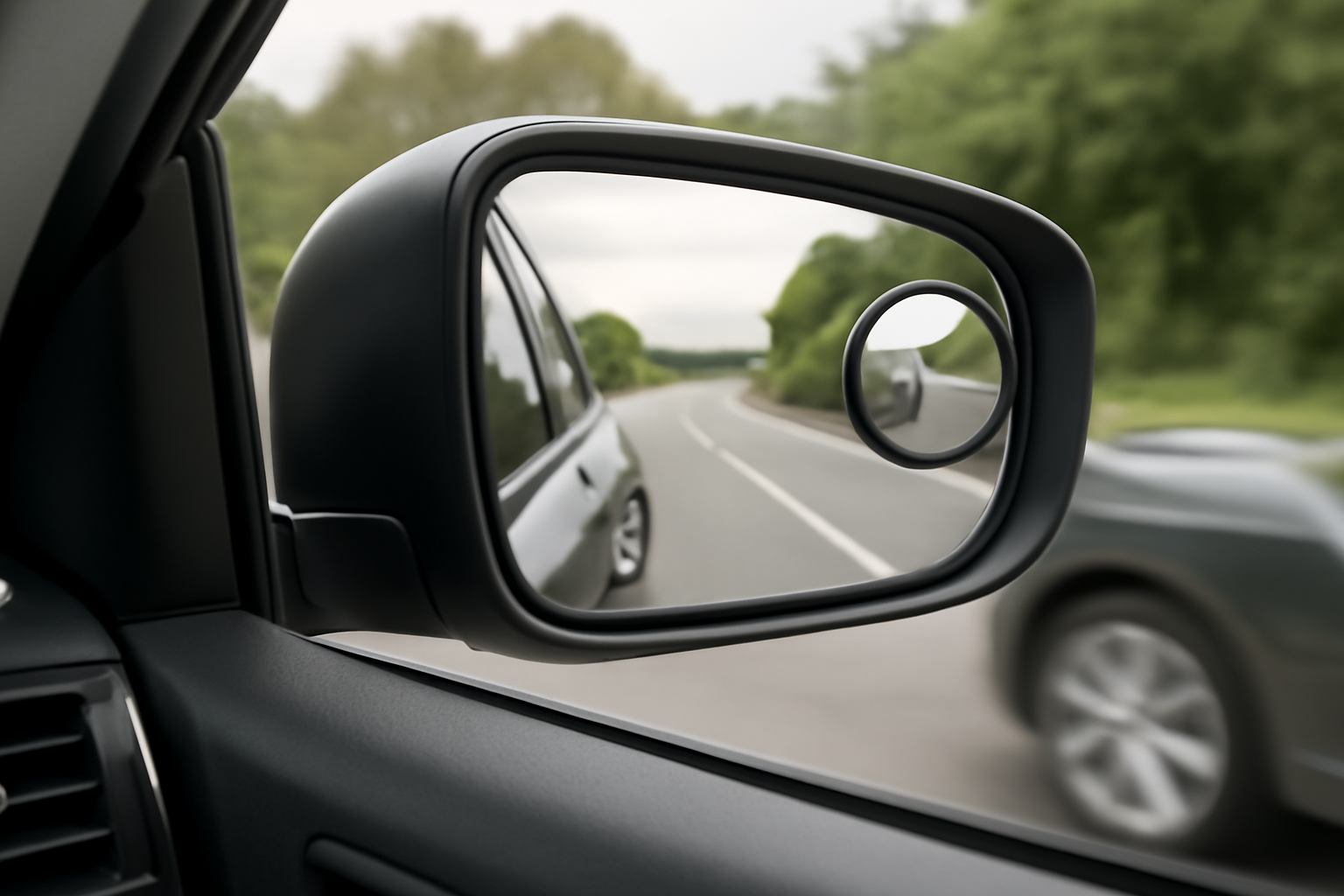
Blind spots are the hidden zones around your vehicle that your side mirrors can’t cover. They’re responsible for a significant percentage of lane-change accidents, and even the most careful drivers have moments where they don’t shoulder-check before merging.
Aftermarket blind spot mirrors are an inexpensive, permanent fix. They attach to your existing side mirrors and expand your field of view enough to eliminate most blind spot coverage gaps.
Whether you’re shopping for your first car as a new teenage driver or upgrading the safety features on your current vehicle, adding blind spot mirrors is one of the simplest modifications you can make.
Types of Blind Spot Mirrors
Convex Stick-On Mirrors
Small convex mirrors that attach to the corner of your side mirrors are the most popular and affordable option. They typically measure 2 inches in diameter and use adhesive backing for permanent mounting. The convex surface provides a wide-angle view that captures vehicles in your blind spot.
The convex blind spot mirrors from brands like Ampper and Utopicar are adjustable on a swivel mount, letting you fine-tune the viewing angle after installation.

Ampper Blind Spot Mirror
Top-rated adjustable convex mirrors with strong adhesive and swivel mount for precise positioning
Wide-Angle Replacement Mirrors
These replace your entire side mirror glass with a wider-angle version that includes a built-in blind spot section. They provide a more integrated look than stick-on options and don’t reduce the usable area of your main mirror.
Installation involves removing the original mirror glass (usually held by clips) and pressing the replacement into the same housing. Make sure to order the correct mirror for your specific vehicle, as sizes and curvatures vary.
Digital Blind Spot Systems
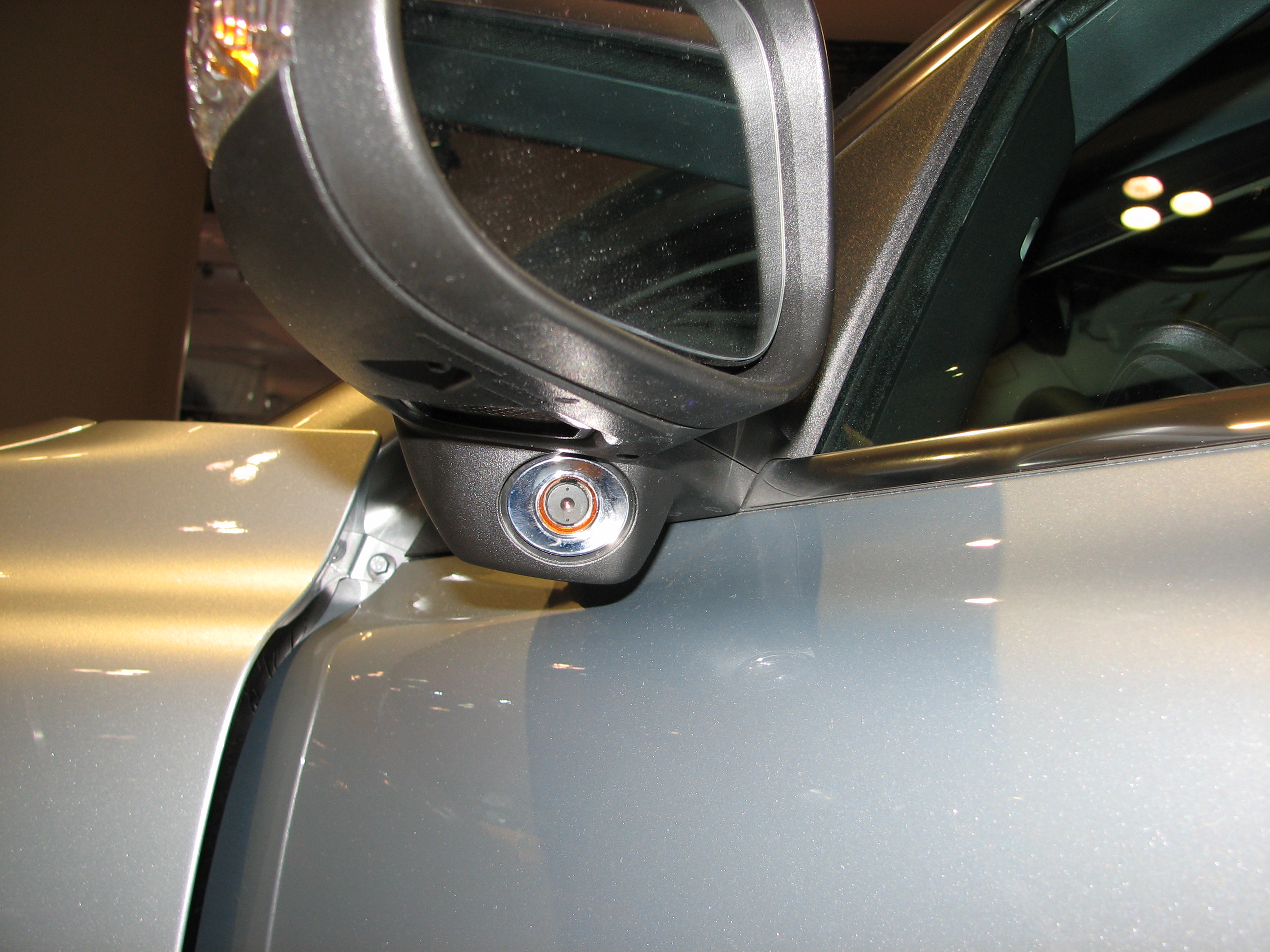
Camera-based blind spot monitors mount a small camera on each side mirror and display the blind spot view on a screen inside the car. Some systems display the image on the side mirror itself as a small inset screen.
These are the most expensive option but provide the clearest blind spot view, especially at night. Installation is more involved, requiring wiring from the cameras to the display unit.
Installation Tips
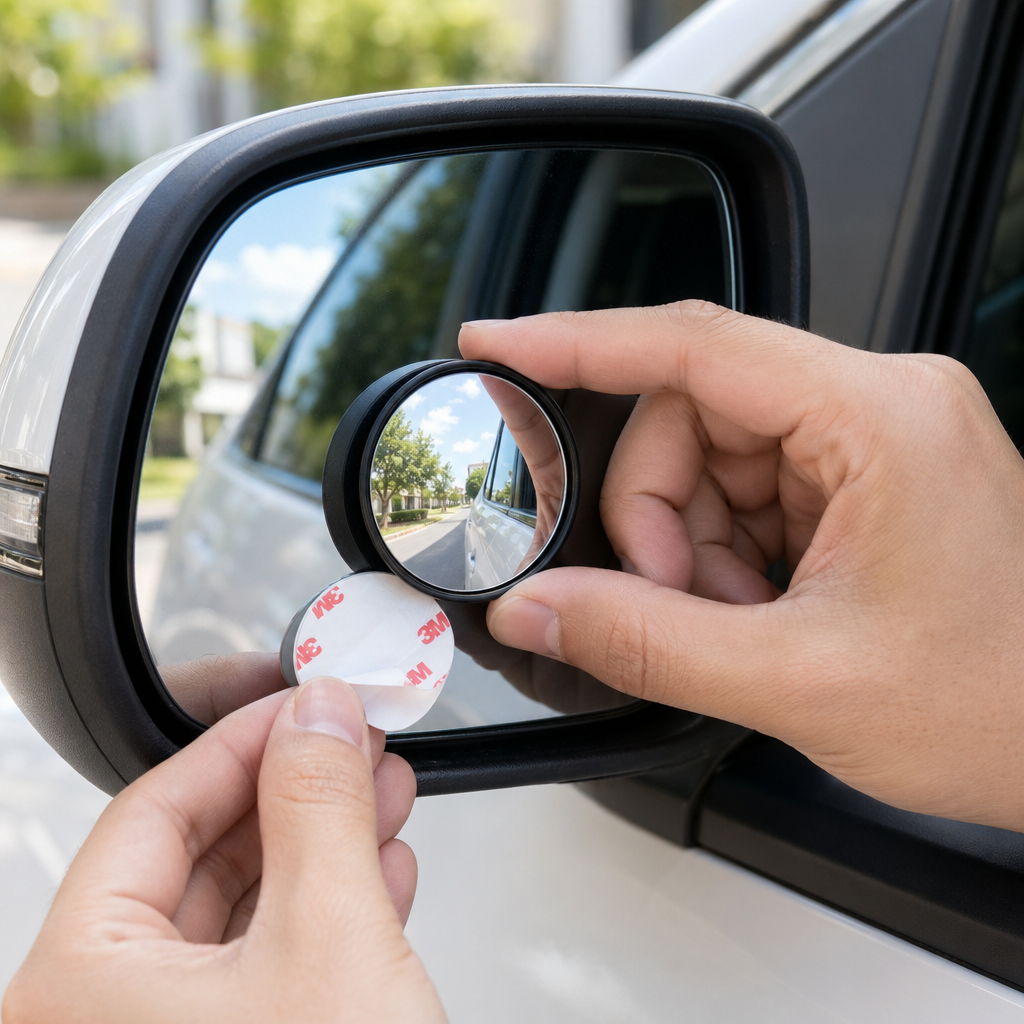
For stick-on mirrors, clean the mounting area on your side mirror with rubbing alcohol. Position the mirror in the lower outside corner of your side mirror, as this gives you the best blind spot view without blocking your primary mirror’s coverage.
Before committing to the adhesive, hold the mirror in position and check the blind spot view from the driver’s seat. Have someone stand in your blind spot to confirm visibility. Adjust the angle until you can see the area that your main mirror misses.
This installation approach works for any vehicle, from compact cars to family SUVs and trucks that hold their value.
Frequently Asked Questions
Are blind spot mirrors legal?
Yes. Aftermarket blind spot mirrors are legal in all 50 states. They add to your existing mirror coverage without replacing any required equipment. Many commercial vehicles are required to have them.
Will blind spot mirrors fall off?
Quality mirrors use 3M automotive adhesive that holds firmly in all weather conditions. Clean the mounting surface thoroughly before applying, and press firmly for 30 seconds. Most last years without any issues.
Do I still need to shoulder check with blind spot mirrors?
Yes. Blind spot mirrors significantly reduce your blind spots but don’t eliminate them entirely. A quick shoulder check before every lane change remains the safest habit, even with mirrors or electronic blind spot monitoring.
Which type of blind spot mirror is best for most drivers?
Convex stick-on mirrors offer the best balance of cost, effectiveness, and ease of installation for most drivers. They’re adjustable, removable if needed, and work on any vehicle without requiring tools or technical knowledge.
This article contains affiliate links. We may earn a small commission at no extra cost to you.
Leave a Reply