
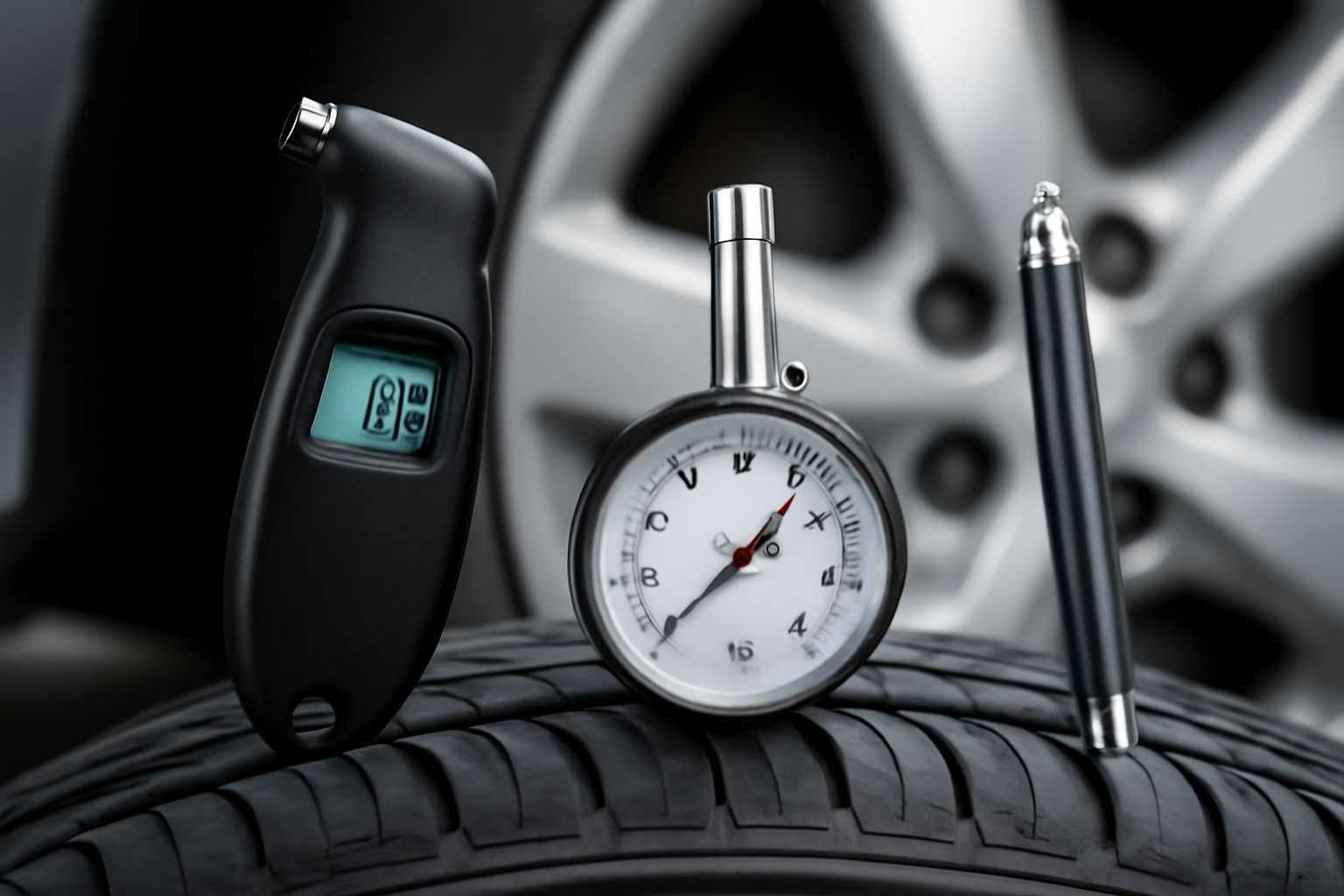
Tire pressure affects everything from fuel economy and tire lifespan to handling and braking distance. Yet most drivers only check it when the TPMS light comes on, and the sensors in your car aren’t always accurate enough to catch a tire that’s a few PSI low. A good handheld gauge is a cheap tool that pays for itself in saved fuel and extended tire life.
Regular maintenance like checking tire pressure is just as important as properly storing your car when you’re not driving it. Both practices help extend the life of your vehicle and prevent costly repairs down the road.
Digital Gauges: Best for Most Drivers
Digital tire pressure gauges give you a clear numeric readout with no guesswork. The best ones are accurate to within 0.5 PSI and have backlit displays for checking tires in low light. Most run on a watch battery that lasts years.
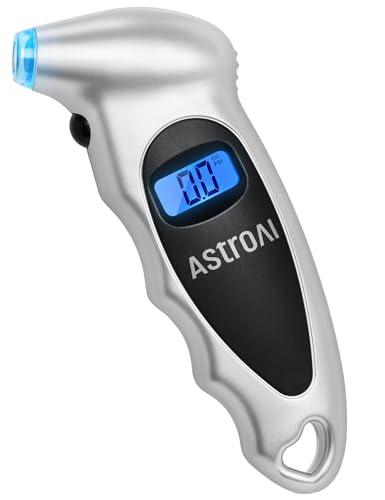
AstroAI Digital Tire Pressure Gauge
Popular pick with backlit display and bleeder valve, compact enough for glove box storage
The AstroAI digital gauge is a popular pick for everyday use. It reads from 0 to 150 PSI, has a lit display, and includes a bleeder valve for releasing excess pressure. It’s compact enough to keep in your glove box permanently.
Dial Gauges: Best for Accuracy
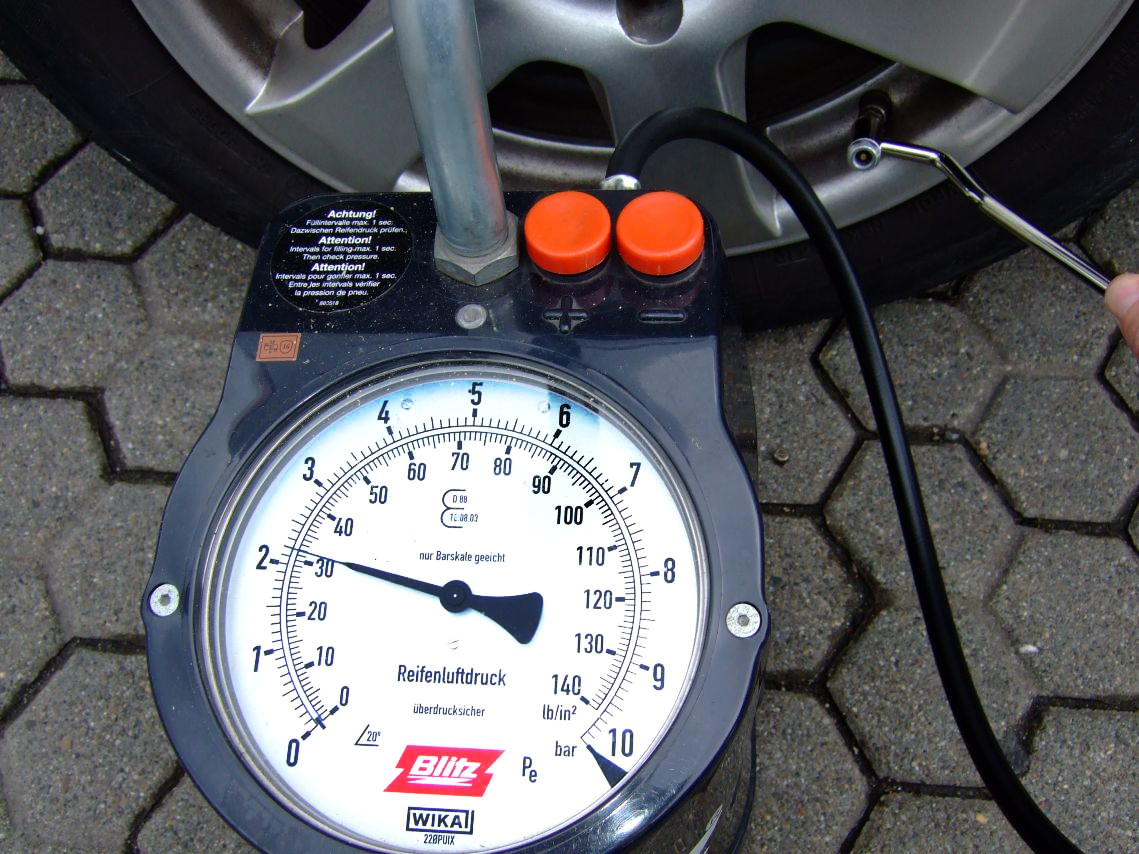
Dial (analog) gauges with a Bourdon tube mechanism tend to hold their calibration better than digital models over time. Many professional mechanics and racing teams prefer dial gauges because they deliver consistent accuracy without needing batteries.

Longacre Dial Tire Pressure Gauge
Professional-grade accuracy that holds calibration better than digital alternatives
A quality Longacre or Intercomp dial gauge is built to higher tolerance standards than budget digital units. The trade-off is they’re larger, more expensive, and harder to read in dim light.
Pencil Gauges: Budget Backup
Pencil-style gauges are the simplest and cheapest option. You press the end onto the valve stem, and a calibrated stick pops out showing the pressure reading. They’re fine as an emergency backup tool, but accuracy varies widely between units and they’re harder to read precisely.
If you’re choosing between a pencil gauge and a budget digital, spend a little more on the digital. The readability and accuracy difference is significant.
Why Tire Pressure Matters
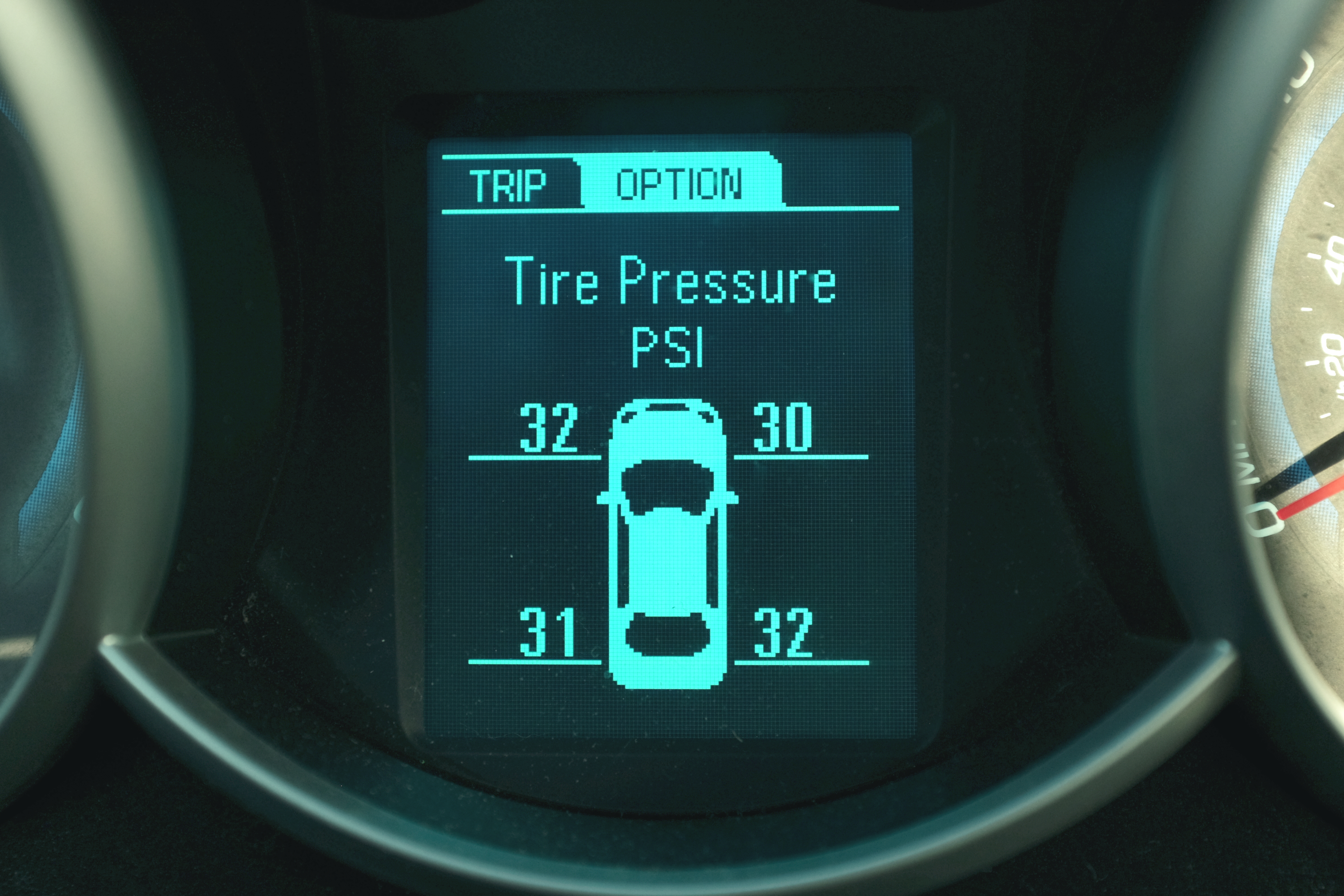
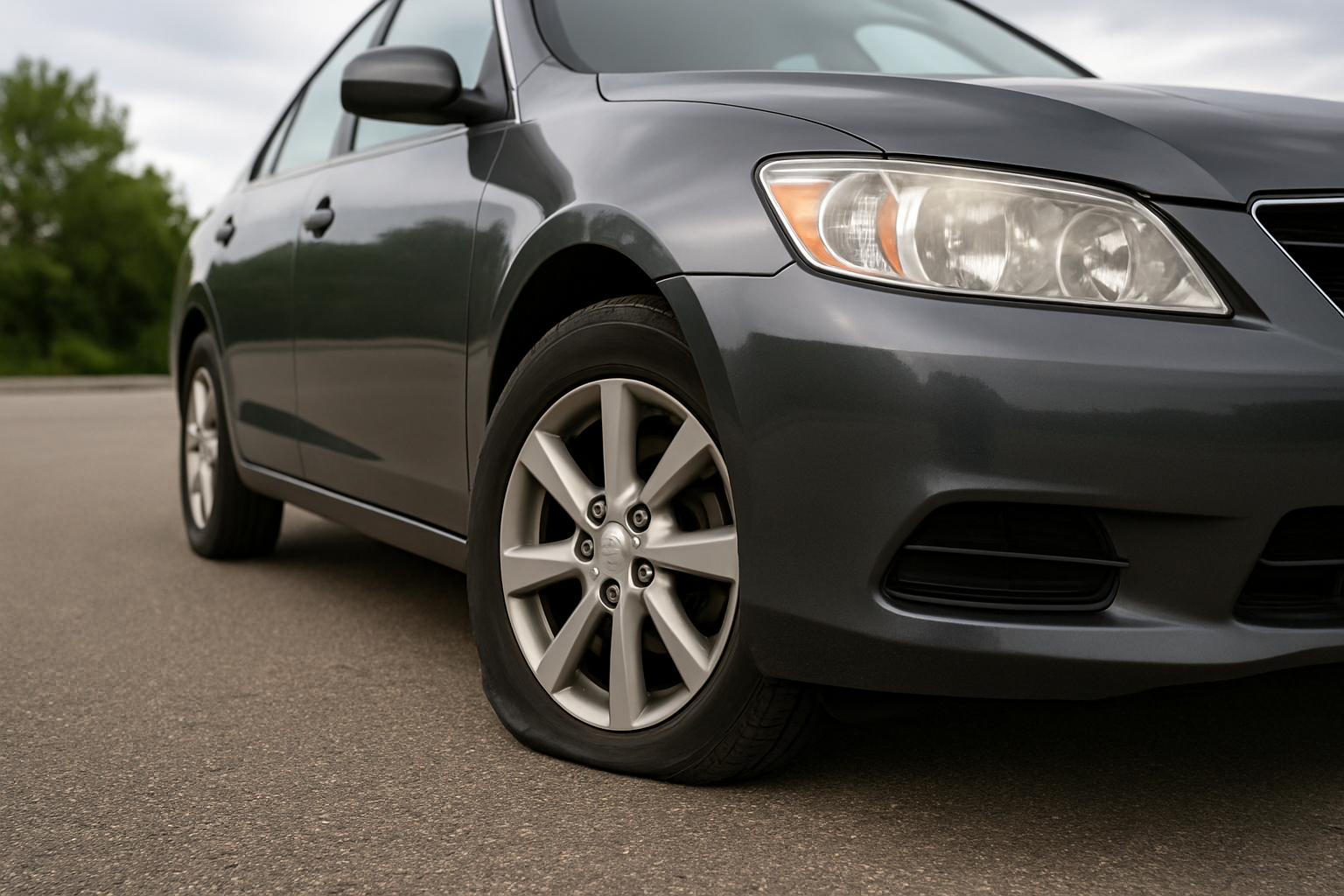
Underinflated tires increase rolling resistance, which reduces fuel economy by roughly 0.2% for every 1 PSI drop below the recommended pressure. Over time, this adds up. Running 5 PSI low on all four tires can cost you an extra tank of gas every few months.
Beyond fuel cost, low pressure causes the tire to flex more, generating excess heat that accelerates tread wear on the outer edges. Overinflation causes center wear and reduces your contact patch, which hurts traction. The correct pressure for your vehicle is printed on a sticker on the driver’s door jamb.
Proper maintenance extends the life of your vehicle, whether you’re driving a used car built to last 200,000 miles or a newer model. Small investments in tools like tire pressure gauges prevent bigger expenses later.
Tips for Accurate Readings
Always check tire pressure when the tires are cold, meaning the car hasn’t been driven for at least 3 hours or more than a mile. Driving heats the air inside the tires and raises the pressure by 2 to 5 PSI, giving you a falsely high reading.
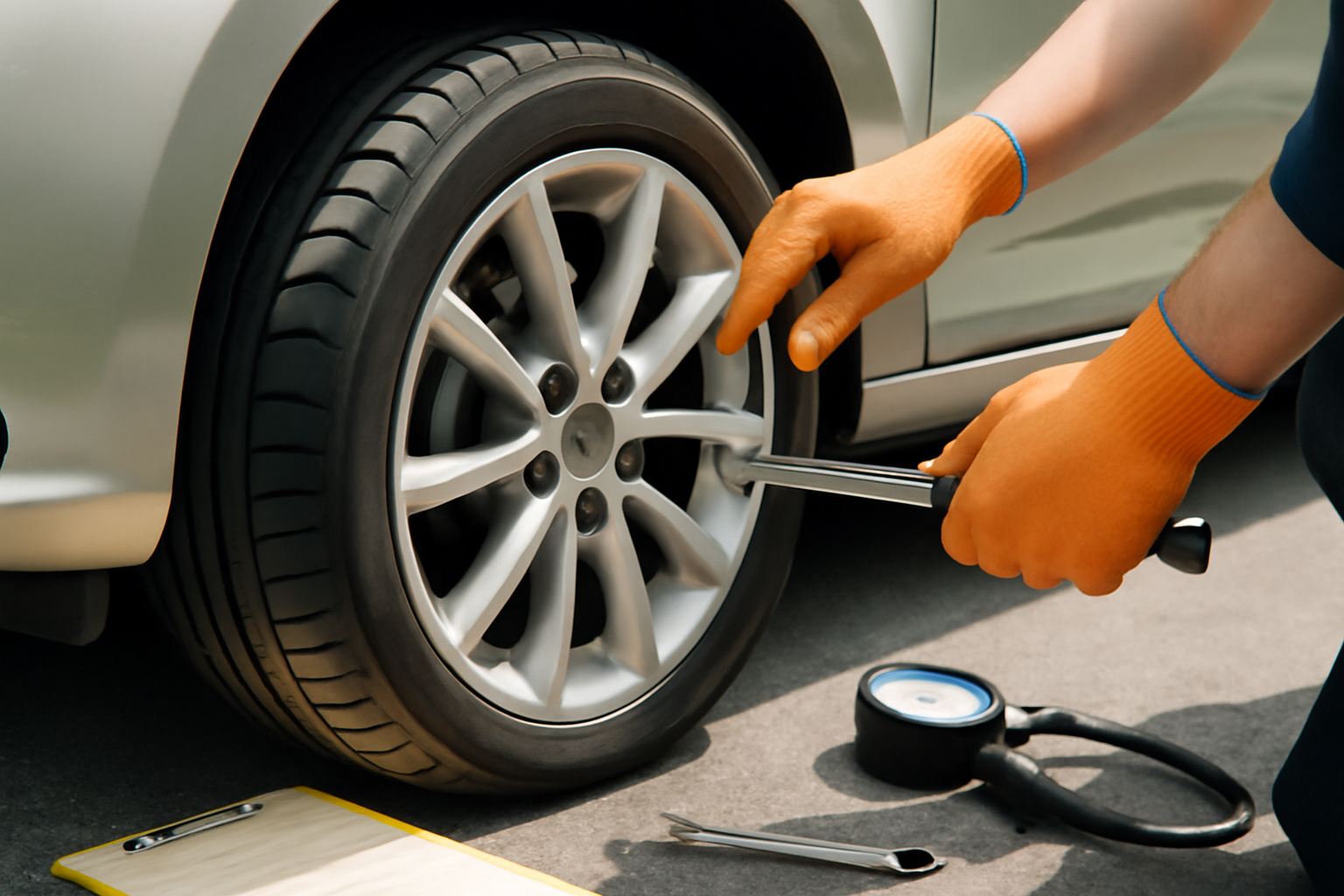
Press the gauge firmly and squarely onto the valve stem to avoid air leakage during the reading. If you hear hissing, reposition the gauge. Take two readings on each tire and use the higher one (a low reading usually means the seal wasn’t perfect).
Cold weather can drop tire pressure significantly. Just like how hot weather affects your cooling system, temperature swings impact tire pressure and require seasonal adjustments.
Frequently Asked Questions
How often should I check my tire pressure?
Once a month and before any long trip. Tire pressure drops about 1 PSI per month naturally, and temperature swings (roughly 1 PSI for every 10°F change) can push tires out of spec seasonally.
Should I use the pressure on the tire sidewall or the door sticker?
Always use the pressure on the door jamb sticker. The number on the tire sidewall is the maximum pressure the tire can safely hold, not the recommended operating pressure for your vehicle.
Are gas station air gauges accurate?
Often not. Gas station gauges take a beating and rarely get calibrated. Use them for filling, but verify the pressure with your own gauge afterward.
Can I check tire pressure right after driving?
You can, but the reading will be 2 to 5 PSI higher than the true cold pressure. For accurate results, wait at least three hours after driving or check them first thing in the morning before you’ve driven anywhere.

Leave a Reply