
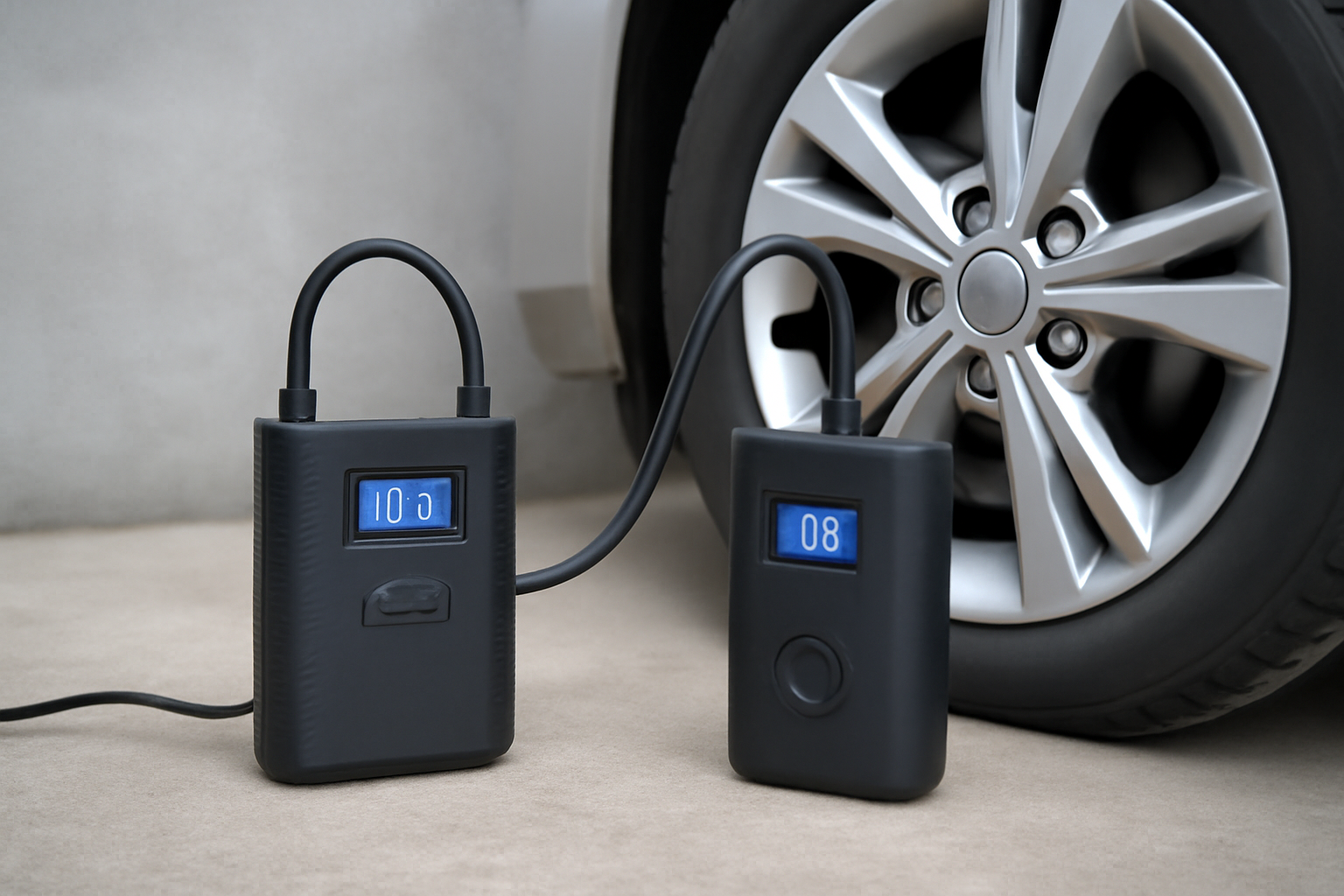
A portable tire inflator pays for itself the first time you find a low tire on a cold morning or limp out of a parking lot with a slow leak. Gas station air compressors are unreliable, often broken, and sometimes overcharge for the privilege. Keeping an inflator in your trunk means you can top off tires anywhere, anytime, in about 3 to 5 minutes per tire.
Here are the best portable tire inflators you can buy, tested on the specs that matter most: accuracy, speed, noise, and whether they actually shut off at the set pressure.
12V Plug-In Inflators (Cigarette Lighter Powered)
Viair 88P Portable Compressor

Viair 88P Portable Compressor
Fastest 12V inflator with professional reliability and no-fail analog gauge
The Viair 88P is the go-to for drivers who want speed and reliability. It fills a standard car tire from 25 to 35 PSI in about 3 minutes, which is significantly faster than most competitors. The analog gauge is accurate to within 1 PSI, and the 16-foot power cord plus 5-foot air hose reach all four tires without repositioning.
The 88P doesn’t have an auto-shutoff feature, so you need to watch the gauge manually. For some people, that’s a drawback. For others, it means one less electronic component to fail.
AstroAI Portable Air Compressor
AstroAI’s inflator hits the sweet spot between features and price. It includes a digital gauge with auto-shutoff (set your target PSI and it stops automatically), an LED flashlight for nighttime use, and adapters for balls, bike tires, and inflatables. Inflation speed is moderate, taking about 5 minutes to go from 25 to 35 PSI.
The AstroAI inflator is compact enough to fit in a glove box and comes with a carrying case. Auto-shutoff accuracy is within about 1.5 PSI, which is good enough for tire maintenance.
Battery-Powered Inflators
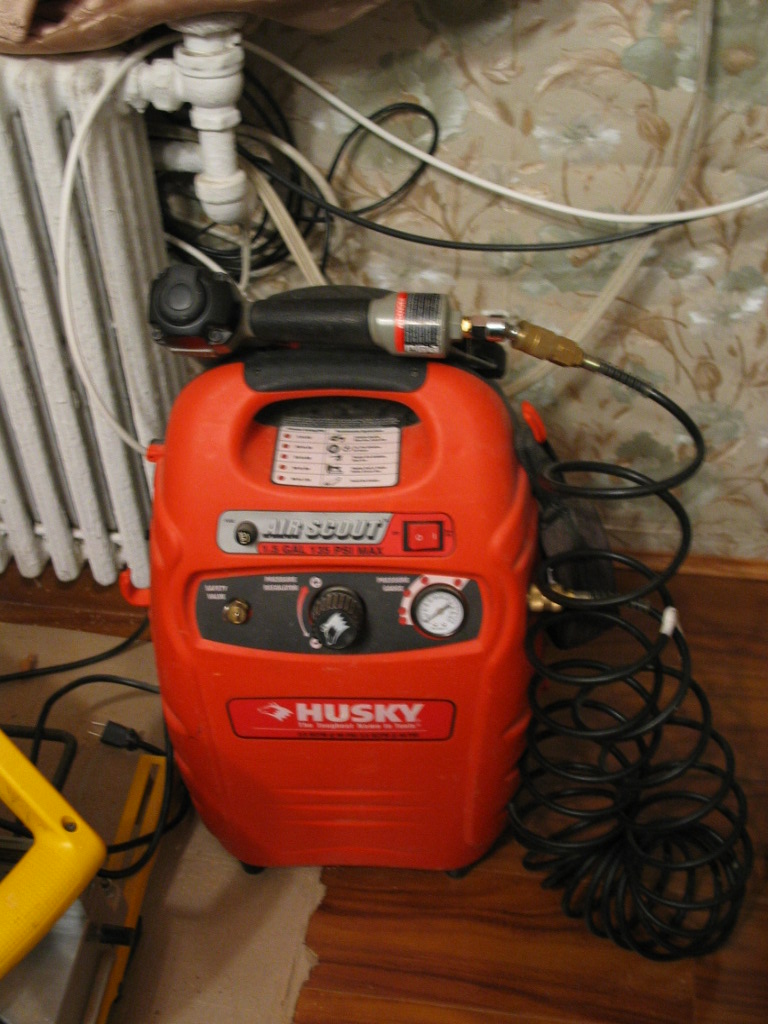
Ryobi 18V ONE+ Dual Function Inflator
If you already own Ryobi 18V tools, this inflator runs on the same battery platform. It inflates a car tire in about 4 minutes and works anywhere without needing a car power outlet. The digital gauge and auto-shutoff are accurate, and the high-pressure mode handles car tires up to 150 PSI while the high-volume mode fills larger items quickly.
The Ryobi handles about 3 to 4 tire top-offs per battery charge, which is enough for a full set. Keep a charged battery in the trunk alongside it for true grab-and-go convenience.
Milwaukee M12 Compact Inflator
The Milwaukee M12 is the most compact battery-powered inflator on the market. It fits in one hand, weighs under 2 pounds with the battery, and delivers accurate auto-shutoff. Inflation speed is slower than the larger units (about 6 minutes from 25 to 35 PSI), but the portability is unmatched.
DeWalt 20V MAX Inflator

DeWalt 20V MAX Inflator
Fastest battery-powered option with professional build quality and dual power modes
DeWalt’s offering is the fastest battery-powered inflator tested, filling a tire from 25 to 35 PSI in about 2.5 minutes. It uses the 20V MAX battery platform and includes a 12V adapter for car power as a backup. The high-volume/high-pressure switch and braided rubber hose feel like professional equipment.
What Specs Actually Matter
PSI accuracy: Your inflator’s gauge needs to be accurate. A gauge that reads 2 PSI high means you’re consistently underinflating your tires. Digital gauges with auto-shutoff are generally more accurate than analog gauges. Verify your inflator against a known-accurate standalone gauge.
Inflation speed: Measured in time to inflate from 25 to 35 PSI (a typical top-off scenario). Fast inflators do this in 2 to 3 minutes; slow ones take 6 to 8 minutes. Speed matters less for occasional use but makes a difference when you’re filling four tires in the cold.
Auto-shutoff: Set your target PSI and walk away. The inflator stops when it reaches the target. This feature prevents overinflation and is worth having, though accuracy varies. Budget units may overshoot by 2 to 3 PSI.
Cord/hose length: Reach all four tires without moving the inflator. A 12V unit with a short cord may not reach the far-side rear tire. Look for at least 10 feet of combined cord and hose length.
Noise level: Inflators are loud. Budget models hit 90+ decibels, which is uncomfortable without ear protection. Premium models like the Viair run around 80 dB, which is tolerable.
Why You Should Keep a Tire Inflator in Your Car
Tire pressure drops about 1 PSI for every 10-degree Fahrenheit temperature change. Seasonal temperature swings routinely leave tires 4 to 8 PSI low. Keeping an inflator in the trunk lets you maintain correct pressure year-round without hunting for a gas station air pump.
Proper tire pressure matters whether you’re driving a family SUV or a teenager’s first car. Underinflated tires reduce fuel economy, increase tire wear, and compromise handling. A portable inflator eliminates the excuse for driving on low tires.
If you’re the type who keeps a full roadside emergency kit, a tire inflator belongs next to your car jack. It’s also essential if you’re storing a vehicle for an extended period, since tires naturally lose pressure over time.
Frequently Asked Questions
Can a portable inflator fill a completely flat tire?
Most 12V and battery-powered inflators can fill a flat tire, but it takes 10 to 15 minutes and may overheat the motor. Many units have a duty cycle rating (for example, 30 minutes on, 30 minutes off). For a completely flat tire, filling in two sessions with a cool-down period is safer for the inflator.
Are battery-powered inflators as powerful as 12V models?
Top-tier battery inflators (DeWalt, Milwaukee) match or exceed 12V models in speed and pressure capacity. Budget battery inflators are slower and may struggle with larger tires. The advantage of battery power is independence from the car’s electrical system.
How accurate are auto-shutoff features on portable inflators?
Digital gauges with auto-shutoff are generally accurate within 1 to 2 PSI on quality models. Budget units may overshoot by 2 to 3 PSI. It’s worth verifying your inflator’s readings against a separate, known-accurate tire gauge the first few times you use it.
Do I need to keep a tire inflator in my car year-round?
Yes. Temperature changes cause pressure fluctuations throughout the year. A tire that’s properly inflated in summer can drop 4 to 8 PSI when winter temperatures arrive. Having an inflator on hand means you can adjust pressure whenever needed, regardless of season or location.
This article contains affiliate links. We may earn a small commission at no extra cost to you.
Leave a Reply