
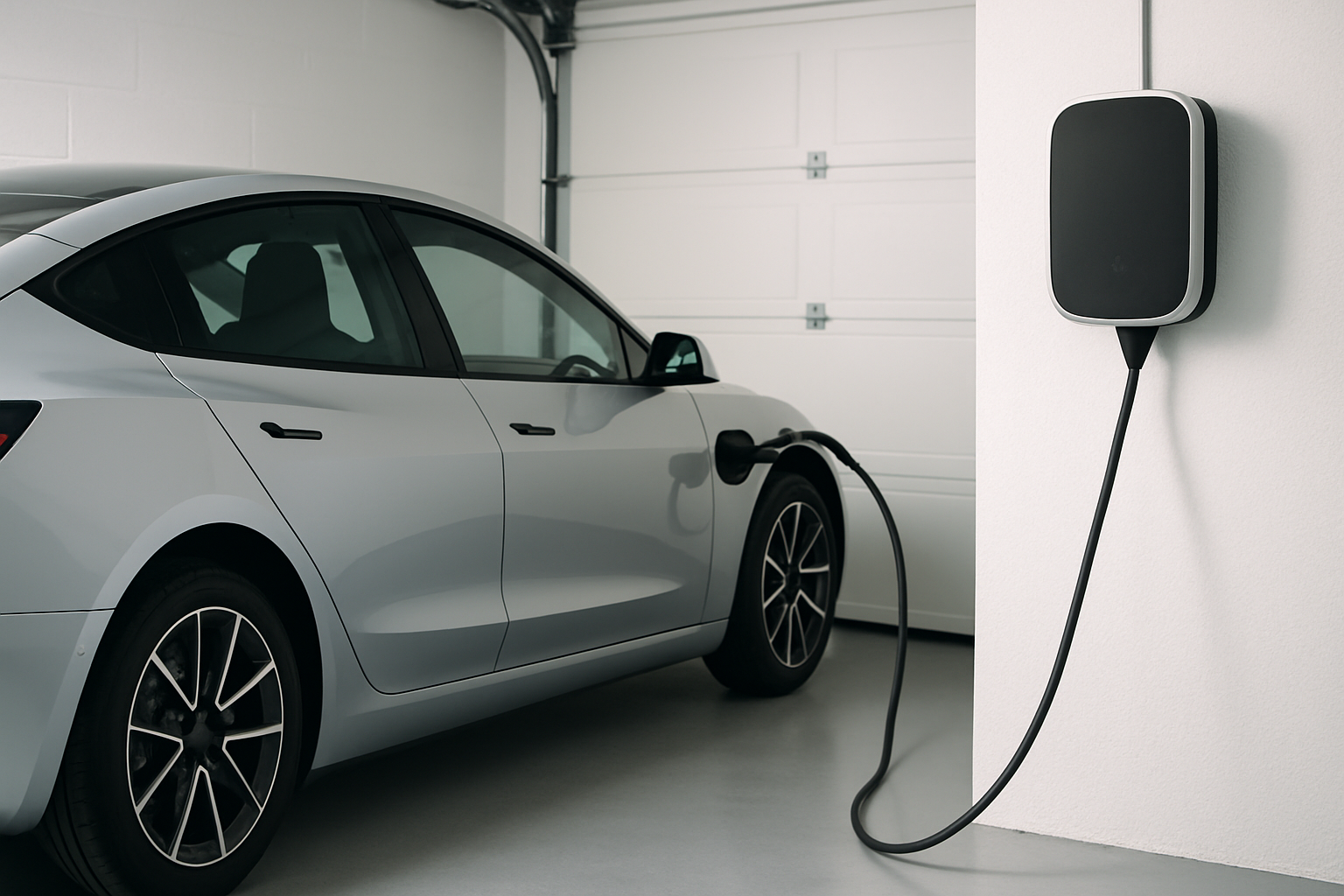
Installing a home EV charger in your garage is one of the smartest upgrades you can make as an electric vehicle owner. You’ll wake up every morning with a fully charged battery, skip the crowded public charging stations, and enjoy the convenience of charging at your own pace. The key is choosing the right charger that fits your vehicle, your electrical setup, and your budget.
Understanding 240V Level 2 Charging Requirements
Before diving into specific charger models, you need to understand what makes a home EV charger work effectively. Level 2 charging requires a 240V electrical connection, similar to what powers your electric dryer or oven. This setup delivers significantly faster charging speeds compared to the standard 120V outlet that comes with most EVs.
Most home EV chargers operate between 16 and 50 amps, with 32-amp and 40-amp units being the most popular choices. Your charging speed depends on both your charger’s amperage and your vehicle’s onboard charging capacity. Even if you install a 50-amp charger, your car will only draw what its internal systems can handle.
The electrical installation typically requires a dedicated 240V circuit with appropriate amperage capacity. Many homeowners opt for a NEMA 14-50 outlet installation, which provides flexibility to use plug-in chargers or hardwired units. This outlet type can handle up to 40 amps of continuous charging power.
Top Home EV Chargers Compared
Tesla Wall Connector
Tesla’s Wall Connector delivers up to 44 miles of range per hour of charging and works with all Tesla vehicles plus other EVs when you use the appropriate adapter. The unit supports up to 48 amps of charging power and features a sleek, minimalist design that matches Tesla’s aesthetic.
Installation requires hardwiring to your electrical panel, which means you’ll need an electrician. The charger includes Wi-Fi connectivity for over-the-air updates and monitoring through the Tesla app. You can schedule charging times, track energy usage, and receive notifications when charging completes.
The Wall Connector costs around $400 and includes a 24-foot cable length, giving you plenty of reach within your garage. Tesla’s build quality is excellent, and the unit comes with a 4-year warranty for residential use.
ChargePoint Home Flex
ChargePoint Home Flex stands out for its versatility and smart features. This unit works with both NEMA 14-50 plug-in installation or hardwired setup, giving you flexibility based on your electrical situation. The charger adjusts from 16 to 50 amps, making it compatible with virtually any home electrical setup.
The ChargePoint app provides detailed charging data, including session costs, energy usage, and carbon footprint tracking. You can set up charging schedules to take advantage of off-peak electricity rates and receive notifications when your vehicle reaches the desired charge level.
Build quality feels solid with a sturdy mounting bracket and weather-resistant construction. The 23-foot cable provides excellent reach, and the LED status ring gives you quick visual feedback on charging progress. Pricing runs around $600-700 depending on amperage configuration.
Grizzl-E Classic
The Grizzl-E Classic focuses on reliability and value without fancy smart features. This Canadian-made charger handles extreme weather conditions better than most competitors, with operating temperatures from -30°F to 122°F. The unit delivers up to 40 amps of charging power through either plug-in or hardwired installation.
You won’t get Wi-Fi connectivity or smartphone apps, but you will get rock-solid performance at a lower price point. The Grizzl-E includes safety features like ground fault protection, temperature monitoring, and automatic power adjustment based on your electrical supply.
The charger costs around $400-450 and includes a 24-foot cable with a holster for tidy storage. Grizzl-E offers excellent customer support and backs their products with a 3-year warranty. This charger works particularly well for users who want simple, dependable charging without smart features.
Wallbox Pulsar Plus
Wallbox Pulsar Plus combines European design sensibilities with comprehensive smart features. The compact charger measures just 6.5 inches square but delivers up to 48 amps of charging power. The unit works with plug-in or hardwired installation and includes both Wi-Fi and Bluetooth connectivity.
The myWallbox app provides detailed energy management, including load balancing if you install multiple units. You can create charging schedules, set power limits, and even integrate with home solar systems for optimized renewable energy use. The charger also supports dynamic load management to prevent electrical overloads.
Installation is straightforward thanks to the compact design and clear mounting instructions. The 25-foot cable gives you excellent reach, and the LED status lights provide clear charging feedback. Expect to pay around $600-750 for this feature-rich option.
JuiceBox 40
JuiceBox 40 offers solid performance with comprehensive smart features at a competitive price point. The charger delivers up to 40 amps of power and includes Wi-Fi connectivity for remote monitoring and control through the JuiceNet app.
Smart features include scheduling, energy tracking, and integration with Amazon Alexa for voice control. The app shows real-time charging data and historical usage patterns, helping you optimize your charging costs. JuiceBox also offers time-of-use scheduling to automatically charge during cheaper electricity rate periods.
The unit requires hardwired installation and includes a 25-foot cable with integrated cable management. Build quality is decent for the price range, though not quite as robust as Tesla or Grizzl-E options. Pricing typically runs around $500-600.
Installation Requirements and Considerations
Most home EV charger installations require a dedicated 240V circuit from your electrical panel to the garage location. The circuit size depends on your chosen charger’s amperage requirements. A 40-amp charger needs a 50-amp circuit breaker, while a 32-amp unit requires a 40-amp breaker.
Electrical code requires the circuit to be sized at 125% of the continuous load, which is why you can’t put a 40-amp charger on a 40-amp circuit. Your electrician will run appropriate wire gauge from the panel to the charging location, typically 6 AWG copper wire for 40-amp circuits or 8 AWG for 32-amp installations.
Consider the mounting location carefully. You want the charger positioned so the cable easily reaches your vehicle’s charging port without stretching or creating trip hazards. Most EVs have charging ports on either the driver or passenger side, so plan accordingly if you park in a specific spot.
Permit requirements vary by location, but most jurisdictions require electrical permits for new 240V circuits. Your electrician should handle permit applications and schedule required inspections. Budget between $500-1500 for professional installation depending on your electrical panel location and any required upgrades.
Smart Features Worth Considering
Wi-Fi connectivity allows you to monitor charging progress, receive completion notifications, and adjust settings remotely. This feature proves particularly useful for tracking energy usage and optimizing charging schedules around time-of-use electricity rates.
Load management capabilities help prevent electrical system overloads by automatically adjusting charging power based on your home’s total electrical demand. This feature becomes important if you have multiple EVs or high electrical loads from other appliances.
Scheduling features let you delay charging until electricity rates drop during off-peak hours. Many utilities offer significant savings for overnight charging, making this feature valuable for reducing your overall energy costs.
Energy tracking provides detailed data on your charging habits, costs, and environmental impact. While not essential for basic charging, this information helps optimize your EV ownership experience and potentially qualify for utility rebate programs.
Recommended EV Charging Solutions
For reliable home EV charging equipment, check out these Level 2 EV chargers for home installation. These units provide the 240V charging capability you need for convenient overnight charging in your garage.
Popular options include plug-in models that work with NEMA 14-50 outlets and hardwired units for permanent installation. Look for chargers with appropriate amperage ratings for your vehicle and electrical system capacity.
Choosing the Right Amperage
Your EV’s onboard charger determines the maximum charging speed regardless of your home charger’s capability. Most current EVs accept between 32-48 amps of charging power, though some older models or base trim levels may be limited to 16-24 amps.
Check your vehicle’s specifications or owner’s manual for the maximum AC charging rate. There’s no benefit to installing a 48-amp charger if your car can only accept 32 amps, though having extra capacity doesn’t hurt if you plan to upgrade vehicles later.
Consider your typical driving patterns when sizing your charger. If you drive 40 miles daily, a 32-amp charger easily replenishes that energy overnight. Longer commutes or frequent road trips might benefit from faster 40-48 amp charging speeds.
Your home’s electrical capacity also influences charger selection. Older electrical panels or homes with high electrical loads might require load management features or lower amperage charging to avoid system overloads.
Budget and Value Considerations
Entry-level chargers like the Grizzl-E Classic provide reliable charging without smart features for around $400-450. These units work well if you want simple, dependable charging and don’t need remote monitoring or scheduling capabilities.
Mid-range options like ChargePoint Home Flex or Wallbox Pulsar Plus cost $600-750 but include comprehensive smart features, better build quality, and longer warranties. The additional cost often pays for itself through optimized charging schedules and energy management.
Premium chargers like Tesla Wall Connector offer excellent build quality and seamless integration with Tesla vehicles. While more expensive upfront, these units typically provide better long-term value through durability and ongoing software updates.
Don’t forget installation costs when budgeting. Professional electrical installation typically adds $500-1500 depending on your specific requirements and local labor rates. Factor in potential electrical panel upgrades if your current service lacks adequate capacity.
Common Installation Challenges
Electrical panel capacity represents the most common installation hurdle. Older homes with 100-amp service might struggle to support high-amperage EV charging alongside existing electrical loads. Your electrician can perform a load calculation to determine if panel upgrades are necessary.
Distance from the electrical panel to your garage affects installation complexity and cost. Longer wire runs require larger conductors and more labor, increasing overall project costs. Consider charger placement carefully to minimize wire length while maintaining convenient access.
Local permitting and inspection requirements can add time and complexity to installations. Some areas have streamlined EV charger permit processes, while others treat them like major electrical work requiring multiple inspections.
Homeowners association or rental property restrictions might limit your charger options. Check any applicable rules before purchasing equipment, and consider portable options if permanent installation isn’t allowed.
Frequently Asked Questions
Can I install an EV charger myself?
Most jurisdictions require licensed electricians for 240V circuit installation due to safety concerns and code compliance. While you might handle the charger mounting, the electrical connections typically need professional installation. Some plug-in chargers allow DIY connection to existing NEMA 14-50 outlets.
Will an EV charger work with any electric vehicle?
All EVs sold in North America use the same J1772 charging connector, except Tesla vehicles which use a proprietary connector. Tesla includes a J1772 adapter, and other EVs can use Tesla chargers with appropriate adapters. Check connector compatibility before purchasing.
How much will my electricity bill increase?
Electricity costs vary significantly by location and usage patterns. Generally, expect to pay 3-5 cents per mile for EV charging compared to 10-15 cents per mile for gasoline. A typical daily commute of 40 miles costs around $1.50-2.00 in electricity with overnight charging rates.
Do I need a smart charger or will a basic model work?
Basic chargers work perfectly fine for simple charging needs. Smart features become valuable if you want to optimize charging costs through scheduling, track energy usage, or integrate with home energy management systems. Consider your priorities and budget when deciding between basic and smart options.
Leave a Reply