
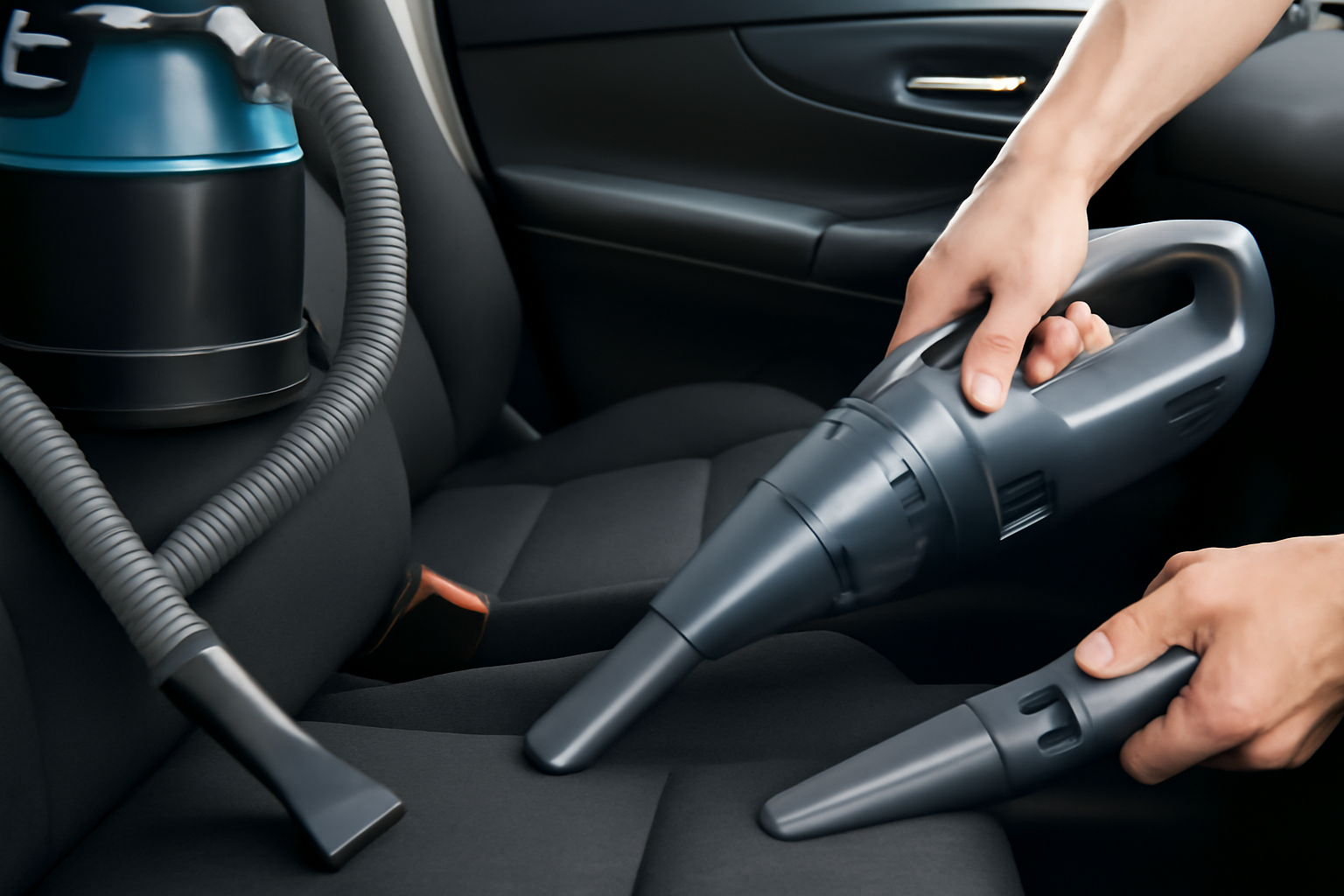
Crumbs in the seat crevices, sand on the floor mats, dog hair on the back seat. Your car’s interior collects debris faster than any room in your house. A dedicated car vacuum, compact enough to store in the trunk and powerful enough to handle real messes, keeps your cabin looking and smelling fresh between full details.
Corded vs. Cordless Car Vacuums
Corded (12V) Models
Corded car vacuums plug into your car’s 12V outlet and run as long as you need them. They’re lightweight and never run out of power.
The downside is limited suction compared to cordless models, since the 12V outlet can only deliver so much power. They’re best for light maintenance cleaning, not deep extraction.
Cordless Handheld Vacuums
Cordless vacuums use rechargeable batteries and offer significantly more suction than 12V models. Modern lithium-ion batteries provide 15-30 minutes of run time, which is enough for a thorough interior cleaning.
A quality cordless car vacuum handles everything from loose dirt to embedded pet hair.

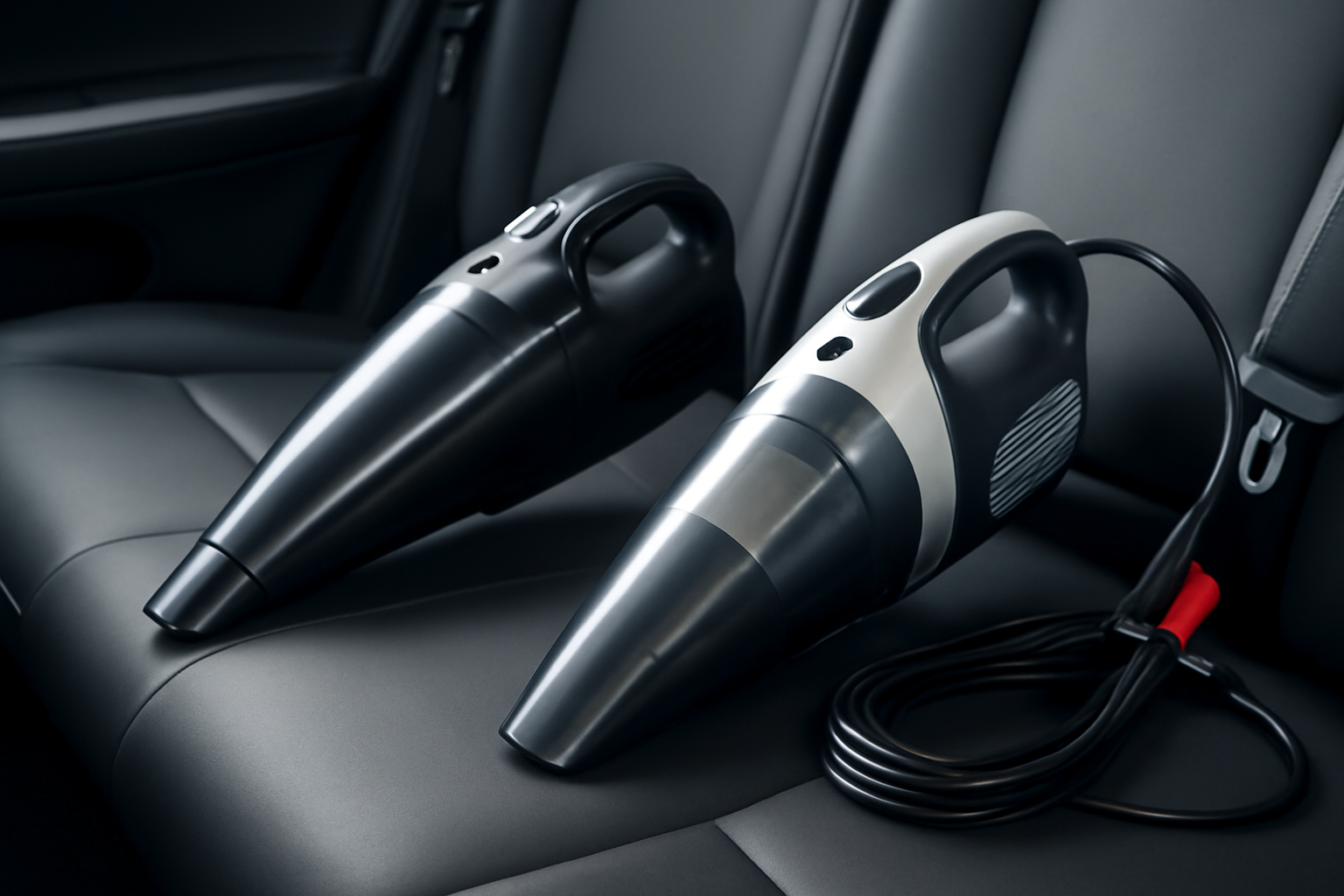
Cordless Car Vacuum
Best for powerful suction and deep cleaning without being tethered to your vehicle
Key Features to Look For
Suction Power
Suction is measured in air watts (AW) or pascals (Pa). For car use, look for at least 6,000-8,000 Pa or 30+ AW.
Higher numbers mean better pickup of heavier debris like sand and gravel. Low-power vacuums struggle with anything beyond surface dust.
Attachments
A crevice tool is essential for reaching between and under seats. A brush attachment loosens embedded dirt from fabric upholstery.
A flexible hose extension lets you reach the back seat from the front door. The more targeted your attachments, the more thorough your cleaning.
Filtration
HEPA filtration captures fine dust and allergens instead of blowing them back into the air. This matters more than you’d think in a car’s small cabin, especially for allergy sufferers.
Washable filters save money on replacements.
Best Picks by Use Case
Best for Families
Families need strong suction for Cheerios, sand, and sticky spills. Look for a cordless model with at least 20 minutes of run time, a wide mouth for big debris, and a washable filter.
Wet/dry capability is a bonus for juice spills and muddy shoe prints. This is especially useful if you have young kids who frequently mess up car seats.
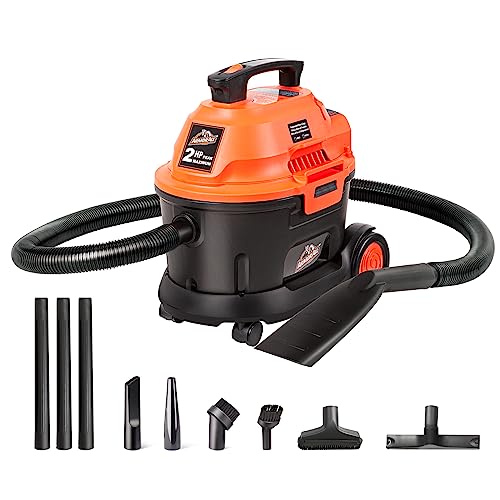
Wet Dry Car Vacuum
Perfect for families dealing with spills and sticky messes from kids
Best for Rideshare Drivers
Rideshare drivers need fast, frequent cleanups between passengers. A compact cordless vacuum stored in the trunk with a quick-charge base keeps the car presentable all day.
Prioritize portability and charge speed over maximum suction.
Best for Pet Owners
Pet hair embeds into fabric and resists standard vacuums. A motorized brush attachment (like a mini turbo brush) is the most effective tool for removing pet hair from seats and carpets.
Some vacuums include a pet-specific attachment designed to pull hair from upholstery fibers.

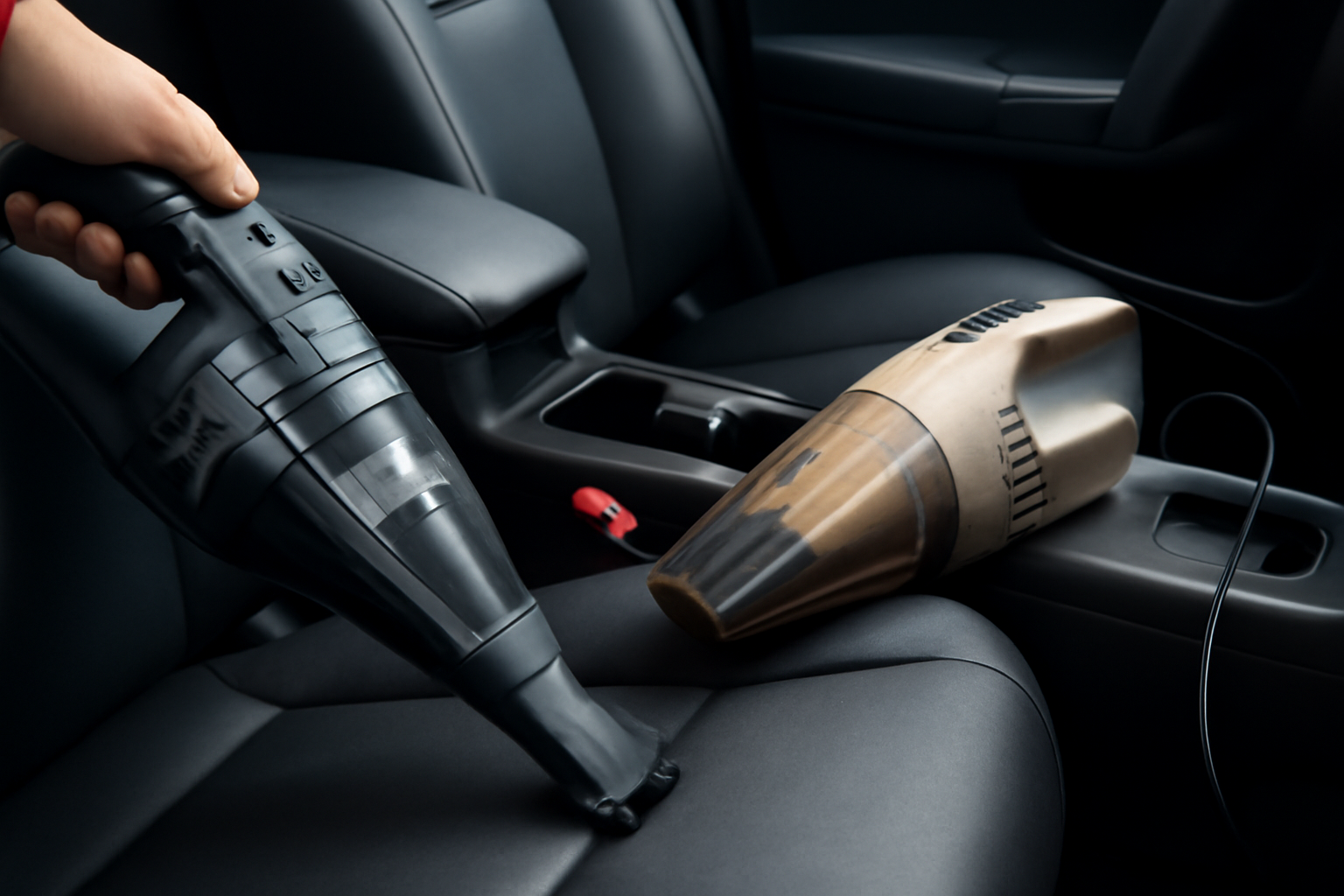
Pet Hair Car Vacuum
Features motorized brush attachments specifically designed to lift stubborn pet hair from fabric
Cleaning Tips for a Thorough Job
Remove the floor mats and shake them out before vacuuming. Slide the seats forward and back to access hidden debris underneath.
Use the crevice tool along the seat rails, center console seams, and door pockets where crumbs accumulate. Finish by vacuuming the trunk, which collects grocery spills and general debris.
For stubborn stains on fabric seats, a quick spray of upholstery cleaner before vacuuming helps lift embedded dirt. Let the cleaner dwell for a few minutes, then vacuum it up.
Regular maintenance keeps your interior fresh, whether you’re driving a budget-friendly first car or a vehicle you plan to drive for 200,000 miles.
Frequently Asked Questions
Can I use a regular household vacuum on my car?
If you have a long extension cord and a hose attachment, a household vacuum works well. It typically has more suction than any car-specific vacuum.
The downside is dragging a full-size vacuum to your driveway and dealing with the cord. A dedicated car vacuum is more practical for regular use.
How often should I vacuum my car?
Once a week is ideal for daily drivers, especially if you eat in the car or have kids and pets. At minimum, vacuum monthly to prevent dirt from grinding into the carpet fibers and causing permanent staining and wear.
Is a wet/dry car vacuum worth it?
For families and anyone who deals with liquid spills regularly, yes. Wet/dry models handle small spills without risking damage to the motor.
Just clean the filter immediately after vacuuming liquids to prevent mold and odor.
What’s the difference between air watts and pascals for measuring suction?
Both measure suction power, but pascals (Pa) measure static pressure while air watts (AW) combine airflow and suction into one number. For car vacuums, look for 6,000-8,000 Pa minimum or 30+ AW for effective cleaning.
Leave a Reply