
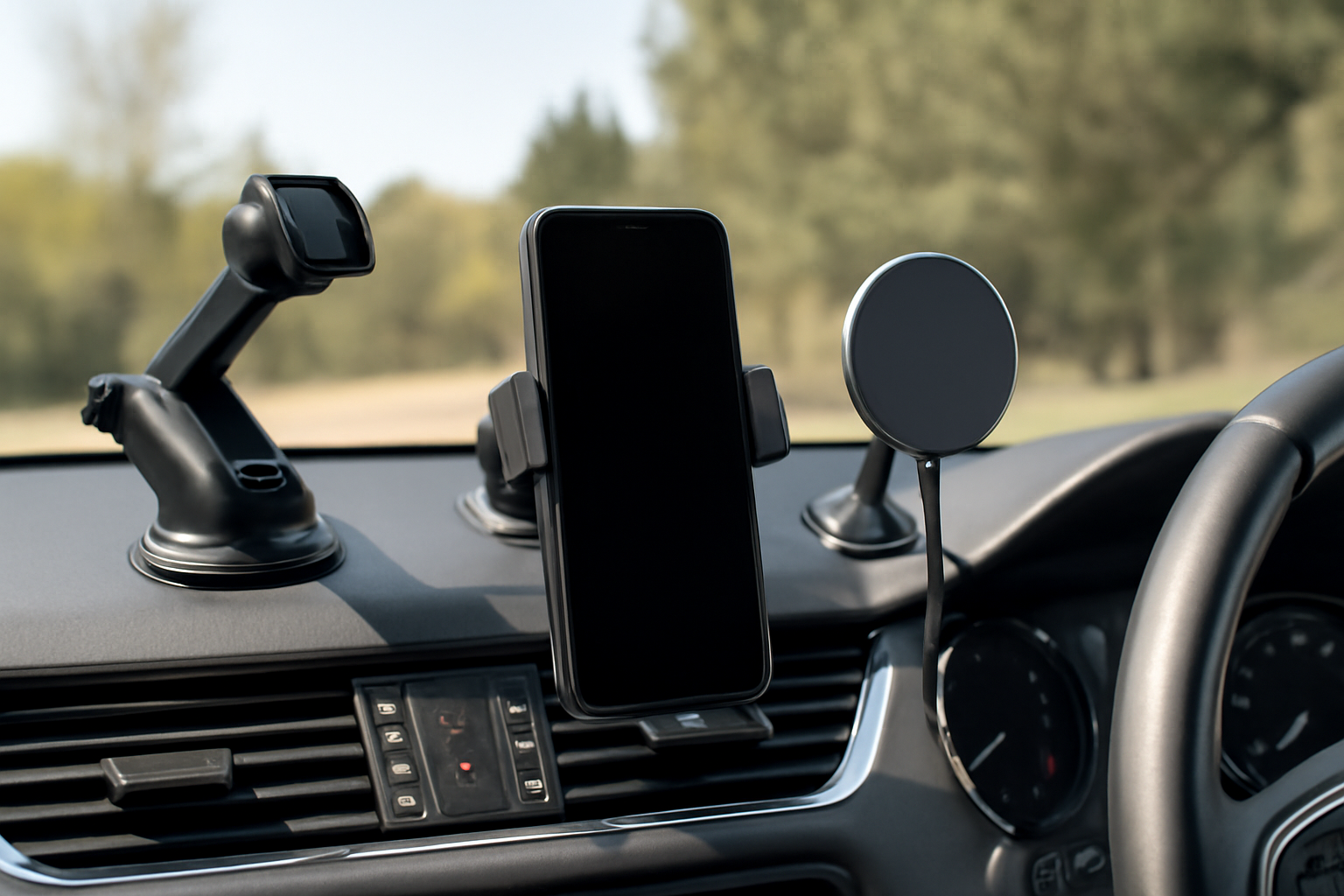
Using your phone for navigation while driving is practically unavoidable, but holding it or balancing it on your leg is dangerous and illegal in most states. A solid car phone mount keeps your screen visible without taking your hands off the wheel or your eyes off the road for more than a quick glance.
The right mount depends on your car’s layout, your phone size, and how bumpy your daily commute gets. Here’s how the main types compare.
Dashboard Mounts
Dashboard mounts use adhesive or suction cups to stick to flat surfaces on your dash. They put the phone in a natural line of sight, which is ideal for navigation. The best models use strong 3M adhesive pads combined with a suction base for a dual-grip hold.
The iOttie Easy One Touch series consistently ranks among the most popular dashboard mounts. The one-touch mechanism lets you mount and remove your phone with one hand, and the telescoping arm provides adjustable positioning.
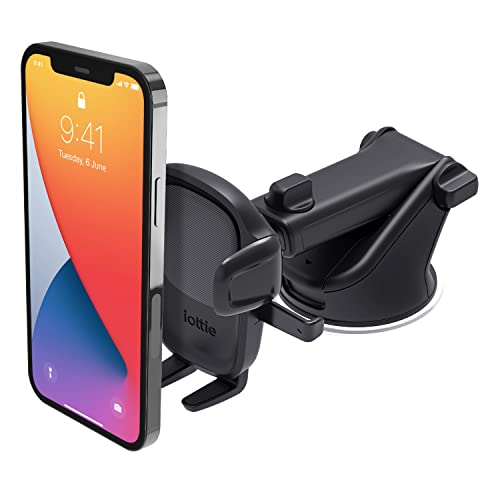
iOttie Easy One Touch Dashboard Mount
One-hand operation with strong dual-grip adhesive, perfect for quick navigation access
Vent Mounts
Vent mounts clip to your air vents and keep the phone close to eye level without blocking windshield visibility. They’re easy to install and don’t leave adhesive residue on your dash. The downside is that they can obstruct airflow and may not grip well on certain vent blade designs.
For a reliable vent mount, look for models with wide, spring-loaded clips that grip the vent blades firmly. Thin, flexible vent blades on some newer cars can struggle to support heavier phones like the iPhone Pro Max or Galaxy Ultra series.
Windshield Mounts
Suction-cup windshield mounts offer strong holding power and flexible positioning with adjustable arms. They work well in most vehicles but can partially obstruct your view, and some states have laws restricting windshield-mounted devices.
When you go this route, position the mount as low as possible on the windshield and to the right side to minimize visual obstruction. This keeps your field of vision clear while still providing easy access to your navigation screen.
MagSafe and Magnetic Mounts
Magnetic mounts use strong magnets to hold your phone. If your phone supports MagSafe (iPhone 12 and newer) or you attach a metal ring to your case, magnetic mounting is the fastest way to dock and undock your phone.
The ESR HaloLock mount and similar MagSafe-compatible options provide quick alignment and strong hold. For non-MagSafe phones, stick-on metal plates work but add bulk to your phone.

ESR HaloLock MagSafe Car Mount
Instant magnetic attachment for iPhone 12 and newer, no fumbling with clips or arms
Best for Rough Roads
If you drive on rough roads regularly, prioritize mounts with mechanical grip arms over magnetic mounts. A heavy phone bouncing on a magnetic mount can eventually slip free. Cradle-style mounts with spring-loaded arms that physically grip the sides of the phone are more secure on bumpy surfaces.
Adding a mount with a stabilizer base or suction cup with gel pad also helps reduce vibration transmitted to the phone, which keeps the screen readable. This is particularly important if you’re driving trucks on uneven terrain or navigating poorly maintained roads.
Frequently Asked Questions
Will a magnetic mount damage my phone?
No. Modern phones are designed to coexist with magnets. MagSafe iPhones have built-in magnets, and magnetic mounts won’t affect phone storage, cameras, or wireless charging.
Which mount type is best for large phones?
Dashboard or windshield mounts with telescoping arms handle large phones best. Vent mounts can struggle with heavy phones because the extra weight can tilt the vent blade downward.
Can I use a phone mount with a thick case?
Most cradle-style mounts adjust wide enough for cases up to about 12mm thick. Magnetic mounts work through thin cases but lose holding strength with thick or wallet-style cases.
Are phone mounts legal in all states?
Most states allow phone mounts, but some restrict windshield placement. Check your local laws regarding windshield obstructions. Dashboard and vent mounts typically don’t have legal restrictions.

Leave a Reply