
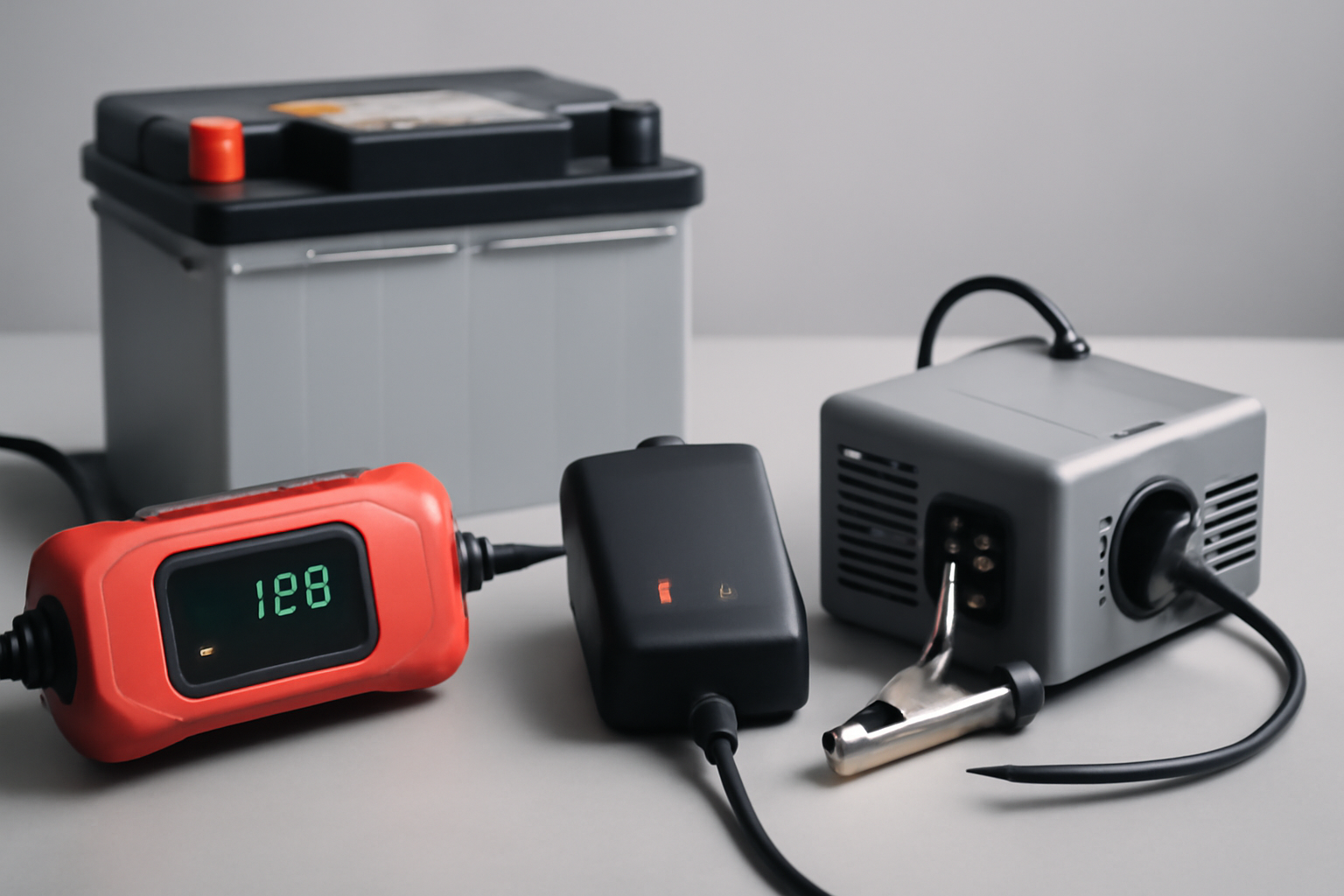
Choosing the right battery charger means understanding what each type does and which one fits your situation. A charger that’s too aggressive can damage a delicate AGM battery, while one that’s too conservative might take days to bring a deeply discharged battery back to life.
This guide breaks down the main charger categories for 2026, including smart chargers, trickle chargers, and multi-bank units for those with more than one vehicle or battery.
Smart Chargers (Best for Most People)
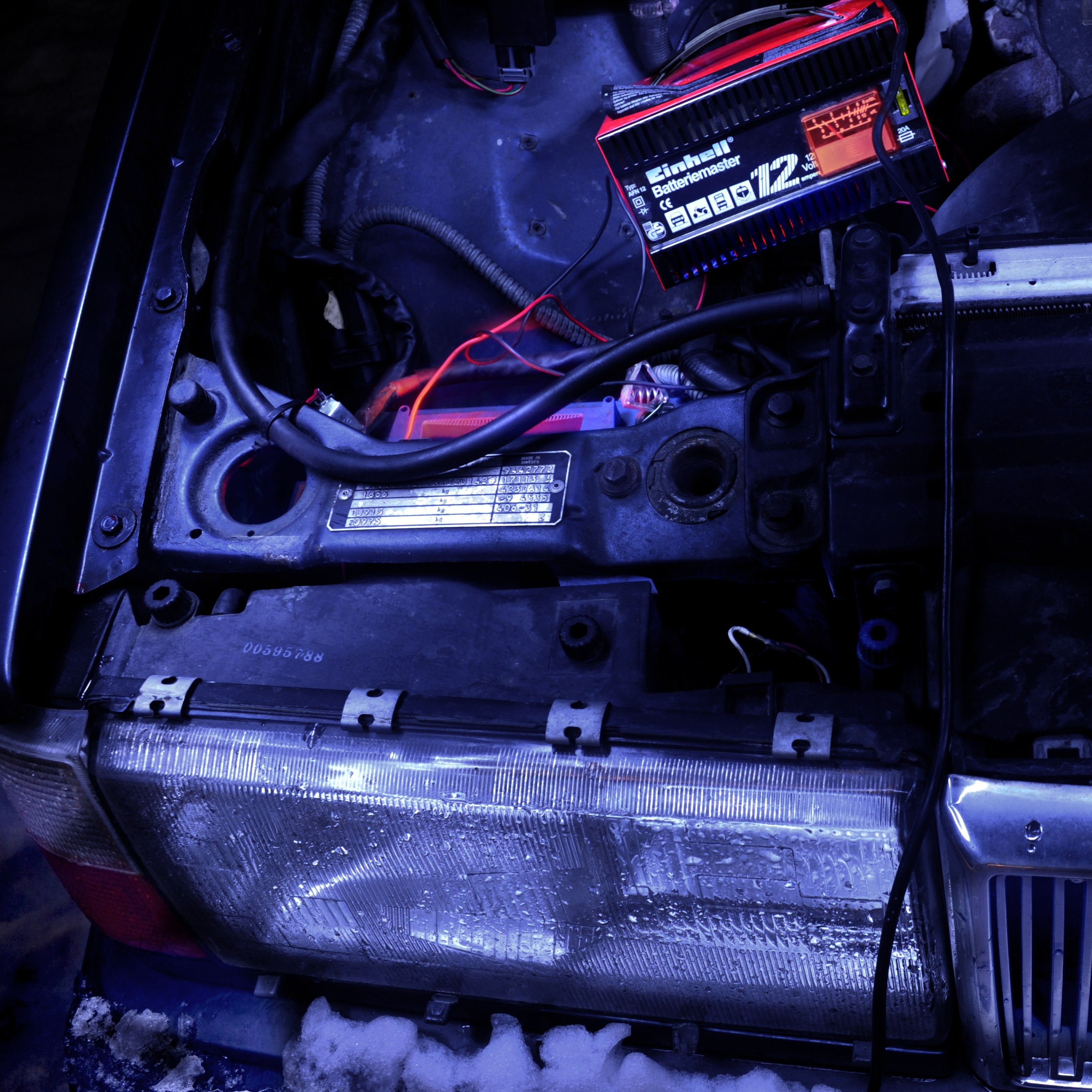
Smart chargers, also called automatic or microprocessor-controlled chargers, monitor the battery’s condition and adjust the charging rate in real time. They cycle through multiple stages: bulk charging to restore capacity quickly, absorption charging to top off the last 20%, and a float or maintenance stage that keeps the battery at 100% without overcharging.
The NOCO Genius series and Battery Tender Plus are two of the most popular smart chargers. Both handle 6V and 12V batteries and work safely with flooded, AGM, gel, and lithium battery types.

NOCO Genius Smart Charger
Industry-leading microprocessor technology with safe charging for all battery types

Battery Tender Plus
Reliable float mode for long-term vehicle storage and seasonal maintenance
Whether you’re storing a vehicle for several months or maintaining a reliable daily driver, smart chargers offer the best protection for your battery investment.
Trickle Chargers
Traditional trickle chargers deliver a constant low amperage (usually 1 to 2 amps) regardless of the battery’s state. They’re simple and inexpensive but carry a risk of overcharging if left connected for extended periods without monitoring.
For seasonal storage or long-term maintenance, a smart charger with float mode is a better choice. If you already own a trickle charger, use a timer to limit charging sessions or check the battery voltage daily.
Manual Chargers
Manual chargers let you select the amperage and don’t automatically shut off. They’re common in professional shops where technicians monitor the charging process. For home use, they require more attention and knowledge to use safely.
The advantage of a manual charger is speed. A 40-amp manual charger can bring a dead battery back to a usable state in about an hour, compared to 4 to 8 hours on a smart charger. The tradeoff is the risk of overcharging and heat damage if you forget about it.
Desulfation Feature
Over time, lead-sulfate crystals build up on battery plates, reducing capacity and cranking power. Some smart chargers include a desulfation mode that uses high-frequency pulses to break down these crystals and restore lost capacity.
Desulfation works best on batteries that have been undercharged for extended periods. It won’t resurrect a battery with physical damage like cracked plates or a shorted cell, but it can recover 10% to 20% of lost capacity on mildly sulfated batteries.
This feature is particularly valuable for vehicles that sit unused for long periods. Similar to how hybrid 12V batteries can drain during storage, conventional batteries develop sulfation when left in a discharged state.
Multi-Bank Chargers
If you have a boat, motorcycle, ATV, or multiple vehicles, a multi-bank charger can maintain two to four batteries simultaneously from a single unit. Each bank operates independently, so different battery types and sizes can charge at the same time.
Mount the charger on the wall of your garage and run permanent leads to each battery location for a clean, always-ready setup.
Choosing the Right Amperage
For maintenance charging, 1 to 3 amps is sufficient. For recharging a dead battery, 5 to 10 amps provides a good balance between speed and gentle charging. Higher amperages (15 to 40 amps) are for fast charging when you need the battery ready quickly but should be used sparingly to avoid heat damage.
As a general rule, the charging rate should not exceed 10% of the battery’s amp-hour rating. A 50Ah battery should charge at 5 amps or less for optimal battery health.
Frequently Asked Questions
Can I leave a smart charger connected indefinitely?
Yes. Smart chargers with float mode are designed for long-term connection. They maintain the battery at optimal voltage without overcharging. This is ideal for vehicles in storage or seasonal equipment.
Will a 12V charger work on a hybrid car?
Smart chargers work on the 12V auxiliary battery found in hybrids and EVs. Never connect a charger to the high-voltage drive battery. The 12V battery in hybrids can be charged and maintained just like any other car battery.
How long does it take to fully charge a dead car battery?
At 5 amps, a fully dead 50Ah battery takes roughly 10 hours to reach full charge. A 10-amp charger cuts that to about 5 hours. Smart chargers will slow down automatically as the battery approaches full charge, so actual times may be slightly longer.
What’s the difference between float mode and trickle charging?
Float mode monitors the battery and only provides current when needed to maintain full charge, while trickle charging delivers constant low amperage regardless of battery state. Float mode is safer for extended connection periods and won’t overcharge your battery.
Leave a Reply