
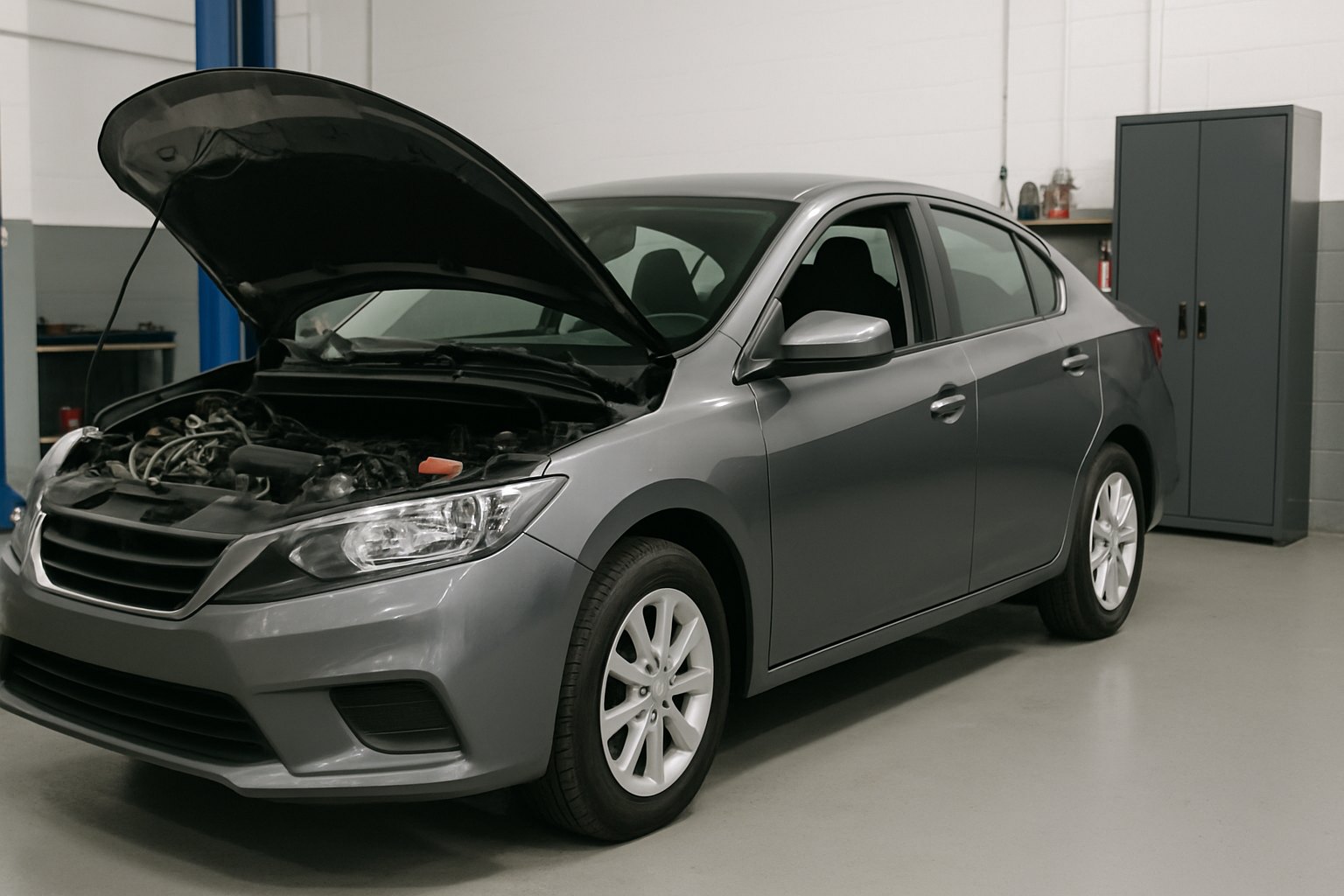
When you turn the key or press the start button and hear your engine cranking but it just won’t fire up, you’re dealing with one of the most common automotive problems. This issue affects vehicles across all makes and models, from older cars to brand new ones, and can leave you stranded at the worst possible moment.
Understanding why this happens and how to diagnose it systematically can save you hundreds of dollars in unnecessary repairs and get you back on the road faster. The key is knowing where to look first.
The Engine’s Three Essential Requirements
Every internal combustion engine needs three fundamental elements to run: fuel, spark, and compression. This is often called the “fuel, spark, compression triangle” by mechanics, and when one of these elements is missing or inadequate, your engine won’t start even if it cranks perfectly.
Think of it like a campfire. You need dry wood (fuel), a match or lighter (spark), and proper airflow (compression) to create combustion. Remove any one of these components, and you won’t get a fire.
Your diagnostic approach should systematically check each of these three areas. Most cranking but not starting issues fall into one of these categories, and by following this methodical process, you’ll identify the problem much faster than randomly replacing parts.
Starting with the Basics: Quick Checks
Before diving into complex diagnostics, perform these simple checks that solve surprisingly many no-start issues. First, verify you have at least a quarter tank of fuel. Fuel gauges can be inaccurate, and fuel pumps struggle when tanks run very low.
Check your dashboard for warning lights, particularly the check engine light, oil pressure light, or security system indicators. Many modern vehicles have immobilizer systems that prevent starting if they detect a problem with the key or security system.
Listen carefully while cranking. You should hear the fuel pump prime for 2-3 seconds when you first turn the key to the “on” position (before cranking). If you don’t hear this quiet humming sound from the rear of the vehicle, you may have a fuel delivery problem.
Fuel System Diagnosis
Fuel problems are among the most common causes of cranking but not starting issues. Your engine needs the right amount of fuel delivered at the correct pressure to fire up properly.
The Fuel Pump Relay
The fuel pump relay is often the culprit when fuel delivery fails. This small, inexpensive component controls power to your fuel pump, and when it fails, your pump won’t run at all. You’ll find the fuel pump relay in your engine bay fuse box or under-dash fuse panel.
Consult your owner’s manual or the fuse box cover to locate the fuel pump relay. Try swapping it with an identical relay from another system (like the horn or A/C clutch relay) to test if this solves your problem. Many vehicles use the same part number for multiple relays, making this swap test very effective.
If swapping the relay gets your car running, replace the faulty relay with a new one. These typically cost $10-20 and take minutes to replace.
Fuel Pressure Testing
Even if your fuel pump runs, it might not deliver adequate pressure. Most fuel injection systems require 35-65 PSI depending on the vehicle. You can test fuel pressure using a fuel pressure gauge that connects to the fuel rail test port.
If you don’t have a pressure gauge, try this field test: remove the air intake tube and spray starting fluid or carburetor cleaner into the throttle body while someone cranks the engine. If the engine tries to start or runs briefly, you likely have a fuel delivery problem.
Low fuel pressure often indicates a failing fuel pump, clogged fuel filter, or restricted fuel lines. High mileage vehicles frequently develop fuel pump issues, especially if they’ve been run low on fuel regularly.
Ignition System Problems
Your ignition system must deliver spark at precisely the right moment for combustion to occur. Modern engines use complex ignition timing controlled by the engine computer, but the basic principle remains the same.
The Crankshaft Position Sensor
The crankshaft position sensor is critical for ignition timing and fuel injection timing. This sensor tells the engine computer exactly where the crankshaft is positioned and how fast it’s rotating. When this sensor fails, your engine typically won’t start at all.
Crankshaft position sensor failure often occurs gradually, starting with intermittent stalling or rough running before progressing to complete no-start conditions. These sensors are particularly prone to failure when they get hot, which can make diagnosis tricky since the problem might be intermittent.
You’ll typically find the crankshaft position sensor near the crankshaft pulley or flywheel, though location varies by vehicle. Replacement usually requires basic hand tools and takes 30-60 minutes depending on accessibility.
Testing for Spark
You can test for spark using an inexpensive spark tester or by carefully observing removed spark plugs during cranking. Remove a spark plug, reconnect the plug wire or coil, and ground the plug threads against the engine block while someone cranks the engine.
You should see a bright blue spark jumping across the plug gap. A weak yellow or orange spark indicates ignition problems, while no spark at all points to ignition coil, crankshaft position sensor, or engine computer issues.
Modern vehicles with coil-on-plug ignition systems can experience individual coil failures. If you have spark on some cylinders but not others, you likely have failing ignition coils rather than a system-wide problem.
Compression and Timing Issues
Compression problems are less common in sudden no-start situations but can develop over time. Your engine needs adequate compression in all cylinders to build the pressure necessary for combustion.
Timing Belt or Chain Problems
If your timing belt or chain breaks or jumps timing, your engine will crank but won’t start because the valves and pistons are no longer synchronized. This is more common in high-mileage vehicles where timing components haven’t been maintained properly.
Interference engines (where pistons and valves occupy the same space at different times) can suffer catastrophic internal damage when timing components fail. Non-interference engines typically just stop running without internal damage.
Timing problems often make distinctive noises during cranking. You might hear unusual rattling, grinding, or the engine cranking much faster than normal (because there’s no compression resistance).
Compression Testing
A compression test measures how much pressure each cylinder builds during the compression stroke. Most gasoline engines should show 120-180 PSI compression, with all cylinders within 10% of each other.
Perform compression testing on a warm engine with the throttle wide open and all spark plugs removed. Low compression in all cylinders often indicates timing problems, while low compression in one or two cylinders suggests valve or piston ring issues.
Modern Vehicle Complications
Today’s vehicles include additional systems that can prevent starting even when fuel, spark, and compression are adequate. Understanding these systems helps complete your diagnostic approach.
Security and Immobilizer Systems
Most vehicles built after 2000 include theft deterrent systems that can prevent starting. These systems verify that you’re using the correct key or that the key fob is present before allowing the engine to start.
Security system problems often trigger dashboard warning lights or cause the starter to not engage at all. However, some security issues allow cranking but prevent fuel pump operation or ignition system function.
If you suspect security system problems, try using your spare key or ensure your key fob battery isn’t dead. Some vehicles require specific procedures to reset the security system after battery disconnection or other repairs.
Engine Computer and Sensor Issues
Your engine control module (ECM) orchestrates fuel injection, ignition timing, and dozens of other functions. When the computer fails or receives incorrect information from sensors, it may prevent starting as a safety measure.
Common sensors that can cause no-start conditions include the mass airflow sensor, throttle position sensor, and various temperature sensors. A code reader or scan tool can help identify sensor problems that might not be obvious otherwise.
Engine computer problems often trigger the check engine light and store diagnostic trouble codes. These codes provide valuable clues about which systems aren’t functioning properly.
Systematic Diagnostic Approach
Follow this logical sequence when diagnosing cranking but not starting issues. This systematic approach prevents you from wasting time and money on unnecessary repairs.
Start with the quick checks: fuel level, dashboard warning lights, and listening for the fuel pump. These take minutes but solve many problems immediately.
Move to fuel system testing next. Check the fuel pump relay, test for fuel pressure, and verify fuel delivery to the engine. Fuel problems are common and relatively inexpensive to fix.
Test the ignition system third. Verify spark at the plugs and check the crankshaft position sensor operation. Many ignition problems create diagnostic trouble codes that speed up diagnosis.
Check compression and timing last, since these problems are less common in sudden failure situations. However, don’t skip this step if fuel and ignition systems check out normal.
When to Seek Professional Help
Some diagnostic procedures require specialized tools or expertise that make professional diagnosis more cost-effective. Fuel pressure testing, compression testing, and timing verification often fall into this category.
If your systematic approach doesn’t identify the problem, or if you discover issues requiring major repairs (like timing belt replacement or engine computer problems), professional help often saves money in the long run.
Get diagnostic quotes from multiple shops if possible. Many shops charge $100-150 for diagnosis, but this fee is often applied toward repair costs. A proper diagnosis prevents the expensive mistake of replacing parts that aren’t actually faulty.
Prevention and Maintenance Tips
Regular maintenance prevents many cranking but not starting issues. Replace your fuel filter according to manufacturer recommendations, typically every 30,000-60,000 miles depending on your vehicle.
Keep your fuel tank at least quarter full to prevent fuel pump damage and reduce the risk of water contamination. Fuel pumps use gasoline for cooling, and they wear out faster when frequently run in low-fuel conditions.
Replace spark plugs and ignition components at recommended intervals. Modern platinum and iridium plugs last much longer than old copper plugs, but they still wear out and can cause starting problems when severely worn.
Don’t ignore check engine lights or intermittent starting problems. These early warning signs often indicate developing issues that are cheaper to fix before they cause complete failure.
Frequently Asked Questions
Why does my car crank fine but won’t start only sometimes?
Intermittent no-start problems often indicate failing components that work when cool but fail when hot. The crankshaft position sensor, fuel pump relay, and ignition coils commonly exhibit this behavior. These components may function normally during morning starts but fail after the engine has been running and components heat up.
Can a bad battery cause cranking but not starting issues?
While a weak battery typically causes slow cranking or clicking sounds, a battery with marginal capacity might crank the engine but not provide enough power for fuel pump and ignition system operation. Test your battery and charging system if cranking seems slower than normal or if electrical components seem dim during cranking.
How much should I expect to pay for diagnosis and common repairs?
Professional diagnosis typically costs $100-150 at most shops. Common repairs range from $15-30 for relays and sensors up to $300-800 for fuel pump replacement or $500-2000 for timing belt/chain repairs. Getting an accurate diagnosis before authorizing repairs prevents unnecessary expenses on parts you don’t actually need.
Is it safe to keep cranking if my engine won’t start?
Limit cranking to 10-15 second intervals with 30-60 seconds between attempts to prevent starter motor overheating. Continuous cranking can damage the starter and drain your battery. If the engine doesn’t show signs of trying to start after several attempts, stop cranking and begin systematic diagnosis rather than continuing to stress the starting system.


Leave a Reply