
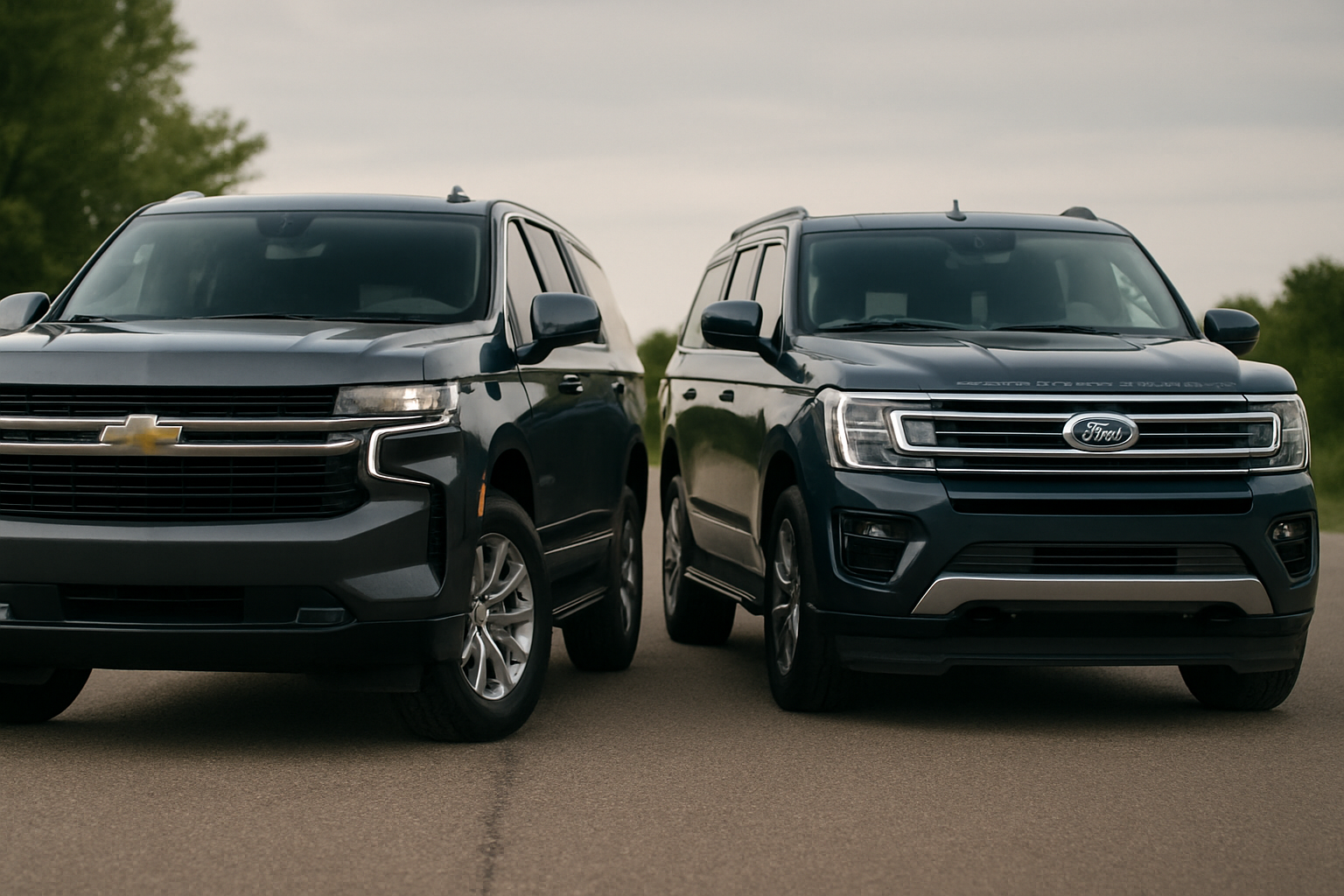
Full-size SUVs dominate American roads for good reason. They haul families, tow boats, and tackle everything from school runs to cross-country adventures. When you’re shopping in this segment, two names consistently rise to the top: the Chevrolet Tahoe and Ford Expedition.
Both trucks have evolved significantly over the past decade, ditching their truck-based roots for more sophisticated platforms. Today’s versions offer independent rear suspension, advanced technology, and surprisingly refined ride quality. But which one deserves your driveway?
Current Generation Overview
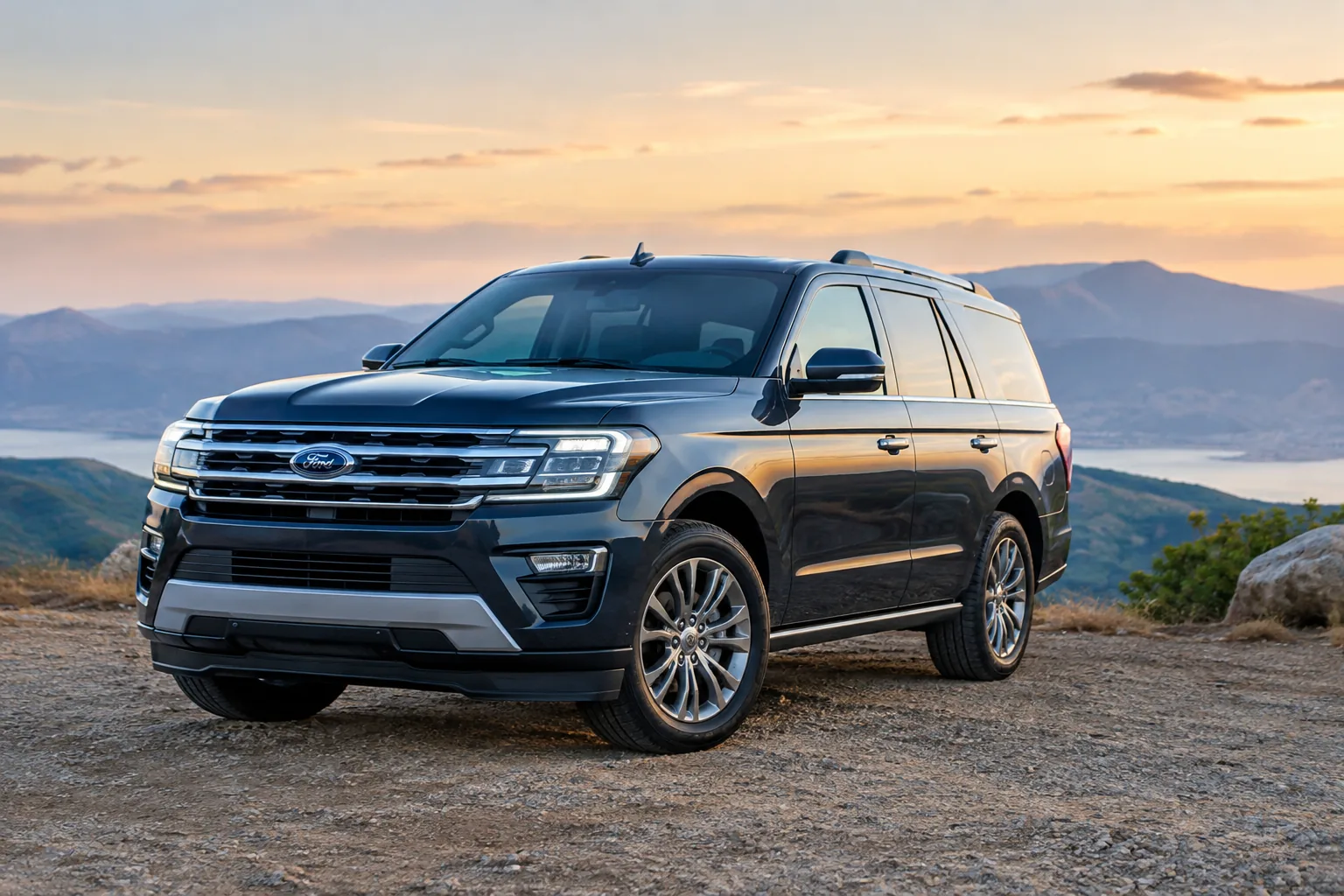
The current Tahoe launched for 2021 as a complete redesign, while Ford’s Expedition received its latest refresh in 2022. Both represent the most advanced versions of these SUVs we’ve ever seen.
The Tahoe rides on GM’s T1 platform, the same architecture under the Silverado and Sierra trucks. Ford builds the Expedition on its CD6 platform, shared with the F-150. Both have moved to independent rear suspension, ditching the solid rear axles that defined previous generations.
This shift to IRS makes a huge difference in ride quality and handling. Your passengers won’t feel every bump transmitted through a solid axle anymore.
Engine Options and Performance
Tahoe Powertrains
Chevrolet keeps things simple with two engine choices. The base 5.3L V8 produces 355 horsepower and 383 lb-ft of torque. Step up to the 6.2L V8 for 420 horsepower and 460 lb-ft of torque.
Both engines pair with a 10-speed automatic transmission. The 6.2L comes standard on High Country and RST trims, while other trims make do with the smaller V8. Cylinder deactivation helps fuel economy on both engines.
Expedition Engine Lineup
Ford offers more variety here. The base engine is a 3.5L twin-turbo V6 making 380 horsepower and 470 lb-ft of torque. That’s more torque than either Tahoe engine, thanks to forced induction.
The optional 3.5L high-output twin-turbo V6 cranks out 440 horsepower and 510 lb-ft of torque. This engine comes standard on Platinum and King Ranch trims. All Expeditions use Ford’s 10-speed automatic.
Ford’s turbocharged approach delivers impressive low-end grunt. You’ll feel that torque advantage when merging onto highways or climbing mountain passes.
Towing Capabilities
Both SUVs excel at towing, but there are important differences. The Tahoe’s maximum towing capacity reaches 8,400 pounds with the 6.2L engine and proper equipment. The 5.3L version tops out at 8,200 pounds.
Ford’s Expedition can pull up to 9,300 pounds when properly equipped with the high-output engine. Even the base twin-turbo V6 manages 9,000 pounds. Ford’s turbocharged engines provide better towing performance, especially at altitude where naturally aspirated engines lose power.
Both trucks offer integrated trailer brake controllers, blind spot monitoring with trailer coverage, and trailer sway control. Ford includes Pro Trailer Backup Assist, which steers for you while backing up trailers.
Cargo Space Comparison
This is where the Tahoe’s longer wheelbase pays dividends. Behind the third row, you’ll find 25.5 cubic feet of cargo space. Fold the third row flat, and that expands to 72.6 cubic feet. With all seats folded, maximum cargo capacity reaches 122.9 cubic feet.
The Expedition offers less cargo room in its standard configuration. You get 20.9 cubic feet behind the third row, 57.5 cubic feet with the third row folded, and 104.6 cubic feet maximum.
However, Ford offers the Expedition MAX with a longer wheelbase. This version provides 36.0 cubic feet behind the third row and 145.4 cubic feet maximum. If cargo space is your priority, the MAX is tough to beat.
Ride Quality and Handling
Both SUVs ride much better than their predecessors, thanks to independent rear suspension. The solid axles of previous generations are gone, replaced by more sophisticated setups.
The Tahoe offers Magnetic Ride Control on higher trims, which adjusts damping rates up to 1,000 times per second. This system provides excellent body control while maintaining ride comfort. Air ride suspension is available and includes a self-leveling feature for towing.
Ford’s Expedition comes with adaptive dampers on upper trims and air suspension on Platinum models. The air suspension automatically adjusts ride height based on driving conditions and can lower the vehicle for easier entry and exit.
In daily driving, the Tahoe feels slightly more truck-like, while the Expedition has a more car-like character. Both handle surprisingly well for their size, but don’t expect sports car reflexes.
Interior Space and Comfort
Three rows of seating come standard on both vehicles. The Tahoe’s longer wheelbase translates to more third-row legroom. Adults can actually sit back there comfortably for reasonable distances.
The Expedition’s third row works fine for kids but feels cramped for adults. Again, the Expedition MAX addresses this issue with significantly more rear passenger space.
Second-row captain’s chairs are available on both, improving access to the third row. The Tahoe offers more second-row legroom, while the Expedition provides better headroom throughout.
Material quality has improved dramatically on both vehicles. Upper trims feature genuine leather, real wood trim, and soft-touch surfaces throughout. These aren’t the cheap plastic interiors of previous generations.
Technology Features
Infotainment Systems
The Tahoe uses GM’s Infotainment 3 Plus system with a 10.2-inch touchscreen on most trims. The interface is intuitive and responsive, with wireless Apple CarPlay and Android Auto standard. Higher trims get a larger 10.2-inch screen with additional features.
Ford equips the Expedition with SYNC 4 and a 12-inch touchscreen. The system includes wireless smartphone integration and over-the-air update capability. Ford’s interface takes some getting used to but offers more customization options.
Both systems support Amazon Alexa integration and include built-in navigation on higher trims. Rear-seat entertainment systems are available with individual screens for passenger entertainment.
Driver Assistance Features
Standard safety technology is comprehensive on both SUVs. Automatic emergency braking, blind spot monitoring, and lane-keeping assist come on all trim levels.
The Tahoe includes GM’s Super Cruise on Premier and High Country trims. This hands-free driving system works on mapped highways and represents one of the most advanced driver assistance systems available.
Ford counters with Co-Pilot360 Assist 2.0, which includes adaptive cruise control with stop-and-go capability and lane centering. While not truly hands-free like Super Cruise, it’s still very capable.
Reliability Considerations
Both vehicles are relatively new in their current forms, making long-term reliability predictions difficult. However, we can look at historical data and known issues.
GM’s LS-based V8 engines have proven reliable over many years and applications. The 10-speed transmission has had some early issues but seems to have improved with software updates. Magnetic Ride Control components can be expensive to replace when they fail.
Ford’s EcoBoost engines have generally been reliable, though turbocharged engines require more maintenance than naturally aspirated units. The 10-speed transmission (shared with GM) has similar early teething problems. Air suspension systems on both vehicles can be costly to maintain out of warranty.
Initial quality surveys show both vehicles performing reasonably well, with the Tahoe having a slight edge in some measures.
Fuel Economy
Neither SUV wins any efficiency awards, but both have improved compared to previous generations. The Tahoe with the 5.3L engine achieves 16 mpg city and 20 mpg highway with rear-wheel drive. Four-wheel drive drops those numbers slightly.
The 6.2L Tahoe manages 14 mpg city and 19 mpg highway, paying a penalty for the extra power.
Ford’s base twin-turbo V6 Expedition returns 17 mpg city and 23 mpg highway with rear-drive. The high-output engine drops to 16 mpg city and 22 mpg highway. Ford’s turbocharged approach provides a small fuel economy advantage.
Trim Levels and Pricing
The Tahoe lineup starts with the LS trim around $52,000. LT adds more features for about $55,000, while the Z71 off-road package brings additional capability. Premier and High Country trims push well into the $70,000+ range.
Expedition pricing begins slightly lower at around $50,000 for the base XLT. XLT adds features for about $53,000. Limited, King Ranch, and Platinum trims can exceed $80,000 when fully loaded.
Both vehicles can get expensive quickly with options. The Expedition MAX typically costs about $3,000 more than the standard-length version across trim levels.
Off-Road Capability
The Tahoe Z71 includes skid plates, hill descent control, and an off-road suspension tune. Ground clearance reaches 8.4 inches, and you get selectable drive modes for different terrain types.
Ford offers the Expedition Timberline for serious off-road work. This trim includes 32-inch all-terrain tires, unique suspension tuning, and additional ground clearance. Skid plates and rock rails protect vital components.
Both vehicles offer four-wheel drive with low-range gearing. Electronic locking differentials help with traction in challenging conditions. The independent rear suspension actually improves off-road comfort compared to solid axles.
Which Should You Choose?
Your decision comes down to priorities and specific needs. Choose the Tahoe if you want more cargo space in the standard wheelbase, prefer naturally aspirated V8 engines, or value GM’s Super Cruise technology.
The Expedition makes sense if you need maximum towing capacity, prefer the extra-long MAX version, or want Ford’s more advanced infotainment system. The turbocharged engines provide excellent performance and slightly better fuel economy.
Both represent significant improvements over previous generations. You can’t go wrong with either choice, but understanding these differences helps you pick the right one for your family’s needs.
Frequently Asked Questions
Which SUV offers better third-row seating?
The Tahoe provides more third-row legroom in its standard configuration, making it more comfortable for adults. The Expedition MAX, however, offers the most spacious third row of any version.
Are these SUVs reliable for long-term ownership?
Both vehicles are too new for comprehensive long-term reliability data. However, their underlying engines and transmissions have generally proven reliable in other applications. Budget for higher maintenance costs on turbocharged engines and air suspension systems.
Which SUV is better for towing heavy trailers?
The Ford Expedition has higher towing ratings and turbocharged engines that maintain power better at altitude. For maximum towing performance, Ford’s high-output twin-turbo V6 is the clear winner.
How do maintenance costs compare between these SUVs?
Maintenance costs should be similar for basic services. Ford’s turbocharged engines may require more frequent oil changes and have additional components like intercoolers and turbochargers that can fail. GM’s naturally aspirated V8s are simpler but aren’t necessarily cheaper to maintain overall.
Leave a Reply