
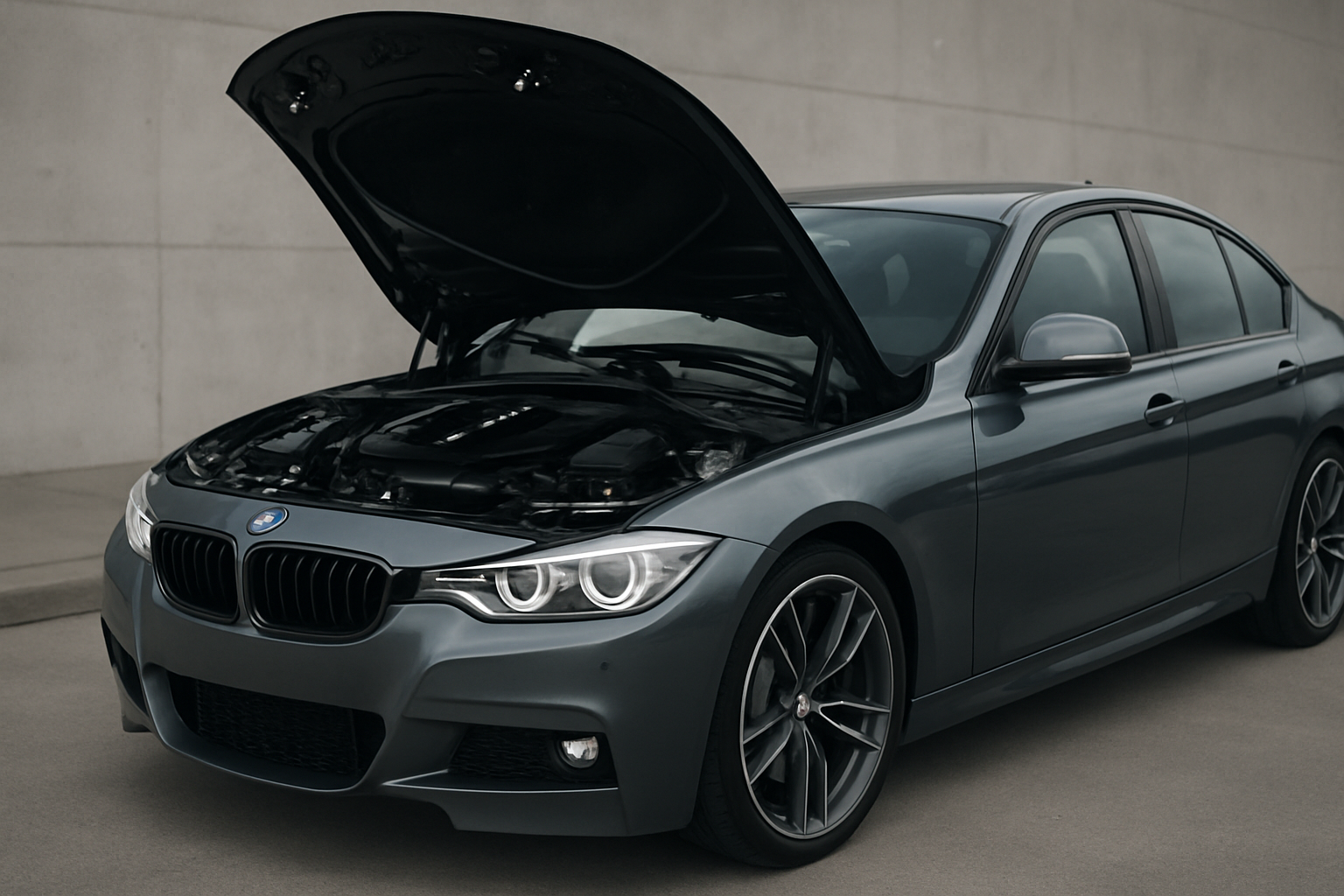
BMW’s N55 and B58 engines represent two different generations of the brand’s turbocharged inline-six powerplants, each with distinct reliability profiles and common failure points. Understanding the differences between these engines can save you thousands in unexpected repairs and help you make smarter buying decisions when shopping for used BMWs.
N55 Engine Overview and Production Years
The N55 engine served as BMW’s workhorse from 2009 to 2017, powering everything from the 335i to the 135i and various X-drive models. This single-turbo 3.0-liter inline-six replaced the twin-turbo N54 and was designed to be more reliable and fuel-efficient.
You’ll find the N55 in these popular models:
- 2011-2016 BMW 335i/340i (F30/F31/F34)
- 2011-2013 BMW 135i (E82/E88)
- 2009-2016 BMW X3/X4 35i
- 2010-2013 BMW Z4 35i
- 2013-2016 BMW 435i
The N55 produces between 300-320 horsepower depending on the application, with 300 lb-ft of torque available from just 1,200 rpm. BMW used Valvetronic variable valve timing and direct injection to achieve solid performance numbers.
B58 Engine Overview and Production Years
The B58 debuted in 2015 as BMW’s next-generation turbocharged inline-six, incorporating lessons learned from the N55’s weaknesses. This engine continues production today and represents a significant step forward in reliability and performance.
Common B58 applications include:
- 2016+ BMW 340i (F30)
- 2017+ BMW 440i
- 2019+ BMW X3/X4/X5 40i
- 2019+ BMW Z4 M40i
- 2020+ Toyota Supra 3.0 (tuned version)
The B58 delivers 335-382 horsepower depending on tuning, with improved fuel economy and lower emissions compared to its predecessor. BMW redesigned the cooling system, turbocharger, and internal components to address N55 shortcomings.
N55 Common Problems and Known Issues
Oil Filter Housing Gasket Failure
The oil filter housing gasket represents the N55’s most predictable failure point. This plastic housing sits at the top of the engine and inevitably cracks between 80,000-120,000 miles, causing oil leaks onto the exhaust manifold.
You’ll notice oil burning smells, visible oil on the engine bay’s right side, and potentially oil spots under your car. The repair costs $400-800 at independent shops, with BMW dealers charging significantly more.
The updated part number is 11428637821, which uses improved plastic compounds. Many owners proactively replace this component around 80,000 miles to avoid roadside breakdowns.
Charge Pipe Failures
BMW’s plastic charge pipe connects the turbocharger to the throttle body and commonly fails due to heat cycling and pressure stress. The failure typically occurs at the connection points where plastic meets rubber or metal.
Symptoms include sudden power loss, loud whooshing sounds during acceleration, and check engine lights. The plastic pipe simply can’t handle the repeated expansion and contraction over time.
Aftermarket aluminum charge pipes from companies like ARM Motorsports or VRSF cost $200-300 and represent a permanent solution. These upgraded pipes handle boost pressure better and eliminate future failures.
Water Pump and Thermostat Issues
The N55’s electric water pump and thermostat housing present another common failure point around 100,000 miles. The water pump’s impeller can crack or the motor can fail, leading to overheating issues.
Warning signs include coolant leaks near the front of the engine, temperature fluctuations, and coolant warning messages on your dash. This repair typically runs $800-1,200 including parts and labor.
BMW released updated water pump designs (part number 11517586925) that address some reliability concerns, but the fundamental design limitations remain.
B58 Common Problems and Known Issues
VANOS System Problems
While the B58 is generally more reliable than the N55, VANOS (variable valve timing) issues have emerged as the primary concern. The system uses oil pressure to adjust camshaft timing, and contaminated oil or worn seals can cause problems.
Symptoms include rough idle, reduced power output, and rattling noises during startup. The issue typically appears after 60,000 miles and costs $1,500-2,500 to repair properly.
Regular oil changes using BMW-approved synthetic oil help prevent VANOS problems. Many technicians recommend 5,000-mile intervals instead of BMW’s suggested 10,000 miles.
Minor Oil Leaks
Some B58 engines develop minor oil seepage from the oil pan gasket or valve cover, though these issues are far less severe than N55 problems. Most leaks remain cosmetic rather than requiring immediate attention.
The B58’s improved gasket materials and better engine design significantly reduce the likelihood of major oil leaks compared to the N55.
Reliability Comparison: N55 vs B58
The B58 represents a substantial improvement in overall reliability compared to the N55. BMW addressed most of the N55’s weak points during the B58’s development, resulting in fewer common failure modes.
N55 engines typically require major repairs every 80,000-100,000 miles, with the oil filter housing gasket, charge pipe, and water pump representing predictable expenses. Total maintenance costs over 150,000 miles often exceed $4,000-6,000 beyond normal service items.
B58 engines show better long-term reliability, with fewer systematic failures and longer intervals between major repairs. While VANOS issues exist, they affect a smaller percentage of engines compared to N55’s universal problems.
The B58’s closed-deck design, improved cooling system, and better materials contribute to its superior reliability record. Most B58 engines can reach 100,000+ miles without major repairs if properly maintained.
Performance and Tuning Differences
Both engines respond well to modifications, but the B58 offers better tuning potential and reliability when modified. The N55’s single turbocharger can produce impressive power gains with basic bolt-ons and tuning.
N55 engines easily reach 400+ horsepower with downpipes, intakes, and custom tuning. However, the engine’s inherent weaknesses become more pronounced under increased stress.
The B58’s stronger internal components and improved turbocharger handle modifications better. Stage 1 tunes typically add 60-80 horsepower while maintaining good reliability.
For serious performance builds, the B58’s closed-deck design and better cooling make it the superior choice despite higher initial costs.
Which Used BMWs to Buy
Best N55-Powered Models
If you’re considering N55-powered BMWs, focus on 2013-2016 models that received mid-cycle updates addressing early problems. The 335i F30 from these years offers good value if you can find examples with maintenance records.
Look for cars where the oil filter housing gasket and charge pipe have already been replaced. This information should be available in service records or CarFax reports.
Budget an additional $2,000-3,000 for predictable repairs when buying any N55-powered BMW. This covers the oil filter housing gasket, charge pipe upgrade, and water pump replacement.
Recommended B58-Powered Models
The 2016+ 340i represents excellent value in the used BMW market, combining improved reliability with strong performance. These cars avoid most N55 problems while offering similar pricing to late N55 models.
2017+ 440i models provide coupe styling with B58 reliability, though they command higher prices. The X3 M40i offers SUV practicality with genuine sports car performance.
For maximum reliability, target 2018+ B58 models that incorporated early production improvements. These engines show the fewest issues and best long-term prospects.
Maintenance Recommendations
Both engines benefit from aggressive maintenance schedules compared to BMW’s recommendations. Use high-quality synthetic oil and change it every 5,000-6,000 miles regardless of the service indicator.
N55 owners should proactively replace the oil filter housing gasket around 80,000 miles and upgrade to an aluminum charge pipe early. These preventive measures avoid roadside failures and reduce long-term costs.
B58 engines require less preventive work but still benefit from frequent oil changes and quality fuel. Use Top Tier gasoline to keep the direct injection system clean.
Both engines use timing chains rather than belts, eliminating major service intervals. However, chain stretch can occur on high-mileage examples of both engines.
Cost of Ownership Analysis
N55-powered BMWs offer lower purchase prices but higher maintenance costs over time. Plan for $1,000-1,500 annually in repairs beyond normal maintenance once the car reaches 80,000 miles.
B58 models cost more upfront but require fewer major repairs. Annual maintenance costs typically stay under $800 beyond oil changes and basic service items.
Factor in depreciation differences when making your decision. B58 models hold value better due to their reputation for improved reliability.
Independent BMW specialists can perform most repairs for 40-60% less than dealer rates. Building a relationship with a good independent shop significantly reduces ownership costs for either engine.
Final Recommendations
Choose the B58 if your budget allows for 2016+ models. The improved reliability and better long-term prospects justify the higher purchase price for most buyers.
N55 models make sense for buyers on tight budgets who can perform their own maintenance or have access to affordable independent service. Factor repair costs into your purchase decision.
Avoid high-mileage N55 models unless they have comprehensive service records showing major components have been replaced. A well-maintained 100,000-mile B58 is preferable to a neglected 60,000-mile N55.
Both engines can provide years of reliable service with proper maintenance, but the B58 represents BMW’s evolution toward better long-term reliability.
Frequently Asked Questions
Which engine is better for high-mileage driving?
The B58 handles high-mileage driving better due to improved cooling and more robust internal components. N55 engines can accumulate high miles but require more frequent attention to cooling system components and gaskets.
Can I prevent N55 oil filter housing gasket failure?
The oil filter housing gasket failure is inevitable on N55 engines due to the plastic housing design. You can delay failure slightly through gentle driving and avoiding extreme temperature changes, but replacement is eventually necessary on all N55s.
Is it worth buying a modified N55 or B58?
Modified B58 engines generally present less risk than modified N55s due to stronger internals. However, any modified BMW requires careful inspection and documentation of the modifications. Avoid heavily modified examples unless you understand the specific changes and their reliability implications.
What’s the most reliable BMW inline-six option?
The B58 represents BMW’s most reliable modern turbocharged inline-six. For naturally aspirated reliability, the older M54 engine (2001-2006) remains highly dependable but lacks the performance of modern turbocharged units.



Leave a Reply