
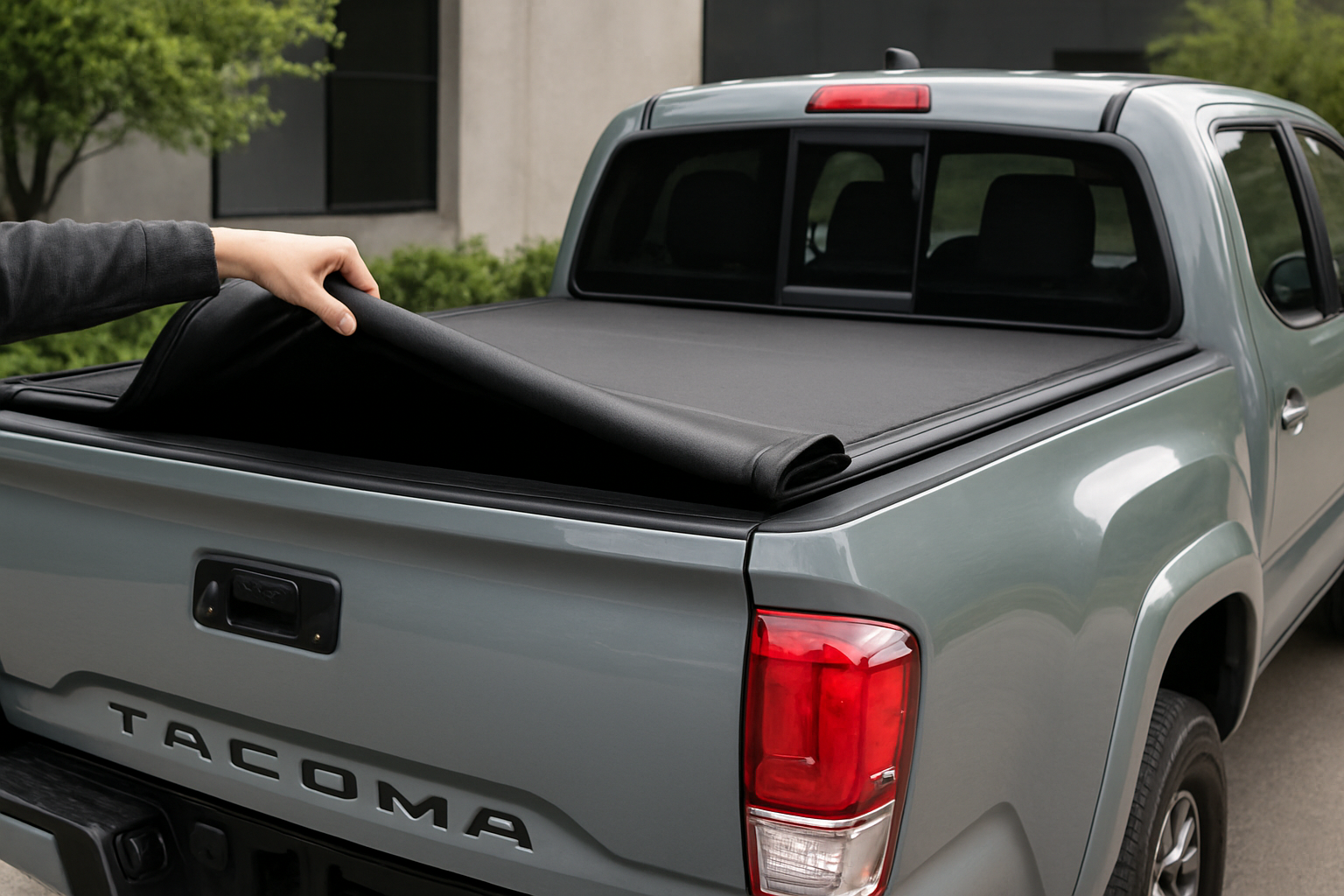
Your Toyota Tacoma’s soft-roll tonneau cover is one of the most practical accessories you can add to your truck, but only if you know how to use it properly. Many Tacoma owners struggle with the rolling mechanism, water drainage, and getting the best bed access without damaging the cover.
This guide covers everything from basic operation to advanced tips that’ll help you get the most out of your investment.
Understanding Your Tacoma’s Soft-Roll Tonneau Cover Options
Toyota Tacomas from 2016 onwards can be equipped with either factory or aftermarket soft-roll tonneau covers. The factory option, available through Toyota’s accessory catalog, typically features a vinyl construction with aluminum rails and a simple clamp-down latching system.
Aftermarket options offer more variety in materials, ranging from marine-grade vinyl to heavy-duty canvas. Popular brands like TruXedo, Extang, and Roll-N-Lock provide covers specifically designed for the Tacoma’s bed dimensions, which measure 60.5 inches for the short bed and 73.7 inches for the long bed models.
The key difference between factory and aftermarket covers lies in the installation complexity and feature set. Factory covers integrate seamlessly with existing bed rail systems, while aftermarket options often provide better weather sealing and more robust construction.
Rolling vs Folding: How Your Cover Actually Works
Soft-roll tonneau covers operate differently than folding hard covers. Instead of panels that fold back on hinges, your cover rolls up toward the cab, similar to a window shade. This rolling action requires specific techniques to prevent damage and ensure smooth operation.
The cover material wraps around a spring-loaded tube at the front of the bed. When you release the latches and push the cover forward, internal springs help wind the material onto the tube. This mechanism works best when the cover material stays aligned and doesn’t bunch up on one side.
Most Tacoma soft-roll covers can be positioned anywhere from fully closed to completely open, with stops available at quarter, half, and three-quarter positions. This flexibility allows you to haul longer items while keeping part of your bed covered.
The Latching Mechanism: Getting a Secure Seal
Your Tacoma’s tonneau cover uses a rail-and-clamp latching system along both sides of the bed. The cover material features reinforced edges that slide into aluminum rails mounted to your truck’s bed rails. Spring-loaded clamps every 12-16 inches secure the cover material in the rails.
To properly latch the cover, start at the tailgate and work toward the cab. Pull each clamp outward, slide the cover material into the rail channel, then release the clamp. You should hear a distinct click when each clamp engages properly.
The tailgate area requires special attention. Most systems include a tailgate seal that tucks between your tailgate and the cover material. This seal prevents water intrusion and reduces wind noise while driving.
Step-by-Step: Opening Your Soft-Roll Cover
Opening your tonneau cover correctly extends its lifespan and prevents frustrating jams. Start by releasing the tailgate-area clamps first, then work your way toward the cab on both sides simultaneously.
Once all clamps are released, grab the cover material near the tailgate corners and gently push toward the cab. The cover should begin rolling onto the tube assembly smoothly. If you feel resistance, stop and check that all clamps are fully disengaged.
For partial opening, most covers include position markers or stops. These allow you to open the cover halfway for longer cargo while maintaining weather protection over the front portion of your bed.
Bed Access with Partial Opening
One of the biggest advantages of soft-roll covers is the ability to access your bed with the cover partially open. This feature proves invaluable when hauling lumber, kayaks, or other long items that extend beyond your tailgate.
When partially opened, the rolled-up portion sits behind the cab and typically measures 8-12 inches in diameter. This leaves the majority of your bed height available for cargo. The remaining covered portion maintains weather protection for tools, gear, or anything else you need to keep dry.
You can secure long items using the truck’s tie-down points while the cover protects the forward portion of your bed. Many Tacoma owners use this configuration for camping gear, keeping sleeping bags and clothing dry while hauling bikes or fishing rods that extend past the tailgate.
Water Drainage: Keeping Your Bed Dry
Proper water drainage separates good tonneau covers from great ones. Your Tacoma’s soft-roll cover should include drain tubes that channel water away from the bed rails and out through the truck’s existing drainage points.
The cover’s design creates channels along the side rails that collect rainwater and direct it toward drain outlets near the tailgate. These outlets connect to flexible tubes that route water down through the truck’s frame and away from the bed area.
Regular maintenance of these drainage channels prevents water backup and potential leaking. Clear any leaves, dirt, or debris from the rail channels monthly, and check that drain tubes haven’t become disconnected or clogged.
Installation Considerations: Factory vs Aftermarket
Factory tonneau covers for the Tacoma typically require no drilling and use existing mounting points along the bed rails. Installation usually takes 30-45 minutes with basic hand tools and involves clamping the rail system to your bed rails and adjusting the cover tension.
Aftermarket covers vary in installation complexity. Some premium systems require drilling into the bed rails for more secure mounting, while others use enhanced clamp systems that provide factory-like installation simplicity.
The roll tube assembly mounts behind the cab, either to the bed rails or to a separate bracket system. Proper alignment of this tube is critical for smooth operation. The tube should sit level and parallel to the tailgate, with equal spacing on both sides.
Popular Soft-Roll Tonneau Cover Options for Your Tacoma
Several aftermarket manufacturers produce high-quality soft-roll covers specifically designed for Toyota Tacomas. These Toyota Tacoma soft-roll tonneau covers offer various features and price points to match different needs and budgets.
TruXedo produces the Lo Pro series, which sits flush with the bed rails for a low-profile appearance. Their covers feature dual-seal technology and come with a lifetime warranty. The Lo Pro installs without drilling and includes pre-installed drain tubes.
Extang’s Trifecta series combines the convenience of soft-roll operation with enhanced weather sealing. Their covers include reinforced corners and heavy-duty vinyl construction designed to withstand harsh weather conditions.
Roll-N-Lock offers premium covers with aluminum slat construction that provides security similar to hard covers while maintaining the convenience of roll-up operation. These covers lock in place and resist cutting or tearing.
Troubleshooting Common Issues
Cover jamming during rolling usually indicates misaligned material or debris in the rail system. When this happens, don’t force the cover. Instead, gently pull the cover back toward the tailgate and check for obstructions or bunched material.
Uneven rolling, where one side advances faster than the other, suggests improper tension adjustment or worn springs in the roll tube. Most covers include tension adjustment bolts that allow you to balance the rolling action between both sides.
Water leaking into the bed typically results from clogged drainage channels or improperly seated cover material in the side rails. Clean the rail channels and ensure the cover edges sit fully in the rail grooves with all clamps properly engaged.
Maintenance Tips for Longevity
Regular cleaning extends your cover’s lifespan significantly. Use mild soap and water monthly, avoiding harsh chemicals that can damage vinyl or canvas materials. Pay special attention to the rail channels where dirt and debris accumulate.
Lubricate the roll tube mechanism annually with white lithium grease applied to the tube bearings and spring assemblies. This prevents binding and ensures smooth operation in cold weather.
Inspect the cover material for small tears or worn areas before they become major problems. Most manufacturers sell repair patches that blend with the original material and prevent further damage.
Frequently Asked Questions
Can I drive with my soft-roll tonneau cover partially open?
Yes, you can drive with the cover partially opened, but secure any loose edges to prevent wind damage. Most covers include straps or snaps to secure the rolled-up portion. Avoid highway speeds with the cover fully open, as wind forces can damage the material or roll tube assembly.
Will a tonneau cover affect my Tacoma’s fuel economy?
Soft-roll tonneau covers can improve fuel economy by 5-10% at highway speeds by reducing aerodynamic drag in the truck bed. The smooth surface eliminates the turbulence created by an open bed, though the improvement varies with driving conditions and speed.
How much weight can I put on top of a soft-roll cover?
Most soft-roll covers support 25-50 pounds of evenly distributed weight when properly latched. Avoid placing heavy items on the cover, as this can stretch the material or damage the support structure. The covers are designed for weather protection, not as cargo platforms.
Do tonneau covers interfere with existing bed accessories?
Soft-roll covers are generally compatible with most bed accessories, including bed liners and tie-down cleats. However, tall bed accessories near the cab may interfere with the roll tube assembly. Measure clearances before installation and consider low-profile alternatives for conflicting accessories.
This article contains affiliate links. If you purchase through these links, we may earn a small commission at no extra cost to you.


Leave a Reply