
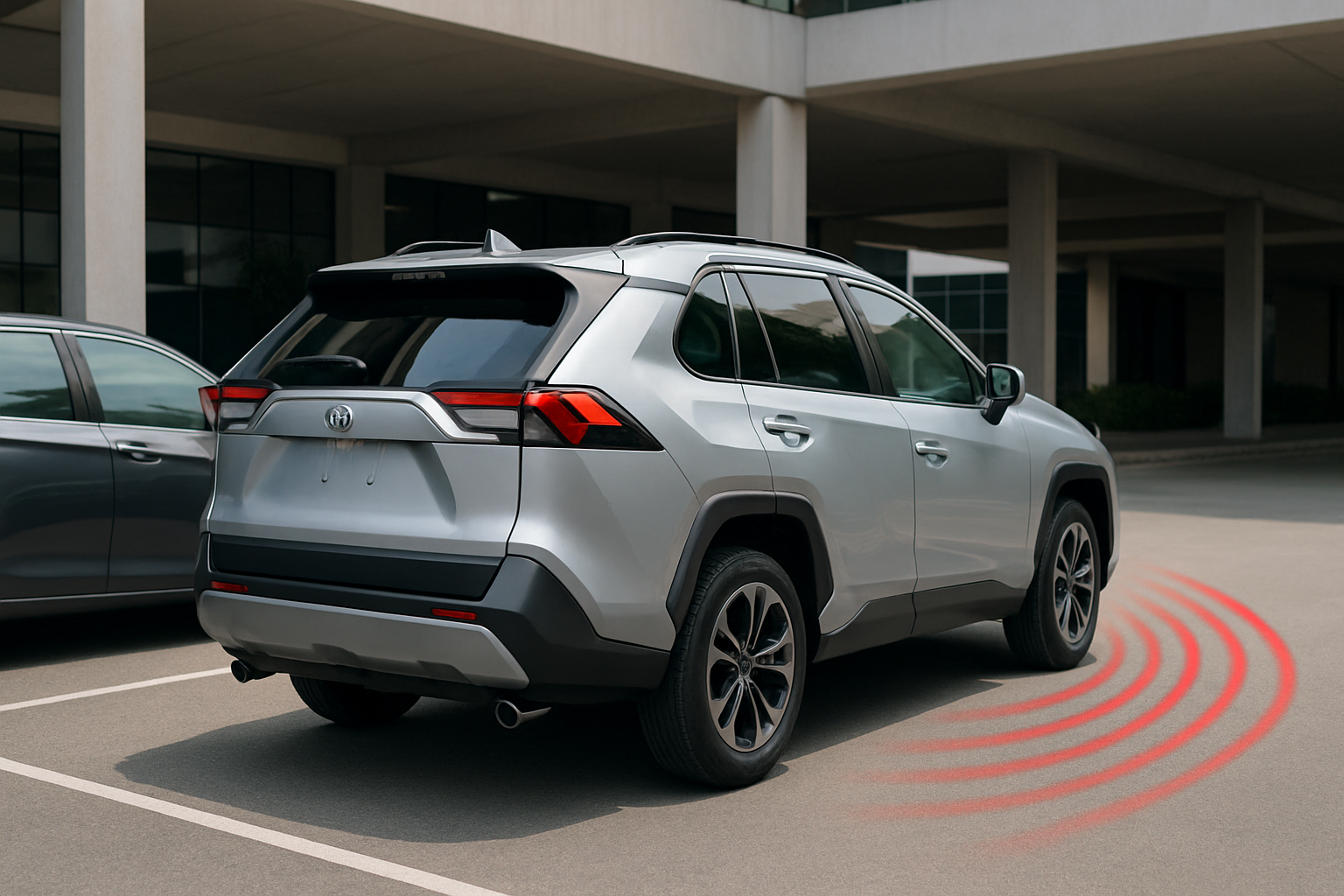
Backing out of parking spaces can be nerve-wracking, especially in busy parking lots where vehicles, pedestrians, and shopping carts seem to appear from nowhere. Toyota’s Rear Cross-Traffic Alert system acts as your extra set of eyes, monitoring blind spots and alerting you to approaching traffic when you’re reversing.
This safety feature has become standard on most Toyota RAV4 models since 2017, though some earlier trim levels offered it as part of optional packages. Understanding how to use this system properly can help you avoid costly accidents and keep everyone safer in parking situations.
What Is Rear Cross-Traffic Alert and How Does It Work?
Rear Cross-Traffic Alert (RCTA) uses radar sensors typically mounted behind the rear bumper to detect vehicles approaching from either side when you’re backing up. These sensors create a detection zone that extends roughly 60 feet in each direction and can spot vehicles traveling between 5 and 25 mph.
The system automatically activates when you shift into reverse and your vehicle speed drops below 5 mph. The radar sensors continuously scan the area behind and to the sides of your RAV4, looking for moving objects that could pose a collision risk.
When the system detects an approaching vehicle, it triggers both visual and audible warnings. You’ll see flashing indicators in your side mirrors (typically amber or red lights) and hear a series of beeps that increase in frequency as the detected vehicle gets closer.
Understanding the Alert System
The visual alerts appear as small warning lights built into the outer edges of your side mirror housings. When a vehicle approaches from the left, the left mirror indicator flashes. Same goes for the right side. These lights are bright enough to catch your attention even in direct sunlight.
The audible alerts start as intermittent beeps and become more rapid as the approaching vehicle gets closer. The beeping pattern helps you gauge both the presence of traffic and the urgency of the situation. You’ll hear these alerts through your vehicle’s speaker system, so they remain audible even with the radio on.
Some drivers find the alerts overly sensitive, especially in areas with heavy foot traffic or shopping carts. The system can sometimes trigger false alarms from objects that aren’t actually threatening, like parked cars with people getting in or out.
Rear Cross-Traffic Braking on Newer Models
RAV4 models from 2019 onward often include Rear Cross-Traffic Braking (RCTB) as part of Toyota Safety Sense 2.0. This enhanced system doesn’t just warn you about approaching traffic; it can actually apply the brakes automatically if it detects an imminent collision.
The braking intervention only occurs when the system determines a collision is likely and you haven’t responded to the initial warnings. The automatic braking applies moderate pressure to help reduce impact severity or potentially avoid the collision entirely.
You’ll know your RAV4 has this feature if you see “Rear Cross Traffic Braking” listed in your vehicle’s safety features menu on the infotainment display. The system operates independently of driver input but won’t engage if you’re actively accelerating or if it detects intentional steering inputs.
How to Activate and Use the System
Rear Cross-Traffic Alert typically comes enabled by default on equipped RAV4 models, but you can verify its status through your vehicle’s settings menu. Access the safety features section through your infotainment touchscreen, usually found under “Vehicle Settings” or “Safety Systems.”
To use the system effectively, shift into reverse and begin backing slowly. Keep your mirrors visible and listen for audio alerts while scanning the area visually. The radar sensors need a moment to initialize, so don’t rush immediately after shifting into reverse.
The system works best when your vehicle is perpendicular to traffic flow, like when backing out of a standard parking space. It’s less effective when backing straight out from angled parking spaces or when other vehicles are parked very close to your sides, as these can block the radar sensors.
When the System Might Not Work Properly
Several conditions can affect Rear Cross-Traffic Alert performance. Heavy rain, snow, or ice buildup on the rear bumper can interfere with the radar sensors. You’ll want to keep the sensor areas clean for optimal detection.
The system may also struggle in very tight parking spaces where large vehicles park close to your RAV4’s sides. The radar waves can bounce off nearby objects, creating blind spots or false readings.
Extremely slow-moving traffic (under 5 mph) might not trigger alerts, as the system is designed to detect vehicles moving at normal driving speeds. Similarly, very fast-moving vehicles (over 25 mph) may pass through the detection zone too quickly for the system to provide adequate warning.
Adjusting Sensitivity and Volume Settings
Most RAV4 models allow you to adjust the alert volume through the vehicle settings menu. Look for “Safety System Settings” or “Driver Assistance” in your infotainment system. You can typically choose between high, medium, and low volume levels.
Some model years also offer sensitivity adjustments, though this feature isn’t universal across all RAV4 trims. Higher sensitivity settings will trigger alerts for more distant objects, while lower settings only warn about immediate threats.
If you find the system too intrusive, you can disable the audible alerts while keeping the visual mirror indicators active. This provides a compromise between safety awareness and reduced distraction.
Troubleshooting Common Issues
If your Rear Cross-Traffic Alert stops working, start by checking the rear bumper area for obstructions. Mud, snow, or even thick ice can block the radar sensors, which are usually located behind plastic covers in the rear bumper corners.
Clean the sensor areas with a soft cloth and mild detergent if needed. Avoid using high-pressure washers directly on the sensor locations, as this can damage the sensitive radar components.
Persistent warning lights or system error messages may indicate a sensor malfunction or electrical issue. These problems typically require dealer diagnosis, as the radar sensors are integrated into the vehicle’s safety network and aren’t user-serviceable.
Maximizing System Effectiveness
Use Rear Cross-Traffic Alert as a supplement to, not a replacement for, visual checks. Always look over your shoulders and use your mirrors actively while backing up. The system has limitations and won’t detect every potential hazard.
Back up slowly and pause if you hear alerts. Don’t assume the approaching vehicle will stop or change course. Many drivers in parking lots aren’t paying full attention and may not see your backup lights.
Pay attention to the mirror indicators even when you have the radio turned up loud. The visual alerts can be especially helpful in noisy environments where you might miss the audible warnings.
Understanding System Limitations
Rear Cross-Traffic Alert won’t detect stationary objects, pedestrians, or very small moving objects like bicycles or shopping carts. The system is specifically calibrated for vehicle-sized radar signatures moving at driving speeds.
The detection zone extends primarily to the sides, not straight behind your vehicle. Objects approaching from directly behind may not trigger alerts until they move into the side detection zones.
Trailer towing can interfere with system operation, as the trailer may block radar signals. Many RAV4 models automatically disable Rear Cross-Traffic Alert when the system detects trailer wiring connections.
Frequently Asked Questions
Can I permanently disable Rear Cross-Traffic Alert if I find it annoying?
Yes, you can disable the system through your vehicle’s settings menu, and this setting will remain after restarting the engine. However, consider adjusting the sensitivity or volume settings first, as completely disabling the system removes a valuable safety feature. The visual alerts in your mirrors are less intrusive than the audible warnings but still provide important safety information.
Why does my system sometimes beep when no vehicles are around?
False alarms can occur due to various factors including shopping carts, people walking behind other vehicles, motorcycles, or even large trucks passing on nearby roads. The radar sensors can also pick up reflections from metallic objects or other vehicles’ radar systems. While annoying, occasional false alarms indicate the system is actively monitoring your surroundings.
Will the system work if I’m backing up on a slope or uneven surface?
The system should continue functioning on moderate slopes, but very steep inclines or uneven surfaces can affect radar coverage patterns. The sensors are calibrated for level ground, so extreme angles may create blind spots or reduced detection ranges. Exercise extra caution when backing up on steep driveways or uneven parking lots.
Do I need to replace the radar sensors during regular maintenance?
Radar sensors are designed to last the life of the vehicle under normal conditions. They don’t require regular replacement or calibration unless damaged by impact or collision. If you notice reduced performance, cleaning the sensor areas is usually sufficient. Professional diagnosis is needed only if the system displays error messages or stops working entirely.
This article contains affiliate links. If you purchase through these links, we may earn a small commission at no extra cost to you.

Leave a Reply