
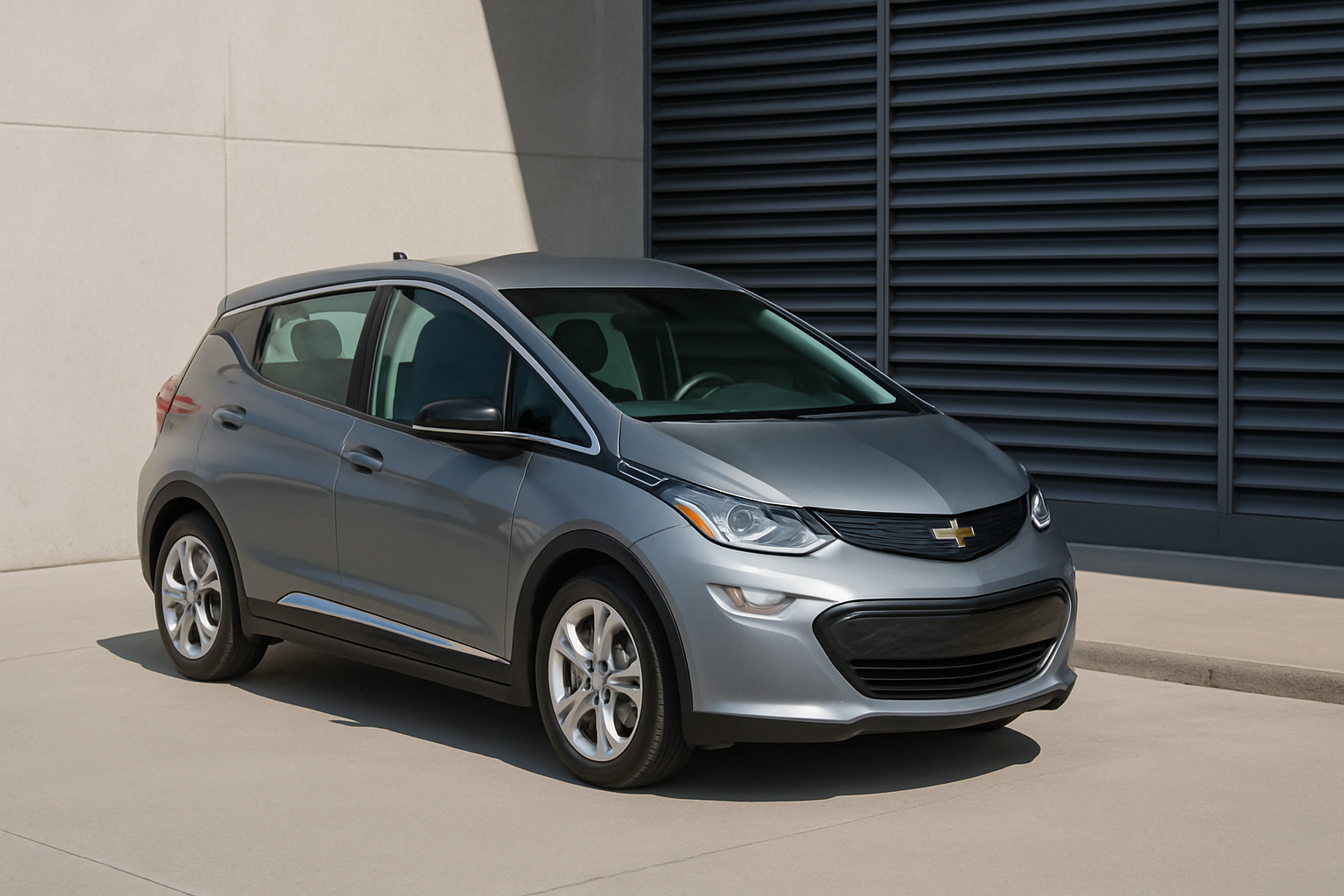
The Chevy Bolt’s one-pedal driving feature transforms how you experience electric driving, letting you accelerate and decelerate using just the accelerator pedal. This regenerative braking system captures energy while slowing down, extending your range while making city driving surprisingly smooth and intuitive.
Understanding One-Pedal Driving on the Chevy Bolt
One-pedal driving uses the electric motor’s regenerative braking to slow your Bolt when you lift off the accelerator. Instead of coasting like a traditional car, the vehicle immediately begins harvesting energy and feeding it back to the battery pack.
The system can bring your Bolt to a complete stop without touching the brake pedal in most situations. You’ll still need the traditional brakes for emergency stops or when you need more aggressive deceleration, but daily driving becomes a single-pedal experience.
The Bolt offers different levels of regenerative braking, from light coasting to aggressive one-pedal mode. You can adjust the intensity based on your driving preferences and conditions.
How to Activate One-Pedal Mode
The easiest way to enable one-pedal driving is through the drive mode selector on your center console. Press the drive mode button repeatedly until you reach “L” (Low) mode, which provides the most aggressive regenerative braking.
In L mode, lifting your foot completely off the accelerator will bring the car to a complete stop and hold it there, even on slight inclines. The system engages automatically without any additional input from you.
You can also access one-pedal driving through the infotainment system’s energy settings. Navigate to Settings, then Energy, and select “One Pedal Driving” to enable the feature in Drive mode rather than requiring L mode.
Using the Regen on Demand Paddle
The steering wheel-mounted paddle on the left side gives you instant control over regenerative braking intensity. Pull and hold the paddle while driving to increase regen force beyond the current setting.
This paddle works in any drive mode, making it perfect for approaching stop signs or managing speed on hills without switching to L mode. Release the paddle to return to your selected regen level.
Many drivers use the paddle for fine-tuning their deceleration, especially when learning to gauge stopping distances with regenerative braking.
What One-Pedal Driving Feels Like
Your first experience with one-pedal driving might feel abrupt. The moment you lift off the accelerator, you’ll feel immediate deceleration that’s much stronger than engine braking in traditional vehicles.
After a few drives, this sensation becomes natural and predictable. You’ll develop muscle memory for how much accelerator pressure maintains your speed and how quickly the car responds to pedal changes.
The transition from acceleration to deceleration happens smoothly without the jerky feeling some drivers expect. The electric motor’s instant response makes speed control more precise than conventional vehicles.
In stop-and-go traffic, one-pedal driving reduces fatigue significantly. You’ll find yourself naturally modulating speed with subtle ankle movements rather than constantly switching between pedals.
Maximizing Range with Regenerative Braking
One-pedal driving can extend your Bolt’s range by 10-15% in typical city driving conditions. The system captures kinetic energy that would otherwise be lost as heat through traditional friction brakes.
Highway driving shows less range improvement since you’re doing less braking, but city driving with frequent stops benefits enormously. Plan your deceleration early to maximize energy recovery.
Watch your energy consumption display to see real-time feedback on how much energy you’re recovering. Smooth, gradual slowdowns capture more energy than sudden stops requiring the friction brakes.
Cold weather reduces regenerative braking effectiveness as the battery’s ability to accept charge decreases. You’ll notice less aggressive regen when the battery is very cold, requiring more use of traditional brakes.
Brake Light Function and Safety
Your Bolt’s brake lights activate automatically during regenerative braking, even though you’re not touching the brake pedal. The system monitors deceleration rate and illuminates brake lights when regen force exceeds a preset threshold.
This safety feature ensures following drivers see your brake lights during one-pedal driving. The lights work exactly like traditional braking from the perspective of other drivers.
Emergency situations still require the brake pedal for maximum stopping power. One-pedal mode provides strong deceleration, but panic braking situations demand the full braking system’s capability.
The brake pedal remains fully functional in one-pedal mode. Touching the brake pedal overrides the regenerative system and engages friction brakes for situations requiring immediate, aggressive stopping.
Getting Used to One-Pedal Driving
Start practicing one-pedal driving in light traffic or empty parking lots. Focus on smooth accelerator inputs and learning how the car responds to different pedal positions.
Judging stopping distances takes practice since regenerative braking feels different from traditional brakes. Begin slowing earlier than usual until you develop a feel for the system’s capabilities.
Your right foot will adapt to more nuanced accelerator control. Instead of the binary on-off approach of traditional driving, you’ll learn to modulate pressure continuously for smooth speed control.
Some drivers experience initial discomfort with the strong deceleration sensation. Stick with it for at least a week of regular driving before deciding whether one-pedal mode suits your style.
Tips for Different Driving Conditions
In wet conditions, one-pedal driving can provide more predictable deceleration than traditional braking since there’s less risk of wheel lockup with regenerative braking.
Hill driving becomes easier with one-pedal mode since the system prevents rollback when stopped and provides consistent engine braking equivalent going downhill.
Parking lots and slow-speed maneuvering benefit enormously from one-pedal control. You can creep forward with precise speed control using tiny accelerator inputs.
Switching Between Drive Modes
You can change regen settings while driving without stopping. The drive mode button cycles through Normal, Eco, and L modes, each providing different levels of regenerative braking.
Normal mode provides the mildest regen, similar to slight engine braking. Eco mode increases regen force while L mode delivers full one-pedal driving capability.
Some drivers prefer using Normal mode for highway driving and L mode for city driving. Experiment with different modes to find what works for your typical routes and driving style.
The car remembers your last-selected drive mode when you restart, so you won’t need to reconfigure settings every time you drive.
Common One-Pedal Driving Questions
Does one-pedal driving work in reverse?
Yes, regenerative braking functions in reverse gear. Lifting off the accelerator while backing up will slow and stop the vehicle just like forward driving. This makes parking and low-speed reversing maneuvers very controllable.
Can passengers feel the difference?
Passengers often notice smoother stops with one-pedal driving once you master the technique. However, new drivers might create jerky stops until they develop proper accelerator control. Practice smooth inputs to keep passengers comfortable.
What happens if the battery is fully charged?
When your battery reaches 100% charge, regenerative braking effectiveness decreases since the battery cannot accept additional energy. The car automatically blends in friction brakes to maintain consistent pedal feel and stopping power.
Does one-pedal driving work on steep hills?
One-pedal driving handles moderate hills effectively, but very steep grades might require additional friction braking. The system provides strong downhill control but may not completely stop the vehicle on extremely steep inclines without brake pedal input.
Leave a Reply