
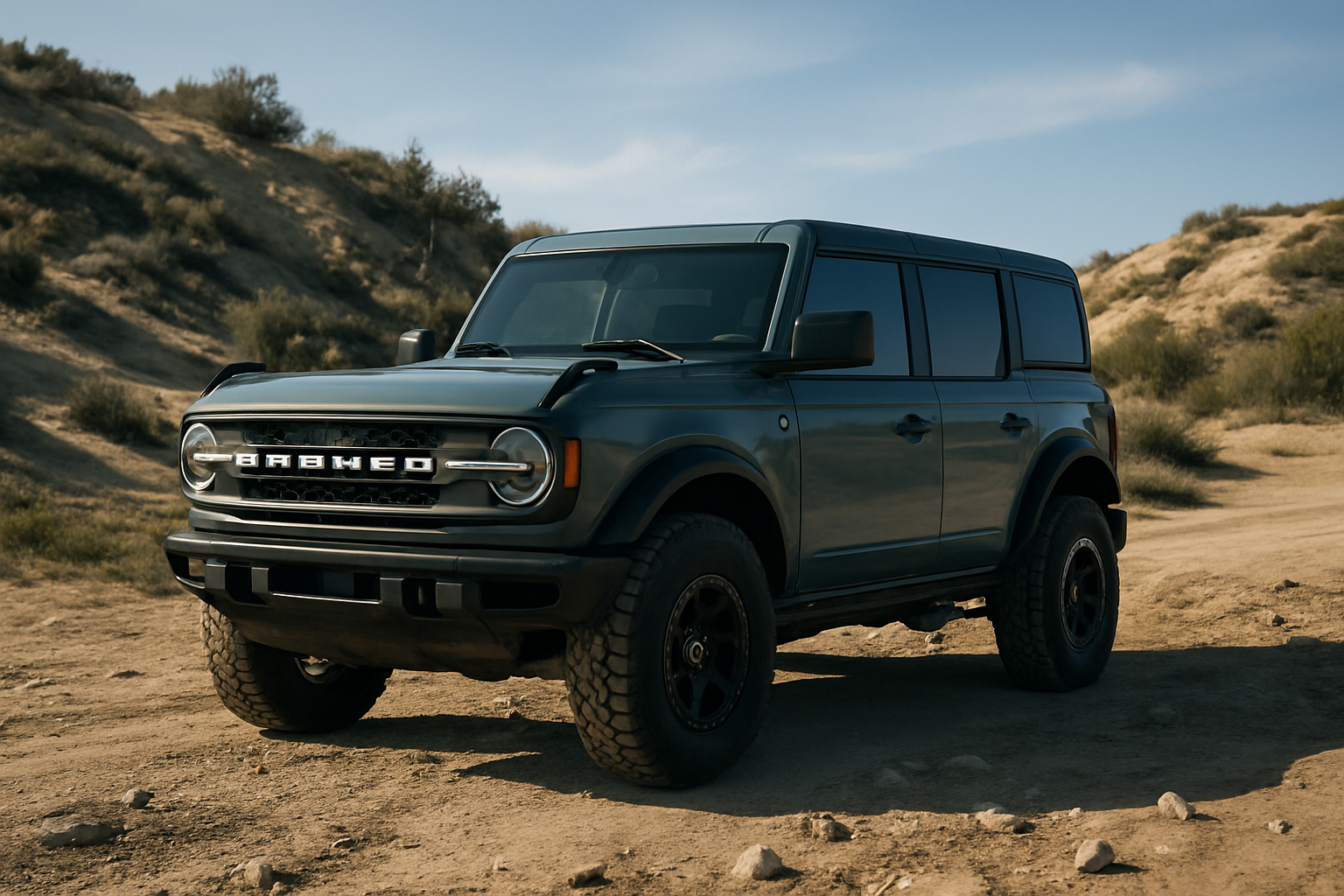
The Ford Bronco’s terrain management system, known as G.O.A.T. Modes (Goes Over Any Type of Terrain), gives you eight distinct driving modes to tackle everything from daily commuting to serious off-road adventures. Each mode automatically adjusts multiple vehicle systems to optimize performance for specific conditions, taking the guesswork out of off-road driving.
Understanding how each mode works and when to use it can dramatically improve your Bronco’s capability and your confidence behind the wheel.
Understanding the G.O.A.T. Mode System
The terrain management system controls five key vehicle functions: throttle response, transmission shift points, stability control settings, traction control, and differential locks (on equipped models). When you select a mode using the rotary dial on your center console, the Bronco’s computer automatically configures these systems for optimal performance.
The dial is located just behind your gear shifter and features clear icons for each mode. You can change modes while driving, but some settings work best when you’re stopped or moving slowly.
Your instrument cluster displays the active mode, and you’ll see additional information about differential lock status and other system changes on the center touchscreen.
Normal Mode: Daily Driving Optimized
Normal mode is your go-to setting for everyday driving on paved roads and well-maintained surfaces. The system prioritizes fuel economy, comfort, and predictable handling over maximum traction.
In Normal mode, throttle response is calibrated for smooth acceleration without being overly aggressive. The transmission uses standard shift points to balance performance with fuel efficiency. Stability control and traction control operate at full sensitivity to prevent wheel slip on dry pavement.
Differential locks remain disengaged, allowing the wheels to turn at different speeds during cornering for better handling and tire wear. This is the mode you’ll use for highway driving, city streets, and parking lots.
Eco Mode: Maximum Fuel Efficiency
Eco mode takes fuel saving to the next level by making the throttle response more conservative and adjusting transmission shift points for maximum efficiency. The system encourages earlier upshifts and keeps the engine in its most efficient RPM range.
The air conditioning system also operates more efficiently in this mode, and the engine management system prioritizes fuel economy over maximum power output. You might notice slightly slower acceleration, but you’ll see improved gas mileage during long highway trips.
Stability and traction control systems operate similarly to Normal mode since Eco is designed for paved road use. Use this mode for long highway drives when you want to maximize your range between fuel stops.
Sport Mode: Performance Focus
Sport mode transforms your Bronco’s character by sharpening throttle response and holding gears longer for more aggressive acceleration. The transmission delays upshifts to keep the engine in its power band, and downshifts happen more readily when you lift off the throttle.
Stability control becomes less intrusive, allowing for more dynamic driving while still providing a safety net. The system permits more wheel slip before intervening, which can make the vehicle feel more responsive during spirited driving on paved roads.
The steering feel may also change slightly, with some models providing more feedback through the wheel. Sport mode works well for highway merging, mountain driving, or any time you want a more engaging driving experience on pavement.
Slippery Mode: Wet and Icy Conditions
Slippery mode is designed for low-traction situations like wet pavement, light snow, or icy roads. The system makes significant changes to help you maintain control when grip is limited.
Throttle response becomes very gentle to prevent sudden wheel spin when you press the accelerator. The transmission starts in second gear rather than first to reduce torque delivery and minimize the chance of breaking traction during acceleration.
Stability control and traction control become more sensitive and intervene earlier to prevent slides or spins. The system applies brakes to individual wheels more aggressively and reduces engine power more quickly when it detects slip.
On models equipped with locking differentials, the system typically keeps them unlocked in Slippery mode to allow for better handling on paved surfaces. This mode works well for rain-slicked highways, snowy parking lots, and other low-traction situations where you’re still primarily on established roads.
Sand Mode: Loose Surface Performance
Sand mode is specifically calibrated for driving on beaches, sand dunes, and other loose, granular surfaces where you need to maintain momentum and allow some wheel slip for forward progress.
The throttle response is more aggressive than Slippery mode because maintaining speed is often crucial in sand. The transmission holds lower gears longer and allows higher RPMs to keep the engine in its power band when fighting through soft surfaces.
Stability control is significantly relaxed to allow the controlled wheel slip that’s necessary for sand driving. The system permits much more sliding and spinning before intervening, recognizing that some slip is normal and beneficial on this type of terrain.
Traction control is also less aggressive, allowing the wheels to spin enough to dig down to firmer sand underneath while still preventing excessive spinning that would dig you into a hole. The rear differential lock (if equipped) may engage automatically to help maintain forward momentum.
Mud/Ruts Mode: Deep Traction Challenges
Mud/Ruts mode handles the specific challenges of sticky, deep mud and rutted trails where you need maximum traction and the ability to power through obstacles that would stop you in other modes.
Throttle response is calibrated to provide strong, consistent power delivery without being so aggressive that it causes uncontrollable wheel spin. The system allows more aggressive throttle inputs than Sand mode while still maintaining some control over wheel speed.
The transmission holds gears longer and allows higher RPMs, similar to Sand mode, but with different shift patterns optimized for the stop-and-go nature of technical mud driving. The system is more willing to engine brake when you lift off the throttle.
Both stability control and traction control are heavily relaxed to allow the wheel spin necessary to clear mud from tire treads and find traction on solid surfaces beneath the mud. The rear differential lock typically engages automatically, and front differential lock (if equipped) may also engage to maximize traction to all wheels.
Rock Crawl Mode: Technical Terrain Mastery
Rock Crawl mode is designed for the most technical off-road situations where precise control and maximum traction are more important than speed. This mode transforms your Bronco into a serious rock climbing machine.
Throttle response becomes extremely precise and linear, allowing you to make tiny adjustments in power delivery when navigating over rocks or through tight spots. The system provides excellent low-speed control for technical maneuvering.
The transmission prioritizes low-speed torque multiplication and holds first gear much longer. On manual transmission models, the system provides hill start assist and other features to help with technical climbs and descents.
Stability control is recalibrated for off-road use, allowing significant body roll and wheel articulation while still providing protection against rollovers. Traction control works differently, focusing on transferring power to wheels with traction rather than stopping wheel spin entirely.
All available differential locks typically engage automatically in Rock Crawl mode, providing maximum traction to all four wheels. The system also activates crawl control features if equipped, which can automatically modulate throttle and brakes to maintain steady progress over obstacles.
Baja Mode: High-Speed Off-Road Performance
Baja mode is calibrated for high-speed desert running and other situations where you need maximum performance across rough terrain while maintaining higher speeds than other off-road modes allow.
Throttle response is very aggressive, providing immediate power delivery when you need to power over jumps, through whoops, or up steep grades at speed. The system prioritizes performance over fuel economy or comfort.
Transmission shift points are optimized for high-speed off-road use, holding gears longer to keep the engine in its power band during aggressive driving. The system is more willing to allow high RPMs for extended periods.
Stability control is configured to allow the body movement and wheel slip associated with high-speed off-road driving while still providing protection against dangerous situations. The system permits significant sliding and jumping while monitoring for potential rollovers.
Traction control allows substantial wheel spin, recognizing that some slip is inevitable and even beneficial when driving aggressively off-road. Differential locks may engage based on conditions, but the system prioritizes handling and steering feel over maximum traction.
How to Select and Change Modes
Changing G.O.A.T. modes is simple using the rotary dial on your center console. You can rotate the dial to any position while driving, though some modes work best when activated before you encounter challenging terrain.
When you select a new mode, you’ll see confirmation on both your instrument cluster and center touchscreen. The system takes a few seconds to reconfigure all the affected systems, during which you might notice changes in throttle feel or transmission behavior.
For modes that engage differential locks, you’ll see additional indicators on your display showing which differentials are locked. Some differential operations work best at low speeds or when stopped, so you might need to slow down for the system to fully engage.
If you’re switching from an aggressive off-road mode back to Normal or Eco, give the system a moment to readjust before judging the throttle response or transmission behavior.
Maximizing G.O.A.T. Mode Effectiveness
To get the best results from your terrain management system, select your mode before you encounter challenging conditions rather than waiting until you’re already stuck or struggling. The system works most effectively when it can prepare all the vehicle systems in advance.
Don’t be afraid to experiment with different modes to see how they affect your Bronco’s behavior. Spend time in an empty parking lot or safe off-road area testing how each mode changes throttle response, transmission behavior, and stability control intervention.
Remember that G.O.A.T. modes are tools to help you drive more effectively, not substitutes for proper technique and preparation. You still need appropriate tires, recovery gear, and driving skills for serious off-road adventures.
Pay attention to the additional information displayed on your touchscreen when different modes are active. This can help you understand what systems are engaged and how to drive most effectively in each mode.
Frequently Asked Questions
Can I change G.O.A.T. modes while driving?
Yes, you can change modes while driving, but some functions work best at low speeds. Differential locks, for example, may not fully engage until you slow down or stop. For safety, it’s better to select your mode before entering challenging terrain.
Do G.O.A.T. modes affect fuel economy?
Absolutely. Eco mode provides the best fuel economy, while Sport and Baja modes prioritize performance over efficiency. Off-road modes like Sand, Mud/Ruts, and Rock Crawl also tend to use more fuel due to their aggressive power delivery and system configurations.
What happens if I forget to switch out of an off-road mode?
Driving in Sand or Mud/Ruts mode on the highway won’t damage anything, but you’ll experience poor fuel economy, aggressive throttle response, and potentially uncomfortable transmission behavior. The system will remind you which mode is active on your display.
Do all Bronco models have the same G.O.A.T. modes?
All Bronco models have the eight basic G.O.A.T. modes, but the specific capabilities vary based on equipment. Models without locking differentials won’t have the same traction advantages in off-road modes, and manual transmission models may have slightly different behaviors in some modes.
This article contains affiliate links. If you purchase through these links, we may earn a small commission at no extra cost to you.

Leave a Reply