
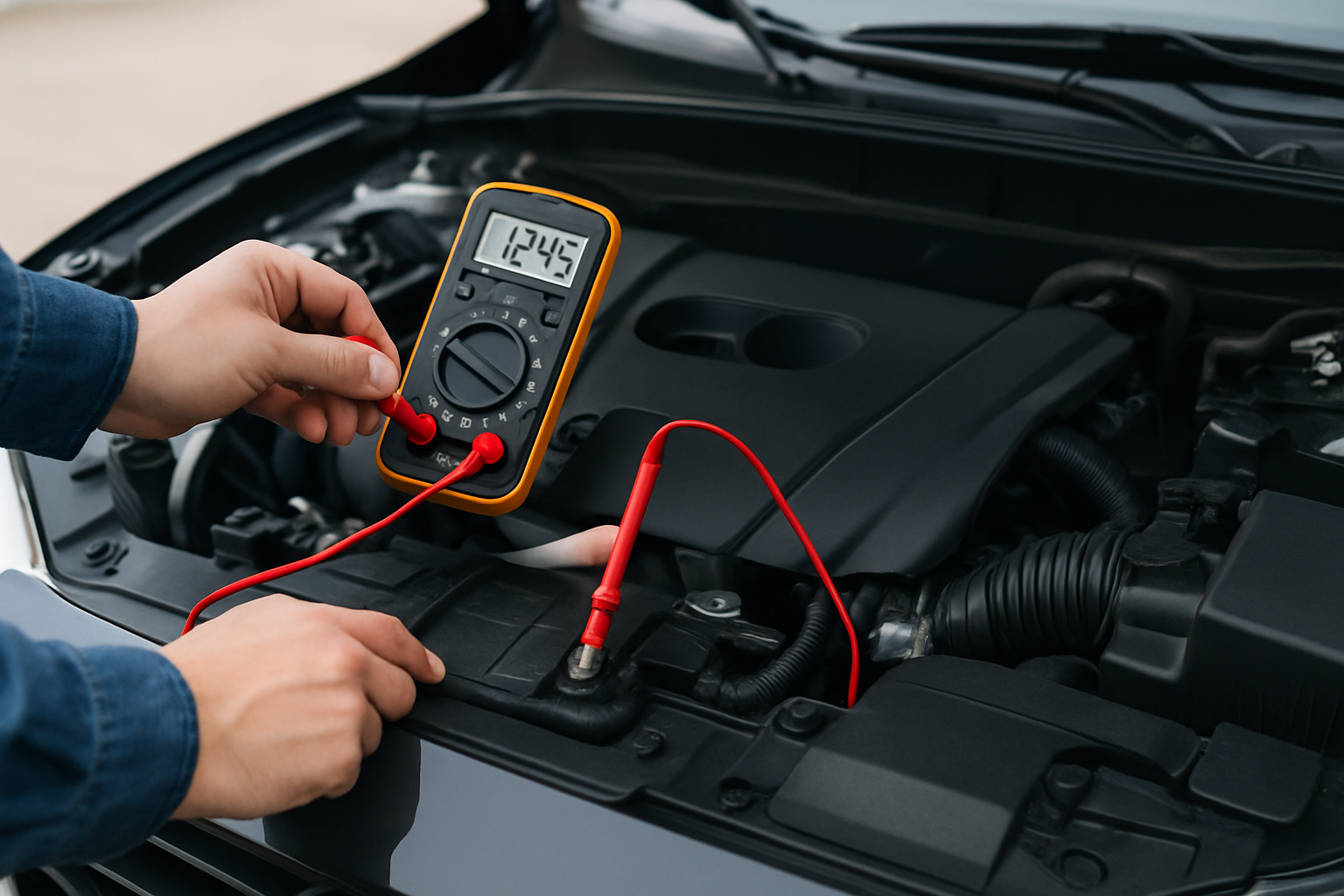
A dead car battery can leave you stranded at the worst possible moment. Learning to test your battery voltage with a digital multimeter gives you the knowledge to catch battery problems before they catch you. With just a few minutes and a basic multimeter, you can determine if your battery needs replacement or if another issue is draining your electrical system.
Understanding Car Battery Voltage Basics
Your car’s 12-volt battery operates within a specific voltage range that tells you everything about its condition. A fully charged battery at rest reads 12.6 volts or higher. When the voltage drops to 12.4 volts, your battery is at about 75% charge. Once readings fall below 12.0 volts, you’re looking at a battery that needs immediate replacement.
These voltage readings only tell the complete story when measured correctly. Temperature affects battery performance, with cold weather reducing available power. Hot weather can also impact readings, making summer testing particularly important for older batteries.
What You’ll Need for Testing
The most important tool for this job is a quality digital multimeter. You don’t need an expensive professional unit, but avoid the cheapest models that give inconsistent readings. A good automotive multimeter should read DC voltage accurately and handle the current draw testing we’ll cover later.
You’ll also want safety glasses and work gloves when working around the battery. Keep some baking soda and water nearby in case you encounter any battery acid corrosion. A wire brush or terminal cleaning tool helps if you discover dirty connections during your testing.
Performing the Rest Voltage Test
Start with your vehicle completely shut off and the keys removed from the ignition. The battery needs to rest for at least 30 minutes after driving to get an accurate reading. Recent driving or charging can give you falsely high voltage readings that don’t reflect the battery’s true condition.
Set your multimeter to the 20V DC setting. Connect the red probe to the positive terminal and the black probe to the negative terminal. Make sure you have solid contact with the metal terminals, not just touching the cable clamps.
A healthy battery shows 12.6 volts or higher. Readings between 12.4 and 12.6 volts indicate a battery with some life left but worth monitoring. Anything below 12.4 volts suggests a battery that’s either discharged or failing.
Write down your reading because you’ll compare it to the cranking voltage test results. Clean corrosion from the terminals if you see white or blue-green buildup, as this can affect both your readings and your car’s electrical performance.
Testing Voltage While Cranking
The cranking test reveals how well your battery performs under load. This test requires a helper to turn the key while you monitor the multimeter. Keep your probes firmly connected to the battery terminals throughout this test.
Have your helper turn the key to start the engine while you watch the voltage reading. A healthy battery should not drop below 9.6 volts during cranking, even in cold weather. If the voltage drops below 9.0 volts, your battery can’t deliver enough power for reliable starting.
The voltage should recover quickly once the engine starts and the alternator begins charging. You should see readings climb back above 12 volts immediately, then rise to 13.5-14.5 volts as the alternator takes over.
Pay attention to how the engine cranks during this test. Slow, labored cranking combined with low voltage readings confirms a weak battery. Fast cranking with normal voltage might indicate a starter or engine problem instead.
Voltage Drop Testing for Electrical Problems
Sometimes a battery tests fine at rest but fails under the car’s electrical load. Voltage drop testing reveals problems in your charging system or excessive electrical draw that’s killing your battery prematurely.
With the engine running, your multimeter should read between 13.5 and 14.5 volts at the battery terminals. Readings below 13.5 volts suggest alternator problems or loose belt issues. Readings above 14.5 volts can indicate a failing voltage regulator that’s overcharging your battery.
Turn on electrical accessories like headlights, air conditioning, and radio while monitoring voltage. The reading should remain stable above 13 volts. Significant voltage drops when you activate accessories point to alternator problems rather than battery issues.
Interpreting Your Test Results
Combine all your test results to get the complete picture of your battery’s health. A battery that reads 12.6 volts at rest but drops below 9.6 volts while cranking needs replacement regardless of the rest voltage.
Batteries that pass both rest and cranking tests but still leave you with starting problems might have internal damage that only shows up in extreme temperatures. Cold weather testing often reveals battery problems that don’t appear during moderate weather.
Document your test results with dates so you can track battery performance over time. Batteries typically show gradual decline rather than sudden failure, and keeping records helps you plan for replacement before you get stranded.
When Professional Testing Makes Sense
While multimeter testing gives you valuable information, professional battery testers provide additional data about internal resistance and cold cranking amps. Most auto parts stores offer free battery testing with equipment that measures these parameters.
Professional testing becomes particularly valuable for batteries that give borderline readings on your multimeter tests. These testers can determine remaining battery life more precisely than voltage testing alone.
Essential Testing Equipment
A reliable digital multimeter is crucial for accurate battery testing. Digital multimeters designed for automotive use typically include features like auto-ranging, which automatically selects the correct voltage scale, and often come with specialized probes for automotive testing.
Quality automotive multimeters include additional functions beyond basic voltage testing. Many feature diode testing for checking alternator diodes, continuity testing for tracing electrical problems, and current measurement capabilities for diagnosing parasitic draws that kill batteries overnight.
Safety Considerations During Testing
Car batteries contain sulfuric acid and can produce explosive hydrogen gas during charging or heavy discharge. Always wear safety glasses and avoid smoking or creating sparks near the battery during testing.
Remove jewelry like rings and watches before working around the battery. Metal jewelry can create dangerous short circuits if it contacts both battery terminals simultaneously. Keep your multimeter probes from touching each other or other metal parts while connected to the battery.
If you discover significant corrosion during testing, neutralize it with a baking soda and water solution before proceeding. Heavy corrosion can affect test accuracy and indicates potential acid leaks that need attention.
Troubleshooting Common Testing Issues
Inconsistent readings often result from poor probe contact with battery terminals. Clean the terminals thoroughly and ensure your probes make solid contact with clean metal surfaces rather than touching cable clamps or corrosion buildup.
Multimeter readings that fluctuate wildly might indicate internal battery damage or extremely loose connections. Check all battery cable connections and clean terminals before retesting. Persistent fluctuations usually mean battery replacement is necessary.
If your rest voltage reads normal but cranking voltage drops excessively, verify your connections remain solid during the test. Vibration from engine cranking can cause probes to lose contact, giving false low readings.
Maintaining Battery Health
Regular testing helps you catch battery problems early, but proper maintenance extends battery life significantly. Keep terminals clean and connections tight. Corrosion creates resistance that makes your charging system work harder and reduces battery life.
Avoid deep discharges whenever possible. Batteries that regularly discharge below 12.0 volts suffer permanent damage that reduces capacity and lifespan. If you don’t drive regularly, consider a battery tender to maintain proper charge levels.
Extreme temperatures stress batteries more than normal driving conditions. Park in shaded areas during summer heat when possible, and consider battery blankets or block heaters in extremely cold climates.
Frequently Asked Questions
How often should I test my car battery?
Test your battery every three months during normal weather and monthly during extreme hot or cold periods. Batteries over three years old benefit from more frequent testing, as failure rates increase significantly after this point.
Can I test the battery without disconnecting the cables?
Yes, you can test voltage with cables connected for basic testing. However, disconnect the negative cable for more accurate rest voltage readings and to eliminate any parasitic draw from vehicle electronics that might affect your measurements.
Why does my battery test good but still won’t start the car?
A battery can show proper voltage but lack sufficient current capacity due to internal damage. Professional load testing reveals current delivery problems that voltage testing alone can’t detect. Starter motor problems can also cause starting issues with a good battery.
Should I replace a battery that tests at 12.4 volts?
A 12.4-volt reading indicates about 75% charge, which is acceptable for most situations. However, if the battery won’t hold a charge above 12.4 volts after proper charging, replacement is necessary. Consider the battery’s age and cold weather performance when making this decision.
This article contains affiliate links. If you purchase through these links, we may earn a small commission at no extra cost to you.




Leave a Reply