
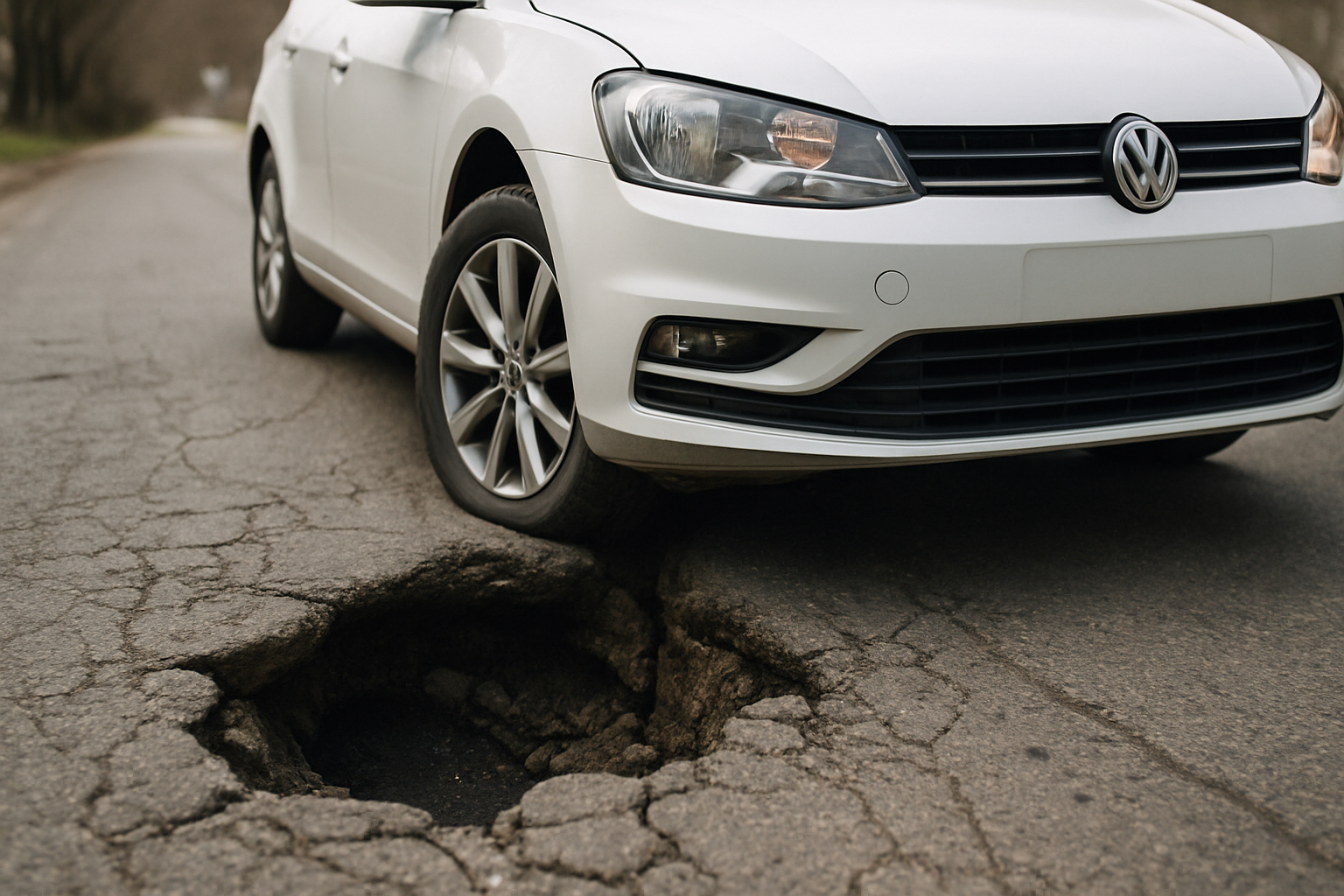
Hitting a deep pothole is one of those heart-sinking moments that every driver dreads. You hear that awful thud, feel the jolt through your steering wheel, and immediately wonder if you just caused hundreds or thousands of dollars in damage to your car.
The good news is that most pothole strikes don’t cause serious damage, but you need to know what to look for and what steps to take right away. Acting quickly can help you spot problems before they get worse and potentially save you money on repairs.
Pull Over Safely and Assess the Situation
Your first priority after hitting a significant pothole is getting to a safe location where you can properly inspect your vehicle. Don’t slam on the brakes or make sudden steering movements right after impact, as your car might be handling differently.
Find a well-lit parking lot or pull onto a wide shoulder away from traffic. Turn on your hazard lights and give yourself enough space to walk around the entire vehicle. You’ll want good visibility to spot any obvious damage.
Take a moment to notice how the car felt immediately after the impact. Did the steering wheel start pulling to one side? Do you hear any new noises like grinding, scraping, or rhythmic thumping? These initial observations will help guide your inspection.
Check Your Tires First
Tires take the brunt of pothole damage, so they should be your first inspection priority. Walk around your car and visually examine each tire, paying special attention to the one that hit the pothole hardest.
Look for Sidewall Bulges
Sidewall bulges are the most dangerous type of tire damage from potholes. These appear as bubbles or bumps protruding from the side of the tire and indicate that the internal structure has been compromised. A bulging sidewall can blow out suddenly, potentially causing you to lose control of your vehicle.
Run your hand gently along the sidewall of each tire, feeling for any irregularities. Even small bulges that aren’t immediately visible can be felt with your fingers. If you find any bulges, don’t drive on that tire. Call for roadside assistance or have the vehicle towed.
Inspect the Tread Area
Check the tread surface for cuts, gouges, or chunks of missing rubber. Small cuts usually aren’t immediately dangerous, but deep gouges that expose the underlying cords or belts mean the tire needs immediate replacement.
Look for any nails, screws, or debris that might have been picked up during the pothole encounter. Sometimes the impact can drive road debris into the tire that wasn’t there before.
Examine Your Wheels and Rims
Wheel damage from potholes is extremely common, especially with low-profile tires that offer less cushioning. Bent or cracked wheels can cause vibrations, air leaks, and handling problems.
Look closely at the rim where it meets the tire. Check for dents, bends, or cracks in the metal. Pay particular attention to the lip of the rim, as this area often gets damaged first when hitting potholes.
Spin each wheel slowly if possible and watch for any wobbling or irregular movement. A wheel that doesn’t spin true has likely been bent and will need professional repair or replacement.
Test Drive Carefully
If your initial inspection doesn’t reveal any obvious tire or wheel damage, take a short, slow test drive in a safe area like an empty parking lot. This will help you identify problems that aren’t visible during a static inspection.
Check for Alignment Issues
Drive straight at low speed and gently let go of the steering wheel for a moment. If the car immediately pulls to one side, your alignment has likely been knocked out of adjustment. This is one of the most common effects of hitting potholes hard.
Pay attention to how the steering wheel sits when driving straight. If it’s crooked or off-center compared to normal, your alignment definitely needs attention.
Listen for New Noises
Roll down your windows and listen carefully for any sounds that weren’t there before the pothole encounter. Grinding noises might indicate brake damage, while clicking or popping sounds during turns could suggest CV joint problems.
Rhythmic thumping that increases with speed usually points to tire or wheel damage. Squealing noises might indicate belt or suspension component damage.
What to Do If You Find Damage
If your inspection reveals any significant damage, particularly sidewall bulges or severely bent wheels, don’t attempt to drive the vehicle any distance. These conditions can lead to sudden tire failure or loss of control.
Call your roadside assistance service or arrange for towing to a reputable tire shop or auto repair facility. Trying to save money by driving on damaged tires isn’t worth the safety risk.
Take photos of any damage you discover, including close-ups of tire damage and shots showing the overall condition of the wheel. These photos will be valuable if you decide to file a claim with your city or insurance company.
Hidden Damage to Watch For
Some pothole damage isn’t immediately obvious but can cause problems over time. Even if everything looks fine during your initial inspection, keep an eye out for developing issues over the next few days and weeks.
Suspension Components
Shock absorbers, struts, and springs can be damaged by severe pothole impacts. You might notice increased bouncing over bumps, a rougher ride quality, or the vehicle sitting lower on one side.
Ball joints and tie rod ends are also vulnerable to pothole damage. These components are critical for steering and handling, so any looseness or play should be addressed immediately by a professional.
Exhaust System Damage
Low-hanging exhaust components sometimes get damaged when the car bottoms out in deep potholes. Listen for changes in exhaust noise or rattling sounds from underneath the vehicle.
A damaged exhaust system can affect performance and allow dangerous fumes to enter the cabin, so have any suspected exhaust damage inspected promptly.
Filing a Claim with Your City
Many drivers don’t realize they can potentially recover repair costs from their local government if the pothole was on a city street or county road. The process varies by location, but it’s often worth pursuing for significant damage.
Document the exact location of the pothole, including street names and nearby landmarks. Take photos of the pothole itself if you can safely return to the location. Measure the depth and width if possible, as many jurisdictions have minimum size requirements for liability.
Contact your city or county’s risk management department to inquire about their pothole damage claim process. You’ll typically need to provide repair estimates, photos of the damage, and documentation of the incident location and time.
Keep in mind that government entities often have immunity from certain types of claims, and the process can take months. Don’t delay necessary safety repairs while waiting for a potential reimbursement.
Insurance Considerations
Most comprehensive auto insurance policies cover pothole damage, but you’ll need to pay your deductible and the claim might affect your rates. Compare the total repair cost to your deductible to determine if filing a claim makes financial sense.
Some insurance companies have specific procedures for pothole damage claims, so contact your agent or company directly to understand your coverage and requirements.
Document everything thoroughly, including photos of the damage, repair estimates, and records of where and when the incident occurred. This documentation will be valuable regardless of whether you pursue an insurance claim or city reimbursement.
Preventing Future Pothole Damage
While you can’t avoid every pothole, some driving techniques can minimize damage when you do encounter them. Reduce your speed in areas known for poor road conditions, especially during spring months when freeze-thaw cycles create the most potholes.
Maintain proper tire pressure, as under-inflated tires are more susceptible to pothole damage. Check your tire pressure monthly and keep it at the manufacturer’s recommended levels found on the door jamb sticker.
Avoid puddles when possible, as they often hide the true depth of potholes. Water can make a shallow-looking pothole much deeper and more damaging than it appears.
When to Seek Professional Help
Don’t hesitate to have your vehicle professionally inspected if you’re unsure about potential damage. Many tire shops and auto repair facilities will perform a basic safety inspection for a reasonable fee.
This is particularly important if you hit the pothole hard enough to feel a significant impact or if you notice any changes in how the vehicle drives, even subtle ones. Professional technicians have the tools and experience to spot damage that might not be obvious to the average driver.
Remember that addressing pothole damage promptly is usually less expensive than waiting for problems to worsen. A slightly bent wheel might be repairable now but could require complete replacement if you continue driving on it.
Frequently Asked Questions
How do I know if my wheel is bent after hitting a pothole?
The most common signs of a bent wheel include vibration in the steering wheel or seat, especially at highway speeds, and visible wobbling when the wheel spins. You might also notice the car pulling to one side or difficulty balancing the wheel during tire service. Have any suspected wheel damage inspected professionally, as bent wheels can cause uneven tire wear and handling problems.
Can I drive on a tire with a small sidewall bulge?
No, you should not drive on a tire with any sidewall bulge, regardless of size. Sidewall bulges indicate internal structural damage that can lead to sudden tire failure. Even a small bulge can grow larger or cause a blowout without warning. Replace the tire immediately or have the vehicle towed to avoid a potentially dangerous situation.
Will my city actually pay for pothole damage to my car?
It depends on your local government’s policies and the specific circumstances. Many cities and counties do have processes for handling pothole damage claims, but they often require proof that the pothole exceeded certain size thresholds and that the government had prior notice of the hazard. Success rates vary widely, but it’s usually worth filing a claim for significant damage. Contact your local risk management department for specific procedures and requirements.
Should I file an insurance claim for pothole damage?
Whether to file an insurance claim depends on the total repair cost compared to your deductible and your comfort level with potentially higher premiums. If the damage is only slightly more than your deductible, you might choose to pay out of pocket. For major damage involving multiple tires, wheels, or suspension components, insurance coverage usually makes financial sense. Contact your insurance company to understand how a pothole claim might affect your rates.

Leave a Reply