

You turn on your air conditioning on a hot summer day, and suddenly your car starts shaking and running rough at idle. The moment you turn the AC off, everything smooths out again. This frustrating problem affects countless drivers and usually points to your engine struggling under the additional load that your AC compressor creates.
Understanding why this happens can save you hundreds of dollars in unnecessary repairs and help you target the real culprit behind your rough idle issues.
How Your AC System Affects Engine Performance
Your air conditioning compressor is essentially a large pump that requires significant power to operate. When you flip that AC switch, your engine’s computer commands the compressor clutch to engage, instantly adding 5-15 horsepower of load to your engine.
A healthy engine compensates for this extra load by increasing idle speed and adjusting fuel delivery. Most modern cars bump their idle from around 650-700 RPM up to 750-850 RPM when the AC kicks on. You might notice this as a slight rev when the compressor engages.
When your engine can’t properly compensate for this added load, you get that rough, shaky idle that makes you want to turn off the AC immediately. The compressor is doing its job, but underlying issues prevent your engine from adapting smoothly.
The Most Common Culprits Behind AC-Related Rough Idle
Dirty or Faulty Idle Air Control Valve
Your idle air control valve (IAC) manages airflow when your foot isn’t on the gas pedal. Over time, carbon buildup clogs this valve, preventing it from opening enough to maintain smooth idle under AC load.
You’ll find the IAC valve typically mounted on or near your throttle body. It looks like a small motor with an electrical connector and usually has two vacuum lines or air passages. When it’s working correctly, you can sometimes hear it making subtle adjustments as a quiet clicking sound.
Cleaning the IAC valve often resolves rough idle issues. Remove it carefully, spray it with throttle body cleaner, and use a soft brush to remove carbon deposits from the pintle and seat.
Carbon-Clogged Throttle Body
Your throttle body controls airflow into the engine, and carbon buildup around the throttle plate creates turbulence and restricts airflow. This becomes especially problematic when your engine needs that extra air to compensate for AC load.
A dirty throttle body often causes rough idle that gets worse under load. You might also notice poor acceleration or hesitation when you first press the gas pedal.
Cleaning involves removing the air intake tube and spraying throttle body cleaner directly onto the throttle plate and bore. Wipe away the loosened carbon with a clean rag, being careful not to force the throttle plate open too aggressively.
Weak or Failing Engine Mounts
Engine mounts absorb vibrations and keep your engine properly positioned. When they weaken or fail, normal engine vibrations become much more noticeable in the cabin. The additional vibration from AC compressor operation amplifies this problem dramatically.
Bad engine mounts often cause excessive shaking that you can feel through the steering wheel, seat, or dashboard. The vibration typically worsens when you put the car in gear while stopped at a traffic light.
Inspect engine mounts by having someone rev the engine slightly while you watch for excessive movement. Cracked rubber or separated metal indicates a mount that needs replacement.
Vacuum Leaks
Small vacuum leaks affect your engine’s ability to maintain proper air-fuel mixture at idle. When the AC compressor adds load, these leaks become more problematic because your engine can’t draw the additional air it needs through the proper channels.
Common vacuum leak sources include cracked hoses, loose connections at the intake manifold, or a faulty brake booster. You might hear a subtle hissing sound with the hood open, especially when someone revs the engine slightly.
Check vacuum lines systematically, looking for cracks, splits, or connections that have worked loose. Pay special attention to any vacuum lines that connect to your AC system or idle control components.
Less Common But Serious Causes
Failing AC Compressor Clutch
Sometimes the problem isn’t your engine’s inability to handle the load, but rather an AC compressor clutch that’s binding or failing internally. A clutch that doesn’t engage smoothly creates uneven load spikes that cause rough running.
You can diagnose this by watching the compressor pulley when someone turns the AC on and off. The clutch should engage with a solid “click” and the center portion should start spinning immediately. Any hesitation, grinding, or multiple clicking sounds indicates clutch problems.
A failing compressor itself can also create excessive load. If your compressor is making noise or your AC isn’t cooling well, internal damage might be causing the rough idle symptoms.
Fuel System Issues
Weak fuel pumps or clogged fuel injectors sometimes only become apparent under load. Your engine might run fine normally but struggle when the AC compressor demands additional power.
These issues often accompany other symptoms like poor acceleration, engine hesitation, or reduced fuel economy. A fuel pressure test can determine if your pump is delivering adequate pressure under load conditions.
Clogged injectors create uneven fuel delivery that becomes more noticeable when your engine is working harder. Professional cleaning or injector replacement typically resolves these issues.
Diagnostic Steps You Can Take
Start by observing exactly when the rough idle occurs. Turn your AC on and off repeatedly while parked, noting whether the problem happens immediately when the compressor engages or builds up gradually.
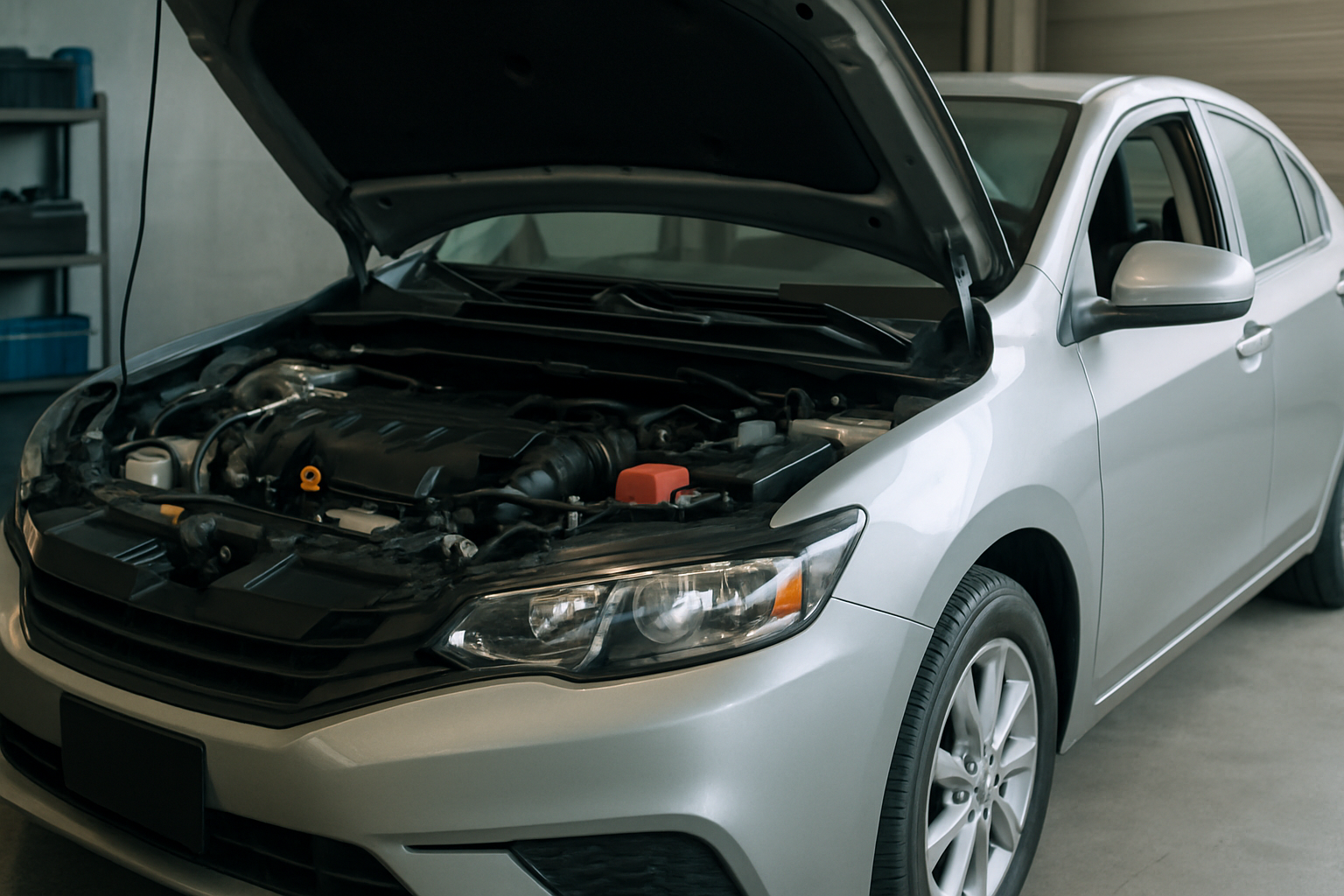
Pop the hood and visually inspect all vacuum lines and electrical connections around the throttle body and intake manifold. Look for obvious cracks, loose connections, or oil contamination that might indicate problems.
Check your air filter condition. A severely clogged filter restricts airflow and makes it harder for your engine to breathe under AC load. Replace it if it’s dirty or hasn’t been changed in over 12,000 miles.
Listen carefully to your engine with the AC on and off. Irregular firing, misfiring, or unusual noises can help pinpoint the source of your problems.
When to Seek Professional Help
If cleaning your throttle body and IAC valve doesn’t resolve the issue, more complex diagnostics become necessary. Modern engines rely on dozens of sensors and computer-controlled systems that require professional scan tools to diagnose properly.
Problems with your mass airflow sensor, oxygen sensors, or engine computer programming can all cause rough idle under AC load. These issues typically require diagnostic equipment beyond what most DIY mechanics own.
Compression problems or internal engine wear also cause rough idle symptoms that worsen under load. A professional compression test or leak-down test can identify these more serious issues.
Prevention and Maintenance Tips
Regular maintenance prevents most AC-related rough idle problems. Clean your throttle body every 30,000 miles or whenever you notice idle quality degrading.
Replace your air filter regularly and use quality fuel with occasional fuel system cleaner to prevent carbon buildup in critical components.
Have your AC system serviced annually to ensure your compressor isn’t working harder than necessary due to low refrigerant or other issues. A well-maintained AC system places less strain on your engine.
Address small vacuum leaks and engine mount issues promptly before they worsen and cause more noticeable problems.
Cost Expectations for Common Fixes
Throttle body and IAC valve cleaning typically costs $150-300 at a shop, or about $15 in cleaner if you do it yourself. Most car owners can handle this maintenance with basic tools.
Engine mount replacement ranges from $200-600 depending on which mount fails and your vehicle’s design. Some mounts are easily accessible while others require significant disassembly.
AC compressor clutch replacement usually runs $300-800, while a complete compressor replacement can cost $800-1500 including refrigerant and labor.
Fuel system cleaning or injector replacement varies widely based on your engine design, ranging from $200 for professional cleaning to over $1000 for injector replacement on some vehicles.
Frequently Asked Questions
Can I damage my engine by running the AC when it causes rough idle?
Occasional rough idle when using AC won’t cause immediate engine damage, but prolonged operation under these conditions can accelerate wear on engine mounts and other components. Address the underlying cause promptly rather than simply avoiding your AC.
Why does the rough idle sometimes go away after driving for a while?
Carbon deposits and sticky IAC valves often improve temporarily as your engine reaches full operating temperature and higher RPMs help clear minor obstructions. This temporary improvement doesn’t mean the problem is resolved.
Should I use fuel additives to fix rough idle issues?
Quality fuel system cleaners can help remove minor carbon deposits from injectors and intake components, but they won’t fix major problems like failed engine mounts or severely clogged throttle bodies. Use them as preventive maintenance rather than primary repairs.
Is it normal for idle speed to increase when AC turns on?
Yes, most vehicles increase idle speed by 100-200 RPM when the AC compressor engages. This is normal compensation for the additional load. The problem occurs when this compensation isn’t smooth or adequate to prevent rough running.
This article contains affiliate links. If you purchase through these links, we may earn a small commission at no extra cost to you.


Leave a Reply