
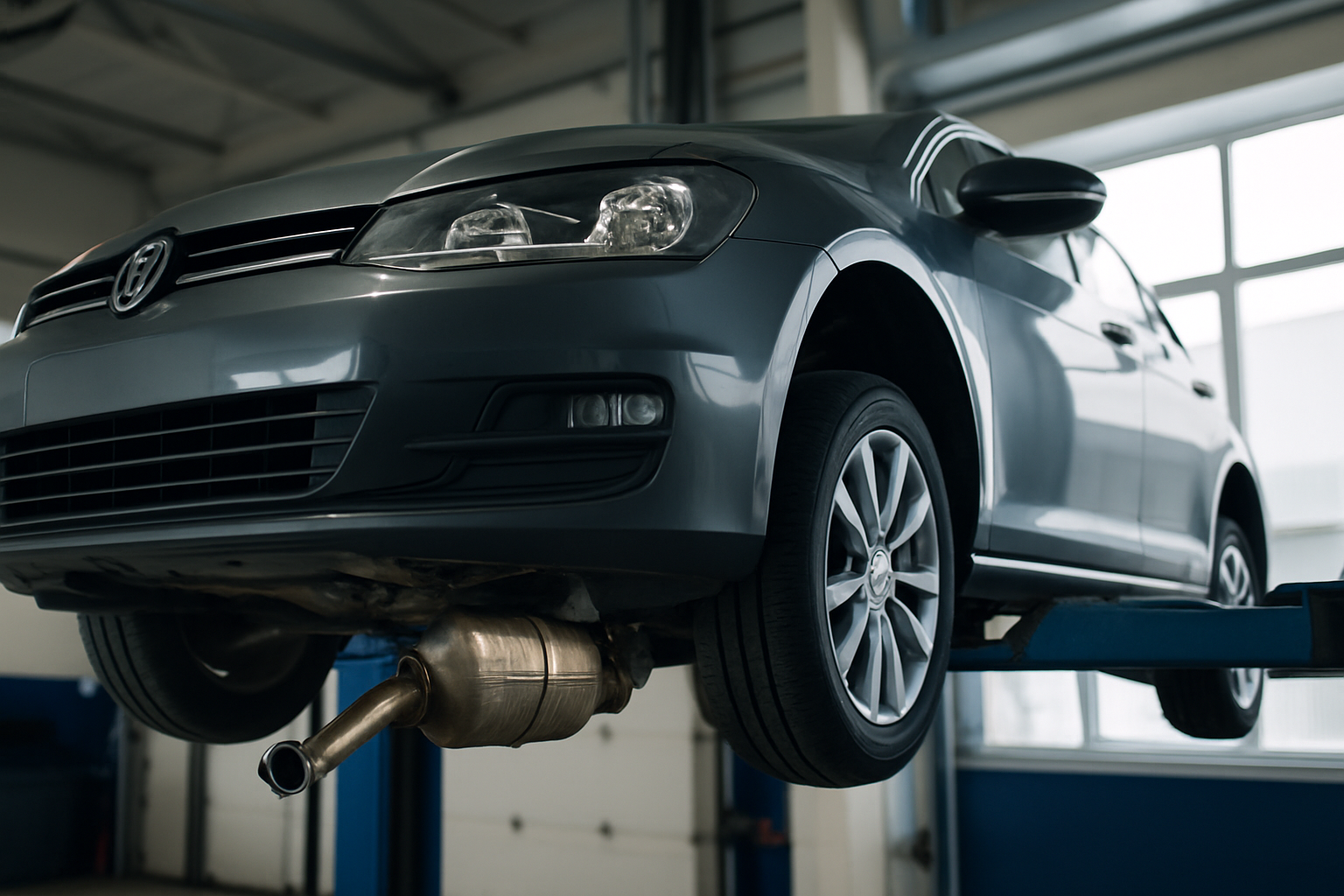
Your check engine light just came on, and the dreaded P0420 code is staring back at you from the scan tool. Before you panic about replacing your catalytic converter for $1,500 or more, you need to understand what this code actually means and explore the much cheaper fixes that might solve your problem.
The P0420 diagnostic trouble code doesn’t automatically mean your catalytic converter is dead. In many cases, you can fix this issue for under $100 instead of spending over a thousand dollars on a new cat.
What Does the P0420 Code Actually Mean?
The P0420 code indicates “Catalyst System Efficiency Below Threshold (Bank 1).” Your car’s computer monitors the catalytic converter’s performance by comparing readings from the upstream oxygen sensor (before the cat) and the downstream oxygen sensor (after the cat).
When your catalytic converter is working properly, the downstream O2 sensor should show relatively stable readings compared to the constantly fluctuating upstream sensor. If both sensors start showing similar fluctuating patterns, your car’s computer thinks the catalytic converter isn’t doing its job.
But here’s the key point: the computer can only measure what the sensors tell it. If one of those sensors is faulty, you’ll get a P0420 code even if your catalytic converter is perfectly fine.
The Real Culprits Behind P0420 Codes
Before you assume you need a new catalytic converter, consider these more common causes of P0420 codes:
Faulty Downstream Oxygen Sensor
The downstream O2 sensor (also called the post-cat sensor) is the most frequent cause of P0420 codes. These sensors typically cost between $40-80 and take about 30 minutes to replace on most vehicles.
When this sensor starts failing, it sends erratic signals to your car’s computer, making it think the catalytic converter isn’t working. Replacing this sensor often clears the P0420 code permanently.
Upstream Oxygen Sensor Issues
The upstream O2 sensor can also cause P0420 codes, though it’s less common than downstream sensor failure. A failing upstream sensor might not provide accurate readings for the computer to properly evaluate catalytic converter performance.
If your upstream sensor is sending bad data, your engine might not run at the optimal air-fuel ratio, which can eventually damage your catalytic converter if left unfixed.
Exhaust Leaks
Small exhaust leaks between the upstream and downstream oxygen sensors can allow outside air to enter the exhaust system. This extra air affects the downstream sensor readings and triggers a P0420 code.
Check for exhaust leaks by listening for hissing sounds or having someone rev the engine while you listen around the exhaust manifold, cat, and connecting pipes. Even a small crack in an exhaust pipe can cause this code.
Engine Performance Problems
Issues like misfiring spark plugs, dirty fuel injectors, or a clogged air filter can cause your engine to run rich or lean. These conditions force your catalytic converter to work harder than normal, potentially causing it to fail prematurely or trigger efficiency codes.
Always address any other diagnostic trouble codes before focusing on the P0420. Fixing underlying engine problems might resolve your catalytic converter code as well.
How to Diagnose P0420 the Smart Way
Start with the cheapest potential fix first. Replace the downstream oxygen sensor before considering catalytic converter replacement. This sensor costs $50-80 compared to $300-1,500 for a catalytic converter.
You can also use a scan tool with live data capabilities to monitor your oxygen sensor readings. Compare the upstream and downstream sensor voltage patterns while the engine is warmed up and running.
If both sensors show nearly identical rapid fluctuations (switching between roughly 0.1V and 0.9V), your catalytic converter likely has failed. If the downstream sensor shows erratic or stuck readings while the upstream sensor fluctuates normally, replace the downstream sensor first.
When You Actually Need a New Catalytic Converter
Sometimes the catalytic converter really is the problem. Internal catalyst material can break down over time, especially if your engine has been running rich, burning oil, or misfiring for extended periods.
Physical damage from road debris, overheating from engine problems, or contamination from coolant or oil leaks can also destroy catalytic converters. If you’ve ruled out sensor and exhaust leak issues, and your live data confirms both O2 sensors are working but showing identical patterns, you likely need a new cat.
High-mileage vehicles (over 100,000 miles) are more prone to actual catalytic converter failure, but don’t assume mileage alone means you need replacement.
Aftermarket vs OEM Catalytic Converters
If you do need a new catalytic converter, you’ll face the choice between aftermarket and OEM parts. Each option has distinct advantages and drawbacks.
Aftermarket Catalytic Converters
Aftermarket cats typically cost $200-600 depending on your vehicle. They’re EPA-approved and legal to install, but some cheaper options might not last as long as OEM parts.
Quality varies significantly among aftermarket brands. Stick with reputable manufacturers like Walker, Bosal, or Eastern Catalytic for better reliability. Avoid the cheapest options, as they might trigger P0420 codes again within a year or two.
OEM Catalytic Converters
Original equipment catalytic converters cost $800-2,000 or more but typically last longer than aftermarket alternatives. They’re designed specifically for your vehicle and usually provide the best long-term reliability.
For newer vehicles still under warranty, you might want to stick with OEM parts to avoid any potential warranty issues. For older, high-mileage vehicles, a quality aftermarket cat often makes more financial sense.
DIY Replacement Tips
Replacing oxygen sensors is usually straightforward for DIY mechanics. You’ll need an oxygen sensor socket (available at any auto parts store) and basic hand tools. The sensors typically screw into the exhaust pipe or catalytic converter housing.
Always replace sensors with the engine cold, and apply anti-seize compound to the threads of the new sensor. Torque specifications usually range from 30-50 ft-lbs, but check your service manual for exact values.
Catalytic converter replacement is more involved, requiring the vehicle to be lifted and potentially cutting exhaust pipes. If you’re not comfortable working under a car or don’t have proper tools, leave this job to a professional.
Cost Breakdown: Sensors vs Catalytic Converter
Here’s what you can expect to pay for different repair scenarios:
Downstream O2 sensor replacement: $50-80 for the part, $100-150 labor if you pay a shop. Total: $150-230.
Both O2 sensors: $100-160 for parts, $150-250 labor. Total: $250-410.
Aftermarket catalytic converter: $200-600 for the part, $200-400 labor. Total: $400-1,000.
OEM catalytic converter: $800-2,000 for the part, $200-400 labor. Total: $1,000-2,400.
These numbers make it clear why you should try the oxygen sensor replacement first. Even if it doesn’t fix the problem, you’re only out $50-80 and you’ll have new sensors for when you do replace the catalytic converter.
Prevention and Maintenance
You can extend your catalytic converter’s life by maintaining your engine properly. Change your oil regularly, replace air filters when dirty, and fix any misfiring or running issues promptly.
Using top-tier gasoline with detergent additives helps keep your fuel system clean, which reduces the load on your catalytic converter. Avoid fuel additives that claim to clean or restore catalytic converters, as most provide little benefit and some can cause damage.
If your engine starts running rough, burning oil, or showing other performance problems, address these issues quickly. A misfiring engine can destroy a catalytic converter in just a few hundred miles.
State Emissions Considerations
If you live in a state with emissions testing, you’ll need to fix P0420 codes to pass inspection. Most testing stations won’t pass a vehicle with any stored diagnostic trouble codes, even if the check engine light isn’t currently on.
Some states have stricter requirements for catalytic converter replacements. California, for example, requires CARB-approved aftermarket catalytic converters, which typically cost more than standard EPA-approved units.
Check your local regulations before purchasing parts, especially if you’re buying online from out-of-state suppliers.
Frequently Asked Questions
Can I drive with a P0420 code?
You can drive with a P0420 code in most cases, but your vehicle will fail emissions testing and might have slightly reduced fuel economy. The code itself rarely indicates an immediate safety concern, but you should address it promptly to avoid potential catalytic converter damage if the underlying cause is an engine performance problem.
Will disconnecting the battery clear a P0420 code permanently?
Disconnecting the battery will temporarily clear the code, but it will return if the underlying problem isn’t fixed. Your car’s computer needs to complete several drive cycles before determining if the repair was successful, so don’t expect immediate results even after making proper repairs.
How long do catalytic converters typically last?
Most catalytic converters last 80,000-120,000 miles under normal driving conditions. However, engine problems like misfiring, oil burning, or running rich can significantly reduce this lifespan. Proper engine maintenance is the best way to maximize catalytic converter life.
Are there any temporary fixes for P0420 codes?
While some products claim to clean or restore catalytic converter function, most provide little lasting benefit. Your best bet is proper diagnosis and repair of the actual problem. Temporary fixes might clear the code for a few weeks, but they won’t address the root cause and the code will likely return.
This article contains affiliate links. If you purchase through these links, we may earn a small commission at no extra cost to you.
Leave a Reply