
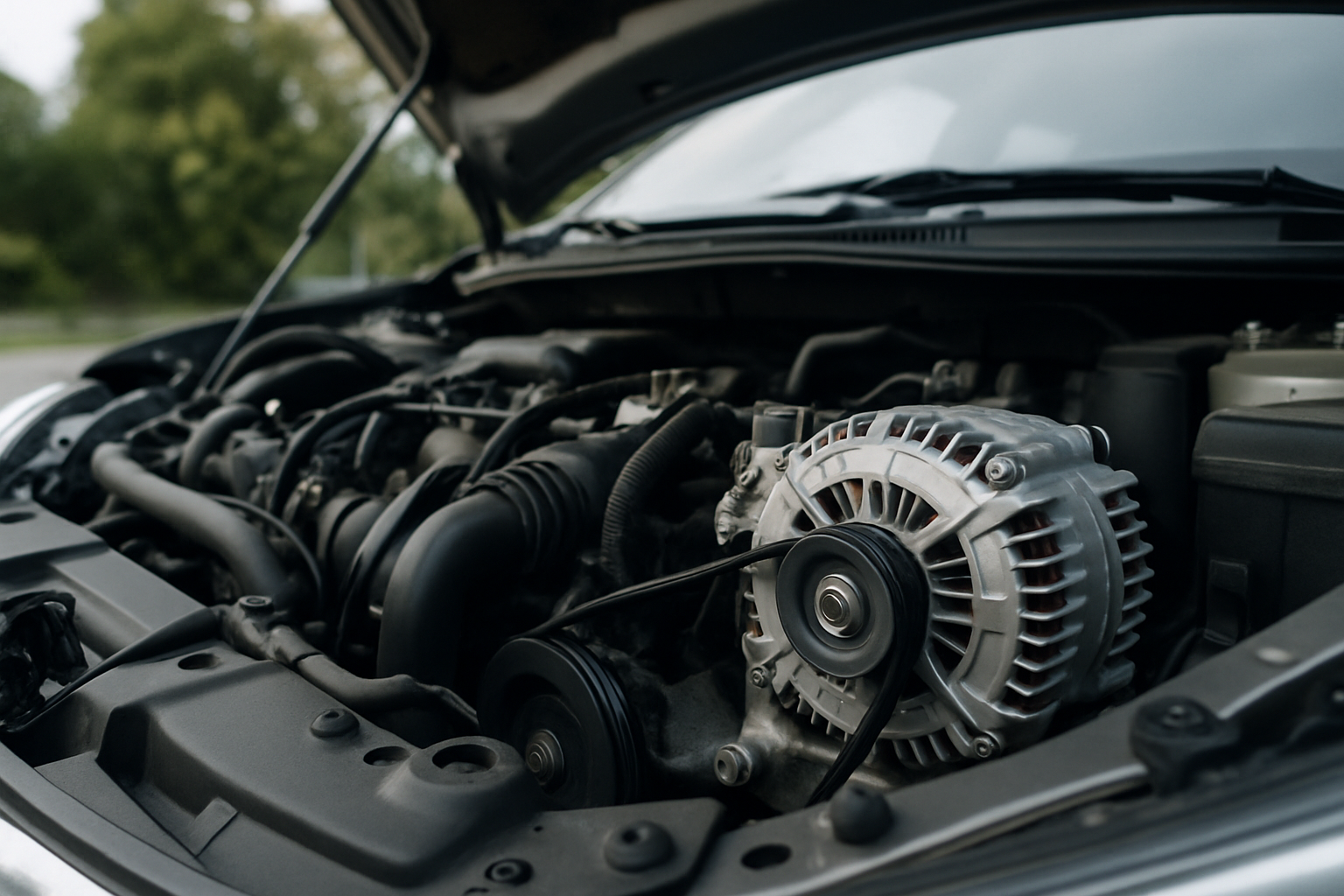
When your car starts acting up with dimming headlights, dashboard warning lights, or mysterious electrical issues, your alternator might be the culprit. This crucial component keeps your battery charged and powers all your electrical systems while driving, but when it starts failing, it can leave you stranded at the worst possible moment.
Understanding the warning signs and knowing how to diagnose alternator problems can save you from unexpected breakdowns and expensive roadside assistance calls. Let’s explore what causes alternators to fail and how you can spot trouble before you’re stuck with a dead battery.
What Your Alternator Actually Does
Your alternator is essentially a generator that converts mechanical energy from your engine into electrical power. While your engine runs, the alternator charges your battery and supplies electricity to run everything from your headlights to your radio to your fuel injection system.
The alternator produces alternating current (AC) that gets converted to direct current (DC) through internal diodes. A properly functioning alternator should maintain voltage between 13.5 and 14.5 volts while your engine runs. When this system breaks down, your battery becomes the sole power source, and it won’t last long on its own.
Modern vehicles rely heavily on electrical systems, making a healthy alternator more critical than ever. Your car’s computer, ignition system, fuel pumps, and dozens of other components all depend on steady electrical power to function properly.
Common Causes of Alternator Failure
Worn Out Brushes and Slip Rings
Carbon brushes inside the alternator make contact with slip rings to transfer electrical current. Over time, these brushes wear down from constant friction and eventually can’t maintain proper contact. This gradual wear typically happens after 100,000 to 150,000 miles of normal driving.
You’ll notice this problem developing slowly. The alternator might work fine at higher RPMs but struggle at idle, causing your lights to dim when you’re sitting at a traffic light.
Failed Diodes
The diode pack converts AC to DC current, and when one or more diodes fail, your alternator can’t produce its full output. Bad diodes often cause a whining or buzzing noise that changes with engine RPM.
A partially failed diode pack might still charge your battery somewhat, but not enough to keep up with your electrical demands during extended driving or when using accessories like air conditioning.
Bearing Problems
Alternators contain bearings that allow the rotor to spin smoothly inside the stator. These bearings can wear out due to age, contamination, or lack of lubrication. You’ll typically hear grinding, squealing, or rattling noises when bearings start failing.
Bearing failure often accelerates quickly once it starts. What begins as a slight noise can progress to complete seizure within a few hundred miles of driving.
Serpentine Belt Issues
While not technically part of the alternator, a loose, worn, or broken serpentine belt will prevent your alternator from spinning properly. A slipping belt can’t transfer enough power from the engine to keep the alternator running at optimal speed.
Belt problems often announce themselves with squealing noises, especially during startup or when you accelerate. You might also notice visible cracks, fraying, or glazing on the belt surface.
Warning Signs Your Alternator Is Failing
Dimming or Flickering Lights
One of the earliest signs of alternator trouble is lights that dim when you’re idling and brighten when you rev the engine. Your headlights, dashboard lights, and interior lighting all depend on steady voltage from the alternator.
Pay attention to how your lights behave at traffic lights or in drive-through lanes. If they noticeably dim when the engine idles and brighten when you accelerate, your alternator isn’t keeping up with electrical demand.
Battery Warning Light
The battery symbol on your dashboard doesn’t just indicate battery problems. This light actually monitors your charging system, and it’ll illuminate when your alternator isn’t maintaining proper voltage.
Don’t ignore this warning light, even if your car seems to run normally. You’re operating on borrowed time, using stored battery power that won’t last indefinitely. Most car batteries can only power your vehicle for 30 minutes to 2 hours without alternator support, depending on electrical load.
Strange Noises
A failing alternator often produces distinctive sounds. You might hear whining, grinding, or buzzing noises that change pitch with engine RPM. These sounds typically come from the front of the engine compartment where the alternator is mounted.
Whining or buzzing often indicates problems with the diode pack or internal wiring. Grinding or rattling sounds usually point to worn bearings that need immediate attention before they cause complete alternator failure.
Repeatedly Dead Battery
If you find yourself jump-starting your car frequently or replacing batteries more often than every 3-5 years, your alternator might not be charging properly. A healthy alternator should keep your battery fully charged during normal driving.
Many people assume they have a bad battery when the real problem is a failing alternator that isn’t replenishing the battery’s charge. Replacing the battery without fixing the alternator will just leave you with another dead battery in a few weeks.
Electrical System Malfunctions
Modern vehicles have dozens of electrical components that can act erratically when voltage drops. You might notice problems with power windows moving slowly, radio cutting out, air conditioning cycling on and off, or dashboard gauges behaving strangely.
These seemingly unrelated electrical issues often share a common cause: insufficient voltage from a failing alternator. Computer-controlled systems are particularly sensitive to voltage fluctuations.
How to Test Your Alternator
Basic Voltage Test
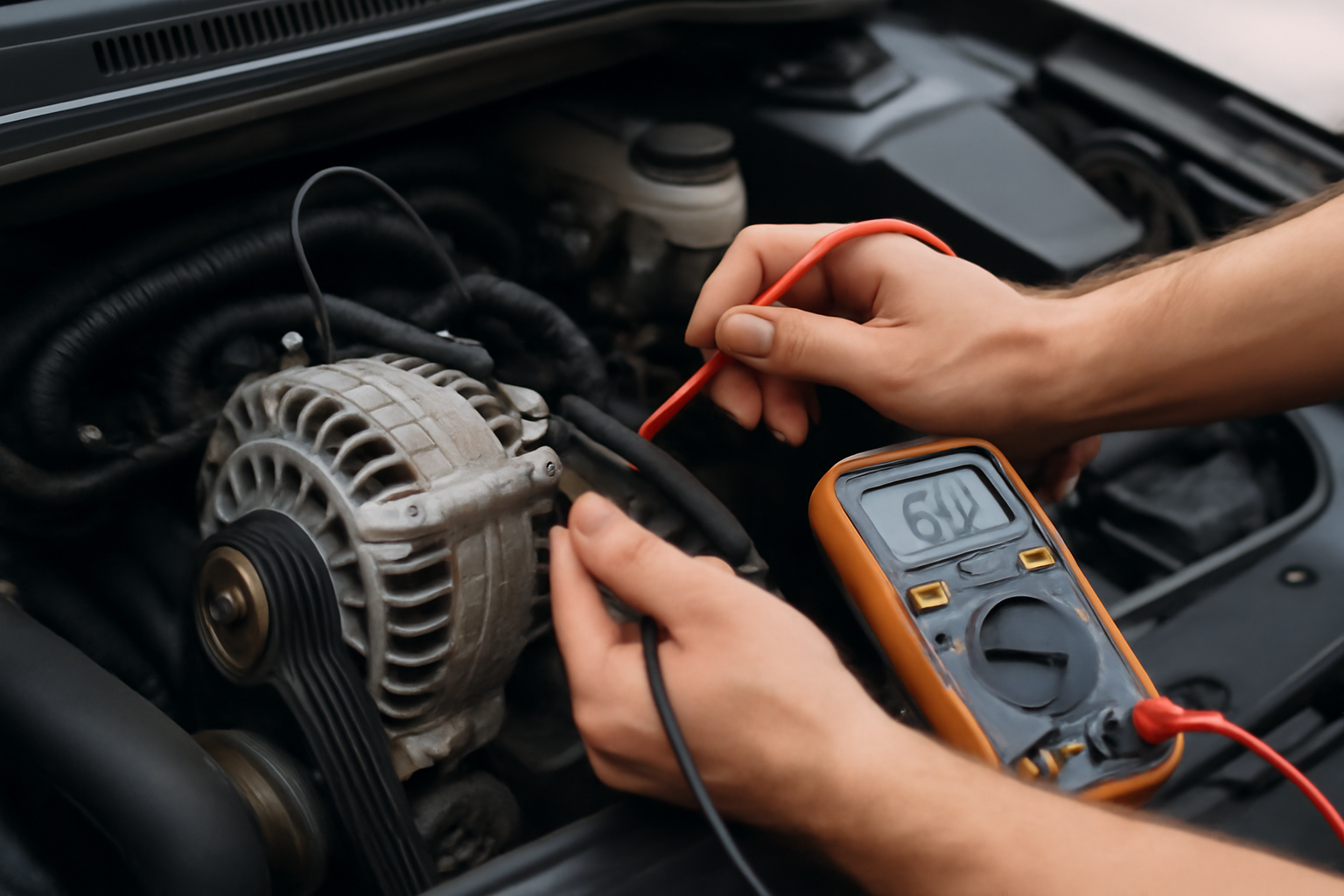
The most straightforward way to check your alternator is with a digital multimeter. Start by measuring battery voltage with the engine off. A healthy battery should read around 12.6 volts when fully charged.
Start the engine and measure voltage again at the battery terminals. You should see 13.5 to 14.5 volts with the engine running at idle. If voltage stays at 12.6 volts or lower, your alternator isn’t charging.
Rev the engine to about 2,000 RPM and watch the voltage reading. It should remain steady between 13.5 and 14.5 volts. Voltage that fluctuates wildly or exceeds 15 volts indicates alternator problems.
Load Testing
Turn on electrical accessories like headlights, air conditioning, and radio while monitoring voltage. A healthy alternator should maintain at least 13.5 volts even with a moderate electrical load.
If voltage drops significantly below 13.5 volts when you add electrical load, your alternator can’t keep up with demand. This test simulates real-world driving conditions when multiple electrical systems operate simultaneously.
Professional Testing
Auto parts stores often provide free alternator and battery testing with specialized equipment. These machines can measure actual amperage output and test the alternator under various load conditions more precisely than a basic multimeter.
Professional testing can also check individual diodes and identify internal problems that might not show up during simple voltage testing. This comprehensive analysis helps confirm whether you need alternator replacement or if another component is causing charging problems.
Alternator vs Battery Problems
Diagnosing the Real Culprit
Alternator and battery problems often produce similar symptoms, making diagnosis tricky. A simple test can help you identify which component is actually failing.
If your car starts normally but runs poorly with dimming lights, the alternator is likely the problem. If your car struggles to start but runs fine once started with steady lighting, you probably need a new battery.
Try this quick test: disconnect the negative battery cable while the engine is running. If the engine immediately dies, your alternator isn’t working. If the engine continues running, your alternator is functioning but your battery might not be holding a charge.
Age and Mileage Considerations
Car batteries typically last 3-5 years regardless of mileage, while alternators usually survive 7-10 years or 100,000-150,000 miles. Consider the age of each component when troubleshooting charging system problems.
If your battery is less than 2 years old and your car has high mileage, the alternator is the more likely suspect. Conversely, if your alternator was recently replaced but your battery is 4+ years old, focus on battery testing first.
What to Do When Your Alternator Fails
Immediate Steps
If your alternator fails while driving, minimize electrical load immediately. Turn off air conditioning, radio, unnecessary lights, and any other electrical accessories. This conservation can extend your remaining battery power.
Drive directly to the nearest auto parts store or repair facility. Don’t make stops or turn off the engine unless absolutely necessary. Once you shut off a car with a failed alternator, you might not be able to restart it.
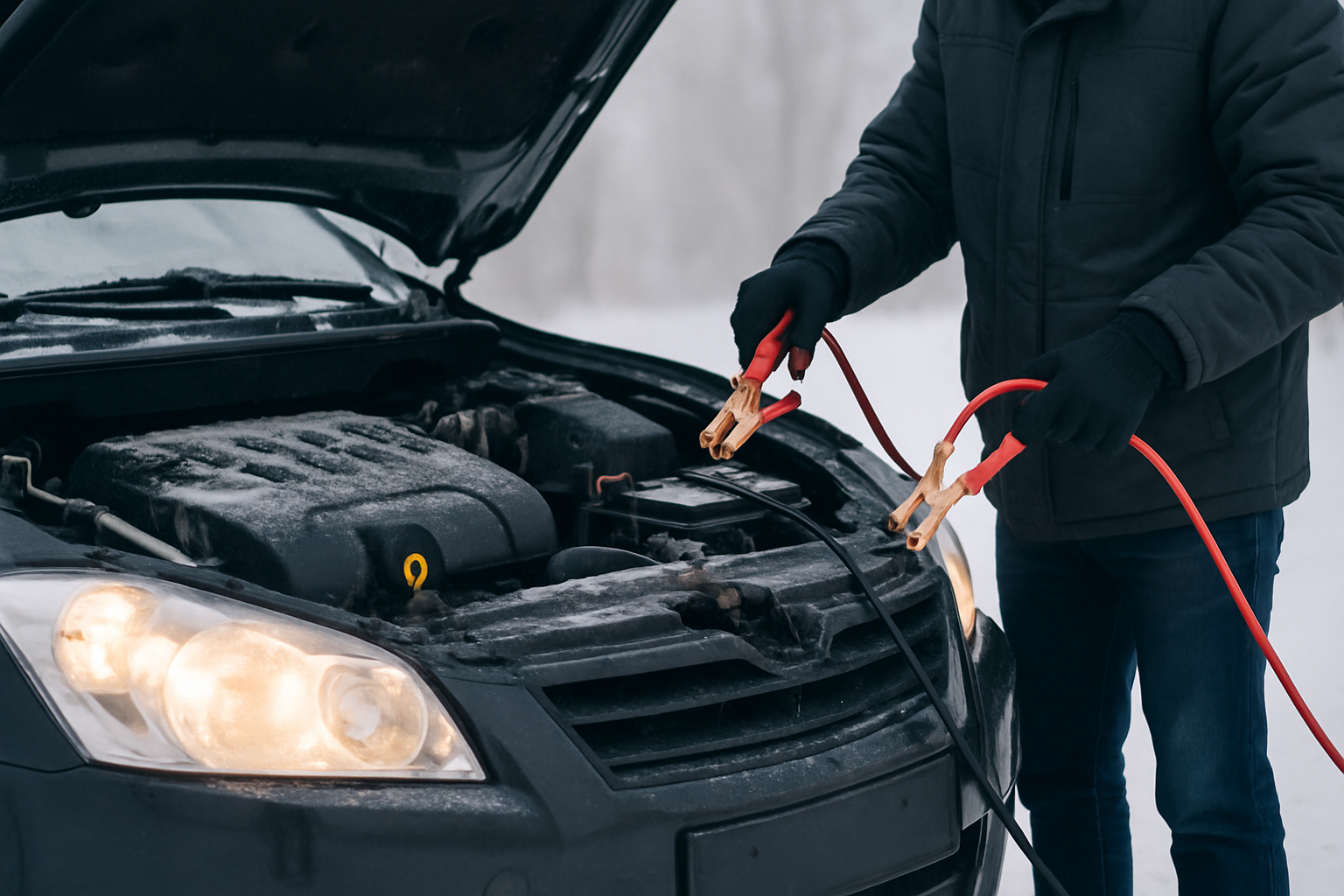
Keep jumper cables in your vehicle for emergencies. Even with a dead alternator, you might be able to get enough charge to start your car and drive to safety, though this should only be a temporary solution.
Replacement Considerations
When replacing your alternator, consider your vehicle’s electrical demands. If you’ve added aftermarket accessories like amplifiers, winches, or additional lighting, you might need a higher-output alternator than the original equipment.
Remanufactured alternators offer good value and typically come with warranties, but new units provide maximum reliability. Installation labor costs are the same regardless of which option you choose.
Frequently Asked Questions
How long can I drive with a failing alternator?
Driving distance depends on your battery’s condition and electrical load. With a healthy battery and minimal electrical usage, you might get 30 minutes to 2 hours of driving. However, continuing to drive with a confirmed alternator failure risks getting stranded and potentially damaging other electrical components.
Can a bad alternator damage my battery?
Yes, a failing alternator can definitely harm your battery. Overcharging from a malfunctioning voltage regulator can destroy battery cells, while undercharging forces the battery to work harder and shortens its lifespan significantly.
Why did my new alternator fail quickly?
Premature alternator failure often results from underlying problems like loose belt tension, corroded connections, or electrical shorts that weren’t addressed during installation. Poor-quality replacement parts or improper installation can also cause early failure.
Can I replace an alternator myself?
Alternator replacement is possible for DIY mechanics with basic tools and automotive experience. The job typically requires removing the serpentine belt, disconnecting electrical connections, and unbolting the alternator. However, some vehicles have limited access that makes professional installation worthwhile.

Leave a Reply