
You press the windshield washer button and hear the pump running, but nothing comes out. This common problem usually means your washer nozzles are clogged with dirt, debris, or dried washer fluid residue.
Most clogged nozzles can be cleared in just a couple of minutes using simple tools you probably have around the house. You don’t need to visit a mechanic or buy expensive replacement parts.
What Causes Windshield Washer Nozzles to Clog
Your washer nozzles are tiny openings that spray fluid onto your windshield. Over time, these small holes collect dust, pollen, and other airborne particles. Old washer fluid can also leave behind mineral deposits or sticky residue that blocks the flow.
Winter weather makes the problem worse. Salt, road grime, and ice can build up around the nozzles. If you’ve ever used cheap washer fluid or plain water, you’re more likely to experience clogs from mineral buildup or algae growth.
The nozzles are designed to create a specific spray pattern, so even a small amount of debris can disrupt the flow completely.
Quick Diagnosis: Is It Really a Clogged Nozzle
Before you start cleaning, make sure the nozzles are actually the problem. Press your washer button and listen carefully. You should hear the washer pump running for a few seconds.
If you hear the pump but see no fluid coming out, your nozzles are likely clogged. If you don’t hear any pump noise, you might have a blown fuse, dead pump, or electrical issue instead.
Check your washer fluid reservoir too. An empty tank won’t produce any spray no matter how clean your nozzles are.
Tools You’ll Need
Gather these common household items before you start:
- A thin sewing needle, straight pin, or safety pin
- Compressed air canister (the kind used for cleaning electronics)
- Clean cloth or paper towels
- Flashlight or phone light
You might also want to have fresh washer fluid on hand to test your repair and top off the reservoir.
Method 1: Clear the Blockage with a Needle
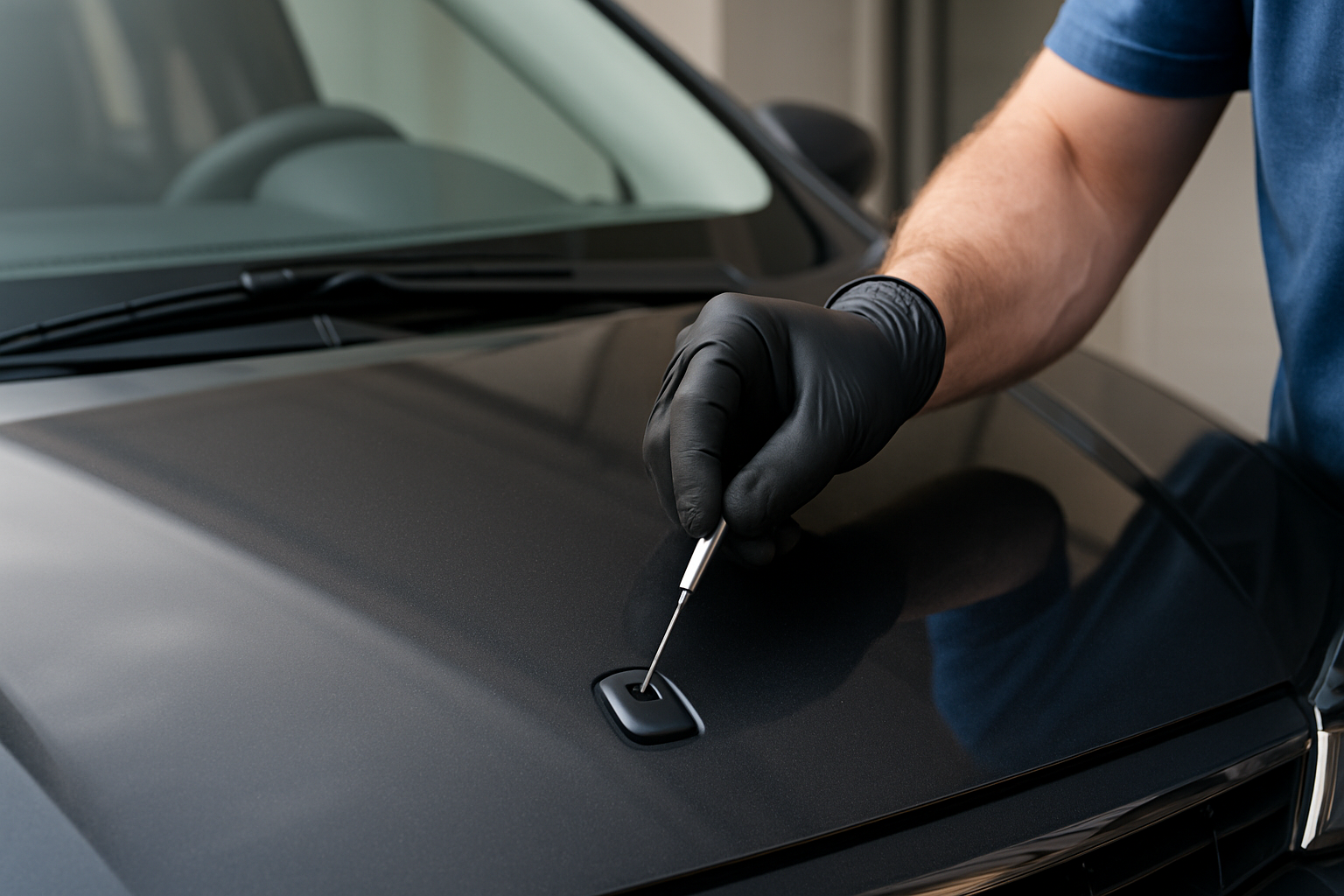
Start with the gentlest approach first. Locate your washer nozzles, which are usually positioned on the hood near the base of your windshield. Some vehicles have them mounted on the wiper arms instead.
Take your sewing needle or pin and carefully insert it into the nozzle opening. Don’t force it or push too hard. You want to dislodge any debris without damaging the nozzle’s internal shape.
Gently move the needle around to break up any buildup. You might see small particles or dried fluid come out. Clean these away with your cloth.
Test the nozzle by pressing your washer button. If fluid flows freely, you’re done. If not, move to the next method.
Method 2: Use Compressed Air
Compressed air can blow out stubborn clogs that a needle can’t reach. Position the compressed air nozzle close to the washer nozzle opening, but don’t create a tight seal.
Give the nozzle a few short bursts of compressed air. You’ll often see debris fly out immediately. Be careful not to blow the debris into your eyes.
This method works particularly well for clogs deeper inside the nozzle where a needle can’t reach effectively.
Method 3: Blow Through the Hose
For persistent clogs, you might need to approach from the other direction. Pop your hood and locate the washer fluid reservoir. You’ll see hoses running from the reservoir to your nozzles.
Carefully disconnect the hose from the nozzle you’re trying to clear. The hose usually pulls off by hand, but some have small clips you’ll need to squeeze first.
Put your mouth to the hose end and blow gently but firmly toward the nozzle. This reverse pressure often dislodges clogs that are stuck partway through the system.
Reconnect the hose when you’re finished. Make sure it’s seated properly to prevent leaks.
Testing Your Repair
Once you’ve tried these methods, test each nozzle individually if possible. Many vehicles have separate buttons or settings for different nozzle zones.
Press your washer button and watch the spray pattern. You want a steady, well-formed spray that covers the appropriate area of your windshield. If the spray is weak or misdirected, you might have a partial clog remaining.
Check that both nozzles are working if your car has two. It’s common for one to clog while the other continues working normally.
What to Do If the Nozzles Still Don’t Work
If you’ve tried all three methods and still get no fluid flow, the problem might not be clogged nozzles. Here are other possibilities to investigate:
Check the washer pump: You should hear a humming or whirring sound when you press the washer button. If the pump is completely silent, it might have failed or lost power.
Inspect the fuses: Your owner’s manual will show which fuse protects the washer system. A blown fuse is an easy fix that costs less than a dollar.
Look for kinked hoses: The rubber hoses can get pinched or develop cracks over time. Trace the hose from the reservoir to the nozzles, looking for obvious damage.
Test the reservoir: Some vehicles have sensors that prevent the pump from running when the fluid level is too low. Add fresh washer fluid and try again.
Preventing Future Clogs
You can reduce the frequency of clogs with some simple maintenance habits. Use quality washer fluid instead of plain water or homemade mixtures. Commercial washer fluids contain detergents and anti-freeze agents that help prevent buildup.
Clean your nozzles monthly, especially if you drive in dusty conditions or park under trees. A quick needle cleaning takes just seconds and prevents major blockages.
Replace your washer fluid regularly instead of just topping it off. Old fluid becomes more likely to leave deposits as water evaporates and concentrates the remaining chemicals.
When to Replace Nozzles Instead of Cleaning
Sometimes cleaning isn’t enough to restore proper function. If your nozzles are cracked, the spray pattern remains poor after cleaning, or they clog repeatedly, replacement might be your best option.
Washer nozzles are relatively inexpensive parts, usually costing between $10 and $30 each. Many simply pop out and press back in, making replacement a quick DIY job.
Upgrading to adjustable nozzles gives you more control over spray pattern and direction. These aftermarket options often resist clogging better than factory parts.
Troubleshooting Tips for Stubborn Cases
If standard cleaning methods aren’t working, try soaking the nozzles in warm water mixed with a small amount of dish soap. This can dissolve sticky residues that mechanical cleaning can’t remove.
For vehicles that sit unused for long periods, run the washer system monthly to keep fluid moving through the lines. Stagnant fluid is more likely to leave deposits.
Consider the age and condition of your washer fluid. If it’s been in the reservoir for over a year or looks cloudy, drain and replace it completely.
Safety Considerations
Always work with your engine off and keys out of the ignition when disconnecting hoses or working around the washer system. This prevents accidental activation while your hands are near moving parts.
Be gentle with plastic nozzles and hoses. These components can crack if you use too much force, creating expensive repairs.
Dispose of old washer fluid properly at an auto parts store or recycling center. Don’t pour it down storm drains or onto the ground.
Frequently Asked Questions
How long should this repair take?
Most clogged nozzles clear in about two minutes once you have your tools ready. Even stubborn clogs rarely take more than ten minutes to resolve. If you’re spending longer than that, you probably have a different problem that needs professional diagnosis.
Can I use a larger needle or drill bit to open up clogged nozzles?
Stick to thin sewing needles or pins. Larger tools can damage the precise opening that creates the proper spray pattern. A damaged nozzle might flow freely but spray in the wrong direction or create an uneven pattern that doesn’t clean effectively.
Why do my nozzles keep clogging every few weeks?
Frequent clogs usually indicate poor quality washer fluid, contaminated reservoir, or nozzles that are worn out and need replacement. Check your parking location too. Trees, construction areas, and heavily traveled roads expose your vehicle to more airborne debris.
Is it safe to drive with clogged washer nozzles?
While not immediately dangerous, clogged nozzles can become a safety issue when you need to clear your windshield quickly. Many states require functional washer systems for vehicle inspection. Fix the problem promptly rather than waiting for a more convenient time.

Leave a Reply