
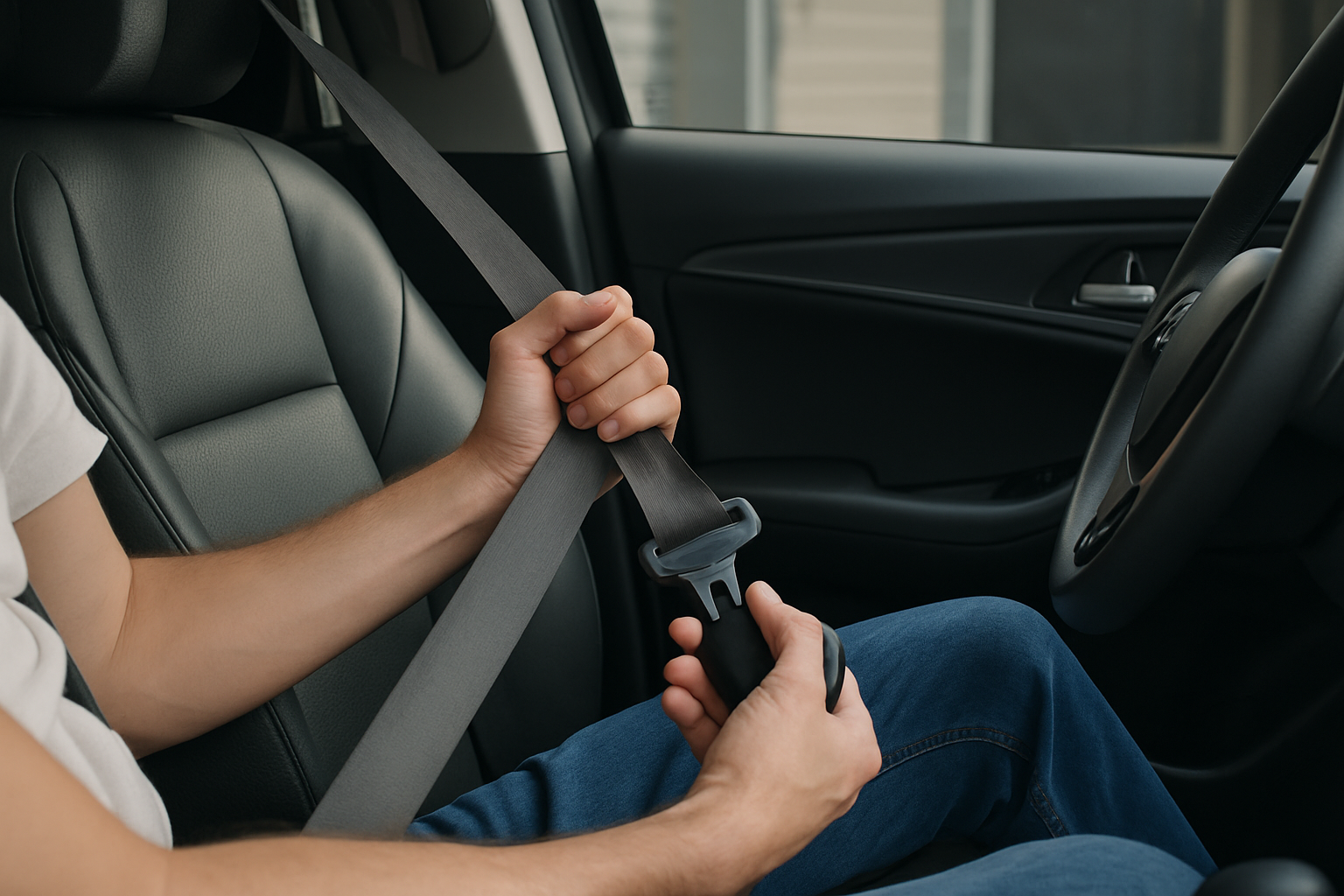
A seat belt that won’t retract properly isn’t just annoying, it’s a serious safety concern that needs immediate attention. When your seat belt gets stuck extended or retracts sluggishly, it can prevent proper protection in an accident and may even prevent your car from starting if it has seat belt interlocks.
Fortunately, most seat belt retraction issues can be fixed with some basic troubleshooting and cleaning. This guide will walk you through the most effective methods to get your seat belt working smoothly again.
Understanding How Seat Belt Retractors Work
Your seat belt retractor uses a spring-loaded mechanism combined with an inertial locking system. When you pull the belt out slowly, the spring allows it to extend freely. Pull too quickly or during sudden deceleration, and centrifugal weights lock the mechanism to keep you secure.
This delicate balance means that dirt, debris, or mechanical wear can easily disrupt normal operation. The most common culprits are twisted webbing, accumulated grime in the mechanism, or damage from accidents.
Quick Diagnosis: Identifying the Problem
Before diving into repairs, you need to determine what’s causing the retraction issue. Pull the seat belt out completely and examine the webbing as it extends. Look for any twists, fraying, or damage along its length.
Listen carefully as you let the belt retract slowly. A smooth, consistent sound indicates the spring mechanism is working properly. Grinding, clicking, or irregular noises suggest internal damage or debris.
Check if the belt retracts partially but stops, or if it won’t retract at all. Partial retraction usually indicates a cleaning issue, while complete failure often means mechanical problems.
The Full Extension and Slow Retraction Method
This technique works for about 70% of stuck seat belt cases and should be your first attempt. Pull the seat belt out to its full extension in one smooth motion. You’ll hear a clicking sound when it reaches the end, which engages a special locking mode.
Once fully extended, allow the belt to retract very slowly. Don’t just let it go, actually control the speed with your hand. Feed it back into the retractor at about one inch per second. This slow process helps the internal mechanism reset and can clear minor jams.
Repeat this process 3-4 times. Many stuck belts will start retracting normally after this simple procedure resets the internal springs and weights.
Cleaning the Seat Belt and Mechanism
Dirt and grime are frequent causes of retraction problems. Mix warm water with a small amount of mild dish soap in a bowl. Avoid harsh chemicals or bleach, which can weaken the webbing material.
Pull the belt out completely and wipe down the entire length with a damp cloth soaked in the soapy solution. Pay special attention to areas that look discolored or feel sticky. These spots often cause the belt to bind against the internal guides.
Use a clean, dry cloth to remove all soap residue and moisture. Wet seat belt webbing can shrink slightly and cause binding issues. Let the belt air dry completely before attempting to retract it.
For the retractor mechanism itself, use compressed air to blow out any visible debris around the opening. Don’t use water or cleaning solutions inside the retractor housing, as this can damage the internal components.
Checking for and Fixing Belt Twists
A twisted seat belt is one of the most common causes of retraction problems. With the belt fully extended, run your hand along its entire length to feel for any twists or rolls in the webbing.
If you find twists, work them out by rotating the belt end and smoothing the webbing back to its flat orientation. Sometimes twists occur deep inside the retractor, requiring multiple extension and retraction cycles to resolve.
Pay attention to where the belt feeds into the retractor housing. The webbing should enter straight and flat, not at an angle or with any rotation. Adjust the belt path if necessary.
When the Problem is More Serious
If cleaning and the extension method don’t work, you may be dealing with internal mechanical damage. This often happens after accidents, even minor ones that don’t seem significant at the time.
Modern seat belts contain pretensioners that activate during crashes to instantly tighten the belt. Once activated, these components must be replaced, as they’re designed for one-time use only. You’ll typically see evidence of pretensioner activation, such as burned or melted webbing near the retractor.
Internal spring failure is another possibility in older vehicles. The constant tension over years can cause springs to weaken or break entirely. This type of damage isn’t repairable and requires retractor replacement.
Troubleshooting Specific Symptoms
Belt Retracts Too Slowly
When your seat belt retracts sluggishly, the spring mechanism is usually weakened but not broken. Try the full extension method several times, as this can help restore spring tension. Cleaning the webbing and mechanism often improves slow retraction significantly.
Check that the belt isn’t rubbing against interior trim pieces or the seat itself. Sometimes slight adjustments to the belt path can eliminate friction points that slow retraction.
Belt Stops Retracting Midway
A belt that retracts partially then stops usually indicates debris or damage at a specific point. Feel along the webbing for rough spots, thick areas, or damage that could catch inside the mechanism.
This symptom can also indicate that the inertial locking mechanism is partially engaged. The full extension and slow retraction method is particularly effective for this issue.
Belt Won’t Retract at All
Complete retraction failure typically means broken internal components or severe jamming. Check if you can feel any spring tension when you tug gently on the extended belt. No tension usually indicates spring failure.
If there’s tension but no movement, something is physically blocking the mechanism. This requires professional diagnosis and likely replacement of the entire retractor assembly.
Safety Considerations and Limitations
Seat belts are critical safety components that must function perfectly to protect you in an accident. While cleaning and basic troubleshooting are safe to perform, never attempt to disassemble the retractor mechanism yourself.
If your troubleshooting doesn’t completely resolve the issue, have the seat belt inspected by a qualified automotive technician. Partially functioning seat belts can give you a false sense of security while providing inadequate protection.
Don’t ignore intermittent problems. A seat belt that works sometimes but fails occasionally is potentially more dangerous than one that’s obviously broken, because you might not realize it’s malfunctioned until you need it most.
When to Replace vs. Repair
Seat belt retractors can’t be rebuilt or repaired in most cases. If cleaning and basic troubleshooting don’t solve the problem, replacement is usually the only option. This is actually a good thing from a safety perspective, as it ensures the mechanism meets original specifications.
Vehicle age plays a role in the decision. Seat belts in cars over 15 years old may benefit from replacement even if they’re currently working, as the internal components are subject to wear over time.
Any seat belt involved in an accident should be replaced, regardless of visible damage. The forces involved can compromise internal components even when the webbing appears undamaged.
Cost Considerations
Professional seat belt retractor replacement typically costs between $200-500 per belt, including labor. Front seat belts are usually more expensive than rear belts due to additional safety features like pretensioners.
While this might seem costly, consider that seat belts are among the most important safety features in your vehicle. The cost of replacement is minimal compared to the potential consequences of a malfunctioning restraint system.
Some insurance policies cover seat belt replacement after accidents, even if the damage isn’t immediately obvious. Check with your insurance provider if your belt problems started after any collision.
Frequently Asked Questions
Can I lubricate my seat belt mechanism to make it work better?
Never use oil, grease, or spray lubricants on seat belt components. These products can attract dirt, damage the webbing material, and interfere with proper locking function. Cleaning with soapy water is the only recommended maintenance.
How often should I check my seat belts for problems?
Test each seat belt monthly by pulling it out completely and letting it retract. This simple check can identify problems before they become serious safety issues. Also inspect the webbing for fraying, cuts, or other damage during regular vehicle maintenance.
Will a stuck seat belt prevent my car from starting?
Some newer vehicles have seat belt interlocks that prevent starting if the driver’s belt isn’t properly fastened. A belt that won’t retract fully might not trigger the “fastened” sensor, potentially causing starting issues. This varies by manufacturer and model year.
Can I temporarily fix a stuck belt with tape or clips?
Never modify seat belt components with tape, clips, or other devices. These modifications can prevent proper function during an accident and may actually increase injury risk. If your seat belt isn’t working correctly, avoid driving until it’s professionally repaired or replaced.


Leave a Reply