
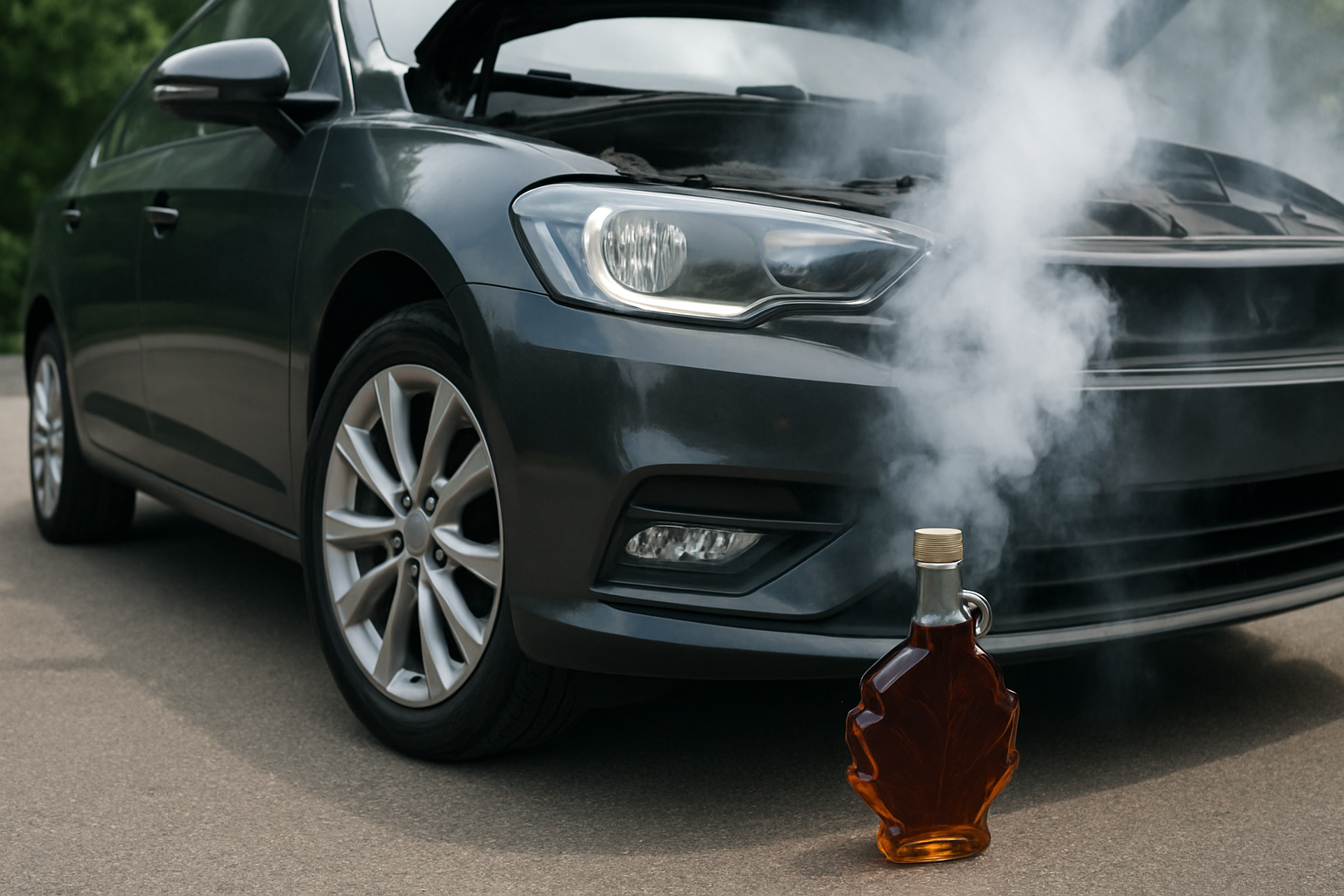
That sweet maple syrup smell coming from your car isn’t a pleasant surprise. It’s actually a warning sign that something potentially dangerous is happening under your hood, and you need to address it quickly.
This distinctive sweet odor indicates an ethylene glycol coolant leak somewhere in your cooling system. While it might smell good enough to eat breakfast with, ethylene glycol is toxic to both humans and pets, making this one automotive problem you can’t ignore.
What Creates That Sweet Maple Syrup Smell
The maple syrup scent comes from ethylene glycol, the main ingredient in most automotive coolants. This chemical compound has a naturally sweet smell that many people compare to pancake syrup or candy.
When your cooling system develops a leak, this sweet-smelling coolant escapes and often lands on hot engine components. The heat causes it to evaporate, sending that distinctive aroma through your car’s ventilation system and into the cabin.
You’ll typically notice this smell most strongly when you first start your car, especially after it’s been parked for a while. The scent can also become more pronounced when you’re sitting in traffic or idling, as the engine heat has more time to vaporize any leaked coolant.
Common Sources of Coolant Leaks
Heater Core Problems
Your heater core acts like a small radiator inside your dashboard, using hot coolant to warm the air that flows into your cabin. When this component fails, you’ll often notice the maple syrup smell is strongest when you turn on your heat or defrost.
A leaking heater core frequently causes fog to appear on the inside of your windshield. This fog feels slightly oily to the touch and can be difficult to wipe away completely. If you’re constantly battling foggy windows along with that sweet smell, your heater core likely needs replacement.
Radiator Leaks
Your radiator sits at the front of your engine bay, making it vulnerable to damage from road debris, corrosion, and age-related wear. Small pinhole leaks in the radiator tanks or damaged cooling fins can allow coolant to escape onto the hot engine block below.
Radiator leaks often create visible puddles under your car, typically appearing as bright green, orange, or pink liquid depending on your coolant type. You might also notice white steam rising from under your hood, especially after driving.
Coolant Hose Failures
Rubber coolant hoses connect various components in your cooling system, and they’re subject to constant pressure and temperature changes. Over time, these hoses can develop cracks, splits, or loose connections at their clamp points.
Hose leaks can be tricky to spot because they don’t always drip straight down. Coolant might spray onto nearby engine components, creating that sweet smell without leaving obvious puddles under your vehicle.
Why This Problem Isn’t Sweet At All
Toxicity Dangers
Ethylene glycol is extremely toxic to both humans and animals. Dogs and cats are particularly attracted to its sweet taste, but even small amounts can cause kidney failure and death. Never let pets near coolant puddles, and wash your hands thoroughly after checking fluid levels.
The sweet smell itself indicates you’re breathing vaporized coolant, which isn’t healthy for extended periods. While brief exposure won’t cause immediate harm, you shouldn’t ignore this problem or continue driving with strong coolant odors in your cabin.
Engine Damage Risks
Coolant leaks can quickly lead to overheating, especially if you don’t notice the problem until your coolant level drops significantly. Modern engines run at precise temperatures, and even brief overheating episodes can warp cylinder heads, blow head gaskets, or cause other expensive internal damage.
Your cooling system operates under pressure, typically around 15-16 PSI when hot. Even small leaks will worsen over time as the constant pressure cycling causes cracks to grow larger.
How to Check Your Coolant Level
Before doing anything else, you need to determine how much coolant you’ve lost. Never remove the radiator cap when the engine is hot, as pressurized coolant can cause severe burns.
Wait until your engine has been off for at least 30 minutes, then locate your coolant reservoir tank. This translucent plastic tank usually sits near the radiator and has “MIN” and “MAX” level markings molded into the side.
Check the coolant level against these markings. If the fluid level sits below the minimum line, you’ve lost a significant amount of coolant and need immediate attention. Even if the level appears normal, you should still investigate the source of that sweet smell.
Immediate Steps to Take
Don’t continue driving if you notice a strong maple syrup smell, especially if it’s accompanied by engine temperature warning lights or gauge readings above normal. Pull over safely and turn off your engine to prevent potential overheating damage.
Look under your car for fresh coolant puddles. Check around the radiator area, beneath the dashboard on the passenger side (for heater core leaks), and along visible coolant hoses. Take photos of any leaks you find to show your mechanic.
If your coolant level is critically low, you can add water as an emergency measure to get to a repair shop. However, this dilutes your coolant’s freeze protection and corrosion inhibitors, making it a temporary solution only.
Professional Diagnosis and Repair
Cooling system leaks require proper diagnosis to identify the exact failure point. Many shops use pressure testing equipment that pressurizes your cooling system while the engine is cold, making leaks easier to spot and locate.
Repair costs vary significantly depending on the source of your leak. Simple hose replacements might cost $100-200, while heater core replacement can run $500-1500 depending on your vehicle’s design. Radiator replacement typically falls somewhere in between.
Some shops might suggest stop-leak additives as a quick fix, but these products can clog other parts of your cooling system. They’re best used only as emergency measures to get you to proper repair facilities.
Prevention and Maintenance
Regular coolant system maintenance can prevent many of these sweet-smelling problems. Most manufacturers recommend coolant replacement every 5-7 years or 100,000-150,000 miles, depending on your specific vehicle and coolant type.
During routine maintenance, have your technician inspect coolant hoses for cracks, bulges, or soft spots that indicate impending failure. Replacing questionable hoses before they leak costs much less than dealing with overheating damage.
Keep an eye on your temperature gauge during normal driving. If you notice it running hotter than usual, check your coolant level and look for early signs of leaks before they become major problems.
When to Call for Emergency Help
If your temperature gauge enters the red zone or warning lights illuminate, stop driving immediately. Continuing to operate an overheating engine can cause thousands of dollars in internal damage within minutes.
Call for roadside assistance or a tow truck rather than attempting to drive to a repair shop. Even short distances can be too far when your cooling system has failed completely.
Frequently Asked Questions
Can I drive with a small coolant leak?
Small leaks that don’t affect your coolant level significantly might allow short-distance driving, but you should schedule repairs immediately. Monitor your temperature gauge constantly and carry extra coolant in case you need to top off the system.
Why does the smell seem stronger in the morning?
Coolant often leaks more when the system is under pressure from a hot engine. After sitting overnight, leaked coolant accumulates on engine components and creates stronger odors when you first start up and begin heating those parts.
Is it safe to add water instead of coolant?
Water works as an emergency coolant replacement for short distances, but it doesn’t provide freeze protection or corrosion inhibitors. Use only distilled water if possible, and have the system properly refilled with appropriate coolant as quickly as possible.
How can I tell if my heater core is leaking?
Heater core leaks typically cause persistent fogging on the inside of your windshield, especially when using heat or defrost. You might also notice coolant odors are strongest when the heater is running, and sometimes you’ll see actual coolant dripping from under the passenger side dashboard.
This article contains affiliate links. If you purchase through these links, we may earn a small commission at no extra cost to you.


Leave a Reply