
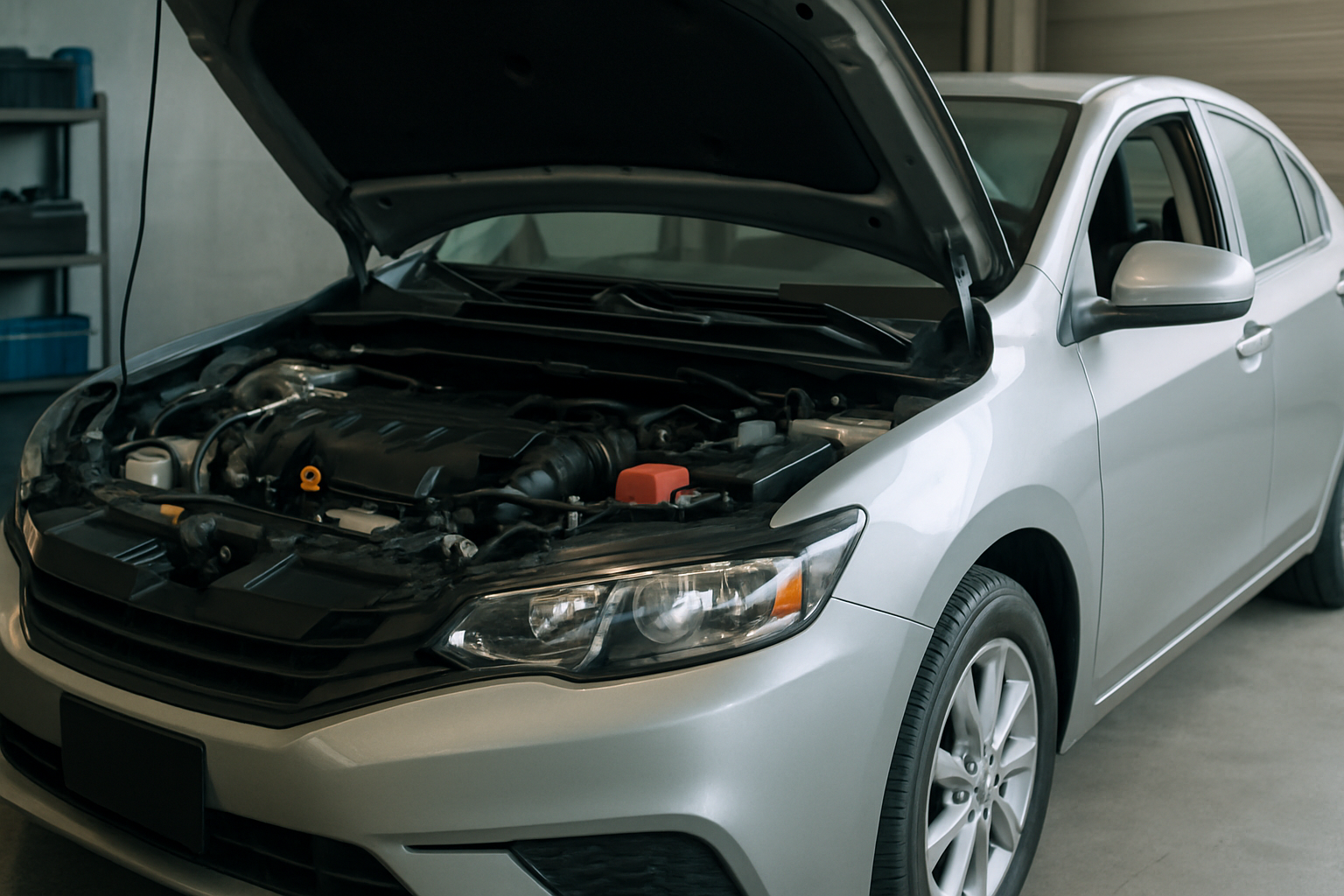
A rough idle can turn your relaxing drive into a frustrating experience. When your engine shakes, stumbles, or sounds erratic while stopped at traffic lights, you’re dealing with one of the most common automotive issues that almost every driver faces eventually.
The good news is that rough idle problems usually stem from a handful of predictable causes, and many of them won’t break the bank to fix. Understanding what’s happening under your hood can save you hundreds of dollars in unnecessary repairs and get your car running smoothly again.
What Does a Rough Idle Actually Mean?
Your engine should purr like a content cat when you’re sitting in park or at a red light. A smooth idle means all cylinders are firing consistently, air and fuel are mixing properly, and everything is working in harmony.
When you have a rough idle, you’ll notice your car shaking or vibrating more than usual. The engine might sound choppy or uneven, almost like it’s coughing. Your RPM gauge might bounce around instead of holding steady, and in severe cases, the engine might actually stall when you come to a stop.
These symptoms happen because one or more cylinders aren’t getting the right mixture of air, fuel, and spark they need to run properly. Think of it like trying to ride a bicycle with a wobbly wheel. Everything else might be working fine, but that one problem throws off the whole system.
The 7 Most Common Rough Idle Fixes (Ranked by Likelihood and Cost)
1. Vacuum Leak ($20-$50)
Vacuum leaks top the list because they’re incredibly common and relatively cheap to fix. Your engine relies on a precise balance of air and fuel, and when extra air sneaks in through cracked hoses or loose connections, it throws everything off balance.
You can often hear a vacuum leak as a hissing sound when the engine is running. Check all the rubber hoses connected to your intake manifold, brake booster, and PCV system. Look for cracks, especially where hoses connect to plastic or metal fittings.
The easiest way to find a vacuum leak is to spray carburetor cleaner around suspected areas while the engine is running. If the idle changes when you spray a particular spot, you’ve found your leak. Replace any cracked hoses or tighten loose clamps.
2. Dirty Throttle Body ($15-$30)
Your throttle body controls how much air enters the engine, and over time it gets coated with carbon deposits and grime. This buildup disrupts the smooth airflow your engine needs for a steady idle.
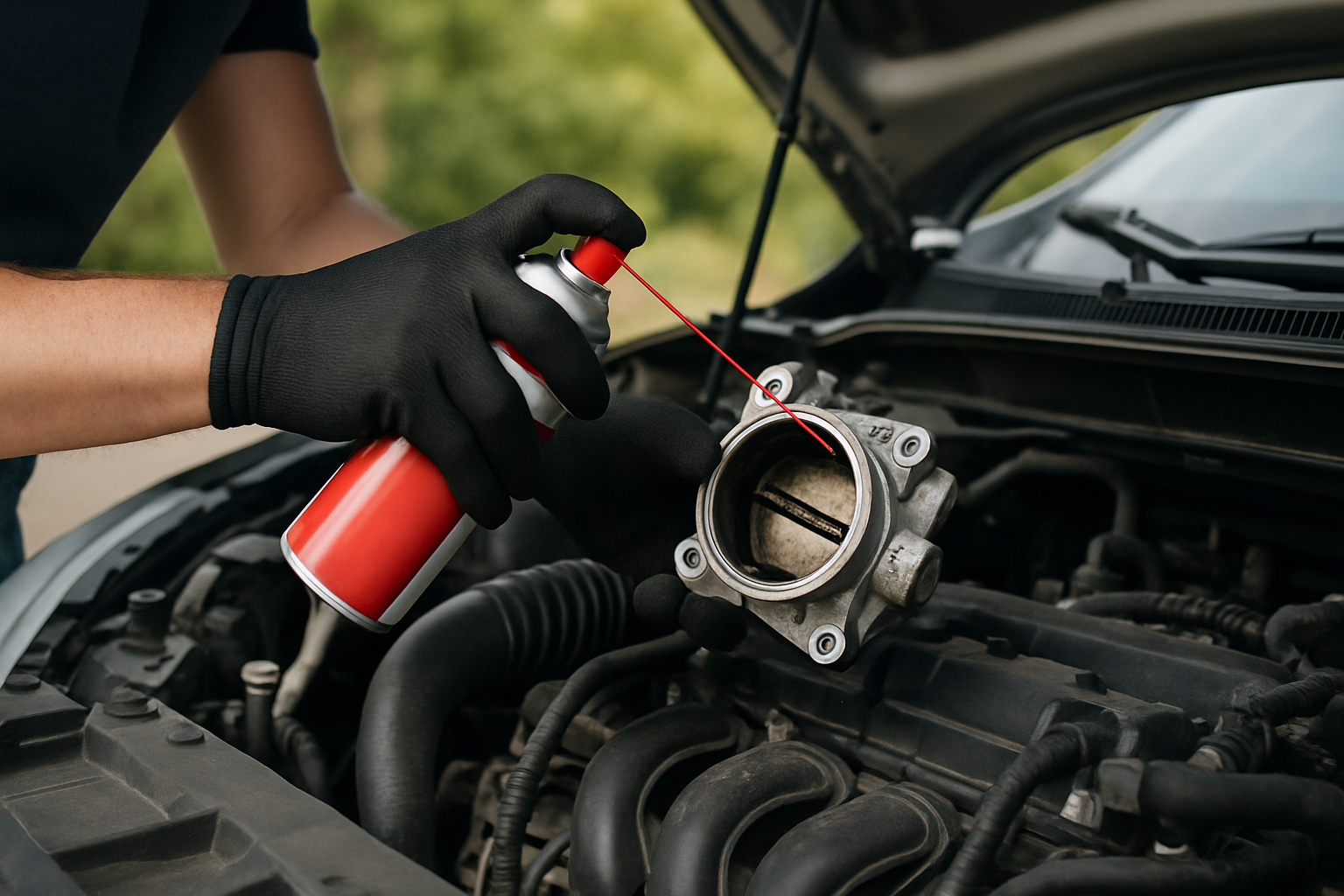
Cleaning a throttle body is one of the easiest maintenance tasks you can do yourself. Remove the air intake duct, spray the throttle body with specialized cleaner, and wipe it down with a clean rag. You’ll be amazed at how much black gunk comes off.
While you’re in there, gently move the throttle plate with your finger to clean behind it. Just don’t force it, and make sure the key is off and the engine is cool before you start.
3. Worn Spark Plugs ($30-$80)
Spark plugs might be small, but they have a huge job. When they’re worn out, they can’t create a strong enough spark to ignite the fuel mixture consistently. This leads to misfires and that characteristic rough idle feeling.
Most spark plugs last between 30,000 and 100,000 miles, depending on the type. Copper plugs need replacement more often, while iridium and platinum plugs last longer but cost more upfront.
Pull one plug and examine it closely. If the electrode is worn down, covered in black carbon deposits, or the gap has widened significantly, it’s time for a new set. Always replace all plugs at once, even if only one looks bad.
4. Clogged Fuel Injectors ($50-$150)
Fuel injectors spray a precise pattern of gasoline into each cylinder. When they get clogged with deposits from low-quality fuel or simply age, they can’t deliver the right amount of fuel at the right time.
You have two options for dealing with dirty injectors. The cheaper route is using a high-quality fuel injector cleaner like Chevron Techron or Lucas Fuel Treatment. Add it to your gas tank and drive normally for a few hundred miles.
If the cleaning additives don’t work, you’ll need professional injector cleaning or replacement. This involves removing the injectors and either cleaning them with specialized equipment or installing new ones.
5. Faulty Idle Air Control (IAC) Valve ($75-$200)
The IAC valve’s job is to control airflow when your foot isn’t on the gas pedal. When this valve gets stuck or fails, your engine can’t maintain a steady idle speed.
A bad IAC valve often causes erratic idle speeds that surge up and down. You might also notice the engine stalling when you come to a stop, especially if you have the air conditioning running.
You can sometimes clean an IAC valve with throttle body cleaner, but replacement is often the better long-term solution. The valve is usually located on or near the throttle body and held in place with a few bolts.
6. Dirty Mass Airflow (MAF) Sensor ($100-$300)
Your MAF sensor tells the engine computer exactly how much air is entering the engine. When it gets dirty or fails, the computer makes fuel delivery decisions based on wrong information.
A dirty MAF sensor often causes rough idle along with poor acceleration and reduced fuel economy. The sensor element looks like a thin wire or film inside the sensor housing.
You can clean a MAF sensor with specialized MAF cleaner (never use anything else). Remove the sensor, spray it lightly, and let it air dry completely before reinstalling. If cleaning doesn’t help, you’ll need a replacement sensor.
7. Worn Engine Mounts ($150-$400)
Engine mounts don’t actually cause rough idle, but they can make normal engine vibration feel much worse. When mounts wear out, they stop dampening the natural vibrations from your engine.
Bad engine mounts are easy to diagnose. Have someone rev the engine while you watch from the front of the car. If the engine moves excessively or you can see it rocking back and forth dramatically, your mounts are probably shot.
Engine mount replacement requires lifting the engine slightly, so this job is best left to professionals unless you have proper equipment and experience.
Diagnosing Your Rough Idle Problem
Start with the cheapest and easiest fixes first. Check for vacuum leaks by listening for hissing sounds and visually inspecting hoses. Clean your throttle body since it takes about 15 minutes and costs almost nothing.
If you have a check engine light, get the codes read at an auto parts store for free. These codes can point you directly to the problem area, saving you time and guesswork.
Pay attention to when the rough idle happens. Does it only occur when cold? When the air conditioning is on? This information can help narrow down the cause significantly.
When to Call a Professional
Some rough idle problems require diagnostic equipment or specialized tools that most DIYers don’t have. If you’ve tried the basic fixes and still have issues, a professional mechanic can run compression tests, check fuel pressure, and use scan tools to pinpoint the exact problem.
Complex issues like internal engine problems, computer malfunctions, or emissions system failures often need professional attention. Don’t spend more money throwing parts at the problem if the simple fixes don’t work.
Preventing Future Rough Idle Issues
Regular maintenance prevents most rough idle problems. Change your spark plugs according to your owner’s manual, use quality fuel with detergent additives, and replace your air filter regularly.
Don’t ignore small problems. That slight hesitation during acceleration or minor vibration at idle often gets worse over time. Addressing issues early usually costs less than waiting until they become major problems.
Frequently Asked Questions
Can I drive with a rough idle?
You can usually drive with a rough idle in the short term, but you shouldn’t ignore it. A rough idle often indicates problems that can worsen and cause more expensive damage if left unfixed. Plus, you might experience stalling at inconvenient times.
How much should I expect to pay for rough idle repairs?
Rough idle fixes range from $15 for a can of throttle body cleaner to several hundred dollars for major component replacement. Most common causes like vacuum leaks, dirty throttle bodies, and spark plugs cost under $100 to fix yourself.
Will rough idle damage my engine?
A rough idle itself won’t immediately damage your engine, but the underlying causes might. Misfires can damage catalytic converters, vacuum leaks can cause lean running conditions, and ignoring problems often leads to more expensive repairs later.
Why does my car idle rough when cold but smooth when warm?
Cold rough idle that improves when warmed up often points to issues with the idle air control system, carbon buildup, or sensors that don’t work properly until they reach operating temperature. This pattern can help your mechanic diagnose the specific problem faster.
This article contains affiliate links. If you purchase through these links, we may earn a small commission at no extra cost to you.

Leave a Reply