
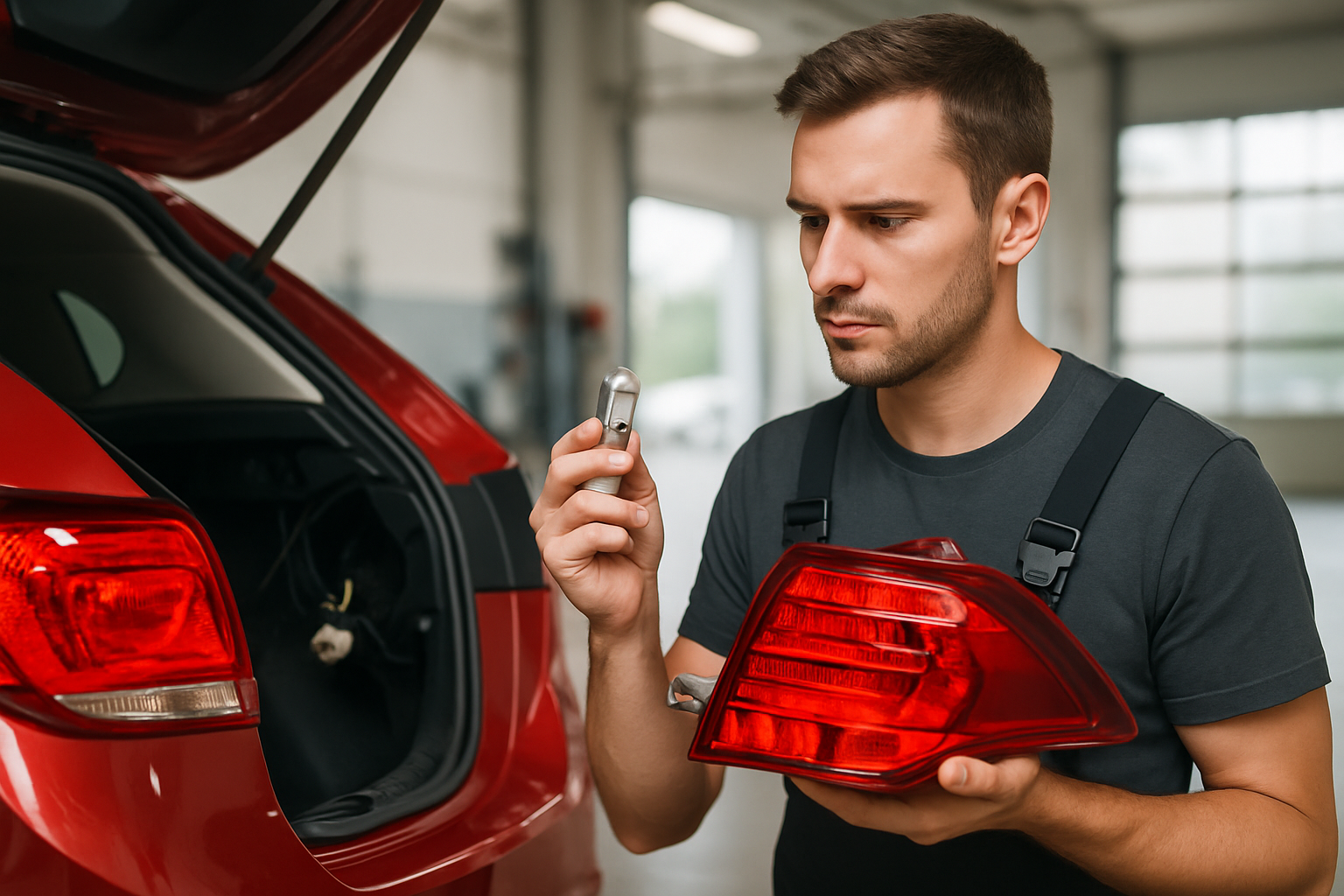
A burned-out tail light or brake light isn’t just annoying, it’s dangerous and can get you pulled over. The good news is that most tail light bulb replacements are simple DIY jobs that take under 15 minutes and cost less than $10.
Understanding Your Tail Light Setup
Before you start, you need to understand what you’re working with. Most modern vehicles use combination tail light assemblies that house multiple bulbs. Your brake lights, turn signals, reverse lights, and running lights might all be in the same housing, but they’re separate bulbs.
The most common setup includes a dual-filament bulb that serves both as your tail light (dim) and brake light (bright). When you press the brake pedal, the same bulb just gets more power to shine brighter.
Turn signals typically use single-filament amber bulbs, while reverse lights use bright white bulbs. Some newer cars use separate LED assemblies, but the replacement process is similar.
Tools and Supplies You’ll Need
For most tail light replacements, you won’t need much:
- Replacement bulb (we’ll cover finding the right part number below)
- Clean cloth or paper towel
- Screwdriver set (Phillips and flathead)
- Work gloves (optional, but helpful)
Some vehicles might require a socket wrench or trim removal tools, but most can be done with basic hand tools you already have.
Finding the Right Bulb Part Number
This is crucial because using the wrong bulb can cause problems. Your owner’s manual will list the correct bulb numbers for each position, usually in a chart near the back of the book.
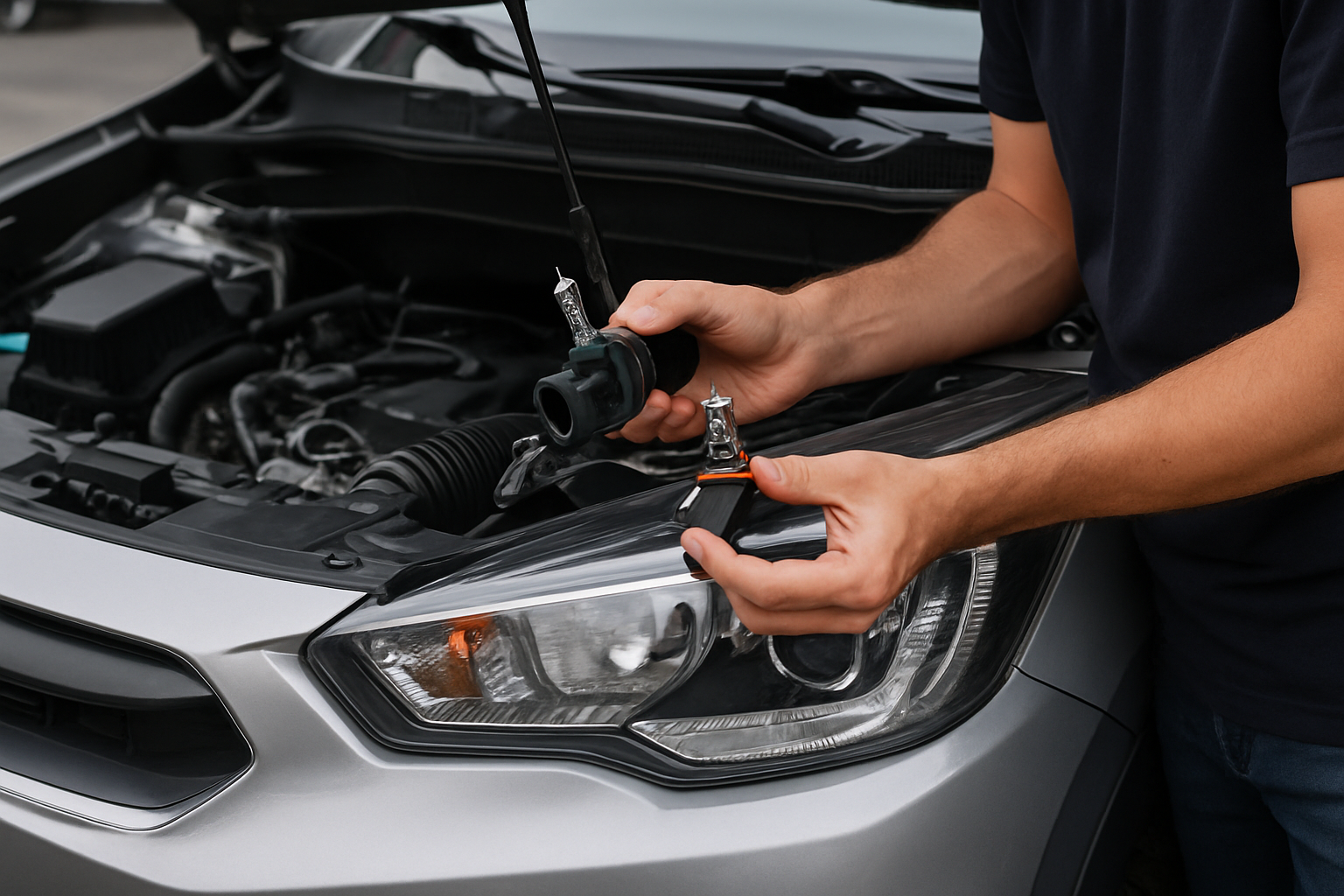
If you don’t have the manual, check the old bulb itself. The part number is typically printed on the metal base. Common brake light bulbs include 3157, 7443, 1156, and 1157, but there are dozens of variations.
You can also look up your vehicle’s specifications online using your VIN, or ask at any auto parts store. They can look up the exact bulbs your car needs based on year, make, and model.
Step-by-Step Replacement Process
Access Through the Trunk (Most Common Method)
Most vehicles allow you to change tail light bulbs from inside the trunk, which makes the job much easier.
Pop your trunk and look at the back wall where your tail lights are located. You’ll see plastic covers or access panels that either twist off, pull off, or are held by a few screws. Remove these covers to expose the back of the tail light assembly.
You’ll see several bulb sockets plugged into the back of the light assembly. Each socket is typically labeled or color-coded to help you identify which bulb does what. The brake light socket is usually the largest one.
Twist the appropriate socket counterclockwise about a quarter turn and pull it straight out. The bulb is either pressed into the socket or twists out, depending on the type.
Removing the Old Bulb
For bayonet-style bulbs (like 1157 or 3157), push the bulb down slightly and twist counterclockwise to remove it from the socket. For wedge-style bulbs, just pull them straight out.
Take a moment to inspect the socket for any corrosion or melting. If you see green corrosion, clean it with a small wire brush or sandpaper before installing the new bulb.
Installing the New Bulb
Handle the new bulb by its base, not the glass. Oils from your skin can cause hot spots that lead to premature failure.
Install the new bulb by reversing the removal process. For bayonet bulbs, align the pins with the slots, push down, and twist clockwise until it locks. For wedge bulbs, just push firmly into place.
Before reassembling everything, test the new bulb. Have someone press the brake pedal while you watch from behind, or turn on your headlights to check the running lights.
Alternative Access Methods
Removing the Entire Light Assembly
Some vehicles require you to remove the entire tail light assembly to access the bulbs. This involves removing screws or bolts from the outside of the car, usually visible when you open the trunk or tailgate.
Be careful not to let the assembly fall when the last screw comes out. These plastic housings can crack easily if dropped on concrete.
Once removed, you can access the bulb sockets from behind just like the trunk method.
Under-Hood or Side Panel Access
A few vehicles have tail light access through wheel wells or side panels. This is less common but might require removing plastic clips or screws to access a service panel.
Considering LED Upgrades
While you’re replacing bulbs, you might consider upgrading to LED versions. Modern LED replacement bulbs are brighter, last longer, and use less power than traditional incandescent bulbs.
However, LED upgrades come with some considerations. Some vehicles will throw error codes or display “bulb out” warnings because LEDs draw less current than expected. You might need load resistors or CANBUS-compatible LED bulbs to avoid these issues.
LED bulbs also tend to be more directional than incandescent bulbs, so make sure you choose ones designed specifically for automotive use with proper light distribution.
LED brake light bulbs are available for most common applications, with brands like Sylvania, Philips, and LASFIT offering quality replacements.
Legal Consequences of Burned-Out Lights
Driving with a burned-out brake light is illegal in all 50 states and can result in a traffic ticket. Police officers often use burned-out lights as a reason for traffic stops, which can lead to additional citations if they find other violations.
Beyond the legal issues, you’re putting yourself and others at risk. The car behind you might not realize you’re stopping, especially in low-light conditions or bad weather.
Most states give you a grace period to fix the problem, but you’ll still get the ticket initially. Some officers will just give you a warning if you seem genuinely surprised and promise to fix it immediately.
When to Seek Professional Help
While most tail light replacements are straightforward DIY jobs, some situations call for professional help. If you find melted or severely corroded sockets, you might need new pigtails or wiring repair.
Vehicles with complex electronic systems might require coding or programming after bulb changes, especially if you’re switching between incandescent and LED bulbs.
If you’ve replaced a bulb but it keeps burning out quickly, you might have an electrical problem that needs professional diagnosis. Overcharging, poor connections, or damaged wiring can cause repeated failures.
Maintenance Tips for Longer Bulb Life
Keep your tail light lenses clean and free of cracks. Dirty or damaged lenses can trap heat and cause bulbs to fail prematurely.
When installing bulbs, make sure they’re fully seated in their sockets. Loose connections create resistance and heat, which shortens bulb life.
Consider replacing bulbs in pairs. If one side has failed, the other side probably isn’t far behind, especially if they were installed at the same time.
Troubleshooting Common Issues
New Bulb Doesn’t Work
First, double-check that you have the right bulb type and that it’s properly installed. Try the old bulb in a different socket to make sure the new bulb isn’t defective.
Check the fuse for that circuit. Your owner’s manual will show which fuse protects the brake lights. A blown fuse might indicate a larger electrical problem.
Bulb Works But Seems Dim
This usually indicates a poor connection or corrosion in the socket. Remove the bulb and clean both the socket and bulb contacts with fine sandpaper or a wire brush.
Low voltage from a failing alternator or weak battery can also cause dim bulbs, but this would affect multiple lights, not just one.
Bulb Keeps Burning Out
Repeated failures often mean too much voltage is reaching the bulb. This can happen with cheap aftermarket bulbs that can’t handle normal voltage fluctuations.
Loose connections can also cause voltage spikes that kill bulbs. Make sure all connections are tight and clean.
Frequently Asked Questions
How often should I replace tail light bulbs?
Incandescent bulbs typically last 1-2 years with normal use, though this varies based on how often you drive and brake. LED bulbs can last 10+ years. Replace bulbs when they burn out, but consider doing both sides at once to maintain even lighting.
Can I use a higher wattage bulb for brighter light?
Don’t exceed the manufacturer’s specified wattage. Higher wattage bulbs generate more heat and can melt sockets or damage wiring. If you want brighter lights, look for “premium” bulbs with better filament design or switch to quality LED replacements.
Why does my car show a bulb warning after LED installation?
LED bulbs draw much less current than incandescent bulbs, so your car’s monitoring system thinks the bulb is burned out. You need either CANBUS-compatible LED bulbs or load resistors to solve this problem.
Is it legal to have different colored tail lights?
Brake lights and tail lights must be red in all US states. Turn signals must be amber or red, depending on position. Using any other colors for these safety lights is illegal and will fail inspection in most states.
This article contains affiliate links. If you purchase through these links, we may earn a small commission at no extra cost to you.
Leave a Reply