
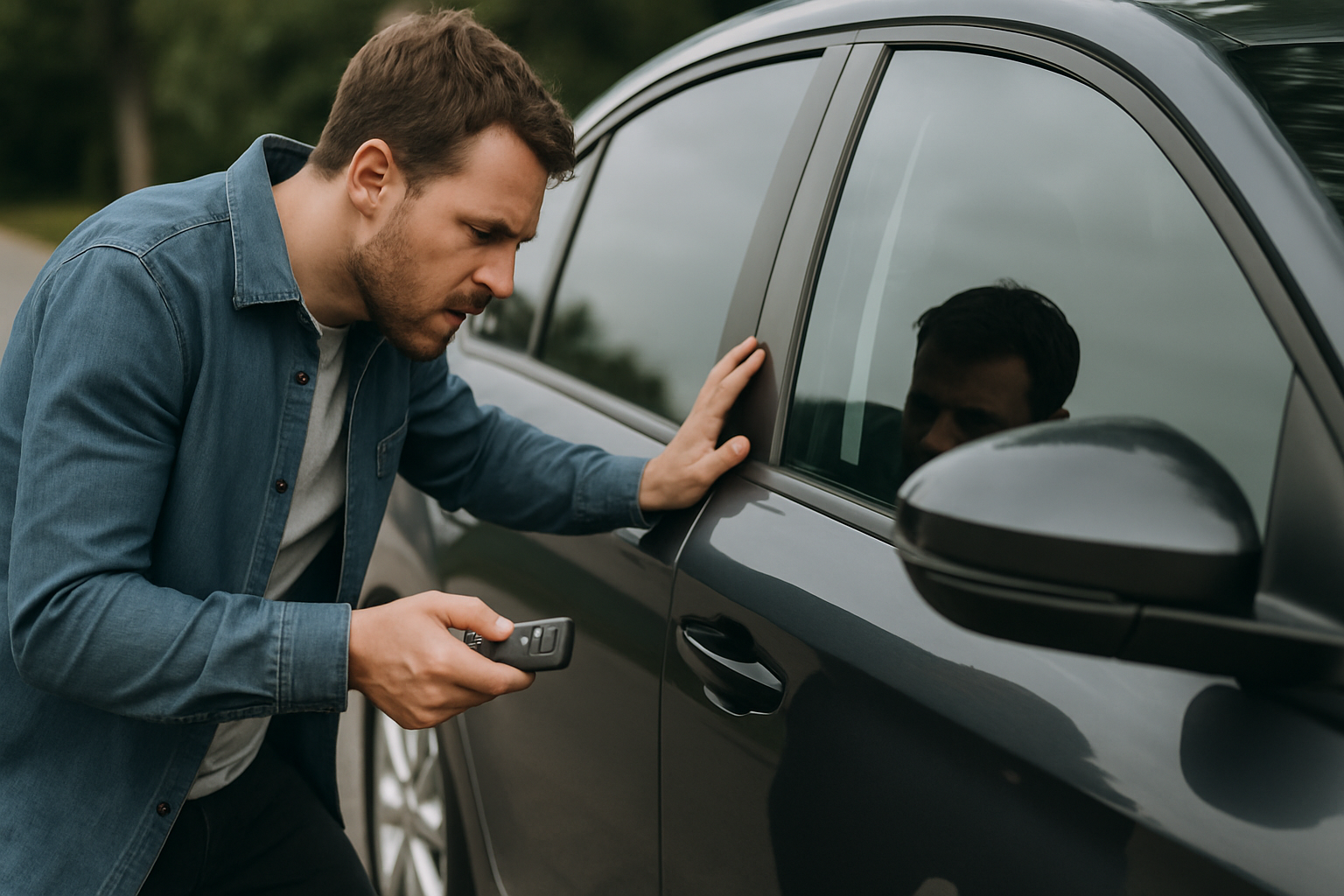
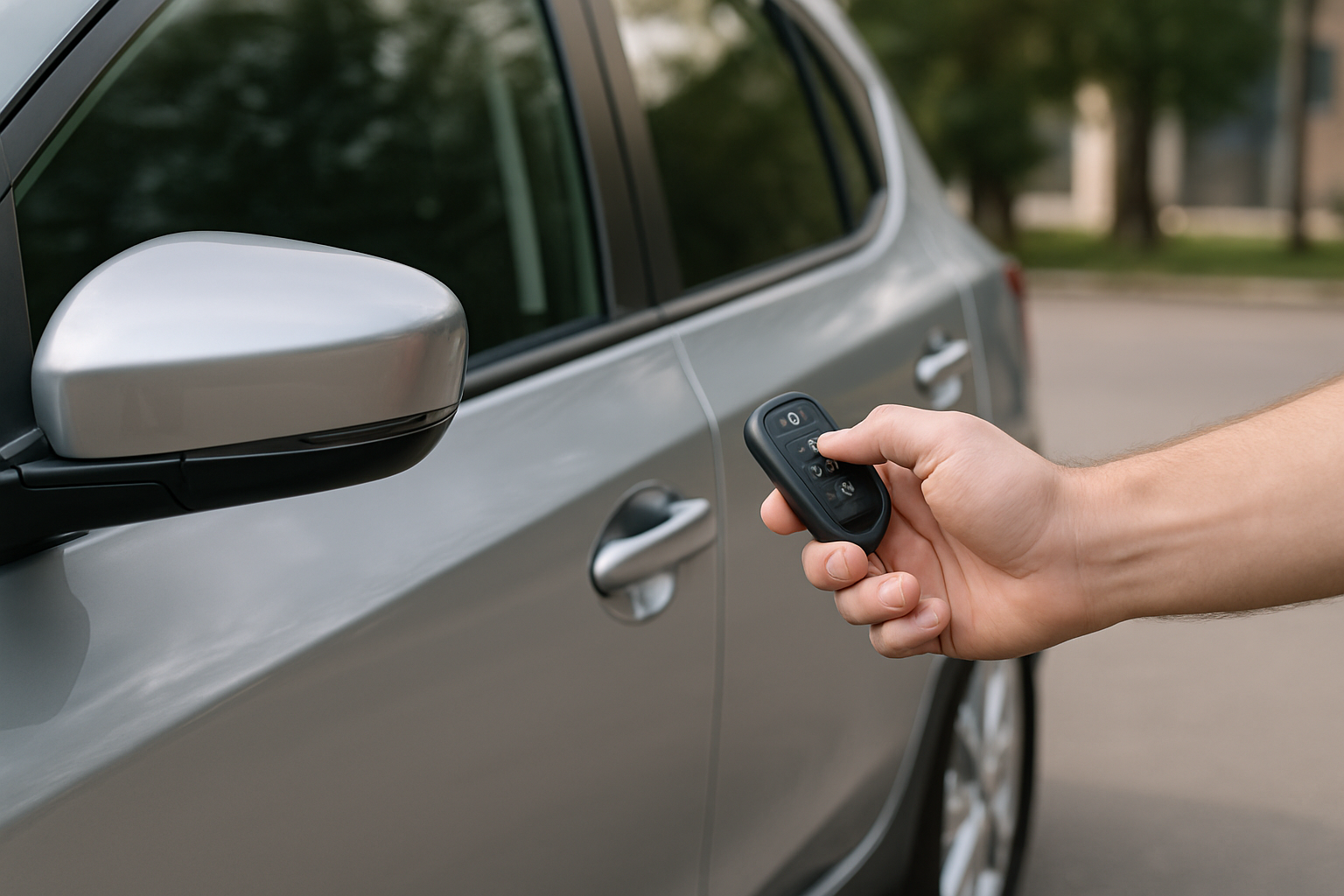
Picture this: you’re rushing to get somewhere important, and your key fob suddenly stops working. You press the unlock button repeatedly, but your car remains stubbornly locked. Don’t panic, because there are several hidden features built into your vehicle that most drivers never learn about.
Understanding Your Key Fob’s Hidden Physical Key
Every modern key fob contains a secret weapon that manufacturers don’t advertise well enough: a hidden physical key. This backup key is your first line of defense when the battery dies.
Look closely at your key fob and you’ll find a small button, tab, or sliding mechanism somewhere along the side or back. On most fobs, you’ll need to press a small release button while pulling out the metal key blade. Some fobs require you to slide a plastic cover or twist a section to reveal the key.
The physical key might seem tiny compared to traditional car keys, but it’s specifically designed to fit your vehicle’s hidden door locks. Keep this key easily accessible once you remove it, because you’ll need it for the next step.
Finding Your Car’s Hidden Door Lock
Modern cars appear to have smooth door handles without visible keyholes, but every vehicle has a hidden physical lock for emergency access. The trick is knowing where to look.
Check your driver’s side door handle carefully. You’ll typically find a small plastic cover, cap, or removable panel somewhere on the handle assembly. This cover protects the physical keyhole from weather and keeps the handle looking sleek.
Most covers pop off with gentle pressure using your fingernail or the metal key itself. Some slide to the side, while others flip open like a tiny door. Once removed, you’ll see a traditional keyhole that accepts your fob’s hidden physical key.
If you can’t locate the hidden lock on the driver’s door handle, check behind the handle where it meets the door panel. Some manufacturers position the keyhole on the back side of the handle assembly.
Unlocking Your Door the Old-Fashioned Way
Insert the physical key into the hidden lock and turn it counterclockwise to unlock. You might need to apply firm pressure since these locks don’t get used often. Don’t force it, but be confident with your turning motion.
Most vehicles will only unlock the driver’s door with the physical key, not all doors simultaneously like the electronic fob does. This is a security feature that prevents someone from unlocking your entire vehicle if they only gain access to the physical key.
Your car’s alarm system might activate when you open the door this way, since you’re bypassing the electronic entry system. This is completely normal, and the alarm will stop once you start the engine using the proper procedure.
Starting Your Engine With a Dead Key Fob
Getting inside your car is only half the battle. Starting the engine with a dead key fob requires another hidden feature that most drivers never discover.
If your vehicle has a traditional ignition switch where you insert a key, you can simply use the same physical key that opened your door. Insert it into the ignition and start the car normally.
For vehicles with push-button start systems, the process is different but equally simple. Your car has a hidden sensor that can detect your key fob even when the battery is dead, but only if you position it correctly.
Hold your key fob directly against the push-button start button. The exact positioning matters, so press the fob firmly against the start button itself, not just near it. While holding the fob against the button, press the brake pedal and push the start button simultaneously.
Some vehicles have a specific backup location where you place the dead fob. Check your center console, cup holder, or dashboard for a key-shaped outline or special marked area. Place your fob in this location, then proceed with normal push-button starting.
Emergency Key Fob Battery Replacement Solutions
Sometimes you need a quick temporary fix to get your fob working again. If you have another electronic device with the same battery type, you can borrow its battery for immediate use.
Most key fobs use common battery types like CR2032, CR2025, or CR1616. Check remote controls, small calculators, or other key fobs for compatible batteries. Digital calipers, kitchen scales, and computer motherboards often use these same batteries.
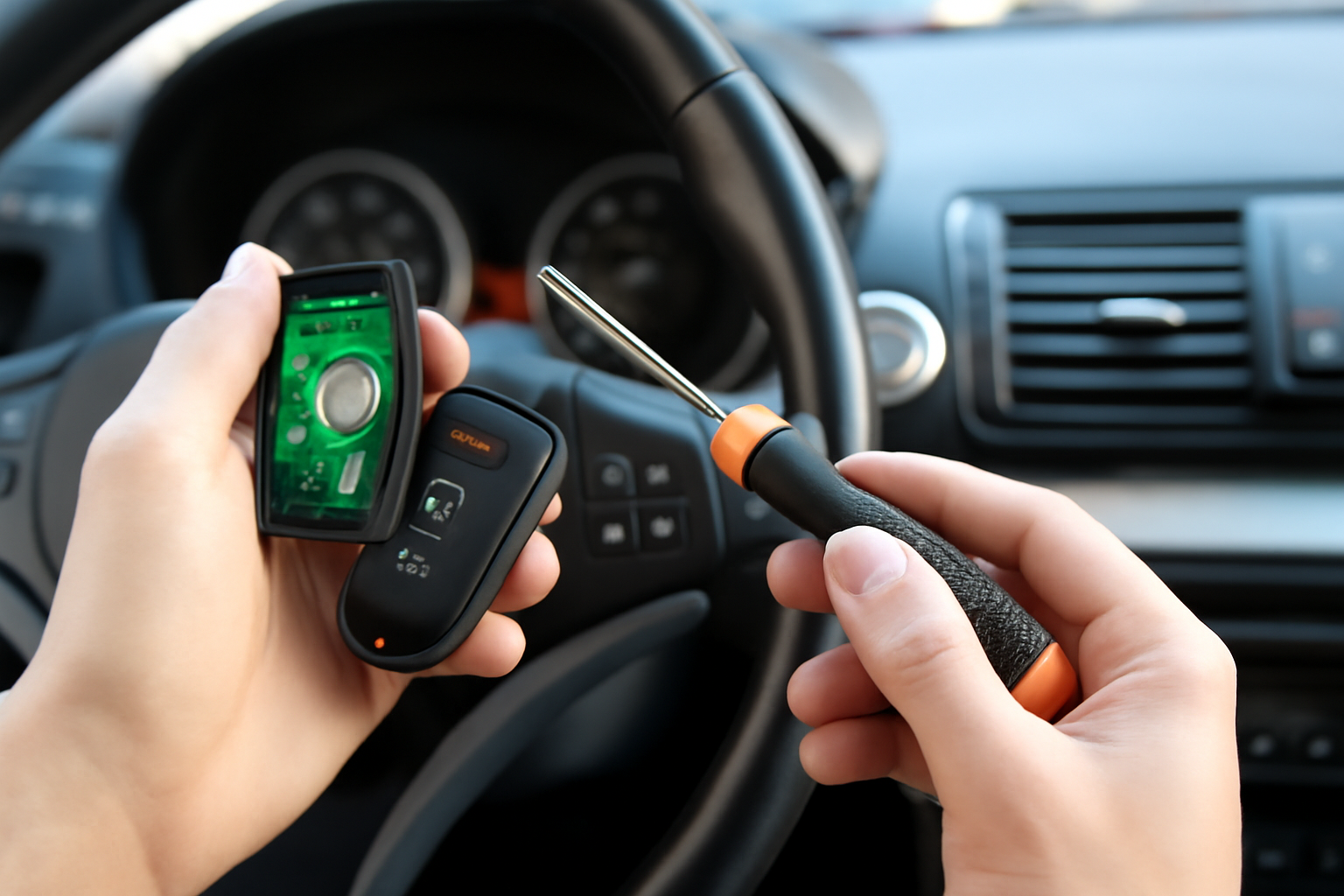
To replace the battery, look for a seam or split line around your key fob’s case. Most fobs split apart by gently prying with a small flathead screwdriver or coin. Be careful not to damage the internal components or lose small parts.
Remove the old battery and note its orientation before installing the new one. The positive side (marked with +) typically faces up, but double-check against the old battery’s position. Press the fob case back together until it clicks securely.
Professional Key Fob Battery Replacement Options
Many drivers prefer professional battery replacement to avoid damaging their expensive key fobs. Auto parts stores like AutoZone, O’Reilly, and Advance Auto Parts often provide free battery replacement services when you purchase the battery from them.
Dealership service departments can replace your fob battery and test all functions to ensure proper operation. While more expensive than DIY replacement, this option includes a guarantee that everything works correctly afterward.
Locksmith shops specialize in key fob services and typically charge reasonable fees for battery replacement. They also carry a wide variety of battery types and can often handle unusual or luxury vehicle fobs that require special procedures.
For convenient battery replacement options, key fob battery replacement kits include the most common battery types plus the small tools needed to open different fob designs safely.
Preventing Future Key Fob Battery Problems
Key fob batteries typically last 2-4 years depending on usage frequency and environmental conditions. Extreme temperatures, both hot and cold, can shorten battery life significantly.
Watch for warning signs that your fob battery is weakening: reduced range where you need to be closer to your vehicle for the buttons to work, delayed response when pressing buttons, or intermittent function where the fob works sometimes but not others.
Keep a spare battery in your wallet, purse, or glove compartment. These batteries are small, inexpensive, and have long shelf lives when stored properly. Mark the date on the battery package so you know how old your spare is.
Consider replacing your fob battery proactively every 2-3 years, even if it’s still working. This prevents the inconvenience of being locked out and ensures reliable operation.
What to Do About Car Alarm Systems
Using physical keys often triggers your vehicle’s alarm system since you’re bypassing the electronic entry method. Don’t panic when the alarm sounds, as this is normal behavior.
The alarm will typically stop once you successfully start the engine using either the physical key or the dead fob technique described above. Your car’s computer recognizes the correct key and disables the alarm automatically.
If the alarm continues running after starting the engine, try pressing any button on your key fob. Even with a weak battery, the fob might have enough power for one or two button presses that can reset the alarm system.
Some vehicles allow you to disable the alarm by turning the physical key in the door lock to the lock position, then back to unlock. This sequence can reset the alarm system without needing electronic intervention.
Long-Term Solutions for Reliable Access
Consider programming a spare key fob if you only have one. Most vehicles can store multiple fob codes, and having a backup prevents lockout situations entirely.
Smart phone apps from some manufacturers can unlock and start your vehicle remotely. Features like OnStar, BMW ConnectedDrive, Mercedes me connect, and similar services provide backup access through your smartphone.
Hide-a-key boxes offer old-school backup access, but choose high-quality magnetic boxes designed for automotive use. Place them in hidden locations that aren’t obvious to potential thieves but remain accessible when you need them.
Regular maintenance of your key fob includes keeping the contacts clean and protecting it from moisture. Store your fob away from magnetic objects and electronic devices that might interfere with its signal.
Frequently Asked Questions
Can I drive my car with a completely dead key fob?
Yes, once you’re inside and have started the engine using the methods described above, you can drive normally. The car only needs the fob for initial entry and starting. However, you won’t be able to use remote features like locking/unlocking from a distance.
Will using the physical key damage my car’s locks?
No, the physical key and hidden lock are designed for regular use. These are legitimate backup systems built by the manufacturer. The locks might feel stiff from lack of use, but they won’t be damaged by proper operation.
How long do key fob batteries typically last?
Most key fob batteries last 2-4 years with normal use. Factors like temperature extremes, frequency of use, and the specific fob design can affect battery life. Premium vehicles with more electronic features may drain batteries faster.
What if my car doesn’t have a hidden physical key in the fob?
Every modern vehicle is required to have mechanical backup access, but some luxury vehicles use different systems. Check your owner’s manual for specific procedures, or contact your dealership for guidance on your particular model’s backup access method.

Leave a Reply