
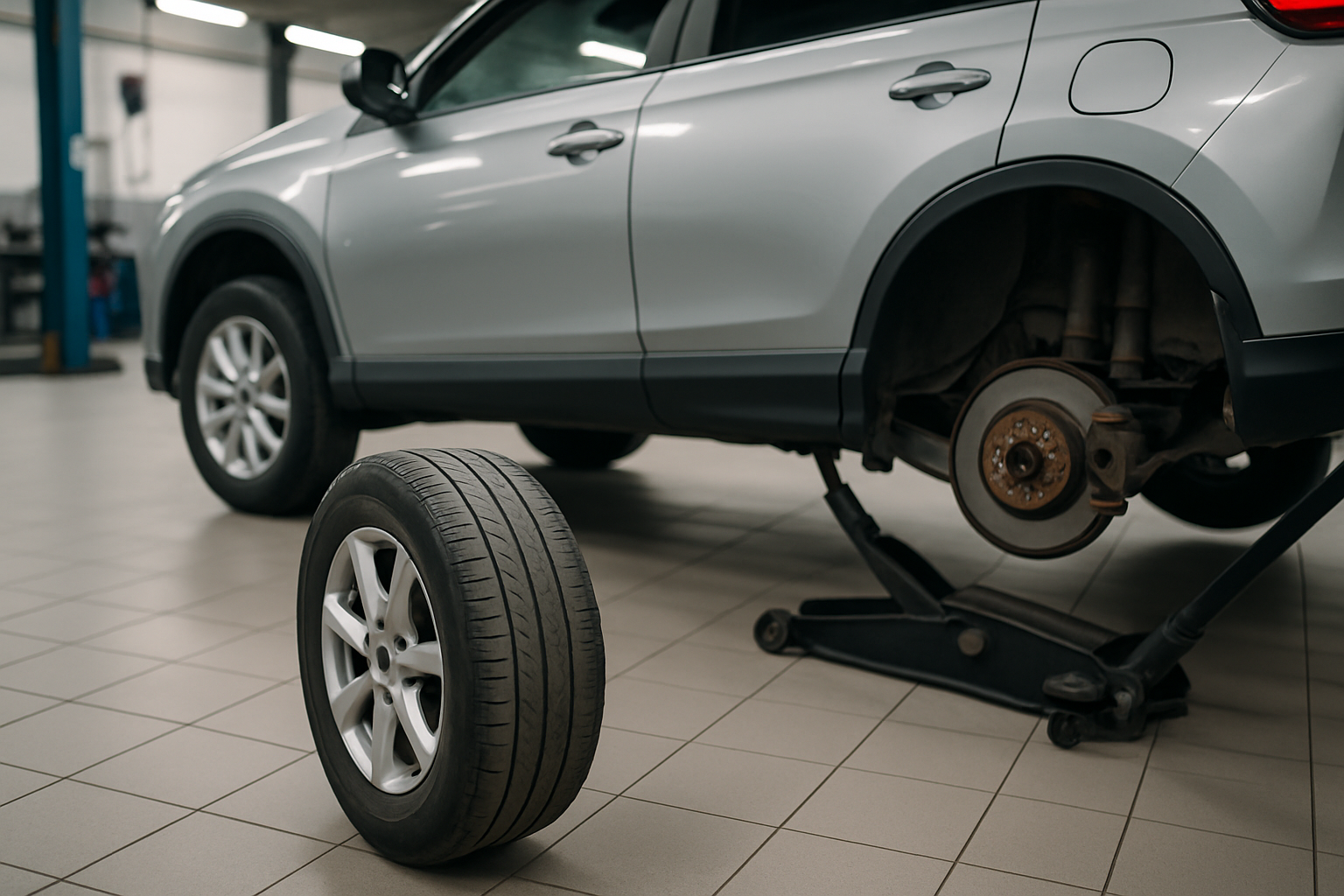
Your tires tell a story every time you drive, and learning to read the wear patterns can save you hundreds of dollars in premature replacements while keeping you safer on the road. Uneven tire wear isn’t just about money, it’s a warning sign that something else needs attention on your vehicle.
Most drivers don’t realize their tires are wearing unevenly until it’s too late. By understanding what causes different wear patterns and how to spot them early, you can fix the underlying problem before it destroys a full set of tires.
How Normal vs. Abnormal Tire Wear Looks
Normal tire wear happens gradually across the entire tread surface. You’ll see the tread depth decreasing evenly from the outer edge to the inner edge, with no dramatic differences in depth across the tire’s width.
Abnormal wear creates distinct patterns that point to specific problems. These patterns might show up as excessive wear on just the center of the tread, heavy wear on both outer edges, wear on only one side, or a cupping pattern that creates high and low spots around the tire’s circumference.
The key is catching these patterns early. Once you know what to look for, a quick visual inspection during your monthly tire pressure check can reveal problems before they become expensive.
Center Wear Pattern: The Overinflation Problem
Center wear shows up as excessive tread wear down the middle of your tire while the edges still have plenty of tread depth. This pattern creates a crown-like appearance where the center sits lower than the shoulders.
Overinflation causes this pattern because too much air pressure pushes the center of the tire’s contact patch harder against the road. The tire essentially rides on its middle section instead of using the full width of the tread.
Your tire pressure monitoring system won’t warn you about overinflation, only underinflation. That’s why you need to check pressure manually with a good gauge, especially after temperature changes or if someone else has been adding air to your tires.
Fix center wear by reducing tire pressure to the manufacturer’s specification, which you’ll find on a sticker inside the driver’s door jamb. Don’t use the maximum pressure printed on the tire sidewall unless your vehicle’s door sticker specifically calls for it.
Edge Wear Pattern: When Tires Run Low on Air
Edge wear appears as excessive wear on both outer edges of the tire while the center tread remains relatively deep. This creates the opposite pattern of center wear, with the shoulders wearing faster than the middle.
Underinflation lets the tire’s sidewalls flex too much, causing the edges to scrub against the pavement with each revolution. The tire can’t maintain its proper shape under load, so the contact patch spreads out to the shoulders.
This pattern often develops slowly because many drivers don’t check tire pressure regularly. A tire can lose 1-2 PSI per month naturally, and temperature changes can cause additional pressure drops of about 1 PSI for every 10-degree decrease.
Correcting edge wear requires inflating tires to proper pressure and maintaining it with monthly checks. If the wear is severe on both edges, you might also want to have your wheel alignment checked since extreme underinflation can sometimes knock alignment out of specification.
One-Side Wear: Alignment Issues
One-side wear shows heavy wear on either the inner or outer edge of the tire, but not both edges like you’d see with underinflation. The wear typically appears as a smooth, angled slope from the worn edge toward the good tread.
Wheel alignment problems cause this pattern. Your wheels might be tilted too far inward or outward (camber), pointed left or right instead of straight ahead (toe), or have incorrect caster angles that affect how the wheel contacts the road during turns.
Inner edge wear is more common than outer edge wear because most alignment problems tend to create negative camber or excessive toe-out. You’ll often see this pattern on the front tires first, though rear tires can develop one-side wear if the rear alignment is off.
Professional wheel alignment is the only fix for this pattern. Adjusting tire pressure won’t help because the problem lies in how the wheel sits in relation to the road surface, not the tire’s inflation level.
Cupping Pattern: Suspension Component Failure
Cupping creates a wavy pattern around the tire’s circumference with alternating high and low spots in the tread. When you run your hand around the tire, you can feel the irregular surface, and the tire often makes a rhythmic thumping sound while driving.
Worn shock absorbers or struts cause cupping because they can’t control tire bounce properly. As the wheel hits bumps and dips, a worn damper lets the tire hop and skip instead of maintaining steady contact with the road surface.
Other suspension components can also create cupping patterns. Worn ball joints, tie rod ends, or wheel bearings allow excessive wheel movement that creates similar irregular wear patterns.
Replacing the worn suspension components stops the pattern from getting worse, but tires with severe cupping may need replacement even after fixing the underlying problem. The irregular surface can cause vibration and noise that persist even with new shocks or struts.
How to Inspect Your Tire Wear Patterns
Start your inspection with the vehicle parked on level ground where you can walk around and examine each tire. You’ll get the most accurate reading when tires are cool and not recently driven.
Use a tire tread depth gauge to measure depth at three points across each tire: the inner edge, center, and outer edge. Compare these measurements to identify patterns. A difference of more than 2/32″ between any two points indicates abnormal wear.
Visual inspection reveals patterns that measurements might miss. Look for smooth, worn areas, shiny spots where the tread has been scrubbed away, or any areas where you can see more of the underlying tire construction.
Run your hands around the tire to feel for irregular surfaces, especially the cupping pattern that’s easier to feel than see. Check all four tires because patterns might appear differently on each wheel depending on which components are affected.
Essential Tools for Tire Wear Diagnosis
A quality tire tread depth gauge gives you precise measurements to track wear progression and identify patterns early. Digital gauges provide the most accurate readings, though a simple penny test can work for basic depth checking.
You’ll find tire tread depth gauges that range from basic coin-style gauges to digital versions with LED displays. The digital models make it easier to spot small differences in tread depth that indicate developing patterns.
A tire pressure gauge is equally important since many wear patterns start with incorrect inflation. Get a gauge that reads in 0.5 PSI increments for accuracy, and check it against a known standard occasionally to make sure it’s reading correctly.
Keep a small notebook or use your phone to record tire measurements and dates. Tracking wear progression helps you spot patterns developing before they become obvious visual problems.
When Tire Wear Patterns Indicate Safety Issues
Some wear patterns create immediate safety concerns that require prompt attention. Severe one-side wear can lead to sudden tire failure, especially if the wear has exposed the tire’s internal belts or cord.
Cupping patterns affect vehicle handling and can make emergency maneuvers unpredictable. The irregular contact patch changes how the tire grips during braking and cornering, potentially leading to longer stopping distances or loss of control.
Any tire worn down to 2/32″ or less in any area needs immediate replacement regardless of the wear pattern. Most states consider this the legal minimum tread depth, though stopping performance degrades significantly before reaching this point.
Don’t wait to address alignment or suspension problems that cause wear patterns. These issues typically get worse over time and can damage other components if left uncorrected.
Preventing Uneven Tire Wear
Monthly tire pressure checks prevent most inflation-related wear patterns. Temperature changes affect tire pressure more than most drivers realize, so check pressure whenever the weather changes significantly.
Tire rotation every 5,000-7,500 miles helps even out wear patterns and extends overall tire life. Follow your vehicle manufacturer’s rotation pattern, which accounts for differences between front and rear tire sizes or directional tread designs.
Address suspension problems promptly when you notice symptoms like excessive bouncing, poor ride quality, or steering problems. Worn shocks and struts affect more than just ride comfort; they directly impact tire wear and vehicle safety.
Have wheel alignment checked annually or whenever you notice steering pull, off-center steering wheel position, or early signs of one-side wear. Many tire shops include basic alignment checks with tire installation or rotation services.
Frequently Asked Questions
Can I fix uneven tire wear by rotating tires more frequently?
Tire rotation can slow the progression of some wear patterns, but it won’t fix the underlying cause. If you have alignment problems or worn suspension components, rotation will just spread the uneven wear to all four tires instead of correcting it. Fix the root cause first, then use rotation to maximize tire life.
How long does it take for wear patterns to develop?
Development time varies based on driving conditions and the severity of the problem. Severe alignment issues can create noticeable one-side wear in as little as 1,000-2,000 miles, while minor pressure problems might take 10,000-15,000 miles to become obvious. Regular inspections help catch patterns early.
Will fixing the problem reverse existing tire wear?
Correcting alignment, suspension, or inflation problems stops further irregular wear but won’t restore tread that’s already been worn away. Tires with mild patterns might provide acceptable service after repairs, but severely worn tires typically need replacement even after fixing the underlying issue.
Can different tire brands or models cause uneven wear?
Mixing different tire brands, models, or significantly different tread depths can contribute to uneven wear patterns. Each tire design has different rolling characteristics, and mismatched tires can create handling problems that accelerate wear. Replace tires in sets when possible, or at minimum replace both tires on the same axle with identical models.

Leave a Reply