

Few things are more unsettling than a mysterious humming noise that starts up every time you hit highway speeds. Your car was running quietly around town, but once you reach 50 mph or higher, that persistent drone kicks in and won’t go away.
This type of noise typically points to one of three main culprits: worn wheel bearings, tire wear patterns, or differential problems. Each has its own distinct characteristics, and with the right approach, you can pinpoint exactly what’s causing your highway humming.
Understanding Highway Speed Humming Noises
Highway humming noises develop because certain components only create noticeable sound under sustained high-speed conditions. At lower speeds, road noise and engine sounds mask these issues, but once you’re cruising at highway speeds, the humming becomes impossible to ignore.
The key to diagnosing these noises lies in understanding how they change with different driving conditions. Does the sound get louder when you turn? Does it vary with acceleration or deceleration? These details will lead you straight to the source.
Wheel Bearing Problems: The Most Common Culprit
Worn wheel bearings cause the majority of highway humming complaints. These bearings support your wheel assemblies and allow them to rotate smoothly. When they start to fail, they create a distinctive humming or growling noise that becomes more pronounced at highway speeds.
How to Identify Wheel Bearing Noise
Wheel bearing noise has one telltale characteristic: it changes when you turn the steering wheel. If you’re hearing a hum while driving straight and it gets noticeably louder when you turn left, your right wheel bearing is likely worn. Conversely, if the noise gets louder during right turns, suspect the left bearing.
This happens because turning shifts your vehicle’s weight. When you turn left, more weight transfers to the right wheels, putting additional load on a failing right bearing and making it noisier. The same principle applies in reverse for right turns.
You can test this theory safely on a quiet highway. While maintaining a steady speed around 55-65 mph, gently steer left and right within your lane. Don’t make dramatic steering inputs, just slight movements to shift the vehicle’s weight from side to side.
Which Side Has the Bad Bearing
Determining which wheel bearing is failing becomes straightforward once you understand the weight transfer principle. Drive at highway speed and make gentle lane changes or slight steering corrections while listening carefully to how the noise changes.
If the humming gets louder during left turns or when the vehicle leans left, the problem is on the right side. If it gets louder during right turns, the left bearing needs attention. Front wheel bearings typically create more noticeable noise than rear bearings because they’re closer to the driver.
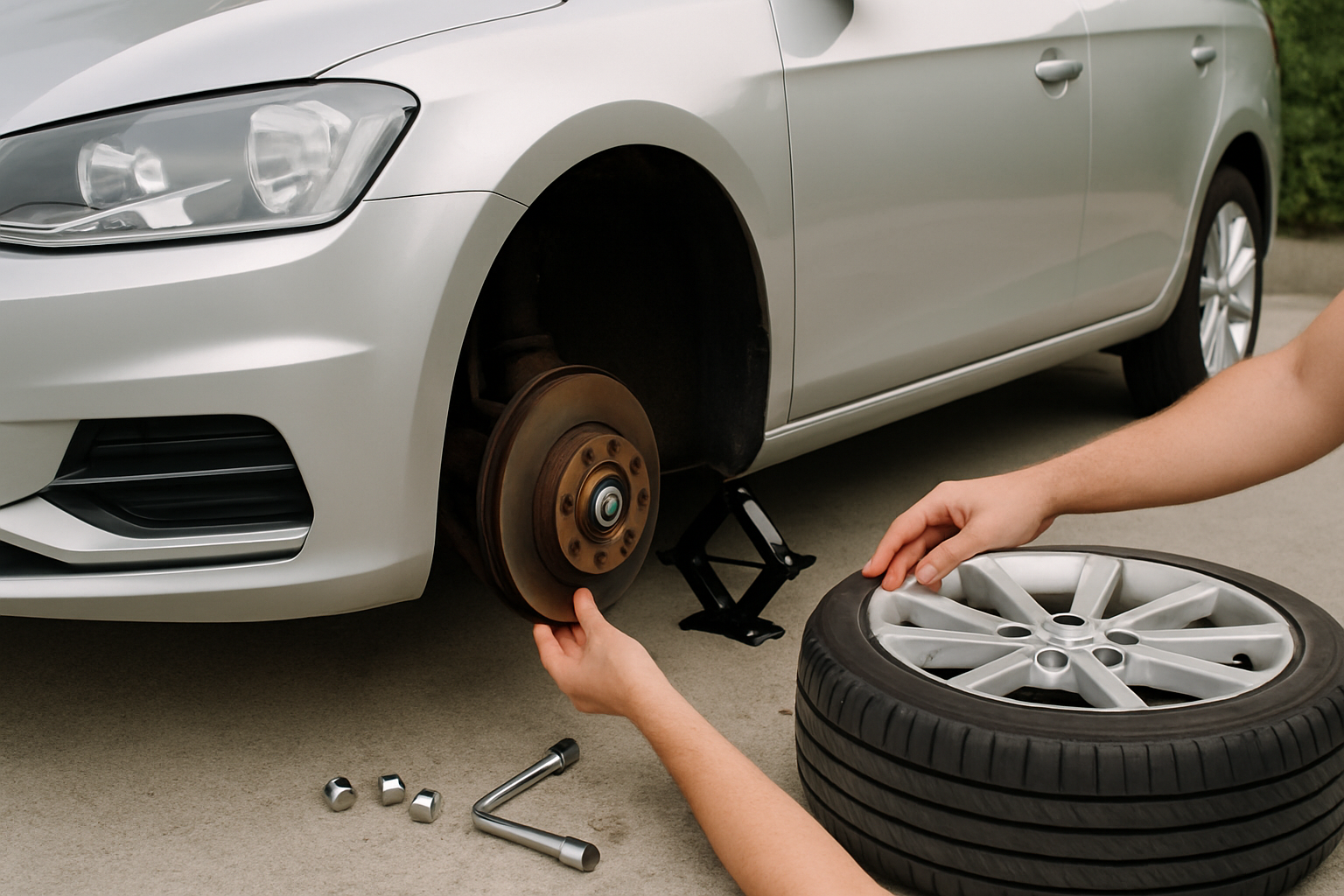
On many vehicles, you can also check for play in the bearing by jacking up the suspected wheel and trying to wiggle it. Grab the tire at the 12 and 6 o’clock positions and try to rock it back and forth. Any noticeable movement indicates bearing wear.
Tire-Related Humming Noises
Irregular tire wear patterns create their own distinct humming sounds at highway speeds. Two specific wear patterns cause most tire-related highway noise: cupping and feathering.
Tire Cupping
Cupping occurs when small sections of tread wear away faster than surrounding areas, creating a scalloped pattern around the tire’s circumference. This uneven surface creates a rhythmic humming or thumping noise that increases with speed.
You can identify cupping by running your hand across the tire tread. Cupped tires feel noticeably uneven, with definite high and low spots. Cupping typically results from worn suspension components like shock absorbers or struts that allow the tire to bounce excessively.
Tire Feathering
Feathering happens when one edge of each tread block wears faster than the other, creating a sawtooth pattern. This wear pattern produces a humming noise that may seem to come from inside the cabin rather than from a specific wheel.
Check for feathering by running your hand across the tire tread in both directions. Feathered tires feel smooth when you move your hand one way but rough in the opposite direction. This wear pattern usually indicates alignment problems or worn suspension components.
Isolating Tire Noise
Tire noise typically remains constant regardless of steering input, unlike wheel bearing noise. However, you can isolate which tires are causing problems through a simple rotation test.
If you suspect tire noise, note which side of the vehicle seems louder. After rotating your tires, take another highway test drive. If the noise moves to a different location following the tire rotation, you’ve confirmed that tire wear is causing your humming problem.
Differential Whine: The Third Possibility
Differential problems create a whining or humming noise that’s most noticeable during acceleration or deceleration. Unlike wheel bearing noise, differential whine doesn’t change with steering input but varies significantly with throttle position.
Identifying Differential Noise
Differential noise becomes most apparent when you’re accelerating up highway on-ramps or during sustained climbs. The whine may also appear during engine braking or when decelerating from highway speeds.
Test for differential noise by varying your throttle position while maintaining highway speed. If the humming gets louder under acceleration or deceleration but remains quiet during steady cruising, your differential may need attention.
On rear-wheel-drive vehicles, differential noise seems to come from directly beneath the driver’s seat. Front-wheel-drive cars with transaxle problems usually produce noise that appears to come from the engine bay area.
Systematic Diagnosis Process
Start your diagnosis by determining how the noise responds to different driving conditions. This systematic approach will save you time and prevent unnecessary part replacement.
First, establish the baseline noise level while driving straight at highway speed. Then perform gentle left and right steering inputs to test for wheel bearing problems. If the noise changes with steering, you’ve likely found your answer.
If steering doesn’t affect the noise, test throttle response. Does the humming change when you accelerate, decelerate, or coast? Noise that varies with throttle position suggests differential or drivetrain problems.
Finally, consider the noise’s location. Does it seem to come from a specific corner of the vehicle, from directly underneath, or from everywhere at once? Localized noise points to wheel bearings or tires, while generalized humming may indicate differential issues.
When to Seek Professional Help
While these diagnostic techniques help identify the general source of highway humming, some situations require professional equipment and expertise. Wheel bearing replacement, for example, often requires specialized pullers and presses.
If your diagnosis points to wheel bearings but you’re not comfortable with the repair, find a shop that specializes in suspension and brake work. Many general repair shops outsource bearing jobs because they require specific tools and experience.
Differential problems also warrant professional attention. These components contain precise gear meshes and require specific lubricants and setup procedures. Attempting differential repairs without proper knowledge can turn a relatively minor problem into an expensive catastrophe.
Prevention and Maintenance
Regular maintenance prevents many highway humming problems. Rotate your tires every 5,000-7,500 miles to ensure even wear patterns. Keep your wheels properly aligned and replace worn suspension components promptly to prevent tire cupping and feathering.
Wheel bearings typically last 75,000-150,000 miles depending on driving conditions. However, driving through deep water, excessive heat, or contaminated environments can shorten their lifespan significantly.
Change differential fluid according to your vehicle’s maintenance schedule. Many drivers overlook this service, but old differential fluid can cause premature gear wear and the whining noises that result.
Cost Considerations
Wheel bearing replacement costs vary widely depending on your vehicle’s design. Simple bolt-on units might cost $200-400 per side including labor, while pressed bearings or integrated hub assemblies can run $400-800 per side.
Tire replacement costs depend on your tire size and quality preferences, but addressing the underlying cause of irregular wear is crucial. Replacing tires without fixing alignment or suspension problems means you’ll face the same issue again in 20,000-30,000 miles.
Differential repairs range from simple fluid changes ($150-250) to complete rebuilds ($1,500-3,000). Early diagnosis and repair typically keep costs on the lower end of this spectrum.
Frequently Asked Questions
Can I continue driving with a humming noise?
This depends on the underlying cause. Tire-related humming is generally safe in the short term, though it will worsen over time. Wheel bearing problems can become dangerous if the bearing fails completely, potentially causing wheel separation. Differential issues rarely cause immediate safety concerns but can lead to expensive damage if ignored.
Why does the humming only happen at highway speeds?
Highway speeds amplify certain mechanical problems that remain quiet at lower speeds. Wheel bearings generate more noise under sustained high-speed operation. Tire wear patterns create resonance frequencies that become noticeable around 45-50 mph. Additionally, other vehicle noises that mask these problems at low speeds become less prominent at highway speeds.
Will the noise get worse over time?
All three common causes of highway humming get progressively worse without repair. Worn wheel bearings will eventually fail completely. Irregular tire wear accelerates once it starts. Differential problems cause increasing gear damage over time. Early diagnosis and repair prevent more expensive problems later.
Can weather affect highway humming noises?
Temperature changes can make some noises more or less noticeable. Cold weather often makes worn bearings noisier, while heat can affect tire noise characteristics. However, these noises won’t disappear completely due to weather changes. If your humming comes and goes with temperature, investigate other potential causes like exhaust system problems or loose heat shields.
This article contains affiliate links. If you purchase through these links, we may earn a small commission at no extra cost to you.


Leave a Reply