
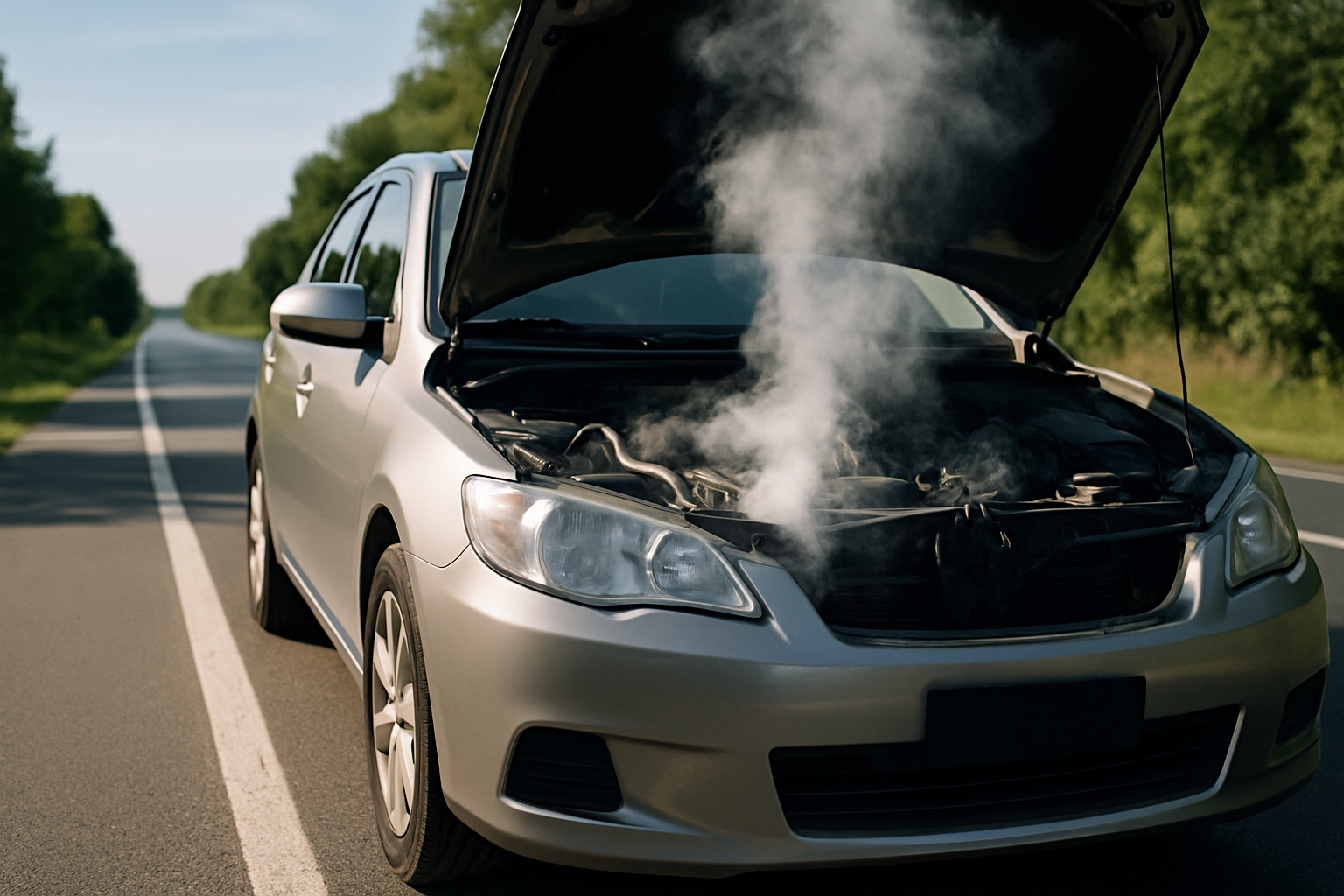
Car overheating is one of those problems that can turn a regular drive into a roadside emergency in minutes. When your temperature gauge starts climbing into the red zone, knowing what to do next can save you from expensive engine damage and keep you safe on the road.
Your engine relies on a complex cooling system to maintain the right operating temperature, and when something goes wrong, the consequences can be severe. Let’s walk through exactly what you need to do when your car overheats and how to prevent it from happening again.
What to Do When Your Car Overheats: Immediate Steps
The moment you notice your temperature gauge climbing toward the red zone or see steam coming from under the hood, you need to act fast. These first few minutes are critical for preventing major engine damage.
Pull Over Immediately and Safely
Don’t try to push through to your destination or the next exit. Pull over to the shoulder as soon as you can do so safely. Turn on your hazard lights and get your car as far from traffic as possible.
Turn off the engine immediately. Every second your engine runs while overheated increases the risk of catastrophic damage like a blown head gasket or cracked engine block.
Do NOT Open the Radiator Cap
This is the most important safety rule when dealing with an overheated engine. The cooling system is under extreme pressure when hot, and removing the radiator cap can cause scalding coolant to spray out violently.
Even if the engine has been off for 30 minutes, the system can still be dangerously pressurized. Wait at least an hour before even considering opening the hood, and never remove the radiator cap until the engine is completely cool.
Check for Obvious Problems
After waiting for the engine to cool down, you can pop the hood and look for visible issues. Check for coolant puddles under the car, damaged hoses, or a cooling fan that isn’t running.
Look at the coolant reservoir if you can see it without removing any caps. If it’s completely empty, you’ve got a leak somewhere in the system.
Should You Drive or Call for a Tow?
This decision depends on what caused the overheating and how far you need to go. If you can identify a simple fix like a loose hose clamp or you just need to add coolant, you might be able to drive carefully to a repair shop.
However, if you suspect a blown head gasket, failed water pump, or major coolant leak, driving the car will likely cause expensive engine damage. When in doubt, call for a tow truck.
Signs You Need a Tow Truck
Call for professional help if you notice white smoke from the exhaust, milky oil on the dipstick, or coolant that keeps disappearing even after you’ve added more. These symptoms often indicate head gasket problems.
If the cooling fan isn’t running when the engine is hot, or if you see significant coolant leaks, towing is usually the safer choice than risking further damage.
Common Causes of Engine Overheating
Understanding why engines overheat can help you prevent problems and recognize warning signs early. Most overheating issues come down to problems with coolant circulation, heat dissipation, or system leaks.
Thermostat Failure
The thermostat controls coolant flow between your engine and radiator. When it fails in the closed position, coolant can’t circulate properly, causing rapid overheating.
Thermostat problems often develop gradually, so you might notice your temperature gauge running hotter than normal before complete failure occurs. Replacing a thermostat typically costs between $200-400 at most shops.
Water Pump Problems
Your water pump circulates coolant throughout the engine and cooling system. When it fails, coolant stops moving, and your engine overheats quickly.
Water pump failure often announces itself with coolant leaks from the front of the engine or unusual noises from the pump area. This repair usually runs $400-800 depending on your vehicle and how accessible the pump is.
Radiator Fan Issues
Electric cooling fans pull air through the radiator when you’re stopped in traffic or driving slowly. If the fan motor fails or the relay goes bad, your car will overheat during idle or low-speed driving.
Fan problems are often intermittent at first. You might notice higher temperatures in stop-and-go traffic but normal temps on the highway.
Coolant Leaks
Even small coolant leaks can eventually lead to overheating as the system loses its ability to absorb and dissipate heat. Common leak points include radiator hoses, the radiator itself, water pump gaskets, and heater core connections.
Check your driveway or parking spot regularly for coolant puddles. Coolant is usually bright green, orange, or pink and has a sweet smell.
Head Gasket Failure
A blown head gasket allows combustion gases to enter the cooling system, causing overheating and coolant loss. This is one of the most expensive overheating-related repairs, often costing $2000-4000.
Head gasket problems can cause white exhaust smoke, bubbling in the radiator, or oil and coolant mixing together. If you suspect head gasket issues, stop driving immediately.
How to Prevent Engine Overheating
Prevention is always cheaper than repairs when it comes to cooling system problems. Regular maintenance and attention to warning signs can save you from roadside emergencies and expensive repairs.
Regular Coolant System Maintenance
Check your coolant level monthly when the engine is cold. The reservoir should be between the minimum and maximum marks. Top off with the correct coolant type if needed, but never add water alone in cold climates.
Have your cooling system flushed according to your owner’s manual schedule, typically every 5 years or 100,000 miles. Old coolant loses its ability to prevent corrosion and transfer heat effectively.
Watch Your Temperature Gauge
Get familiar with your car’s normal operating temperature range. Most vehicles run around the middle of the temperature gauge during normal operation.
If you notice the gauge running hotter than usual, even if it’s not in the red zone, have your cooling system checked. Early intervention can prevent major problems.
Inspect Hoses and Belts
Check radiator hoses every few months for cracks, soft spots, or swelling. Squeeze the hoses when the engine is cold. They should feel firm but not rock-hard.
Make sure your serpentine belt is in good condition and properly tensioned. This belt drives your water pump on many vehicles, so belt failure can cause immediate overheating.
Keep Your Radiator Clean
Remove leaves, dirt, and debris from your radiator fins regularly. A blocked radiator can’t dissipate heat effectively, especially during hot weather or heavy traffic.
If you live in an area with lots of bugs or highway driving, consider having your radiator professionally cleaned annually. External cleaning is much cheaper than internal repairs.
Address Small Problems Quickly
Don’t ignore minor coolant leaks or temperature fluctuations. Small problems often become big problems when left unattended.
If you’re constantly adding coolant but can’t find an obvious leak, have a pressure test done. Internal leaks can be harder to spot but are often more serious.
Emergency Overheating Fixes
Sometimes you need to get a few more miles out of an overheating car to reach help. These temporary fixes can work in emergencies but aren’t long-term solutions.
Turn on the Heat
Running your heater on full blast helps pull heat away from the engine by using the heater core as an additional radiator. It’s uncomfortable in summer but can help prevent engine damage.
This trick works best for minor overheating situations or when you’re stuck in traffic and need to keep the engine running.
Add Water in Emergencies
If you’re stranded and need to add fluid to the cooling system, plain water is better than nothing. However, use the proper coolant mixture as soon as possible.
Water alone can cause corrosion and will freeze in cold weather, but it will help cool your engine in an emergency situation.
When to Call a Professional
Some cooling system problems are beyond typical DIY repairs. Knowing when to call a professional can save you time and prevent additional damage.
Complex issues like head gasket replacement, internal engine problems, or electrical cooling fan diagnosis usually require professional equipment and expertise.
If you’re not comfortable working with pressurized cooling systems or don’t have the proper tools, professional diagnosis is worth the cost to avoid misdiagnosis and unnecessary parts replacement.
Frequently Asked Questions
How long can I drive with an overheated engine?
You shouldn’t drive at all with an overheated engine. Even a few minutes of driving with the temperature gauge in the red can cause thousands of dollars in engine damage. Pull over immediately and shut off the engine.
Can I add coolant to a hot engine?
Never add cold coolant to a hot engine, as the temperature shock can crack the engine block or radiator. Always wait for the engine to cool completely before adding any fluids to the cooling system.
Why does my car overheat only in traffic?
Overheating in stop-and-go traffic usually indicates a problem with your cooling fan, radiator blockage, or insufficient coolant flow. At highway speeds, air movement helps cool the radiator, but sitting still requires the electric fan to do all the work.
How much does it cost to fix an overheating car?
Repair costs vary widely depending on the cause. Simple fixes like replacing a thermostat might cost $200-400, while major problems like head gasket replacement can run $2000-4000 or more. Early diagnosis and repair are always less expensive than waiting until major damage occurs.
This article contains affiliate links. If you purchase through these links, we may earn a small commission at no extra cost to you.

Leave a Reply