
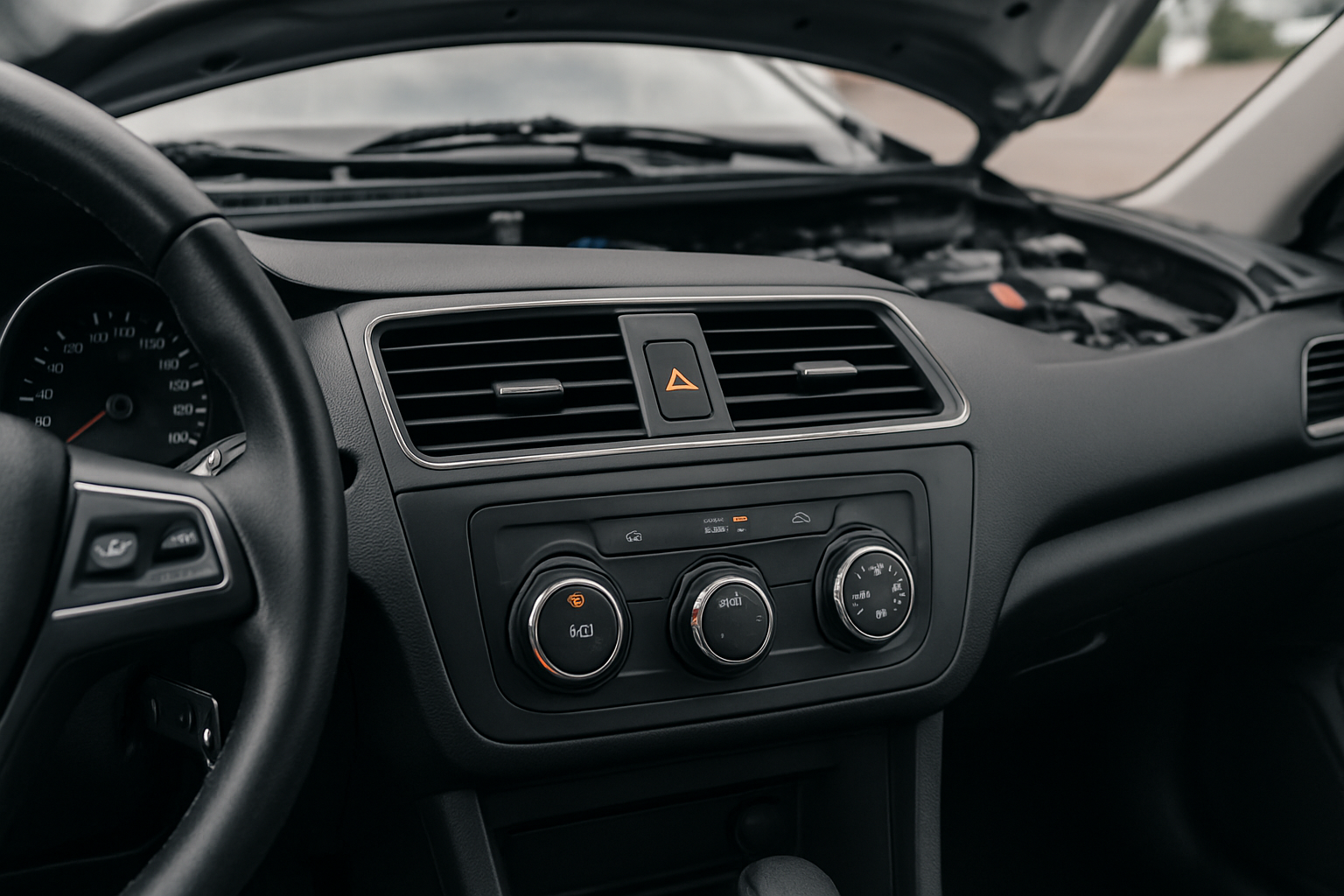
Nothing ruins a hot summer drive quite like turning on your AC only to get blasted with warm air. Your car’s air conditioning system is more complex than most people realize, and when it stops working properly, several different components could be the culprit.
Understanding Your Car’s Air Conditioning System
Your vehicle’s AC system works by circulating refrigerant through a closed loop of components. The compressor pressurizes the refrigerant, the condenser cools it down, and the evaporator absorbs heat from inside your car. When any part of this cycle breaks down, you’ll feel the difference immediately.
Most AC problems fall into a few common categories, and understanding these can save you both time and money. Some fixes are simple enough for any car owner to handle, while others require professional attention.
Low Refrigerant: The Most Common Culprit
Low refrigerant levels cause about 85% of AC problems. Your system relies on having the right amount of refrigerant to transfer heat effectively. When levels drop, the system can’t cool properly, and you’ll get lukewarm or completely warm air instead.
Refrigerant doesn’t just disappear on its own. If your levels are low, there’s almost always a leak somewhere in the system. Small leaks can develop over time as seals age and hoses deteriorate. Larger leaks might come from damaged components or loose connections.
You can check refrigerant levels using the sight glass on your AC system, usually located near the receiver-drier. If you see bubbles in the glass when the AC is running, your refrigerant is likely low. A completely clear sight glass typically indicates proper levels.
When AC Recharge Kits Work
Over-the-counter AC recharge kits can temporarily fix low refrigerant issues. These kits work best when you have a very slow leak that has gradually reduced your refrigerant levels over months or years. AC recharge kits are available for both R134a and R1234yf systems, depending on your vehicle’s year.
Most recharge kits include a canister of refrigerant, a hose with pressure gauge, and detailed instructions. The process involves connecting the kit to your low-pressure service port and adding refrigerant while monitoring the gauge readings.
When Recharge Kits Mask Bigger Problems
Recharge kits become problematic when they’re used to mask significant leaks. If your refrigerant disappears within days or weeks of recharging, you have a leak that needs professional repair. Repeatedly adding refrigerant without fixing the underlying problem wastes money and can damage other AC components.
Large leaks often require component replacement, not just refrigerant. Adding more refrigerant to a system with a major leak is like filling a bucket with a hole in the bottom.
Blend Door Actuator Problems
The blend door actuator controls the mixing of hot and cold air inside your dashboard. When this small motor fails, you might get stuck with warm air even though your AC system is working perfectly. This problem is especially common in vehicles with automatic climate control.
You’ll often hear clicking or grinding noises from your dashboard when the blend door actuator starts failing. The sounds typically occur when you adjust temperature settings or first start the car. Some vehicles will also display error codes related to climate control.
Blend door actuators are model-specific parts that usually cost between $50 and $150. The challenging part is accessing them, as they’re buried deep in your dashboard. Most actuators are held in place with just a few screws, but reaching them often requires removing dashboard panels.
Compressor Clutch Issues
Your AC compressor has an electromagnetic clutch that engages when you turn on the air conditioning. If this clutch fails, the compressor won’t run, and you won’t get cold air. Clutch problems can be electrical, mechanical, or both.
You can diagnose clutch issues by watching the compressor pulley while someone turns on the AC. The center section should engage and start spinning with the outer pulley. If it doesn’t move, you likely have a clutch problem.
Electrical issues might involve a blown fuse, bad relay, or faulty pressure switch. These are usually cheaper fixes than mechanical clutch problems. Mechanical failures often require replacing the entire clutch assembly or the whole compressor.
Condenser Fan Troubles
The condenser fan helps cool the refrigerant after it leaves the compressor. When this fan stops working, your AC might blow cold air at idle but warm up in traffic or at highway speeds. The fan is especially critical when your car isn’t moving fast enough for natural airflow.
Condenser fan problems usually stem from a failed fan motor, damaged fan blades, or electrical issues. You can check the fan by looking through your grille while the AC is running. Both the radiator fan and condenser fan should be spinning.
Fan motors typically last 80,000 to 120,000 miles before failing. Replacement fans cost between $100 and $300 for most vehicles, plus labor if you’re not installing it yourself.
Diagnosing Your Specific Problem
Start your diagnosis by checking the obvious things first. Make sure your AC controls are set correctly and that all fuses are intact. Many apparent AC failures turn out to be simple setting mistakes or blown fuses.
Listen to your system while it’s running. Unusual noises can point you toward specific components. Clicking from the dashboard suggests blend door problems, while grinding from the engine bay might indicate compressor issues.
Check your refrigerant levels using the sight glass method mentioned earlier. This quick check can tell you whether you’re dealing with a simple low-refrigerant situation or something more complex.
DIY Fixes vs Professional Repair
Simple refrigerant recharges are well within most car owners’ capabilities. The process is straightforward, and the tools are inexpensive. Just make sure you’re using the correct refrigerant type for your vehicle.
Fuse and relay replacements are also easy DIY tasks. Your owner’s manual will show you exactly which fuses protect the AC system. Relays usually just pull straight out and push back in.
More complex repairs like compressor replacement, leak detection, and blend door actuator installation often require professional help. These jobs involve specialized tools, refrigerant recovery equipment, and significant disassembly.
Preventive Maintenance Tips
Run your AC system regularly, even in winter. Monthly operation keeps seals lubricated and prevents them from drying out and cracking. Just a few minutes of operation each month can extend your system’s life significantly.
Replace your cabin air filter according to your maintenance schedule. A clogged filter reduces airflow and makes your AC system work harder than necessary. Most cabin filters are easy to replace and cost less than $20.
Have your AC system professionally serviced every two to three years. Professional service includes leak detection, refrigerant level checks, and component inspection that can catch problems before they become expensive failures.
Cost Expectations for Common Repairs
AC recharge typically costs $100 to $200 at a shop, or about $30 if you do it yourself with a kit. Remember that recharging only works if you don’t have significant leaks.
Compressor replacement is one of the more expensive AC repairs, usually running $800 to $1,500 including labor. Many shops recommend replacing the receiver-drier and expansion valve when doing compressor work.
Blend door actuator replacement costs vary widely depending on accessibility. Simple replacements might cost $200 to $400, while difficult-to-reach actuators can cost $600 or more due to labor time.
Frequently Asked Questions
Can I drive with a broken AC system?
Your car will run fine with a broken AC system, but comfort and safety can suffer. Hot weather driving without AC can lead to driver fatigue and reduced alertness. If your compressor is making loud noises, you should have it checked to prevent potential belt or engine damage.
How long should AC repairs last?
Quality AC repairs should last several years under normal conditions. Compressor replacements often come with warranties of 2-3 years. Simple refrigerant recharges might last anywhere from months to years, depending on whether you have leaks in your system.
Is it worth fixing AC on an older car?
This depends on your car’s value and your budget. If repair costs exceed 50% of your vehicle’s value, you might want to consider alternatives. However, if you plan to keep the car for several more years, AC repair often makes financial sense.
Can low refrigerant damage other AC components?
Yes, running your AC system with very low refrigerant can damage the compressor. The refrigerant also carries oil that lubricates internal components. Without adequate refrigerant and oil circulation, metal parts can wear out quickly and fail catastrophically.

Leave a Reply