
Nothing ruins your morning like turning the key and hearing that dreaded clicking sound instead of your engine roaring to life. A dead car battery overnight is one of the most frustrating automotive problems, especially when it happens repeatedly without an obvious cause.
When your battery drains while parked, you’re dealing with what mechanics call a “parasitic draw.” This means something in your electrical system is continuing to pull power even when the car should be completely shut down.
Understanding Normal vs. Excessive Battery Drain
Your car’s electrical system is designed to draw a small amount of power even when parked. This keeps essential systems like your clock, radio presets, and engine computer memory alive. A normal parasitic draw should be around 25-50 milliamps (0.025-0.050 amps).
When the draw exceeds 100 milliamps, you’ll start noticing battery problems within a few days. Anything over 200 milliamps will kill most batteries overnight, especially older or smaller batteries.
Modern vehicles have more electronic systems than ever before, which means more potential sources for excessive drain. Your car’s computer modules need time to “go to sleep” after you shut off the engine, typically taking 15-30 minutes to reach their lowest power consumption state.
Common Culprits Behind Overnight Battery Drain
Aftermarket Electronics
Improperly installed aftermarket stereos are notorious battery killers. Many installers connect the constant power wire to circuits that should only be active when the ignition is on. This keeps your stereo’s amplifier or display pulling power continuously.
Dash cams present another common problem. While most are designed to draw minimal power in parking mode, cheap units or incorrect installation can create significant drain. Some dash cams continue recording at full power instead of switching to low-power monitoring mode.
Interior and Exterior Lights
A trunk light that stays on due to a faulty switch or misaligned trunk lid will drain your battery surprisingly fast. These bulbs typically draw 5-10 amps, enough to kill a battery in just a few hours.
Dome lights, glove compartment lights, and under-hood lights can all cause problems if their door switches fail. Even LED bulbs, while more efficient, will drain your battery if they stay on all night.
Check that all doors are properly closed and listen for the subtle click of door switches engaging. A door that appears closed but isn’t fully latched can keep interior lights active.
Factory Electronic Modules
Sometimes factory components malfunction and fail to enter sleep mode. Common problem modules include body control modules, infotainment systems, and climate control computers.
These issues often develop gradually as components age. A module that normally draws 10 milliamps might start pulling 200 milliamps due to internal component failure.
Tools You’ll Need for Diagnosis
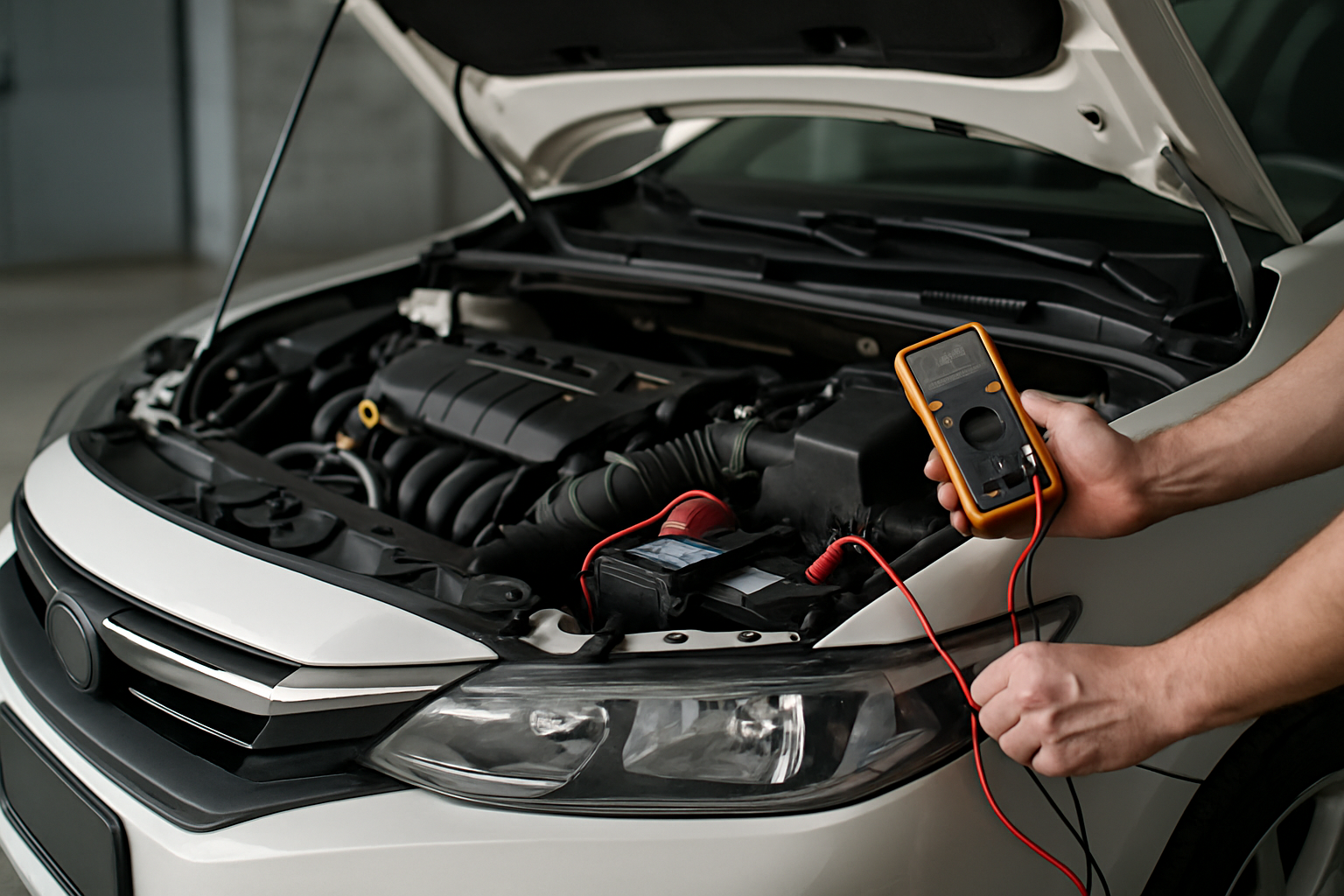
The most important tool for finding parasitic draw is a digital multimeter capable of measuring DC amperage. You’ll need one that can handle at least 10 amps and accurately measure down to milliamps.
A basic automotive multimeter will work fine for this job. Quality automotive multimeters designed for car electrical work often include features like inductive amp clamps and specialized automotive functions.
You’ll also need a basic set of fuse pullers and possibly a flashlight for working in dark areas. Some mechanics use a special parasitic draw tester, but a standard multimeter works just as well.
Step-by-Step Parasitic Draw Testing
Initial Battery and Multimeter Setup
Start with a fully charged battery to get accurate readings. A weak battery can give false results and make diagnosis more difficult.
Set your multimeter to measure DC amps, starting with the highest amp range (usually 10A). You’ll likely need to move your positive probe to the amp measurement port on your multimeter.
Disconnect the negative battery cable from the battery terminal. Connect your multimeter in series between the negative cable and the negative battery terminal. The red probe goes to the cable, black probe to the battery terminal.
Getting Your Baseline Reading
When you first connect the multimeter, expect to see a high reading as various modules wake up. This is normal. Wait 15-30 minutes for all systems to go to sleep before taking your baseline measurement.
During this waiting period, avoid opening doors, using your key fob, or disturbing the vehicle. Any activity can wake up modules and reset the sleep timer.
Once systems have settled, you should see a reading under 100 milliamps on most vehicles. If you’re seeing 200 milliamps or higher, you definitely have a parasitic draw problem.
The Fuse-Pulling Method
With your baseline reading established, start removing fuses one at a time while watching the multimeter. Pull a fuse, note any change in amperage, then reinstall it before moving to the next one.
Work systematically through both the engine bay fuse box and interior fuse panels. Your owner’s manual should have a fuse diagram showing what each fuse controls.
When you pull the fuse that’s feeding your parasitic draw, you’ll see the amperage drop significantly. This tells you which circuit is causing the problem.
Narrowing Down the Problem
Once you’ve identified the problematic fuse, you’ll need to investigate what’s connected to that circuit. The fuse diagram will list the components, but there might be multiple devices on one fuse.
For circuits with multiple components, you can disconnect individual items to isolate the exact source. For example, if the radio fuse shows the draw, disconnect the radio harness to confirm it’s the stereo causing the problem.
Sometimes you’ll need to trace wiring or check individual switches. A trunk light circuit might include the trunk light bulb, trunk switch, and trunk release solenoid.
Advanced Testing Techniques
Using an Inductive Amp Clamp
Professional technicians often use inductive amp clamps that measure current flow without disconnecting anything. These clamps go around individual wires to measure the current flowing through them.
This method allows you to test circuits without disrupting the electrical system. You can clamp around wires going to specific modules or components to measure their individual draw.
Module-by-Module Testing
For intermittent problems or complex electrical systems, you might need to disconnect and test individual modules. This involves unplugging control modules one at a time while monitoring amperage.
Be careful when disconnecting modules, as some systems may store fault codes or require relearning procedures when reconnected. Check your service manual before disconnecting critical modules like engine or transmission computers.
Fixing Common Parasitic Draw Problems
Aftermarket Equipment Issues
If aftermarket equipment is causing the draw, check the installation first. Stereos should have three power connections: constant power (for memory), switched power (for operation), and ground.
Many installation problems stem from connecting both power wires to constant power sources. The switched power wire should only have power when the ignition is on.
For dash cams, ensure they’re connected to a proper switched power source or that their parking mode is configured correctly. Some dash cams need specific voltage cutoff settings to prevent battery drain.
Light and Switch Problems
Faulty door switches are usually easy to replace and relatively inexpensive. Clean the switch contacts first, as dirt and corrosion can prevent proper operation.
For trunk lights that won’t turn off, check the trunk switch adjustment. Sometimes the switch needs to be repositioned so the trunk lid properly activates it when closed.
LED bulb conversions can sometimes cause issues with automatic systems that expect the higher current draw of incandescent bulbs. This can keep modules awake that should be sleeping.
Module and Computer Issues
When factory modules cause parasitic draw, the solution often involves software updates or module replacement. Check for any relevant technical service bulletins for your specific vehicle.
Sometimes disconnecting the battery for several hours can reset modules that are stuck in an active state. This forces all systems to completely power down and restart fresh.
Prevention and Maintenance Tips
Regular battery testing can help you catch parasitic draw problems before they leave you stranded. Most auto parts stores will test your battery and charging system for free.
Keep your battery terminals clean and tight. Corroded connections can cause electrical problems that lead to excessive drain or charging issues.
If you’re adding aftermarket electronics, have them professionally installed or carefully research proper installation procedures. Improper wiring is one of the most common causes of parasitic draw.
Consider using a battery tender or trickle charger if your vehicle sits unused for extended periods. This can help maintain battery health and compensate for small parasitic draws.
When to Seek Professional Help
While basic parasitic draw testing is within most DIY mechanics’ capabilities, some situations require professional diagnosis. Complex intermittent problems or issues involving multiple modules can be challenging without advanced diagnostic equipment.
Professional shops have specialized tools like power probes, advanced scan tools, and detailed wiring diagrams that make diagnosis faster and more accurate.
If you’re not comfortable working with electrical systems or your testing doesn’t reveal an obvious cause, professional diagnosis can save time and prevent damage from incorrect repairs.
Frequently Asked Questions
How long should I wait before testing for parasitic draw?
Wait at least 15-30 minutes after shutting off the vehicle before taking measurements. Some luxury vehicles with many electronic modules may need up to an hour to fully enter sleep mode. The key is waiting until your amp reading stabilizes at its lowest point.
Can a bad alternator cause parasitic draw?
While alternators don’t typically cause parasitic draw directly, a failing alternator with bad diodes can allow current to flow backward through the charging system. This creates a draw even when the engine is off. You can test this by disconnecting the alternator output wire during your parasitic draw test.
Will disconnecting my battery damage any electronic systems?
Disconnecting the battery for diagnostic purposes won’t damage electronics, but it will reset radio presets, clock settings, and learned parameters in some engine computers. Some vehicles may need idle relearning or other procedures after battery disconnection. Keep any radio security codes handy before starting your testing.
What if I can’t find the source of the parasitic draw?
If fuse-pulling doesn’t isolate the problem, the draw might be coming from a circuit that doesn’t go through the fuse boxes, such as the alternator charging circuit or a direct battery connection. Some aftermarket equipment connects directly to the battery. You might also have multiple small draws from different circuits that add up to a significant total.
This article contains affiliate links. If you purchase through these links, we may earn a small commission at no extra cost to you.



Leave a Reply