
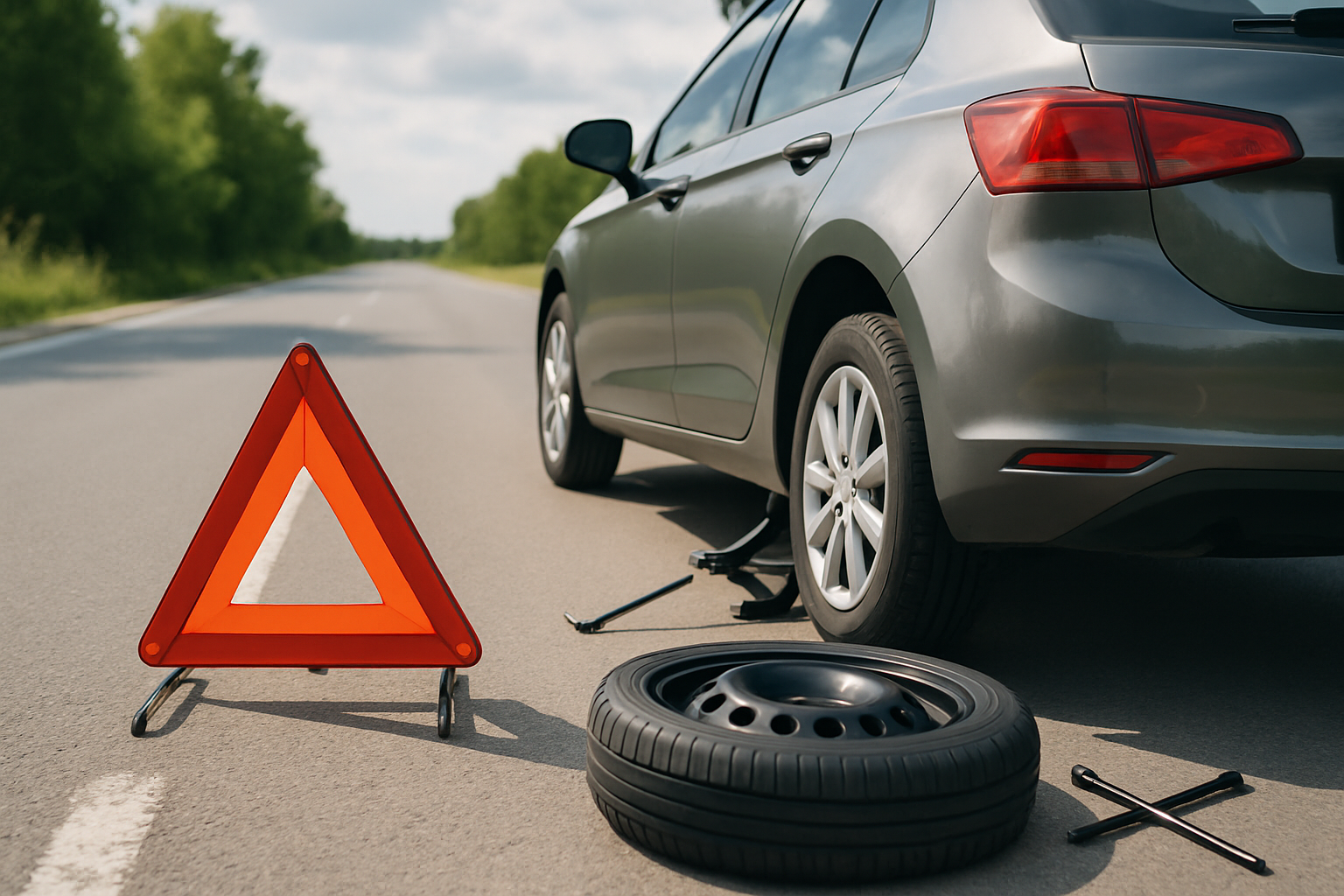
Getting a flat tire on the side of the road can be stressful, but knowing how to change it safely can turn a potential disaster into a manageable inconvenience. This guide will walk you through the entire process, from positioning your vehicle to getting back on the road.
Before we dive into the steps, remember that many newer vehicles don’t come with a full-size spare tire anymore. Some have compact “donut” spares, others have tire repair kits, and some luxury cars have run-flat tires instead.
Safety First: Preparing to Change Your Tire
Your safety is more important than getting back on the road quickly. The moment you feel a tire going flat, don’t slam on the brakes. Instead, grip the steering wheel firmly and gradually slow down while looking for a safe place to pull over.
Find the flattest, most stable surface possible, away from traffic. A parking lot is ideal, but if you’re on a highway, get as far right as possible. Turn on your hazard lights immediately and engage your parking brake once you’ve stopped.
If you have reflective triangles or flares, place them 50-100 feet behind your vehicle to warn approaching traffic. Many drivers skip this step, but it’s crucial for your safety, especially at night or in poor weather conditions.
Gathering Your Tools and Locating Your Spare
Most vehicles come with a jack, lug wrench, and spare tire stored in the trunk or under the vehicle. Check your owner’s manual for the exact location, as it varies significantly between models. Some trucks have spares mounted underneath the bed, while SUVs often store them under the cargo floor.
You’ll also want to grab your vehicle’s owner’s manual if you have it handy. It contains specific jacking points for your car, which is critical information you don’t want to guess about.
Before you start, inspect your spare tire. If it’s a compact spare (donut), check that it has adequate air pressure. These smaller spares typically require higher pressure than regular tires, often around 60 PSI.
Loosening the Lug Nuts While the Tire is on the Ground
This step catches many people off guard, but you need to break the lug nuts loose before lifting the vehicle. Once the tire is off the ground, it will just spin freely when you try to turn the lug wrench.
Remove the hubcap or wheel cover if your vehicle has one. Some come off by hand, others require the flat end of your lug wrench to pry them off. Be gentle to avoid damage.
Using your lug wrench, turn each lug nut counterclockwise (lefty-loosey) until they break free, but don’t remove them completely yet. Just loosen them enough that they’ll turn easily once the wheel is in the air. You might need to use your foot or full body weight to break them loose if they’re very tight.
Positioning the Jack Correctly
Finding the correct jack point is absolutely critical. Using the wrong spot can damage your vehicle’s body, suspension components, or even cause the car to fall off the jack.
Most vehicles have reinforced jack points marked with small notches or indentations along the frame rails. These are typically located behind the front wheels and in front of the rear wheels. Your owner’s manual will show you exactly where these points are for your specific vehicle.
Position the jack under the designated jack point nearest to the flat tire. Make sure the jack is perpendicular to the ground and sitting on a firm, level surface. If you’re on soft ground, place a piece of wood under the jack base to prevent it from sinking.
Raising the Vehicle
Before you start pumping or cranking the jack, double-check that you’re on the correct jack point and that the jack is stable. Raise the vehicle slowly and steadily.
You only need to lift the flat tire about six inches off the ground. This gives you enough clearance to remove the flat and install the spare without lifting the vehicle higher than necessary.
Once the tire is off the ground, give the vehicle a gentle shake to make sure it’s stable on the jack. If it feels wobbly, lower it and reposition the jack.
Removing the Flat Tire
With the vehicle safely raised, you can now fully remove the loosened lug nuts. Turn them counterclockwise until they come off completely. Put them in your pocket, the hubcap, or somewhere safe where they won’t roll away.
Grip the tire firmly with both hands and pull it straight toward you. Tires are heavier than many people expect, typically weighing 20-30 pounds for passenger cars and much more for trucks and SUVs. Be prepared for the weight and lift with your legs, not your back.
Roll the flat tire out of your way, but keep it nearby. You’ll need to put it in your trunk or cargo area once you’re finished.
Installing the Spare Tire
Line up the holes in the spare tire with the bolts on the wheel hub. This can be tricky because you’re supporting the weight of the tire while trying to align the holes. Take your time and don’t rush this step.
Push the spare tire all the way onto the hub until it sits flat against the mounting surface. Replace the lug nuts and hand-tighten them. Don’t use the lug wrench yet, just get them snug enough that the spare tire doesn’t fall off.
Make sure all lug nuts are in place before you start tightening them with the wrench.
Proper Lug Nut Tightening Sequence
Don’t tighten the lug nuts in a circle (clockwise around the wheel). Instead, use a star or crisscross pattern. This ensures even pressure distribution and prevents the wheel from warping.
For a five-lug wheel, tighten one lug nut, then move to the one directly across from it. Continue this pattern until all are snug. For four-lug wheels, alternate between opposite nuts.
While the tire is still off the ground, tighten the nuts firmly with the lug wrench, but don’t put all your strength into it yet. You’ll do the final tightening once the tire is back on the ground.
Lowering the Vehicle and Final Tightening
Lower the jack slowly until the spare tire touches the ground and supports some weight, but don’t lower it completely yet. This gives you stability while you do the final tightening of the lug nuts.
Use the star pattern again to fully tighten each lug nut. Apply firm pressure, but don’t over-tighten. The general rule is to tighten until snug, then give each nut an additional quarter turn.
Lower the vehicle completely and remove the jack. Give the lug nuts one final check with the lug wrench to ensure they’re properly tightened.
Important Speed Limits for Spare Tires
If you installed a compact spare (donut), your driving is now restricted. These temporary spares are only designed for short distances and low speeds. The maximum speed is typically 50 mph, and you shouldn’t drive more than 50-70 miles on them.
Full-size spares don’t have the same restrictions, but if it’s been in your trunk for years, check the air pressure and overall condition before driving at highway speeds.
Plan to get your flat tire repaired or replaced as soon as possible. Driving on a spare, especially a compact one, affects your vehicle’s handling, braking, and stability.
What to Do if Your Car Doesn’t Have a Spare
Many new vehicles come with tire repair kits instead of spare tires. These kits include a sealant and small air compressor designed to temporarily fix small punctures.
Read the instructions carefully before using these kits. They typically work by injecting sealant into the tire through the valve stem, then inflating it with the included compressor. However, they only work for certain types of punctures and won’t help with sidewall damage or large tears.
Tire repair kits can be lifesavers for small punctures, but they’re not permanent fixes. You’ll still need to have the tire properly repaired or replaced.
Cleaning Up and Getting Back on the Road
Put all your tools back where they belong and load the flat tire into your trunk or cargo area. Don’t leave it on the side of the road, even if it’s completely destroyed.
Remove any warning triangles or flares you placed behind your vehicle. Turn off your hazard lights once you’re ready to merge back into traffic.
Drive carefully, especially for the first few miles. Pay attention to how the vehicle feels and sounds. If something seems off, pull over safely and double-check your work.
When to Call for Professional Help
Sometimes changing a tire yourself isn’t safe or possible. If you’re on a busy highway with no shoulder, in severe weather, or if you’re physically unable to perform the work, call for roadside assistance.
Other situations where you should consider professional help include: damaged or rusted lug nuts that won’t budge, a jack that won’t work properly, or if you discover your spare tire is also flat.
Many people have roadside assistance through their insurance, vehicle warranty, or AAA. Don’t hesitate to use these services when your safety is at risk.
Frequently Asked Questions
How do I know if my tire can be repaired instead of replaced?
Small punctures in the tread area (caused by nails or screws) can often be repaired if they’re less than 1/4 inch in diameter. However, damage to the sidewall, multiple punctures, or large tears typically require tire replacement. A tire professional can assess whether your tire is repairable.
What should I do if I can’t get the lug nuts loose?
Try standing on the lug wrench (if it’s long enough) or using your foot to apply more force. Make sure you’re turning counterclockwise. If they still won’t budge, you may need a longer wrench for more leverage, or the nuts may be rusted or over-tightened. This is when calling for roadside assistance makes sense.
How often should I check my spare tire?
Check your spare tire’s air pressure at least every six months, along with your regular tires. Compact spares lose air over time just like regular tires. Also inspect it for signs of dry rot or damage, especially if your vehicle is several years old.
Can I use my compact spare tire on any wheel position?
While you can technically install a compact spare on any wheel position, it’s best to put it on a rear wheel if possible. If your flat tire is on the front, consider moving a good rear tire to the front and putting the spare on the rear. This gives you better steering control and stability.
This article contains affiliate links. If you purchase through these links, we may earn a small commission at no extra cost to you.

Leave a Reply