
When you turn the key or press the start button and nothing happens, few automotive problems feel more frustrating. A car that won’t start can leave you stranded at the worst possible moment, but the good news is that most starting issues follow predictable patterns that you can diagnose yourself.
Understanding whether your engine cranks but won’t start versus not cranking at all will point you toward the right solution. This guide will walk you through a systematic approach to identify and fix the most common starting problems.
Step 1: Does Your Engine Crank?
Before diving into complex diagnostics, you need to determine exactly what happens when you try to start your car. This single observation will guide your entire troubleshooting process.
Turn your key to the start position or press your start button. Does the engine turn over and make that familiar cranking sound, or do you hear nothing, clicking, or grinding noises?
Engine Cranks But Won’t Start
If your engine cranks normally but fails to fire up and run, you’re dealing with a fuel, spark, or air delivery problem. The starter motor and battery are working fine, which eliminates several potential culprits right away.
Common symptoms include strong cranking sounds, dashboard lights working normally, and sometimes backfiring or sputtering during cranking attempts.
Engine Won’t Crank At All
When you hear nothing, rapid clicking, or a single click when trying to start, you’re looking at an electrical issue. This typically involves the battery, starter motor, or connections between them.
You might notice dim dashboard lights, no electrical response, or unusual sounds coming from the engine bay.
Diagnosing No-Crank Conditions
Start with the most common culprit when your car won’t crank: the battery. Even if your radio and lights work, a weak battery might not have enough power to turn the starter motor.
Testing Your Battery
Check the battery terminals first. Look for white, blue, or green corrosion around the posts. Clean any buildup with a wire brush and baking soda solution if needed.
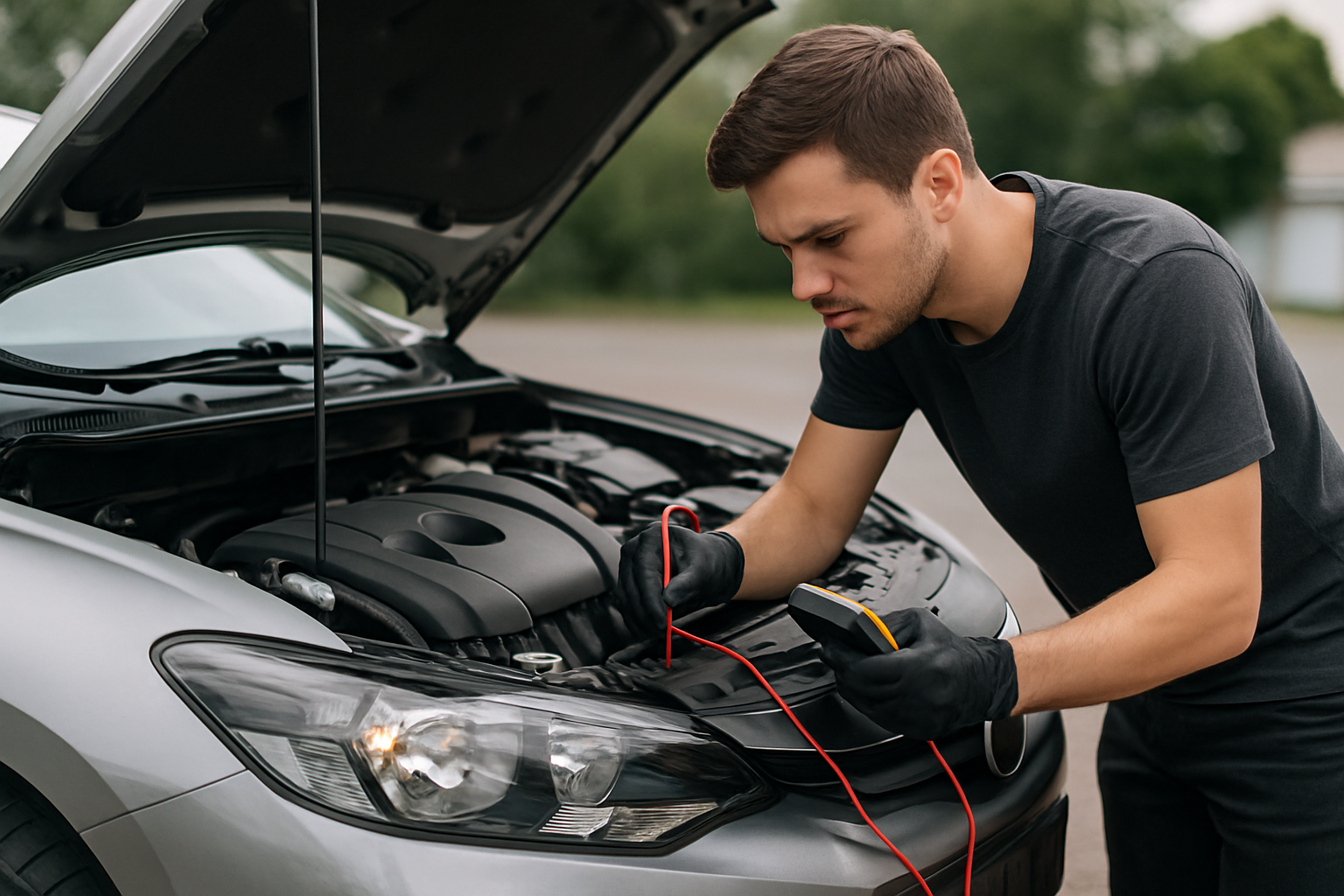
Test the battery voltage with a multimeter. A healthy 12-volt battery should read between 12.4 and 12.6 volts when the engine is off. Anything below 12.0 volts indicates a weak or dead battery.
Try jump-starting your car with jumper cables or a portable jump starter. If the engine starts immediately with a jump, your battery needs replacement or charging.
Identifying Starter Problems
When you hear a single loud click from the engine bay, the starter solenoid is engaging but the motor isn’t turning. This usually means a failed starter motor that needs replacement.
Rapid clicking sounds indicate insufficient power reaching the starter. This could be a weak battery, corroded connections, or a failing starter solenoid.
Complete silence when turning the key often points to a bad ignition switch, neutral safety switch, or completely dead battery.
Checking Connections and Fuses
Inspect the large cables connecting your battery to the starter motor. These thick cables should be tight and free of corrosion. A loose connection can prevent adequate current flow.
Locate your fuse box and check the starter relay and ignition fuses. Swap the starter relay with another identical relay in the fuse box to test if a bad relay is the culprit.
Diagnosing Crank-No-Start Issues
When your engine cranks strongly but won’t start, you need to check three essential systems: fuel delivery, ignition spark, and air intake.
Fuel System Diagnosis
Listen for the fuel pump when you first turn your key to the “on” position. You should hear a brief humming sound from the rear of the vehicle lasting 2-3 seconds. No sound might indicate a failed fuel pump.
Check your fuel gauge to ensure you actually have gas. Fuel gauges can fail, leaving you with an empty tank despite what the display shows.
Remove an spark plug and smell it. If it’s completely dry, fuel isn’t reaching the cylinders. If it’s wet with fuel but the car won’t start, you likely have an ignition problem.
Ignition System Problems
Test for spark by removing a spark plug wire (on older cars) or coil pack, inserting a spark plug, and grounding it against the engine while someone cranks the starter. You should see a bright blue spark.
Check the condition of your spark plugs. Fouled, worn, or damaged plugs can prevent starting even if the ignition system works properly.
On newer vehicles with coil-on-plug systems, a failed ignition coil can prevent starting. These typically trigger a check engine light, so scan for diagnostic codes if possible.
Air and Sensor Issues
A completely clogged air filter can prevent starting, though this is rare. Pull out your air filter and inspect it for excessive dirt, debris, or oil contamination.
Failed crankshaft position sensors commonly cause crank-no-start conditions. The engine computer needs this signal to fire the injectors and ignition system properly.
Mass airflow sensor problems can also prevent starting. Try unplugging the MAF sensor and attempting to start the engine. If it starts, the sensor needs replacement.
Common Starting Problem Solutions
Once you’ve identified the problem area, most starting issues have straightforward fixes you can handle yourself or know what to tell your mechanic.
Battery and Charging Solutions
Replace a battery that can’t hold a charge or tests below 12 volts. Most auto parts stores will test your battery for free and help you find the right replacement.
Clean corroded battery terminals with a wire brush and terminal cleaner spray. Apply a thin layer of petroleum jelly to prevent future corrosion.
If your battery keeps dying, test the alternator output. It should produce 13.5-14.5 volts while the engine runs. Lower readings indicate a failing alternator that isn’t charging the battery properly.
Starter Motor Repairs
Starter motor replacement typically costs $150-400 depending on your vehicle. The part is usually accessible from underneath the car, bolted to the transmission bell housing.
Sometimes you can temporarily get a failing starter working by tapping it with a hammer while someone turns the key. This isn’t a permanent fix but might get you to a repair shop.
Fuel System Fixes
Fuel pump replacement is a significant repair, often requiring dropping the fuel tank. Expect to pay $400-800 for this repair at a shop.
Clogged fuel filters can mimic fuel pump failure. Replace the fuel filter first if you’re experiencing fuel delivery problems, especially on higher-mileage vehicles.
Bad fuel injectors can prevent starting but usually cause rough running first. Professional cleaning or replacement might be necessary for severely clogged injectors.
Emergency Starting Techniques
Several techniques can help you start a problematic car in emergency situations, though these are temporary solutions.
Jump Starting Procedures
Keep a quality portable jump starter in your vehicle for emergency situations. Modern lithium units are compact but powerful enough to start most engines.
When jump starting, always connect positive to positive first, then negative to a ground point away from the battery. Let the good battery charge the dead one for several minutes before attempting to start.
Manual Transmission Push Starting
Cars with manual transmissions can sometimes be push-started if the starter motor fails but the battery has some charge. Put the car in second gear, turn on the ignition, push the car to 5-10 mph, then release the clutch quickly.
This technique only works if your ignition and fuel systems are functioning properly. It won’t help with fuel pump or spark problems.
Preventive Maintenance Tips
Regular maintenance prevents most starting problems before they leave you stranded.
Test your battery twice yearly, especially before summer and winter when extreme temperatures stress the charging system. Most batteries last 3-5 years depending on climate and driving habits.
Replace spark plugs according to your vehicle’s maintenance schedule. Modern platinum and iridium plugs last 60,000-100,000 miles but can fail suddenly when they reach their limit.
Keep your fuel tank above quarter full, especially in winter. This prevents fuel line freeze-up and reduces condensation in the tank that can contaminate your fuel system.
When to Call a Professional
Some starting problems require professional diagnosis and repair, particularly on newer vehicles with complex electronic systems.
If you’ve checked the basics (battery, connections, fuses) and the car still won’t start, a mechanic with proper diagnostic equipment can quickly identify the problem. Modern scan tools can pinpoint failed sensors and system faults.
Fuel pump replacement, starter motor installation, and ignition system repairs often require special tools and experience. Don’t hesitate to call for help rather than risk damaging expensive components.
Frequently Asked Questions
Why does my car start sometimes but not others?
Intermittent starting problems usually indicate failing components that work when warm but fail when cold, or loose electrical connections. Common culprits include worn starter motors, weak batteries, or failing crankshaft position sensors. Temperature changes often trigger these intermittent failures.
How can I tell if it’s the battery or alternator?
Jump start the car and remove the jumper cables. If the engine dies immediately, your alternator isn’t charging the battery. If it continues running but won’t restart after you turn it off, the battery can’t hold a charge. A multimeter test showing less than 13.5 volts while running confirms alternator problems.
What does it mean when I hear clicking but the car won’t start?
Rapid clicking usually means insufficient power is reaching the starter motor due to a weak battery or poor connections. A single loud click indicates the starter solenoid is engaging but the motor itself has failed. Clean your battery terminals and test the battery voltage first.
Can bad gas prevent my car from starting?
Yes, contaminated fuel or gas that’s been sitting too long can prevent starting. Water in the fuel tank, extremely old gasoline, or diesel fuel accidentally added to a gas car will cause starting problems. If you suspect bad fuel, have the tank drained and refilled with fresh gasoline.
Leave a Reply