
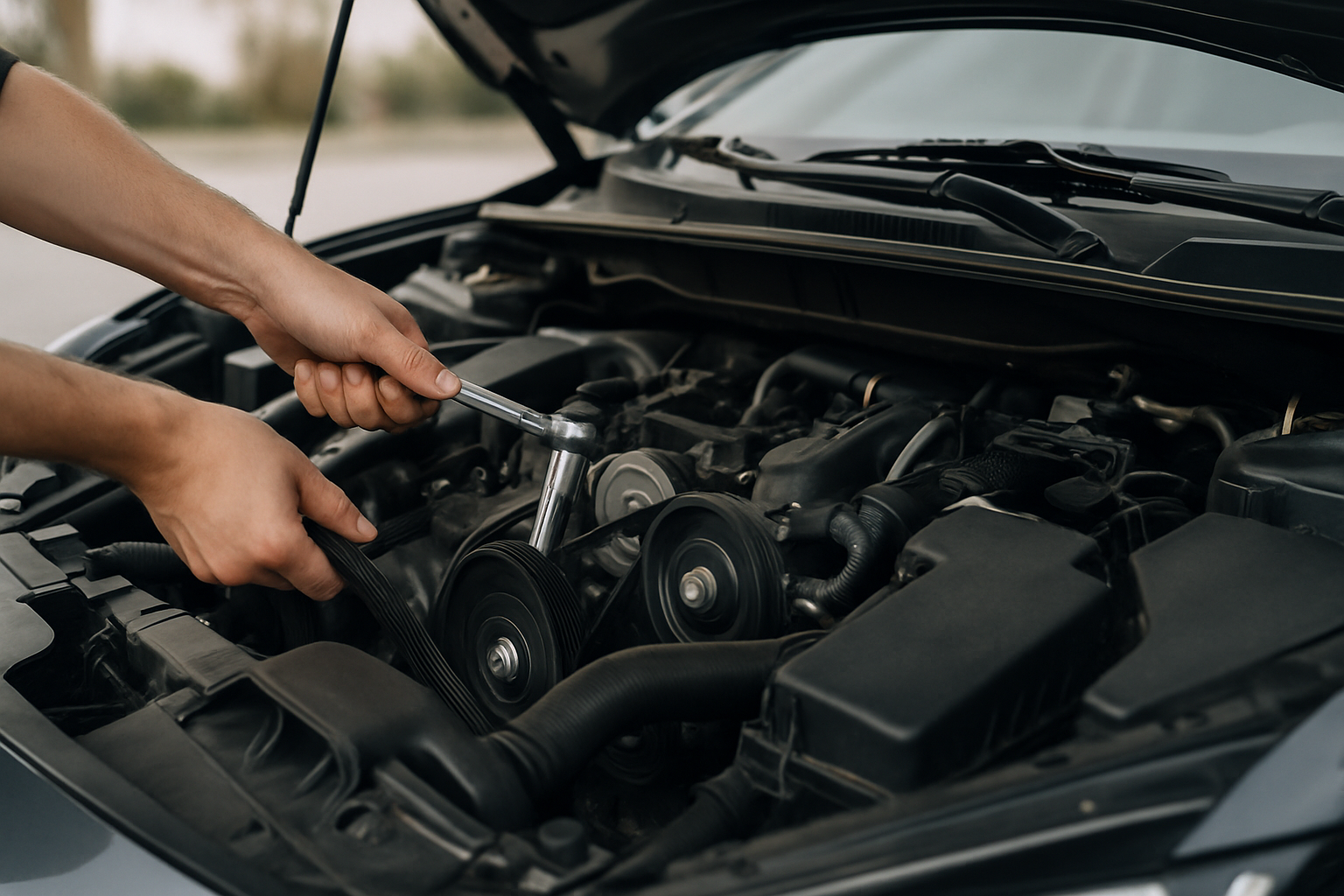
That annoying squeaking sound coming from under your hood doesn’t always mean you need to spend money on a new serpentine belt. In many cases, you can eliminate the noise and extend your belt’s life with some simple fixes that cost a fraction of a replacement.
Before you head to the auto parts store or schedule a service appointment, there are several proven methods to quiet that squeaky belt and keep your engine running smoothly.
Understanding Why Serpentine Belts Squeak
Your serpentine belt drives multiple engine accessories including the alternator, power steering pump, air conditioning compressor, and water pump. When this single belt starts squeaking, it’s usually telling you something specific about its condition or installation.
The most common causes of belt squeaking include improper tension, misaligned pulleys, glazed belt surfaces, and contamination from oil or coolant leaks. Each of these issues can often be addressed without removing the belt entirely.
Squeaking typically occurs when the belt slips against the pulleys instead of gripping properly. This slippage creates the characteristic high-pitched noise that’s most noticeable during startup or when you turn on accessories like air conditioning.
Quick Fix: Belt Dressing Spray
Belt conditioner spray offers the fastest temporary solution for a squeaky serpentine belt. This specialized lubricant reduces friction and can quiet the noise almost instantly, buying you time to address the underlying problem.
To apply belt dressing, start your engine and let it idle. Spray a light coating directly onto the ribbed side of the belt while it’s running. You’ll typically hear the squeaking reduce or disappear within seconds. Avoid oversaturating the belt, as too much product can attract dirt and debris.
Popular belt conditioning products include serpentine belt conditioner sprays that are specifically designed for modern ribbed belts. These products work differently than older belt dressings and won’t cause the belt to slip more over time.
Keep in mind that belt dressing is a temporary fix. If your belt continues squeaking after treatment, you’ll need to investigate the root cause. Repeated applications of belt dressing can also indicate that replacement is becoming necessary.
Checking and Adjusting Belt Tension
Incorrect belt tension causes most serpentine belt squeaking problems. Modern vehicles use automatic tensioners, but these can wear out or become stuck, leading to insufficient tension on the belt.
You can check belt tension by pressing down on the longest span of belt between pulleys. The belt should deflect about 1/4 to 1/2 inch with moderate finger pressure. If it moves more than this, the tensioner may need attention.
Automatic tensioners have a wear indicator mark that shows when replacement is needed. Look for alignment marks on the tensioner arm and housing. When these marks move outside the normal operating range, the tensioner has reached the end of its service life.
Sometimes a tensioner just needs help moving freely. You can try working the tensioner arm back and forth manually (with the engine off) to break free any corrosion or debris that might be limiting its movement.
Inspecting Pulley Alignment
Misaligned pulleys will cause even a new belt to squeak by forcing it to track improperly across the pulley faces. This creates uneven wear and increases the likelihood of noise.
Check alignment by looking at the belt path from the side of the engine. All pulleys should line up in the same plane, with the belt running straight from one to the next without twisting or angling.
If you notice the belt riding high on one side of a pulley or appearing to twist between pulleys, you’ve found your alignment issue. This problem usually requires professional attention, as it often indicates a worn bearing in one of the accessory components.
You can also use a straight edge, like a long screwdriver or ruler, to check pulley alignment more precisely. Place it against the face of one pulley and see if it lines up properly with adjacent pulleys.
Dealing with Belt Glazing
Belt glazing occurs when the rubber surface becomes smooth and shiny from heat and wear. A glazed belt loses its ability to grip properly, leading to slippage and squeaking even when tension is correct.
You can identify glazing by examining the ribbed side of the belt. Instead of having a textured, matte finish, a glazed belt will appear shiny and feel smooth to the touch. The ribs may also look flattened or worn down.
Light glazing can sometimes be addressed by gently scuffing the belt surface with fine sandpaper. Remove the belt and lightly sand the ribbed side with 220-grit sandpaper, following the direction of the ribs. This restores some texture to help the belt grip better.
However, extensive glazing usually indicates that the belt has overheated repeatedly and replacement is the better long-term solution. Scuffing can provide temporary relief, but a heavily glazed belt will likely return to squeaking relatively quickly.
Cleaning Contaminated Belts
Oil, coolant, or power steering fluid contamination can cause belt squeaking by reducing friction between the belt and pulleys. These fluids make the belt slip, especially during startup when engine oil is cold and thick.
Clean a contaminated belt using brake cleaner or degreaser and a clean rag. Work the cleaner into the belt grooves and wipe away any residue. Make sure to clean the pulley faces as well, since contamination there will quickly re-contaminate the belt.
After cleaning, identify and fix the source of contamination. Common culprits include leaking valve cover gaskets, power steering pump seals, or coolant system components. Cleaning the belt without stopping the leak will only provide temporary relief.
Some mechanics recommend using dish soap and water to clean belts, but automotive degreasers work more effectively on oil-based contamination. Always ensure the belt and pulleys are completely dry before starting the engine.
When Replacement Becomes Unavoidable
Despite your best efforts, some squeaky belts simply need replacement. Cracks in the belt ribs, fraying edges, or chunks of missing rubber indicate that the belt has reached the end of its useful life.
A belt with more than three or four cracks per inch of length should be replaced regardless of noise issues. These cracks will eventually lead to belt failure, potentially leaving you stranded with a dead alternator or overheated engine.
Excessive stretching is another sign that replacement is necessary. If your automatic tensioner is operating at the extreme end of its travel range, the belt has likely stretched beyond its useful limits and won’t maintain proper tension.
Age alone can also necessitate replacement. Most serpentine belts should be replaced every 60,000 to 100,000 miles, depending on your vehicle and driving conditions. A belt approaching this mileage range may squeak simply because the rubber compound has hardened with age.
DIY vs Professional Replacement Costs
Serpentine belt replacement costs vary significantly between DIY and professional service. A replacement belt typically costs between $25 and $75 depending on your vehicle, while shop labor can add $100 to $200 to the total bill.
DIY replacement is straightforward on most vehicles and requires only basic hand tools. The main challenge involves releasing tension on the automatic tensioner to remove and install the belt. Most auto parts stores provide belt routing diagrams for your specific vehicle.
Professional replacement makes sense if your vehicle requires removing other components to access the belt, or if the tensioner or other pulleys need replacement at the same time. Some luxury vehicles and trucks have complex belt routing that can be tricky for inexperienced mechanics.
Factor in your time and comfort level with automotive repairs when deciding between DIY and professional service. A squeaky belt repair attempt that goes wrong can end up costing more than having it done professionally from the start.
Preventive Measures for Belt Longevity
Regular inspection can help you catch belt problems before they become squeaky annoyances. Check your serpentine belt every few months for signs of wear, cracking, or contamination.
Keep your engine bay clean and address fluid leaks promptly to prevent belt contamination. A small valve cover gasket leak might seem minor, but the dripping oil can significantly shorten your belt’s life.
Pay attention to your belt tensioner and idler pulleys as well. These components should operate smoothly without excessive play or noise. Replacing worn tensioners and pulleys when you install a new belt helps ensure maximum belt life.
Consider replacing your serpentine belt proactively if you’re doing other engine work that requires belt removal. Installing a new belt while you have easy access can save labor costs and prevent future roadside failures.
Frequently Asked Questions
Can I drive with a squeaky serpentine belt?
You can drive short distances with a squeaky belt, but you should address the problem quickly. A squeaking belt may be slipping, which can lead to charging system problems, power steering loss, or engine overheating. If the squeaking is severe or accompanied by burning smells, stop driving immediately.
How long does belt dressing last?
Belt dressing typically provides relief for a few hundred miles to several weeks, depending on the underlying cause of the squeaking. It’s designed as a temporary fix while you arrange for proper repairs. Repeated applications suggest that belt replacement or tensioner service is needed.
Will a squeaky belt eventually stop squeaking on its own?
A squeaky belt rarely stops squeaking without intervention. The noise may come and go with temperature and humidity changes, but the underlying problem will persist. Ignoring the squeak often leads to premature belt failure or damage to other engine components.
Can cold weather cause belt squeaking?
Cold weather can temporarily cause belt squeaking, especially during startup when the belt rubber is stiff and engine oil is thick. This type of squeaking usually disappears as the engine warms up. However, if the noise persists after warmup, you likely have a tension, alignment, or wear issue that needs attention.
This article contains affiliate links. If you purchase through these links, we may earn a small commission at no extra cost to you.

Leave a Reply