
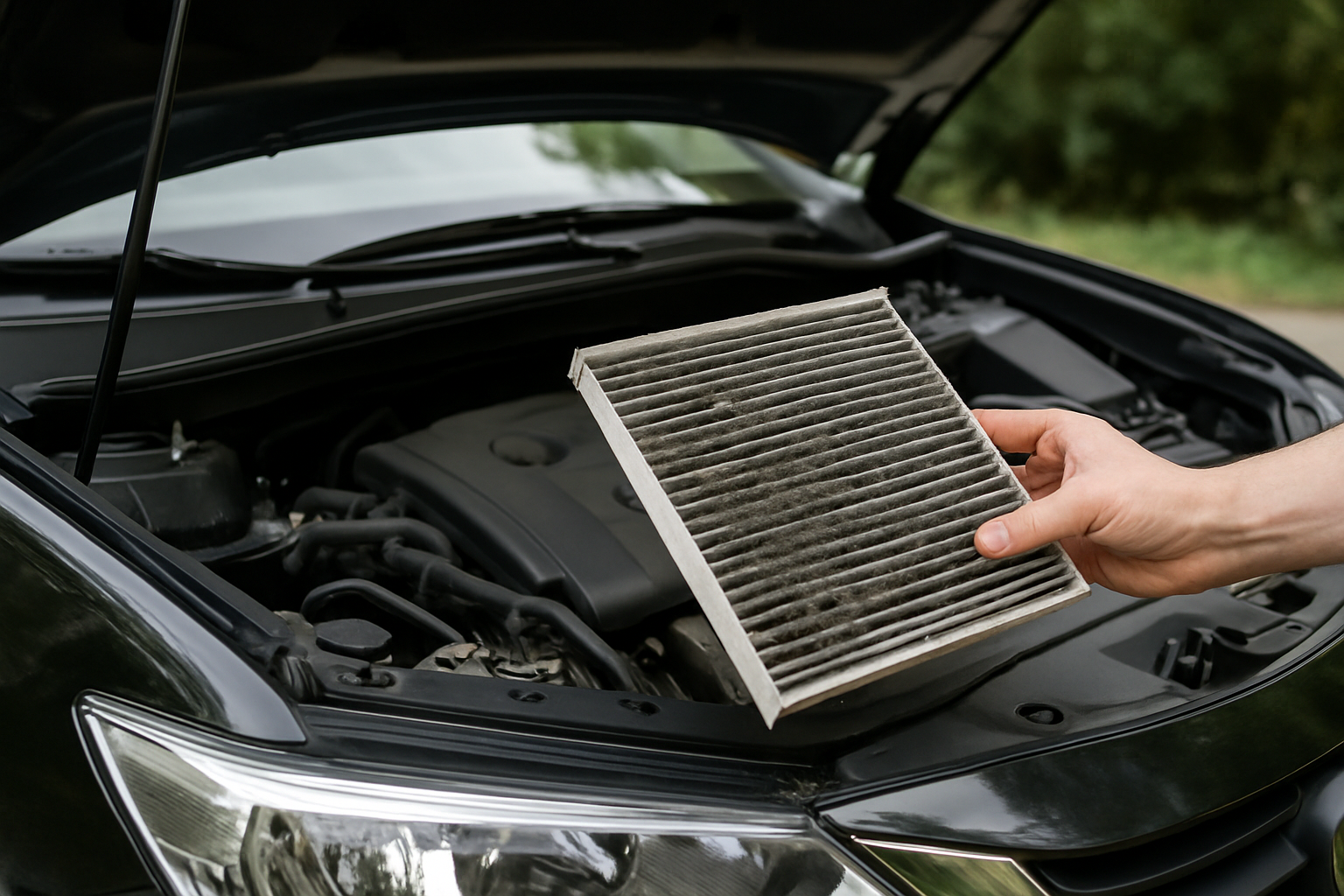
Your cabin air filter works quietly behind the scenes, keeping your car’s interior air clean and breathable. Most drivers forget about this essential component until problems start affecting their daily commute. Skipping regular cabin air filter replacements creates a cascade of issues that impact both your comfort and health.
What Your Cabin Air Filter Actually Does
The cabin air filter sits between your car’s ventilation system and the passenger compartment, typically located behind the glove box. This rectangular filter catches dust, pollen, exhaust fumes, and other airborne particles before they enter your breathing space.
Every time you turn on your air conditioning, heating, or ventilation, air passes through this filter. A clean filter traps microscopic contaminants while allowing fresh air to flow freely into your cabin. Most manufacturers recommend replacing it every 12,000 to 15,000 miles or once per year.
Reduced Air Conditioning Performance
A clogged cabin air filter creates the most noticeable problem: weak airflow from your vents. When the filter becomes packed with debris, your HVAC system has to work harder to push air through the restriction.
You’ll notice your air conditioning takes longer to cool the cabin on hot days. The vents that once blasted cold air now barely whisper, even with the fan speed maxed out. Your heater faces the same struggle during winter months.
This reduced airflow forces your AC compressor and blower motor to run longer and work harder. The extra strain increases fuel consumption and accelerates wear on expensive HVAC components. What starts as a $15 filter replacement can eventually cost hundreds in AC repairs.
The Unmistakable Musty Smell
Moisture trapped in a dirty cabin air filter creates the perfect breeding ground for mold and bacteria. You’ll smell the results every time you start your car or switch on the air conditioning.
This musty, stale odor becomes more pronounced in humid climates or during rainy seasons. The smell doesn’t just disappear when you roll down the windows. It clings to your clothes and follows you even after you’ve left the vehicle.
Some drivers try masking the odor with air fresheners, but this only creates a worse combination of chemical scents mixed with the underlying mustiness. The only real solution involves replacing the contaminated filter and allowing the system to air out.
Increased Allergens and Health Issues
A saturated cabin air filter loses its ability to trap allergens effectively. Pollen, dust mites, and other irritants flow directly into the passenger compartment, triggering allergic reactions in sensitive individuals.
You might experience increased sneezing, watery eyes, or respiratory irritation during your commute. Passengers with asthma or severe allergies face particularly uncomfortable rides when the filter can’t perform its job.
The problem compounds over time as the dirty filter itself becomes a source of contamination. Old filters can actually release trapped particles back into the airstream, making your car’s interior air quality worse than the outside environment.
Foggy Windows and Poor Visibility
Restricted airflow from a clogged filter affects your car’s ability to defog windows efficiently. The defroster relies on proper air circulation to remove moisture from the windshield and side windows.
You’ll spend extra time waiting for windows to clear, especially during humid mornings or rainy weather. This creates safety concerns when you need to start driving before visibility improves completely.
The problem becomes particularly dangerous during sudden weather changes when windows fog up while driving. Your defrosting system simply can’t keep up with the moisture when airflow is restricted.
Higher Fuel Costs
Your engine works harder when the HVAC system struggles against a clogged filter. The blower motor draws more electrical power, which ultimately comes from the alternator driven by your engine.
Air conditioning efficiency drops significantly with restricted airflow, forcing the system to run longer cycles to achieve the same cooling effect. This extra runtime translates directly to increased fuel consumption during your daily driving.
While the individual impact might seem small, it adds up over thousands of miles. Drivers in hot climates who rely heavily on air conditioning will notice the fuel economy difference most clearly.
Damage to HVAC System Components
Forcing air through a severely clogged filter puts excessive strain on your car’s ventilation components. The blower motor works overtime, generating extra heat and wearing out bearings and electrical connections prematurely.
Debris that bypasses a saturated filter can reach sensitive components like the evaporator core or heater core. These parts are expensive to replace and often require extensive dashboard disassembly for access.
Your AC compressor also suffers when the system can’t move air efficiently. Poor airflow across the evaporator can cause the compressor to cycle irregularly or work harder than designed, shortening its lifespan significantly.
Why Cabin Air Filter Replacement Is So Easy
Despite the serious consequences of neglecting this maintenance, replacing a cabin air filter takes less than five minutes in most vehicles. You don’t need any tools or mechanical experience to complete the job.
The filter typically sits behind the glove box, accessible by removing a few plastic clips or opening a hinged cover. Some vehicles place it under the hood near the windshield wipers, but the replacement process remains equally simple.
Most auto parts stores carry the correct filter for your vehicle, and many online retailers offer convenient options. Quality cabin air filters are available for nearly every make and model, often with improved filtration compared to factory parts.
Signs Your Filter Needs Immediate Replacement
Certain symptoms indicate your cabin air filter has reached critical contamination levels. Weak airflow from the vents, even on the highest fan setting, signals significant restriction.
Any musty or unpleasant odor when you first start the car or turn on the AC means the filter is harboring contaminants. Don’t ignore these smells, as they indicate potential health hazards.
Excessive window fogging or difficulty clearing moisture from the windshield points to airflow problems. If your defroster struggles to keep up with normal humidity levels, check the cabin air filter first.
Choosing the Right Replacement Filter
Standard particulate filters handle basic dust and pollen removal effectively. These economical options work well for most driving conditions and provide significant improvement over a dirty filter.
Activated carbon filters add odor-fighting capability and better protection against exhaust fumes. They cost slightly more but offer superior performance in heavy traffic or urban environments.
HEPA-style filters provide the highest level of filtration, capturing even microscopic particles. These premium options are worth considering if you or your passengers have severe allergies or respiratory sensitivities.
Installation Tips for Success
Before removing the old filter, take a photo showing its orientation and position. This simple step prevents confusion during installation and ensures proper airflow direction.
Pay attention to airflow arrows printed on the filter frame. Installing the filter backwards reduces efficiency and can damage the filtering material over time.
Clean any debris from the filter housing before installing the new filter. A quick vacuum or wipe-down ensures maximum performance from your fresh filter.
Frequently Asked Questions
How often should I replace my cabin air filter?
Most manufacturers recommend replacement every 12,000 to 15,000 miles or annually. However, drivers in dusty environments, heavy traffic areas, or those who frequently use recirculation mode may need more frequent changes. Check your owner’s manual for vehicle-specific intervals.
Can I clean and reuse my cabin air filter?
Standard pleated paper filters are designed for single use and cannot be effectively cleaned. Some premium filters feature washable materials, but most experts recommend replacement for optimal performance. The low cost of new filters makes replacement more practical than attempting to clean old ones.
What happens if I remove the filter completely?
Running without a cabin air filter allows all contaminants to enter the passenger compartment directly. You’ll experience worse air quality, potential health issues, and debris may damage downstream HVAC components. Always install a replacement filter rather than leaving the slot empty.
Why does my new car already need a filter change?
New vehicles often accumulate construction dust, manufacturing debris, and storage contaminants in the cabin air filter before delivery. Additionally, the factory filter may be a basic model that benefits from upgrading to a higher-quality aftermarket option for better performance.

Leave a Reply