
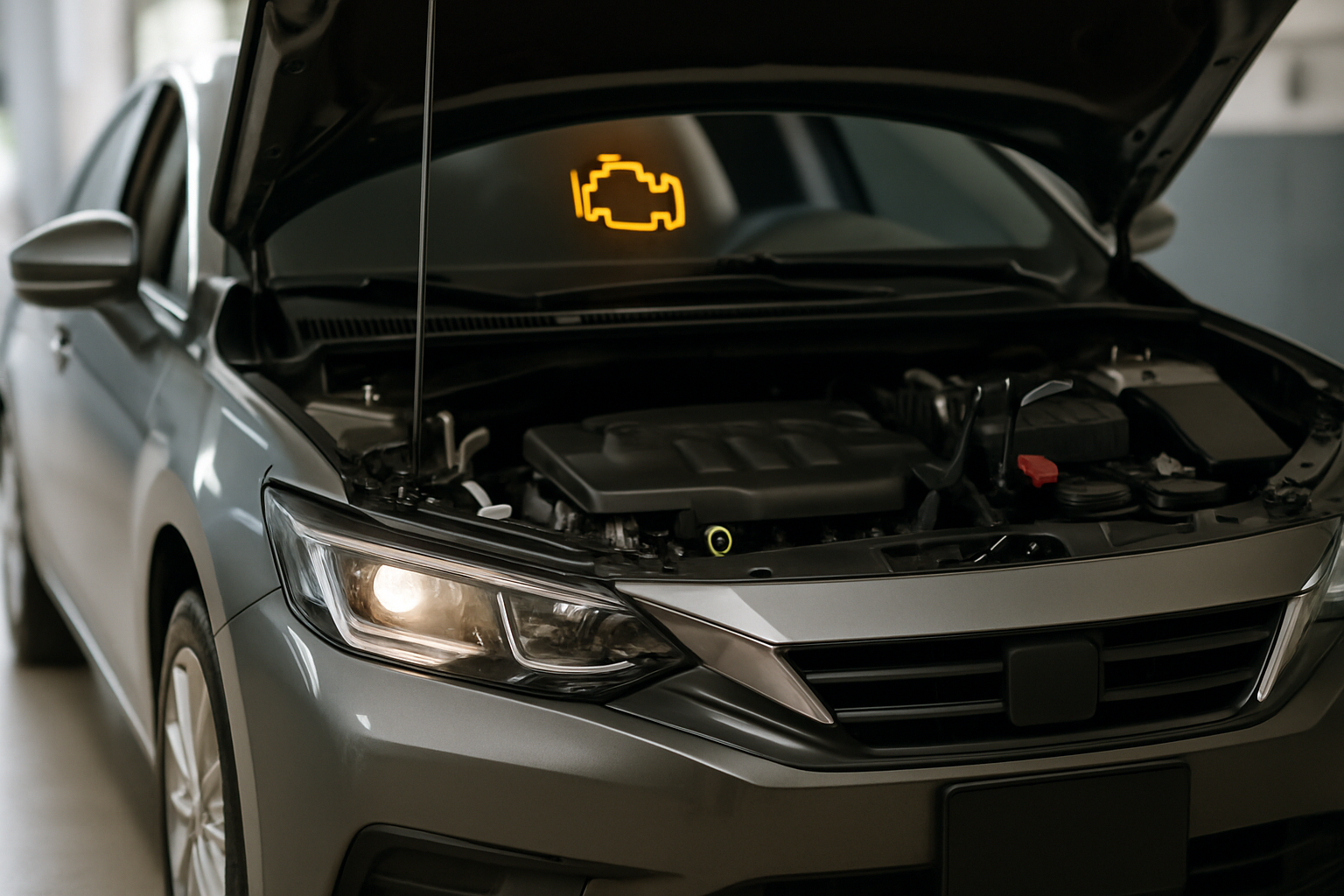
That glowing orange light on your dashboard isn’t just there to stress you out, though it certainly does a good job of that. The check engine light is your car’s way of telling you something isn’t quite right under the hood, but knowing when to pull over immediately versus when you can finish your drive makes all the difference.
Understanding what your check engine light actually means can save you from unnecessary panic, expensive towing bills, and potentially catastrophic engine damage. Most importantly, you’ll know the crucial difference between a solid light and a flashing one.
The Two Types of Check Engine Lights You Need to Know
Your check engine light comes in two distinct varieties, and the difference between them is critical. A solid check engine light means your car’s computer has detected an issue that needs attention, but you can typically continue driving to a safe location or repair shop.
A flashing check engine light is an entirely different story. When that light blinks or flashes, stop driving immediately and pull over safely. A flashing light indicates a severe problem that could cause permanent engine damage, usually related to engine misfires that can destroy your catalytic converter.
The flashing light often means unburned fuel is entering your exhaust system, which can create extremely high temperatures and melt expensive components. This type of damage can easily cost thousands of dollars to repair.
What Triggers Your Check Engine Light
Your car’s onboard diagnostic system, known as OBD-II on vehicles made after 1996, constantly monitors dozens of sensors and systems. When something falls outside normal parameters, it stores a diagnostic trouble code (DTC) and illuminates the check engine light.
These codes range from minor issues that barely affect your car’s performance to serious problems that could leave you stranded. The light itself doesn’t tell you which category your problem falls into, which is why many drivers feel frustrated when it appears.
Modern cars monitor everything from fuel mixture and ignition timing to emissions components and transmission performance. Even a loose gas cap can trigger the light, while a failing engine component might show the exact same warning.
The Most Common Check Engine Light Culprits
Loose or Faulty Gas Cap
Believe it or not, your gas cap causes more check engine lights than almost any other single component. The fuel system needs to maintain proper pressure, and a loose, cracked, or missing gas cap allows fuel vapors to escape.
If your check engine light comes on shortly after getting gas, try tightening your cap until it clicks several times. You might need to drive for a day or two before the light goes off, as the system needs time to complete its self-tests.
Oxygen Sensor Failure
Oxygen sensors measure the amount of unburned oxygen in your exhaust system, helping your engine’s computer adjust the fuel mixture for optimal efficiency. These sensors typically last 60,000 to 100,000 miles before they start failing.
A bad oxygen sensor won’t leave you stranded, but it will hurt your fuel economy and can eventually damage your catalytic converter if ignored. Most cars have multiple oxygen sensors, so the diagnostic code will specify which one needs replacement.
Catalytic Converter Problems
Your catalytic converter reduces harmful emissions by converting them into less toxic substances. When it fails, you’ll notice reduced acceleration, poor fuel economy, and sometimes a sulfur smell from your exhaust.
Catalytic converter failure often results from ignoring other problems like faulty oxygen sensors, spark plugs, or fuel system issues. This is why addressing check engine lights promptly can prevent more expensive repairs down the road.
Mass Airflow Sensor Issues
The mass airflow sensor measures how much air enters your engine, allowing the computer to add the correct amount of fuel. When this sensor fails or gets dirty, your engine might run rough, hesitate during acceleration, or stall unexpectedly.
Sometimes cleaning the sensor with specialized cleaner can resolve the issue, but replacement is often necessary. This is typically a straightforward repair that most shops can handle quickly.
When to Stop Driving Immediately
A flashing check engine light always means stop driving. Additionally, you should pull over safely if your check engine light is accompanied by any of these warning signs:
Strange noises from the engine, especially knocking, grinding, or metallic sounds, indicate serious internal problems. Loss of power, rough idle, or engine hesitation combined with the check engine light suggests issues that could worsen rapidly.
Overheating, indicated by your temperature gauge or a separate warning light, requires immediate attention. Continuing to drive an overheating engine can cause complete engine failure within minutes.
Strong fuel smells, especially inside the cabin, could indicate a dangerous fuel leak. Oil pressure warning lights or unusual smoke from the exhaust also warrant immediate attention.
What You Can Drive With (Cautiously)
A solid check engine light without other symptoms usually means you can drive to a repair shop or safe location. However, avoid heavy acceleration, towing, or long highway trips until you know what’s wrong.
Common issues that allow continued driving include faulty oxygen sensors, loose gas caps, minor evaporative emissions problems, and some sensor failures that don’t directly affect engine operation.
Monitor your gauges closely and listen for any changes in how your engine sounds or feels. If additional warning lights appear or you notice performance changes, find a safe place to stop.
Getting the Codes Read
Auto parts stores like AutoZone, O’Reilly’s, and Advance Auto Parts will read your diagnostic codes for free using an OBD-II scanner. This takes just a few minutes and gives you valuable information about what’s triggering the light.
The codes follow a standard format, starting with a letter (P for powertrain, B for body, etc.) followed by four digits. Common codes include P0171 (fuel system too lean), P0420 (catalytic converter efficiency), and P0300 (random engine misfire).
Having the codes read doesn’t necessarily tell you exactly what part to replace, but it gives you and your mechanic a starting point for diagnosis. Some issues require additional testing to pinpoint the root cause.
Professional Tools for Code Reading
While free code reading helps identify the problem area, professional-grade scanners provide much more detailed information. OBD2 scanners with Bluetooth connectivity allow you to use smartphone apps for enhanced functionality.
These advanced scanners can show live data streams, pending codes that haven’t triggered the light yet, and manufacturer-specific codes that basic readers might miss. Popular options include devices from BlueDriver, FIXD, and Autel that connect to comprehensive mobile apps.
Resetting the Light
Many people want to simply turn off the check engine light, but this approach can backfire. While disconnecting the battery or using a scanner to clear codes will turn off the light temporarily, it will return if the underlying problem isn’t fixed.
Additionally, clearing codes erases valuable diagnostic information that can help mechanics identify intermittent problems. Your car’s computer also needs to complete several drive cycles to reset all its monitors, which is required for emissions testing in many areas.
Only clear codes after you’ve recorded them and addressed the underlying issue. Otherwise, you’re just hiding the symptoms while the problem potentially gets worse.
Cost Considerations
Check engine light repairs range from practically free (tightening a gas cap) to several thousand dollars (replacing a catalytic converter or major engine components). Getting an accurate diagnosis before authorizing repairs helps avoid unnecessary work.
Simple fixes like replacing an oxygen sensor typically cost $200-400 including parts and labor. More complex issues like catalytic converter replacement can run $1,000-2,500 depending on your vehicle.
Ignoring the light often leads to more expensive repairs. A failing oxygen sensor that costs a few hundred dollars to replace can destroy a catalytic converter worth thousands if left unchecked.
Prevention and Maintenance
Regular maintenance prevents many check engine light scenarios. Changing your air filter, spark plugs, and fuel filter according to your owner’s manual keeps sensors clean and systems functioning properly.
Using quality fuel and keeping your gas tank at least a quarter full helps prevent fuel system contamination. Addressing small issues quickly, like rough idle or poor acceleration, often prevents larger problems from developing.
Pay attention to your car’s normal behavior so you can notice changes early. Unusual sounds, smells, or performance changes often precede check engine light activation.
Frequently Asked Questions
Can I pass emissions testing with a check engine light on?
No, you cannot pass emissions testing in any state with an illuminated check engine light. The testing equipment automatically fails vehicles with active trouble codes, even if the actual emissions levels are acceptable.
Will a check engine light cause my car to fail inspection?
Yes, most states that require safety inspections will fail your vehicle for an active check engine light. You’ll need to repair the issue and have the light turned off before your car can pass inspection.
How long can I drive with a check engine light on?
With a solid (non-flashing) light and no other symptoms, you can typically drive for several days or weeks while arranging repairs. However, avoid putting off the diagnosis, as some problems worsen over time and can cause additional damage.
Why did my check engine light turn off by itself?
Check engine lights sometimes turn off when the problem is intermittent or has temporarily resolved itself. However, the diagnostic code remains stored in your car’s computer memory, so a mechanic can still retrieve it and identify the issue.
This article contains affiliate links. If you purchase through these links, we may earn a small commission at no extra cost to you.
Leave a Reply