
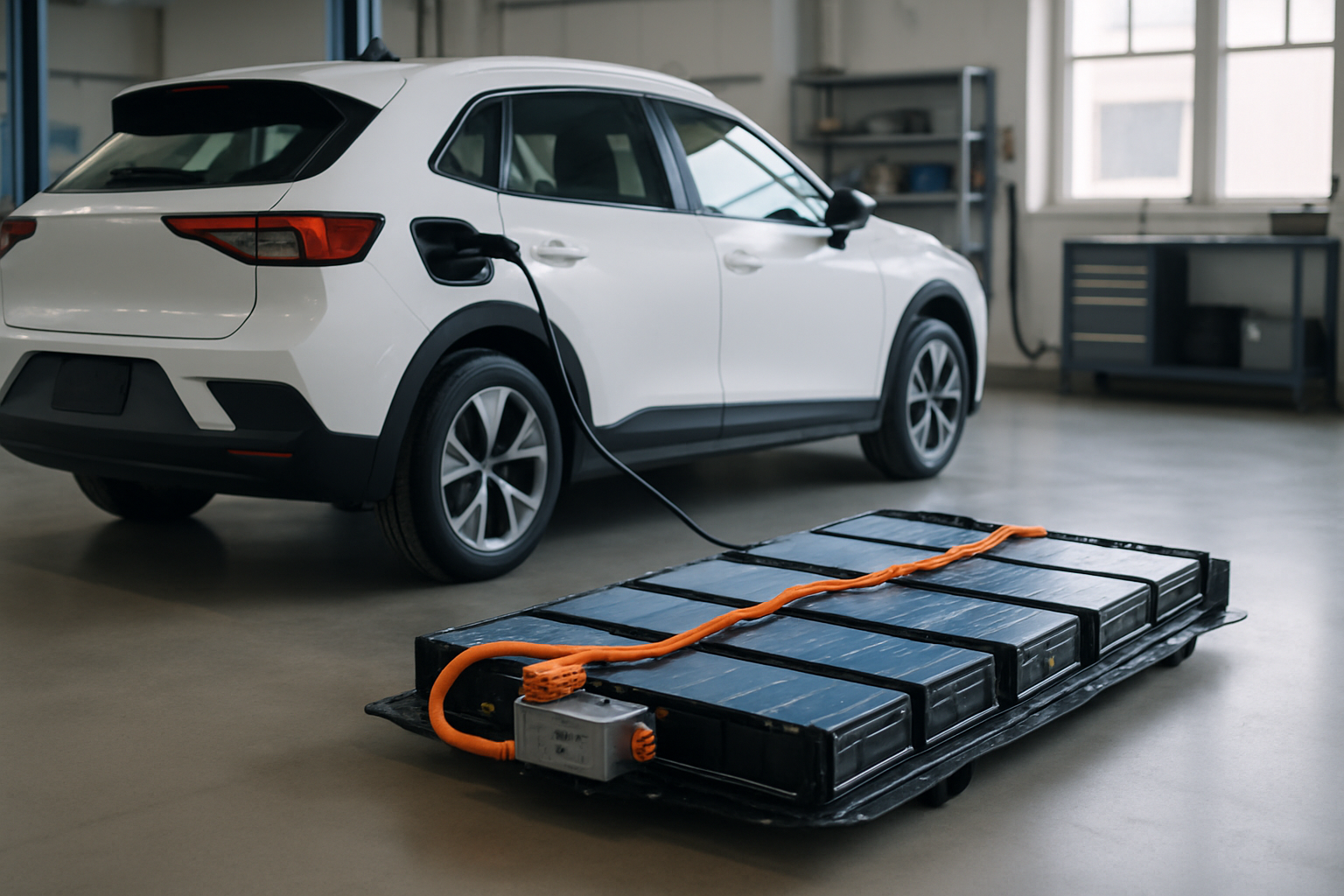
Electric car batteries represent one of the most significant investments in your EV, and naturally, you want to know how long they’ll keep your car running before you’re looking at a replacement bill. With typical EV battery replacements costing anywhere from $5,000 to $20,000, understanding battery longevity isn’t just curiosity, it’s financial planning.
What Do EV Battery Warranties Actually Cover?
Most electric car manufacturers provide battery warranties of 8 years or 100,000 miles, whichever comes first. Some automakers like Hyundai and Kia extend this to 10 years or 100,000 miles. This warranty typically covers you if the battery capacity drops below 70% of its original capacity during the warranty period.
Tesla Model S and X vehicles built before 2020 have unlimited mileage coverage for 8 years, while newer models and the Model 3/Y have the standard 8-year/100,000-120,000 mile coverage depending on the variant. Nissan Leaf batteries are covered for 8 years or 100,000 miles, but early models had degradation issues that led to improved warranty terms.
These warranties don’t mean your battery will fail at 8 years. They’re designed to give you confidence that the manufacturer stands behind their product during the most critical period of ownership.
Real-World Battery Degradation Data
Tesla Battery Longevity
Tesla has shared data showing their batteries retain about 90% of their capacity after 200,000 miles. Independent studies from organizations like Geotab have found similar results across thousands of Tesla vehicles. Model S vehicles from 2012-2013 show approximately 5% degradation in the first 50,000 miles, then level off to about 1-2% degradation per 50,000 miles afterward.
Model 3 data shows even better results, with most vehicles retaining 95% capacity after 50,000 miles. The newer 2170 battery cells used in Model 3 and Y vehicles appear more durable than the earlier 18650 cells used in Model S and X.
Nissan Leaf Battery Performance
Early Nissan Leaf models (2011-2012) experienced faster degradation due to their air-cooled battery design and battery chemistry. Many first-generation Leaf vehicles lost 20-30% of their capacity within 5-7 years, particularly in hot climates like Arizona and Texas.
Nissan addressed these issues with improved battery chemistry in 2013 and introduced liquid cooling in the 2018 Leaf Plus. Current Leaf models show much better degradation patterns, typically losing only 10-15% capacity over 100,000 miles when properly maintained.
Chevrolet Bolt Battery Degradation
The Chevrolet Bolt has shown excellent battery longevity in real-world testing. Most Bolt owners report less than 10% capacity loss after 100,000 miles. The Bolt’s liquid-cooled battery system and conservative battery management help preserve capacity over time.
GM’s LG Chem batteries in the Bolt appear to be among the most durable in the industry, though the recent battery recall due to fire risk has created some uncertainty about long-term reliability.
How Battery Management Systems Extend Life
Modern EVs use sophisticated battery management systems (BMS) that monitor and control hundreds of individual battery cells. These systems balance charging across cells, manage temperature, and prevent overcharging or deep discharge that could damage the battery pack.
Your EV’s BMS will typically prevent you from charging to 100% or discharging to 0% at the cell level, even when your dashboard shows these percentages. This “buffer” protects the battery chemistry and significantly extends battery life.
Temperature management plays a crucial role in battery longevity. Batteries degrade faster in extreme heat or cold, which is why most modern EVs have active thermal management systems that heat or cool the battery pack as needed.
Factors That Affect Battery Life
Climate and Temperature
Extreme temperatures accelerate battery degradation. Hot climates like those in Arizona, Nevada, and Texas can reduce battery life by 20-40% compared to moderate climates. Cold weather also affects batteries, though the impact on degradation is less severe than extreme heat.
If you live in a hot climate, parking in shade or a garage whenever possible can significantly extend your battery’s life. Some EVs allow you to precondition the battery while plugged in, which helps maintain optimal temperature.
Charging Habits
Frequent DC fast charging can accelerate battery degradation, though modern battery management systems minimize this impact. For daily driving, charging to 80% on AC power is optimal for battery longevity.
Keeping your battery charge between 20% and 80% most of the time helps preserve capacity. Only charge to 100% when you need the extra range for longer trips.
Driving Patterns
Aggressive acceleration and high-speed driving generate more heat in the battery, which can contribute to faster degradation. Highway driving at sustained high speeds also works the battery harder than city driving with regenerative braking.
EVs actually prefer stop-and-go city driving because regenerative braking reduces the overall energy demand on the battery pack.
When Do Batteries Actually Need Replacement?
Most EV batteries will retain 70-80% of their original capacity after 150,000-200,000 miles. Even at 70% capacity, your EV remains functional, though you’ll notice reduced range.
Battery replacement becomes necessary when capacity drops below your daily driving needs or when individual cells begin failing. Modern batteries tend to degrade gradually rather than failing suddenly.
Some Tesla Model S vehicles have exceeded 400,000 miles on their original battery packs, though they’re operating at reduced capacity. The battery doesn’t become worthless at 70% capacity, it just provides less range than when new.
Battery Replacement Costs and Options
Battery replacement costs vary significantly by vehicle and battery size. A Nissan Leaf battery replacement runs about $5,500-$6,500, while a Tesla Model S battery can cost $12,000-$15,000 for a remanufactured pack.
Many automakers now offer remanufactured or refurbished battery packs at lower costs than new batteries. These packs often come with shorter warranties but provide substantial savings.
Third-party battery reconditioning services can replace failed cells within your existing battery pack for $3,000-$8,000, depending on how many cells need replacement.
Maximizing Your EV Battery Life
Follow the 80% rule for daily charging. Most EVs allow you to set a charging limit, so you can plug in every night without overcharging.
Avoid letting your battery sit at very low charge levels for extended periods. If you’re storing your EV for weeks or months, maintain the charge between 40-60%.
Use DC fast charging sparingly. While convenient for road trips, frequent fast charging generates heat that can accelerate degradation over time.
Keep your EV in moderate temperatures when possible. Parking in a garage protects the battery from temperature extremes.
The Future of EV Battery Longevity
Battery technology continues improving rapidly. New lithium iron phosphate (LFP) batteries used in some Tesla Model 3 vehicles show even better longevity than traditional lithium-ion chemistries.
Solid-state batteries, expected in production vehicles by 2025-2027, promise significantly longer life and faster charging capabilities.
As battery technology improves and costs decrease, replacement batteries for older EVs will likely become more affordable, similar to how replacement parts for ICE vehicles have become cheaper over time.
Frequently Asked Questions
Do electric car batteries last longer than the car itself?
In many cases, yes. Well-maintained EV batteries can last 15-20 years or more, which often exceeds the useful life of other vehicle components. Many EVs will need suspension, brake, or interior components replaced before the battery pack fails.
Can you drive an EV with a degraded battery?
Absolutely. Even a battery at 70% capacity is still functional, you’ll just have less range than when new. Many EV owners continue driving their vehicles well past warranty expiration with degraded batteries, simply adjusting their driving patterns to accommodate the reduced range.
Is it worth replacing an EV battery or buying a new car?
This depends on your specific vehicle’s value and replacement costs. For a 5-year-old Tesla Model 3, a $8,000 battery replacement might make sense. For a 10-year-old Nissan Leaf worth $6,000, replacement probably doesn’t make financial sense.
Do EV batteries degrade faster in winter?
Cold weather reduces battery performance temporarily but doesn’t cause significant long-term degradation like extreme heat does. Your range will be lower in winter, but the battery will return to normal capacity in warmer weather. Extreme heat causes permanent chemical changes that reduce capacity over time.
Leave a Reply