
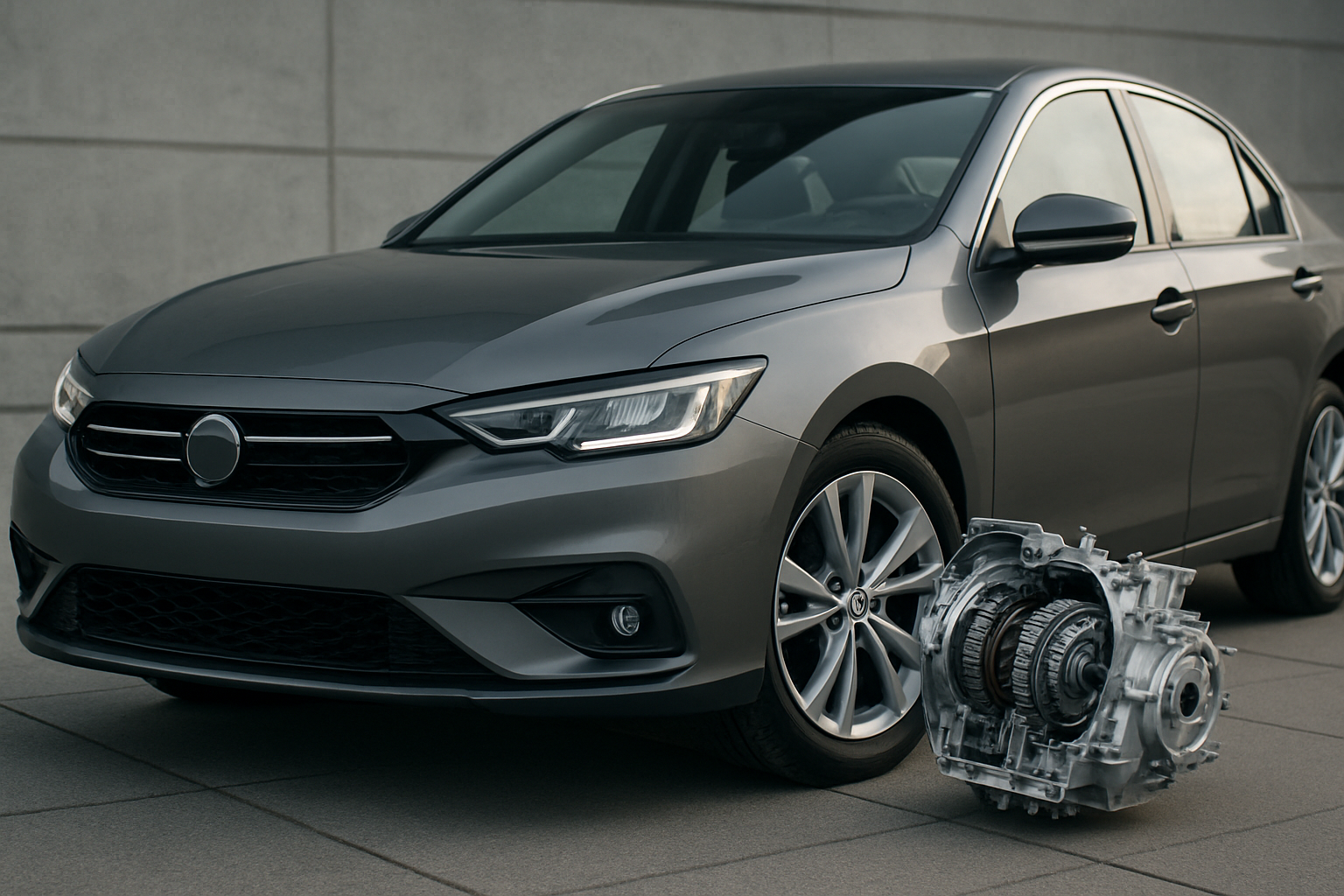
Dual clutch transmissions represent a fascinating middle ground between manual and automatic transmissions, offering the convenience of automatic shifting with performance closer to a manual gearbox. You’ve probably encountered them in various vehicles without even realizing it, as they’ve become increasingly popular across many brands over the past two decades.
Understanding Dual Clutch Technology
A dual clutch transmission (DCT) uses two separate clutches for odd and even gear sets. While one clutch engages to deliver power in the current gear, the other clutch pre-selects the next gear. This setup allows for incredibly fast shifts, often completing gear changes in under 100 milliseconds.
The system works by having one clutch control gears 1, 3, 5, and 7 (if equipped), while the second clutch handles gears 2, 4, and 6. When you’re accelerating in third gear, the transmission has already pre-selected fourth gear on the second clutch. The moment you need to shift, the first clutch releases while the second clutch engages almost instantaneously.
This technology originated in motorsports before making its way into production vehicles. Racing teams needed faster shifts than traditional automatics could provide, but wanted the consistency and reliability that manual transmissions sometimes lacked during intense competition.
How Dual Clutch Differs from Traditional Automatic
Traditional automatic transmissions use a torque converter, planetary gears, and hydraulic controls to change gears. The torque converter creates a fluid coupling between the engine and transmission, which provides smooth operation but reduces efficiency and increases shift times.
Dual clutch transmissions eliminate the torque converter entirely. Instead, they use direct mechanical connections through the clutches, similar to a manual transmission. This direct connection improves fuel economy and provides more immediate throttle response.
Shift speed represents the most significant difference. While a well-tuned automatic might complete shifts in 200-300 milliseconds, dual clutch systems often finish the job in half that time. You’ll feel this difference during aggressive driving, where the rapid shifts keep the engine in its power band more effectively.
The gear ratios also work differently. Automatics typically use planetary gear sets that can create multiple ratios from the same components. Dual clutch transmissions use more traditional layshaft designs with fixed gear ratios, similar to manual transmissions but with automated operation.
Wet Clutch vs Dry Clutch Systems
Dual clutch transmissions come in two primary configurations: wet clutch and dry clutch systems. Each has distinct advantages and drawbacks that affect performance, maintenance, and longevity.
Wet Clutch Systems
Wet clutch DCTs immerse the clutches in transmission fluid, providing cooling and lubrication. Volkswagen’s DSG transmissions in larger engines, Porsche’s PDK, and most high-performance applications use this design. The fluid helps manage heat during aggressive driving and extends clutch life.
These systems handle higher torque loads better and prove more durable in performance applications. However, they’re more complex, expensive, and require regular transmission fluid changes. The fluid coupling also creates slightly more parasitic loss compared to dry clutch systems.
Dry Clutch Systems
Dry clutch DCTs operate without fluid, using air cooling instead. Volkswagen’s smaller DSG units, Ford’s PowerShift, and many compact car applications use dry clutches. They’re lighter, more efficient, and less complex than wet systems.
The downside becomes apparent during heavy use or stop-and-go traffic. Without fluid cooling, dry clutches can overheat more easily, leading to premature wear or shuddering. They also tend to be more sensitive to driving style and operating conditions.
Major Brands and Their DCT Systems
Volkswagen Group DSG
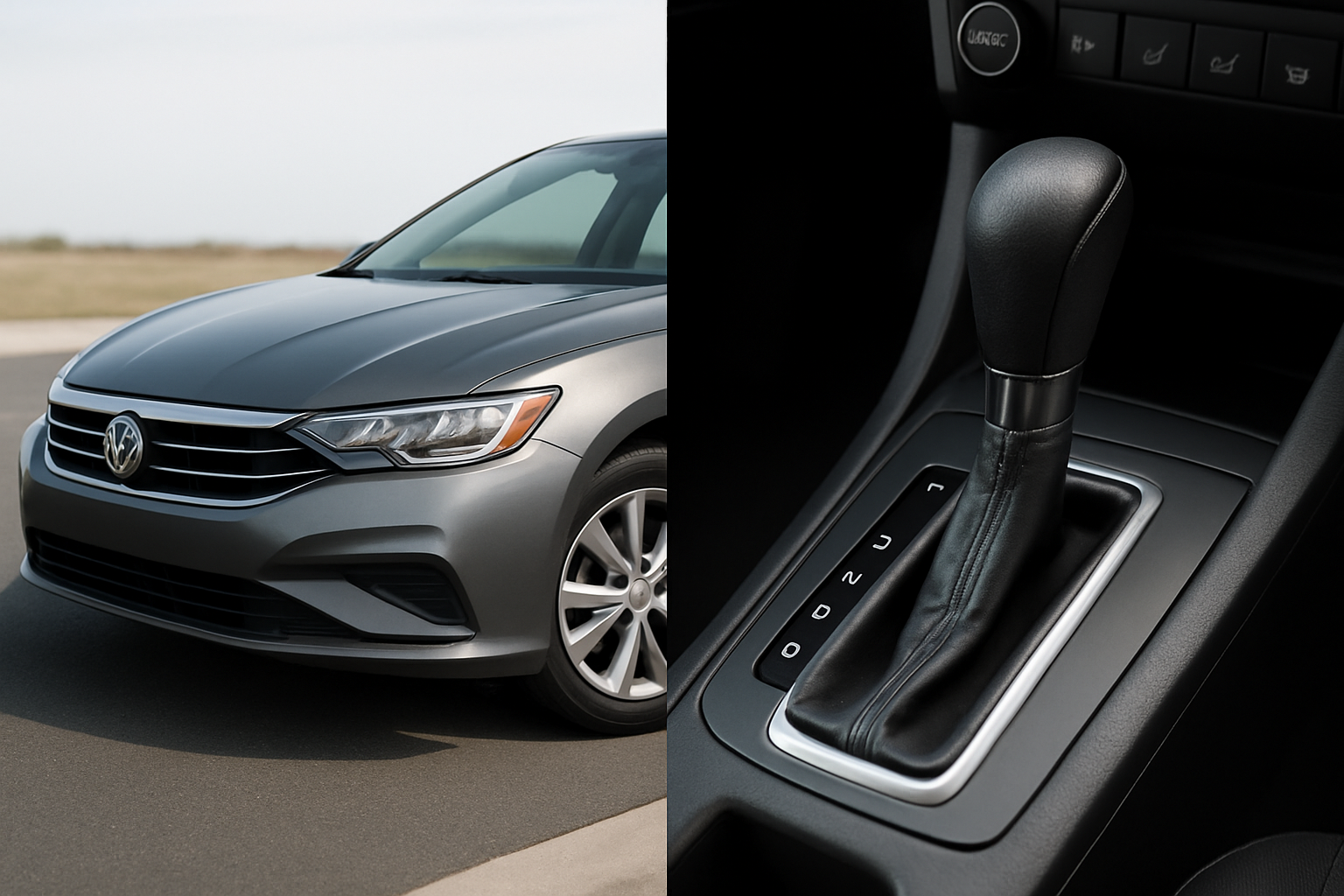
Volkswagen pioneered mainstream DCT adoption with their Direct-Shift Gearbox (DSG). The 6-speed DQ250 wet clutch unit appears in GTI, R, and Audi S models, while the 7-speed DQ200 dry clutch version serves smaller engines across VW, Audi, SEAT, and Skoda vehicles.
The wet clutch DSG has proven reliable in performance applications, though it requires fluid changes every 40,000 miles. The dry clutch version has experienced more issues, particularly with clutch wear and mechatronic unit failures around 60,000-80,000 miles.
Hyundai and Kia DCT
Hyundai developed their own 7-speed dry clutch DCT for vehicles like the Veloster N, Elantra Sport, and various Kia models. Their system shows improvement over early Ford designs but still exhibits some low-speed jerkiness characteristic of dry clutch systems.
The Korean brands have been more conservative with DCT implementation, using them primarily in performance or sport-oriented models rather than mainstream applications. This approach has helped avoid some of the mass-market problems other manufacturers experienced.
Ford PowerShift Problems
Ford’s PowerShift DCT became infamous for reliability issues, particularly in the Focus and Fiesta from 2012-2016. The dry clutch system suffered from premature clutch wear, shuddering, and hesitation, leading to multiple recalls and class-action lawsuits.
The problems stemmed from the clutches overheating during normal driving conditions, especially in stop-and-go traffic. Ford’s software calibration also proved problematic, causing harsh shifts and unpredictable behavior. Many owners experienced multiple clutch replacements within the warranty period.
Ford eventually abandoned the PowerShift in North American markets, returning to traditional automatics for their compact cars. The experience highlighted the challenges of implementing dry clutch DCTs in mainstream applications.
Driving Experience and Characteristics
Performance Advantages
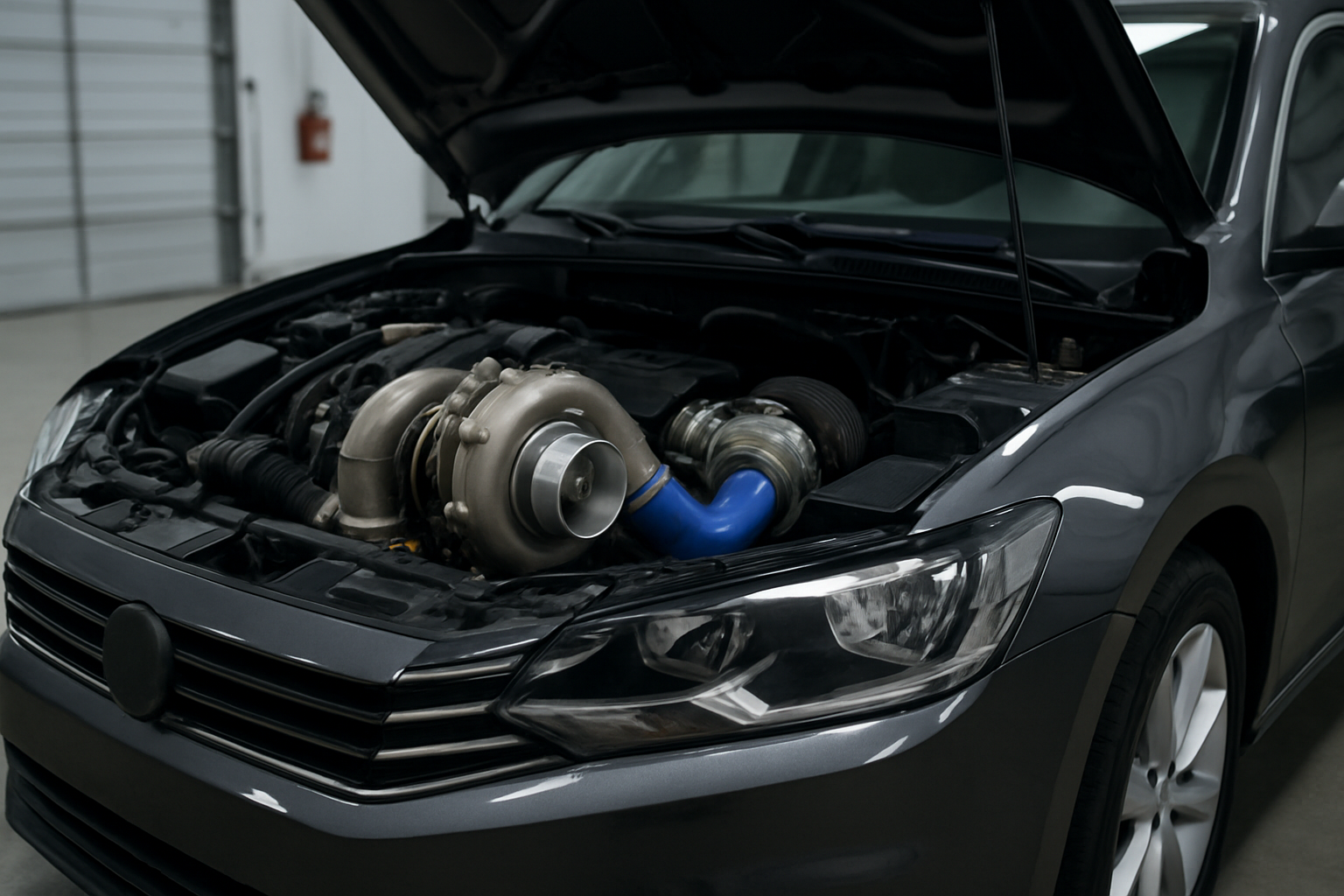
When working properly, DCTs provide an engaging driving experience that combines automatic convenience with manual-like performance. The rapid shifts keep turbocharged engines on boost, improving acceleration and throttle response compared to traditional automatics.
Manual mode operation feels more connected than torque converter automatics. The direct mechanical connection provides immediate engine braking when lifting off the throttle, similar to a manual transmission. Paddle shifters respond instantly without the delay common in conventional automatics.
Low-Speed Behavior
DCTs struggle most during low-speed maneuvering, particularly dry clutch systems. Without a torque converter’s fluid coupling, the transmission must slip the clutches to manage low-speed operation. This creates the characteristic jerkiness when creeping in traffic or parking.
The computer tries to predict your intentions, but it can’t read your mind. When you’re barely touching the throttle in a parking lot, the system might engage and disengage the clutches multiple times, creating an unpleasant lurching sensation.
Stop-and-go traffic amplifies these issues. The constant clutch modulation generates heat, especially in dry systems, which can lead to overheating and reduced performance. Some systems will even display warning messages during extreme conditions.
Maintenance and Reliability Considerations
DCT maintenance requirements vary significantly between wet and dry systems. Wet clutch transmissions need regular fluid changes, typically every 40,000-60,000 miles, using specific DCT fluid that costs considerably more than conventional ATF.
Dry clutch systems don’t require fluid changes for the clutches themselves, but they still have gear oil for the final drive and may need software updates to address shift quality issues. Clutch replacement represents the major service item, often needed between 60,000-100,000 miles depending on driving conditions.
The mechatronic unit, which combines the hydraulic valve body with electronic controls, represents another potential failure point. These units cost thousands to replace and can fail without warning, leaving you stranded with a transmission that won’t shift.
Should You Choose a DCT?
DCTs work best for drivers who prioritize performance and don’t mind some low-speed quirks. If you enjoy spirited driving, frequently use manual mode, or want the fastest possible shifts, a well-designed DCT can be extremely satisfying.
However, if your driving consists mainly of city commuting with lots of stop-and-go traffic, a traditional automatic will likely provide a better experience. The constant low-speed maneuvering that defines urban driving represents exactly where DCTs struggle most.
Consider the specific implementation carefully. Volkswagen’s wet clutch DSG in performance applications has proven reliable, while Ford’s PowerShift created nightmares for many owners. Research the particular system in any vehicle you’re considering, as not all DCTs are created equal.
The Future of Dual Clutch Technology
Many manufacturers are moving away from DCTs in favor of improved conventional automatics with more gears and better programming. Modern 8, 9, and 10-speed automatics offer much of the efficiency benefit with fewer low-speed compromises.
Electric vehicles are also changing the landscape. EVs don’t need complex multi-speed transmissions, reducing the market for advanced transmission technologies. However, DCTs will likely remain in high-performance applications where shift speed and driver engagement matter most.
Hybrid systems represent another interesting application. Some manufacturers use DCTs in hybrid powertrains where the instant engagement characteristics work well with electric motor integration.
Frequently Asked Questions
Do dual clutch transmissions last as long as regular automatics?
DCT longevity depends heavily on the specific design and driving conditions. Well-maintained wet clutch systems in appropriate applications can match or exceed traditional automatic reliability. Dry clutch systems typically have shorter clutch life, especially in stop-and-go driving conditions. Expect clutch replacement every 60,000-100,000 miles in dry systems, while wet systems may go 150,000+ miles with proper maintenance.
Can you drive a DCT like a regular automatic?
Yes, DCTs have full automatic modes that handle all shifting without driver input. However, you’ll need to adapt your driving style for low-speed situations. Avoid riding the brake in traffic, be gentle with throttle inputs during parking maneuvers, and understand that the system may feel different from a traditional automatic during creeping speeds.
Are DCT repairs expensive?
DCT repairs typically cost more than traditional automatic service. Clutch replacement can run $2,000-4,000 depending on the system, while mechatronic unit replacement may cost $4,000-6,000. Specialized DCT fluid also costs more than conventional ATF. Factor these potential costs into your ownership decision, especially for higher-mileage vehicles.
Which DCT systems should I avoid?
Ford’s PowerShift transmission in 2012-2016 Focus and Fiesta models has well-documented reliability issues and should be avoided. Early Volkswagen DQ200 dry clutch units also experienced problems, though later versions improved. Research the specific year and application, as DCT reliability varies significantly between implementations and model years.
This article contains affiliate links. If you purchase through these links, we may earn a small commission at no extra cost to you.

Leave a Reply