
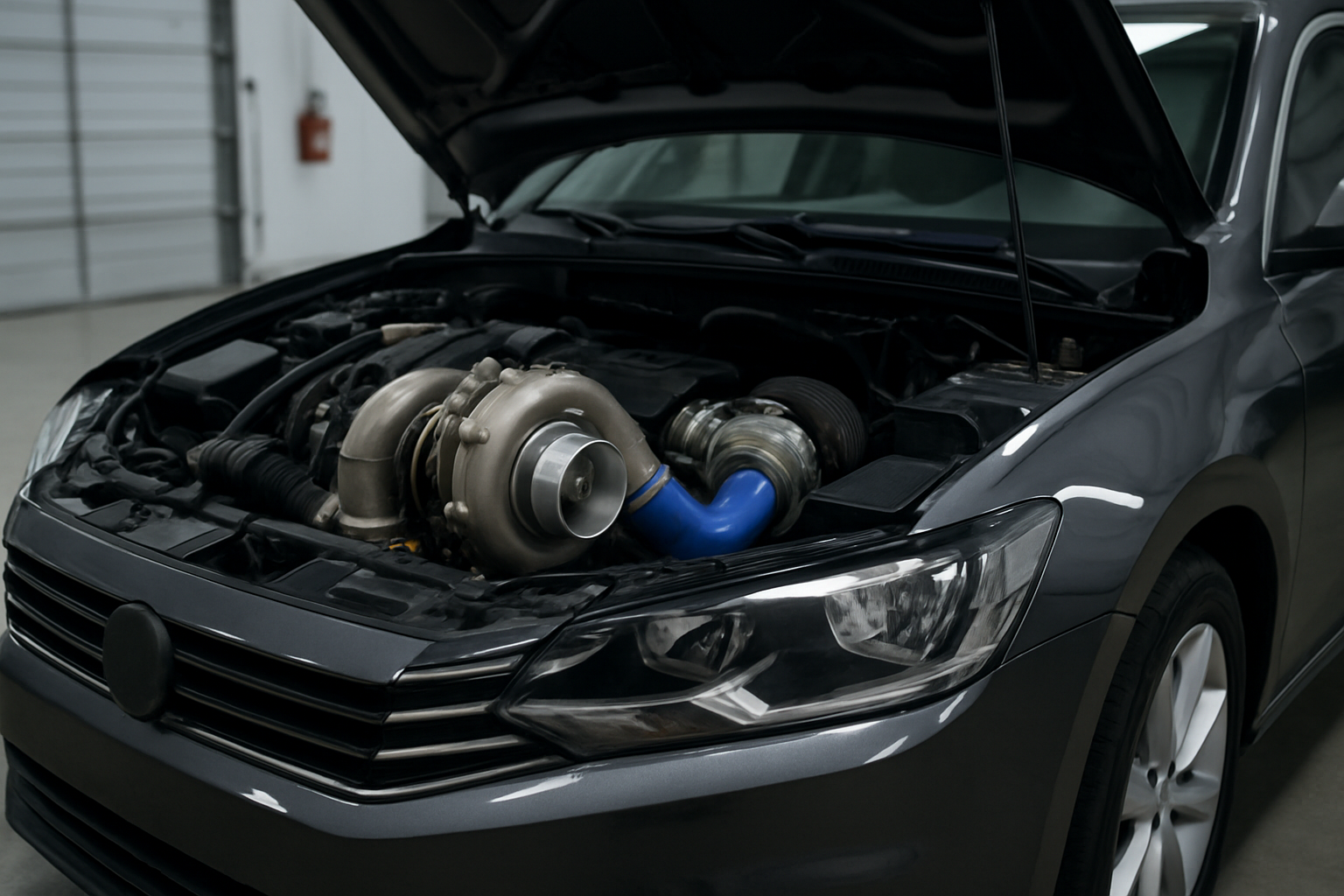
Turbocharging has become incredibly common in modern vehicles, but many drivers wonder whether those spinning turbines actually shorten their engine’s lifespan. Understanding how turbochargers work and their real impact on engine longevity can help you make better decisions about your next vehicle purchase or how to maintain your current turbocharged engine.
What Is Turbocharging and How Does It Work
A turbocharger is essentially an air compressor that forces more air into your engine’s combustion chambers. This extra air allows the engine to burn more fuel, creating significantly more power than a naturally aspirated engine of the same size.
The system works by using exhaust gases to spin a turbine wheel, which connects to a compressor wheel on the opposite end of the same shaft. As exhaust gases exit your engine, they spin the turbine at extremely high speeds, often exceeding 150,000 RPM. This spinning motion drives the compressor wheel, which sucks in fresh air and compresses it before sending it to your engine.
The compressed air contains more oxygen molecules per cubic inch than normal atmospheric air. More oxygen means your engine can burn more fuel during each combustion cycle, resulting in increased power output without increasing engine displacement.
Understanding Boost Pressure
Boost pressure measures how much additional air pressure the turbocharger creates above atmospheric pressure. Most factory turbocharged engines run between 6-15 PSI of boost, while high-performance applications can exceed 20 PSI.
Your engine’s computer controls boost levels through a wastegate, which diverts exhaust gases away from the turbine when target boost is reached. This prevents overboost conditions that could damage your engine. Electronic boost controllers in modern vehicles can adjust boost levels based on engine load, RPM, and other factors.
Higher boost pressures create more power but also increase stress on engine components. Manufacturers carefully balance boost levels to maximize performance while maintaining reliability over the vehicle’s expected lifespan.
The Role of Intercoolers
Compressing air generates heat, and hot air is less dense than cool air. An intercooler cools the compressed air before it enters your engine, increasing air density and reducing the risk of engine knock.
Air-to-air intercoolers use ambient air flowing through cooling fins to reduce inlet air temperatures. These are common on most turbocharged vehicles because they’re lightweight and don’t require additional coolant systems. Water-to-air intercoolers use engine coolant to cool compressed air and are typically found on high-performance applications where space is limited.
Effective intercooling can reduce inlet air temperatures by 100-200 degrees Fahrenheit compared to the hot compressed air leaving the turbocharger. This temperature reduction allows for more aggressive timing advance and higher boost levels without risking detonation.
Understanding Turbo Lag
Turbo lag is the delay between pressing the accelerator and feeling the turbocharger’s power boost. This happens because the turbocharger needs time to spin up from idle speeds to effective boost-producing RPMs.
Several factors influence lag duration. Larger turbochargers have more mass to spin up, creating longer lag times but potentially higher peak power. Smaller turbos spool faster but may not sustain high boost levels at elevated RPMs. Modern twin-scroll turbochargers and variable geometry turbines help reduce lag by optimizing exhaust gas flow.
Engine displacement also affects lag. Smaller engines produce less exhaust gas volume at low RPMs, potentially increasing spool time. This is why many modern turbocharged engines use techniques like anti-lag systems or electric motor assistance to minimize lag.
Does Turbocharging Reduce Engine Life
Turbocharging does place additional stress on engine components, but whether this significantly reduces engine life depends on several factors including design, maintenance, and driving habits.
The increased cylinder pressures from boost put more stress on pistons, connecting rods, and the crankshaft. Higher combustion temperatures can affect valve seats and cylinder head gaskets. The turbocharger itself adds another complex component that can potentially fail.
However, modern turbocharged engines are specifically designed to handle these stresses. Manufacturers use stronger internal components, improved metallurgy, and better cooling systems in turbocharged applications. Many turbocharged engines today easily exceed 200,000 miles with proper maintenance.
Modern Turbo Reliability vs Older Systems
Early turbocharged engines from the 1980s and 1990s earned a reputation for reliability issues, but modern systems are significantly more robust. Older turbos suffered from inadequate lubrication systems, primitive engine management, and materials that couldn’t handle the heat cycles.
Today’s turbochargers use advanced bearing systems, including ball bearings or magnetic bearings that reduce friction and improve durability. Modern engine oils are specifically formulated to handle the high temperatures and rapid oil flow changes that turbochargers create.
Electronic engine management systems now precisely control fuel delivery, ignition timing, and boost levels to prevent conditions that could damage the engine or turbocharger. Knock sensors can detect detonation and immediately reduce boost or retard timing to protect the engine.
Water-cooled turbos have become standard, allowing the cooling system to continue circulating coolant through the turbo even after engine shutdown. This prevents oil coking that plagued earlier air-cooled designs.
Factors That Affect Turbocharged Engine Longevity
Oil quality and change intervals are critical for turbo longevity. The turbocharger shaft spins at extremely high speeds with minimal clearances, making proper lubrication essential. Using the manufacturer-specified oil grade and changing it at recommended intervals can prevent premature turbo failure.
Heat management plays a crucial role in engine life. Allowing the engine to idle for a minute or two after hard driving helps cool the turbocharger gradually. Some newer vehicles have electric coolant pumps that continue running after shutdown to manage heat soak.
Fuel quality affects turbocharged engines more than naturally aspirated ones. Higher octane fuel helps prevent knock under boost, while poor-quality fuel can cause deposits that affect turbocharger performance.
Maintenance Considerations for Turbocharged Engines
Turbocharged engines typically require more frequent oil changes than naturally aspirated engines. Many manufacturers recommend 5,000-mile intervals instead of the 7,500-10,000 miles common with non-turbo engines.
Air filter maintenance becomes more critical because the turbocharger compresses whatever air enters the system. A dirty air filter can cause the turbo to work harder and may allow contaminants to damage the compressor wheel.
Regular inspection of intercooler piping and clamps prevents boost leaks that can cause poor performance and make the turbocharger work inefficiently. Look for oil residue around connections, which often indicates a failing seal or loose clamp.
Signs of Turbocharger Problems
Loss of power or slower acceleration can indicate turbocharger issues, though these symptoms can also point to other problems like clogged fuel injectors or a failing oxygen sensor. A boost gauge or OBD2 scanner can help determine if the turbo is producing proper boost levels.
Unusual noises from the engine bay, particularly whistling or grinding sounds, may indicate turbocharger bearing wear or compressor wheel damage. These sounds often become more noticeable under acceleration when the turbo is working hardest.
Excessive oil consumption without visible leaks sometimes points to turbocharger seal failure. The turbo may be burning oil internally or leaking it into the intercooler system. Blue smoke from the exhaust, especially during startup, can confirm oil burning issues.
Maximizing Your Turbocharged Engine’s Life
Use quality synthetic oil that meets or exceeds the manufacturer’s specifications. Synthetic oils handle the high temperatures and rapid flow changes better than conventional oils, providing superior protection for turbocharger bearings.
Don’t shut off the engine immediately after hard driving. Allow it to idle for 30-60 seconds to let the turbocharger slow down gradually and allow oil circulation to continue cooling the bearings.
Address any engine problems promptly, as issues like misfires or fuel system problems can damage the turbocharger. Rich fuel mixtures can cause excessive exhaust temperatures, while lean conditions can cause detonation that damages pistons and other components.
Is Turbocharging Worth the Potential Trade-offs
Modern turbocharged engines offer excellent reliability when properly maintained, often matching or exceeding the lifespan of comparable naturally aspirated engines. The improved fuel economy and performance make turbocharging an attractive option for many drivers.
The key is understanding that turbocharged engines require slightly more attention to maintenance details. Following the manufacturer’s service intervals, using quality fluids, and addressing problems early can ensure your turbocharged engine provides years of reliable service.
For most drivers, the benefits of turbocharging outweigh the minimal additional maintenance requirements. The technology has matured significantly, and today’s turbocharged engines are far more reliable than their predecessors from previous decades.
Frequently Asked Questions
How long do modern turbochargers typically last?
Well-maintained turbochargers in modern vehicles commonly last 150,000-200,000 miles or more. Proper oil maintenance and allowing cool-down time after hard driving are the most important factors for longevity.
Can I use regular oil in a turbocharged engine?
While some turbocharged engines can use conventional oil, synthetic oil is highly recommended due to its superior high-temperature stability and flow characteristics. Always follow the manufacturer’s oil specifications regardless of oil type.
Do turbocharged engines require premium fuel?
This depends on the specific engine design. Many turbocharged engines are designed to run on regular unleaded fuel, while high-performance applications may require premium. Check your owner’s manual for the manufacturer’s fuel recommendation.
What happens if my turbocharger fails?
Turbocharger failure can range from gradual performance loss to catastrophic engine damage if metal debris enters the engine. Early detection and repair are important to prevent secondary damage to other engine components.
This article contains affiliate links. If you purchase through these links, we may earn a small commission at no extra cost to you.




Leave a Reply