
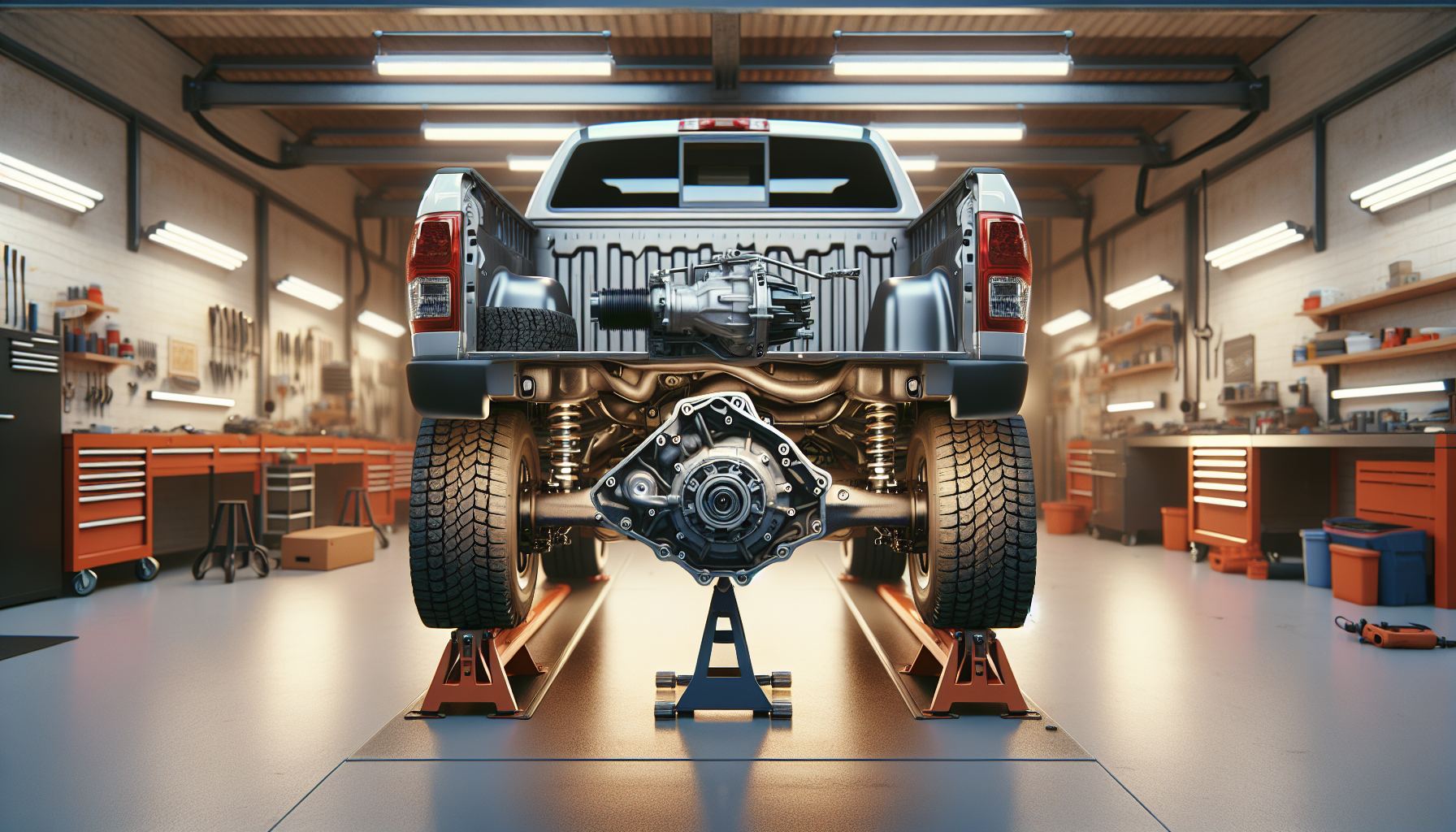
If you’re hearing a whining or humming noise from the back of your Tundra, especially when accelerating or turning, your rear differential is probably trying to tell you something. This isn’t one of those noises you can ignore and hope goes away. The differential is what allows your rear wheels to turn at different speeds during corners, and when it starts complaining, there’s usually a good reason.
Most Tundra owners first notice this sound during highway merging or when the truck is under load. Sometimes it’s a low hum that gets louder with speed. Other times it’s a high-pitched whine that changes pitch when you let off the gas. Either way, catching this early can save you from a much more expensive repair down the road.
Common Causes
The rear differential doesn’t just break for no reason. Here’s what typically causes that whining noise in Tundras:
Low or Contaminated Differential Fluid
This is the most common culprit, and thankfully the easiest to fix. Differential fluid breaks down over time, losing its ability to properly lubricate the gears inside. Toyota recommends changing it every 30,000 to 40,000 miles, but many owners go way longer than that. I’ve seen Tundras with 100,000 miles on the original fluid, and by that point the gears are basically grinding against each other.
Contamination is another issue. If a seal leaks, water or dirt can get into the diff. You’ll sometimes see this on trucks that do a lot of off-roading or deep water crossings.
Worn Bearings
The pinion bearing and carrier bearings support the gears inside the differential. When these wear out, you get a whining noise that often changes with vehicle speed rather than engine RPM. Bearing wear happens gradually, but once it starts making noise, the damage is already done.
Gear Wear or Damage
The ring and pinion gears can wear down from normal use, especially if the truck has been running low on fluid. You might also see premature wear if someone installed oversized tires without regearing the differential. Running 35-inch tires on stock gearing puts extra stress on everything back there.
Incorrect Backlash or Preload
If your differential was recently serviced or rebuilt, improper setup during installation can cause whining. The gear mesh needs to be within very specific tolerances. Too much or too little clearance between the ring and pinion creates noise and accelerates wear.
How to Diagnose the Problem
Before you start throwing parts at the problem, you need to figure out what’s actually wrong. Here’s how to narrow it down:
Listen Carefully to the Noise Pattern
Drive the truck and pay attention to when the noise happens. Does it whine during acceleration but quiet down when coasting? That usually points to gear wear on the drive side. If it whines during deceleration or coasting, the coast side of the gears is worn. A constant hum that increases with speed regardless of throttle position? That’s typically a bearing.
Check the Differential Fluid
This should be your first physical check. Pop the fill plug on the rear diff and stick your finger in. The fluid should be at the bottom of the fill hole. Pull some out and look at it. Fresh diff fluid is clear or slightly amber. If it’s dark brown, smells burnt, or has metal particles in it, you’ve found your problem.
Some Tundras have a drain plug, others don’t. Either way, you can tell a lot from what comes out of that fill hole.
Check for Play
Jack up the rear of the truck and put it on jack stands. Grab the driveshaft near the differential and try to rotate it back and forth. You should feel very minimal movement, maybe a quarter inch at most. Excessive play indicates worn gears or bearings. While you’re under there, spin each rear wheel and listen for grinding or roughness.
This video walks through the diagnostic process:
Look for Leaks
Inspect the pinion seal (where the driveshaft enters the diff), the cover gasket, and both axle seals. Any wetness or dripping means you’re losing fluid. Even a small leak can drop the fluid level enough to cause problems over time.
How to Fix It
The repair depends on what you found during diagnosis. Here are the most common fixes:
Change the Differential Fluid
If the fluid is old or contaminated but you caught it before serious damage occurred, a fluid change might solve the problem. You’ll need about 3 quarts of 75W-85 gear oil for most Tundras. Some models with limited-slip diffs also need a friction modifier additive.
Remove the fill plug first to make sure it’s not seized. Then remove the drain plug if your diff has one, or unbolt the cover if it doesn’t. Clean the cover and housing surface thoroughly, install a new gasket, and torque the bolts to spec in a crisscross pattern. Fill until fluid reaches the bottom of the fill hole.
This video shows the exact process for Tundras:
Drive it for a week and see if the noise goes away or decreases. Sometimes fresh fluid will quiet down gears that aren’t too far gone.
Replace the Pinion Seal
If you have a leak at the pinion seal, you can replace it without tearing apart the whole differential. You’ll need to remove the driveshaft, mark the pinion nut position, remove the nut, pull the yoke, pop out the old seal, install the new one, and reassemble. The tricky part is getting the pinion nut torque right to maintain proper bearing preload.
This job requires a inch-pound torque wrench and some mechanical aptitude. If you mess up the preload, you’ll create new problems.
Replace Axle Bearings
If one of the axle bearings is growling or humming, you can replace just that side. You’ll need to pull the axle shaft out, press off the old bearing, and press on a new one. Not every DIYer has a press, but some auto parts stores will do the pressing for you if you bring them the axle.
When to See a Mechanic
Some differential problems are beyond the scope of a home garage. You should take it to a shop if:
The noise is severe or getting rapidly worse. A differential that’s howling or clunking loudly is on borrowed time. Continuing to drive it risks catastrophic failure, which could leave you stranded or even damage other components.
You found metal shavings or chunks in the fluid. Small amounts of fine metallic dust are normal, but if you’re seeing actual pieces, the gears are chewing themselves apart. At that point you need a rebuild or replacement.
You lack the tools or experience for bearing or gear work. Replacing the pinion bearing, carrier bearings, or ring and pinion requires specialty tools including bearing pullers, a press, dial indicators for measuring backlash and preload, and a torque wrench that reads inch-pounds. The setup is critical. Get it wrong and you’ll be doing it again soon.
A good mechanic has done hundreds of these jobs and knows all the tricks. They’ll also warranty their work, which matters on a job this involved.
Estimated Repair Costs
| Repair | Parts Cost | Labor Cost | Total |
|---|---|---|---|
| Differential fluid change | Check current pricing on fluid and gasket | $80-$120 | $120-$180 |
| Pinion seal replacement | Check pricing on seal | $150-$250 | $200-$300 |
| Axle bearing replacement (one side) | Parts vary by year | $200-$350 | $300-$500 |
| Complete differential rebuild | Parts vary significantly | $600-$1000 | $1200-$2000 |
| Used differential replacement | Check pricing at salvage yards | $400-$600 | $800-$1400 |
Labor costs vary by region and shop rates. Dealer service departments typically charge more than independent shops. If you’re handy, doing the fluid change yourself drops that cost down to just the price of fluid and a gasket.
Prevention Tips
You can avoid most differential problems with basic maintenance:
Change the fluid regularly. Every 30,000 to 40,000 miles is the sweet spot for Tundras, especially if you tow or off-road. I know the owner’s manual might say longer intervals, but diff fluid is cheap compared to a rebuild. Send it if you want your truck to last.
Inspect for leaks during oil changes. A quick look under the truck every few months can catch a small leak before it becomes a big problem. Wipe things down so you can tell if fresh fluid is seeping out.
Address leaks immediately. If you spot a leak, fix it now. Driving around with low fluid accelerates wear dramatically. That $50 seal replacement beats a $1500 rebuild every time.
Regear if you install larger tires. Stock gearing is designed for stock tires. When you jump from 31-inch to 35-inch tires, the differential works harder. Regearing restores the proper mechanical advantage and reduces stress on the components.
Don’t ignore new noises. That barely noticeable hum you’ve been living with? It’s getting worse. Differentials rarely fix themselves. Catching problems early means easier, cheaper repairs.
Your Tundra’s differential is built tough, but it’s not indestructible. Most issues start small and snowball if ignored. Fresh fluid and regular inspections will keep that rear end quiet for the long haul. And if you do end up with a whine, at least now you know what to look for and whether it’s something you can tackle yourself or needs a pro.
Leave a Reply