
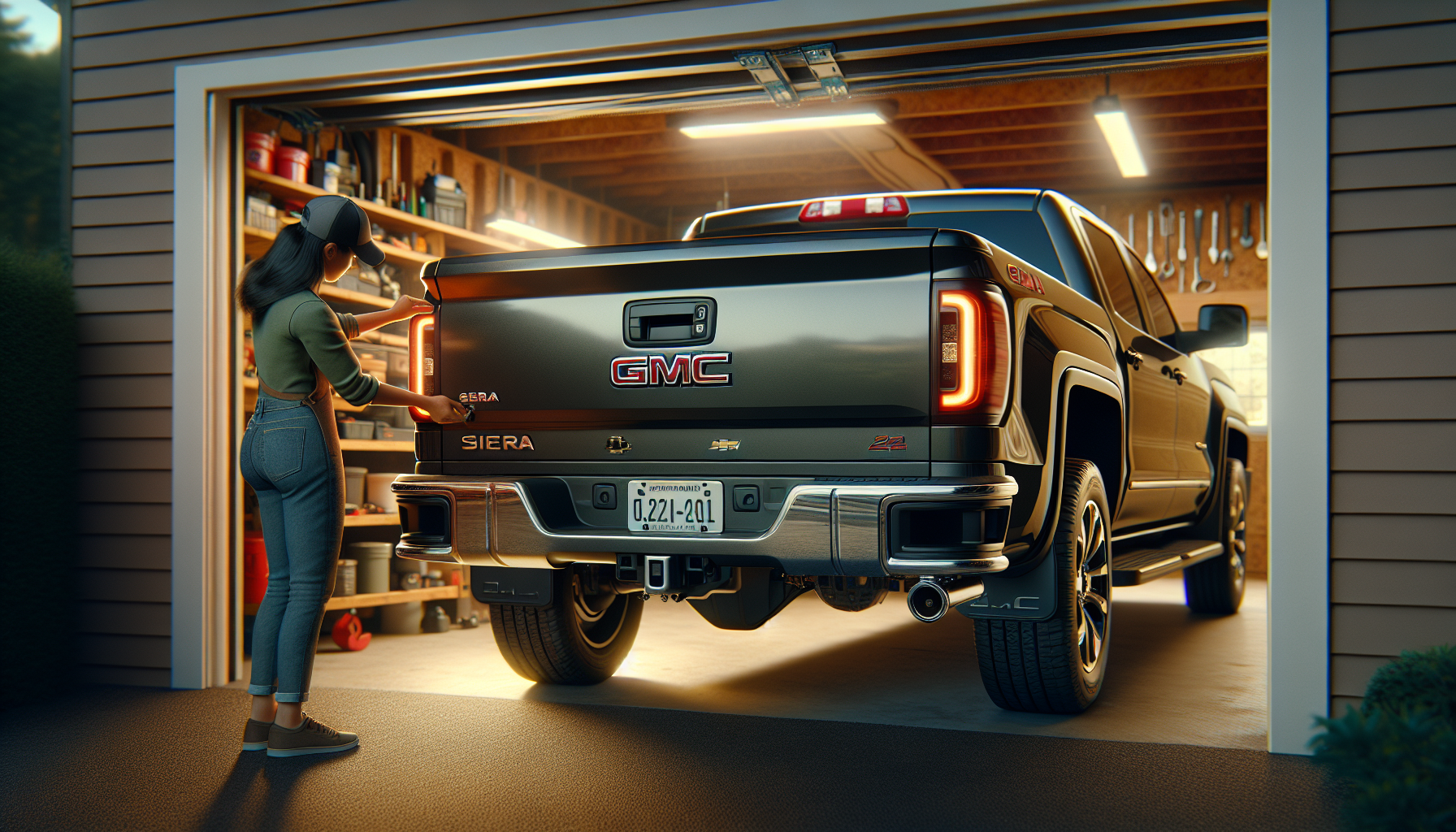
You slam your GMC Sierra’s tailgate shut, and instead of that satisfying click, it bounces back open. Or maybe it closes, but feels loose and rattles down the road. A tailgate that won’t latch properly is more than annoying—it’s a safety issue that can let cargo fly out or even cause the gate to drop open unexpectedly.
This problem shows up across Sierra generations, from older models to newer trucks with electronic latches. The good news is that most tailgate latch issues come down to a handful of common culprits, and many are fixable in your driveway with basic tools.
Common Causes
The tailgate latching system on your Sierra has several moving parts that work together. When one fails, the whole system stops working right.
Worn or Misaligned Strikers
The striker plates on the bed are what the tailgate latches grab onto. Over time, these can rust, wear down, or shift out of alignment. If they’re even slightly off, the latch won’t engage properly. This is especially common on work trucks that see heavy use.
Broken Latch Mechanism
The latch assemblies themselves contain springs, clips, and moving parts that can break or wear out. Plastic components inside the latch housing crack with age and temperature changes. When these fail, the latch either won’t catch at all or won’t hold securely.
Damaged Tailgate Handle or Rods
The handle connects to the latches through metal rods. If these rods bend, come loose, or if the handle assembly breaks, the latches won’t operate correctly. Sometimes the handle feels fine but the internal linkage has popped off its clips.
Electronic Lock Actuator Failure (2007+)
Newer Sierras with power locks have actuators that control the tailgate latches. These can fail due to moisture intrusion or simply wear out. When the actuator dies, it might prevent the latch from engaging even when you close the gate manually.
Bent or Damaged Tailgate
If your Sierra’s taken a hit to the tailgate—maybe from backing into something or dropping the gate onto pavement—the whole tailgate frame can warp slightly. Even a small bend throws off the alignment between the latches and strikers.
Corrosion and Dirt Buildup
Rust and grime accumulate in the latch mechanism, especially if you regularly drive on salted roads or muddy job sites. This buildup prevents the moving parts from operating smoothly.
How to Diagnose the Problem
Start by figuring out exactly what’s failing. A systematic check saves you from replacing parts that aren’t broken.
Step 1: Visual Inspection
Open the tailgate and look at both latch assemblies on the left and right sides. Check for obvious damage, missing clips, or broken plastic pieces. Look at the striker plates on the bed—are they rusty, worn smooth, or sitting at an odd angle?
Step 2: Test the Handle and Rods
With the tailgate open, operate the handle while watching the latches. Both latches should move simultaneously when you pull the handle. If only one moves, or if there’s excessive play before they engage, you’ve got a linkage problem. Check that the metal rods connecting the handle to the latches are properly seated in their clips.
Step 3: Check Latch Operation
Manually push each latch closed with your finger (the part that would hook onto the striker). It should click into place and stay there until you operate the handle. If it won’t stay closed or feels loose and floppy, that latch mechanism is shot.
Step 4: Test Alignment
Close the tailgate slowly while watching the gap between the tailgate and bed. The latches should align perfectly with the strikers as the gate closes. If you see the tailgate sitting crooked or the latches missing the strikers, you’ve got an alignment issue.
Step 5: Check for Electronic Issues
If your Sierra has power locks, test them. Lock and unlock the doors with your key fob and listen for the tailgate actuator clicking. If you hear nothing, or if the actuator clicks but the latch doesn’t move, the electronic system needs attention.
This video walks through diagnosing and fixing a stubborn tailgate latch:
How to Fix It
Most Sierra tailgate latch problems fall into the DIY category. Here’s how to tackle the most common fixes.
Adjusting the Strikers
This is often the easiest fix. The striker plates bolt to the bed with two bolts each (usually 10mm). Loosen these bolts slightly—don’t remove them completely. Close the tailgate gently and see where the latches contact the strikers. You want the latch to hit the striker dead center. Adjust the striker position up, down, or side-to-side until alignment looks right. Tighten the bolts and test. You might need to repeat this a couple times to dial it in perfectly.
Cleaning and Lubricating
Remove any dirt, mud, or rust from the latch mechanisms using a wire brush and some penetrating oil. Spray the moving parts inside each latch with white lithium grease or a silicone-based lubricant. Work the latch open and closed several times to distribute the lubricant. Don’t use WD-40 as a lubricant—it’s a solvent that will attract more dirt.
Replacing a Broken Latch
If a latch mechanism is broken, you’ll need to replace it. GM part numbers vary by year, but expect to pay $30-60 per latch assembly. Remove the plastic cover inside the tailgate (usually held by clips or screws). Disconnect the rod from the broken latch—there’s typically a clip holding it on. Remove the bolts securing the latch to the tailgate (usually three bolts). Install the new latch in reverse order, making sure the rod clips securely into place.
Fixing Linkage Issues
If the metal rods connecting your handle to the latches have popped off, you can usually snap them back into their clips. Sometimes the plastic clips themselves break. Replacement clips are cheap—under $10 for a set. If a rod is bent, you can either try to carefully straighten it or replace it. The rods themselves are inexpensive parts.
Replacing the Lock Actuator
For trucks with power tailgate locks, a failed actuator needs replacement. The actuator mounts to the latch assembly. You’ll need to remove the inner tailgate panel to access it. Disconnect the electrical connector, remove the mounting screws, and swap in the new actuator. These run about $40-80 depending on whether you buy OEM or aftermarket.
Here’s a detailed guide on replacing the tailgate lock actuator:
Addressing a Bent Tailgate
If your tailgate is bent, your options are limited. Minor bends sometimes respond to careful persuasion with a rubber mallet, but you risk making things worse. A body shop can assess whether it’s fixable or if you need a replacement tailgate. Used tailgates from salvage yards are often a cost-effective solution.
When to See a Mechanic
Some situations call for professional help. If your tailgate has significant body damage that’s affecting alignment, a body shop has the tools and expertise to either repair or properly install a replacement. They can also handle paint matching if needed.
If you’ve replaced latches and adjusted strikers but still can’t get the tailgate to latch securely, something more complex is going on. The bed itself might be tweaked from an accident, or there could be frame damage affecting alignment. A mechanic can diagnose these issues properly.
Electrical problems beyond a simple actuator replacement—like issues with the body control module or wiring harness—are best left to someone with diagnostic tools and electrical experience.
Estimated Repair Costs
| Repair Type | DIY Cost | Shop Cost |
|---|---|---|
| Striker adjustment | $0 | $50-100 |
| Latch cleaning/lubrication | $5-10 | $60-100 |
| Single latch replacement | $30-60 | $150-250 |
| Both latches replacement | $60-120 | $250-400 |
| Lock actuator replacement | $40-80 | $200-350 |
| Linkage/rod repair | $10-30 | $100-200 |
| Tailgate replacement (used) | $200-500 | $400-800 |
| Body/alignment work | N/A | $300-1000+ |
Prevention Tips
Keep your Sierra’s tailgate latching smoothly with some basic maintenance. Lubricate the latch mechanisms twice a year—once before winter and once before summer. This prevents corrosion and keeps everything moving freely.
Don’t slam the tailgate. Lower it gently until it’s almost closed, then give it a firm push to engage the latches. Repeatedly slamming it stresses the latch components and can bend strikers over time.
If you use a bed extender or any accessory that interfaces with the tailgate, make sure it’s properly installed and not putting side-load stress on the gate. Wash out the bed regularly, especially if you haul dirt, salt, or corrosive materials. Grime that sits in the latch area accelerates wear.
Check the latch operation periodically. If you notice the tailgate starting to feel loose or the latches not engaging as crisply as they used to, address it early. Catching problems before complete failure prevents being stranded with a tailgate that won’t close.
For trucks that sit outside, consider a tailgate lock or cover to protect the latch mechanism from weather exposure. While this won’t prevent all issues, it reduces moisture intrusion that leads to corrosion and actuator failures.
A GMC Sierra with a properly functioning tailgate is one of those things you don’t think about until it stops working. Whether it’s a quick striker adjustment or a latch replacement, getting your tailgate latching right again restores both security and peace of mind. Most of these repairs are manageable for DIYers with basic tools and a Saturday afternoon.


Leave a Reply