
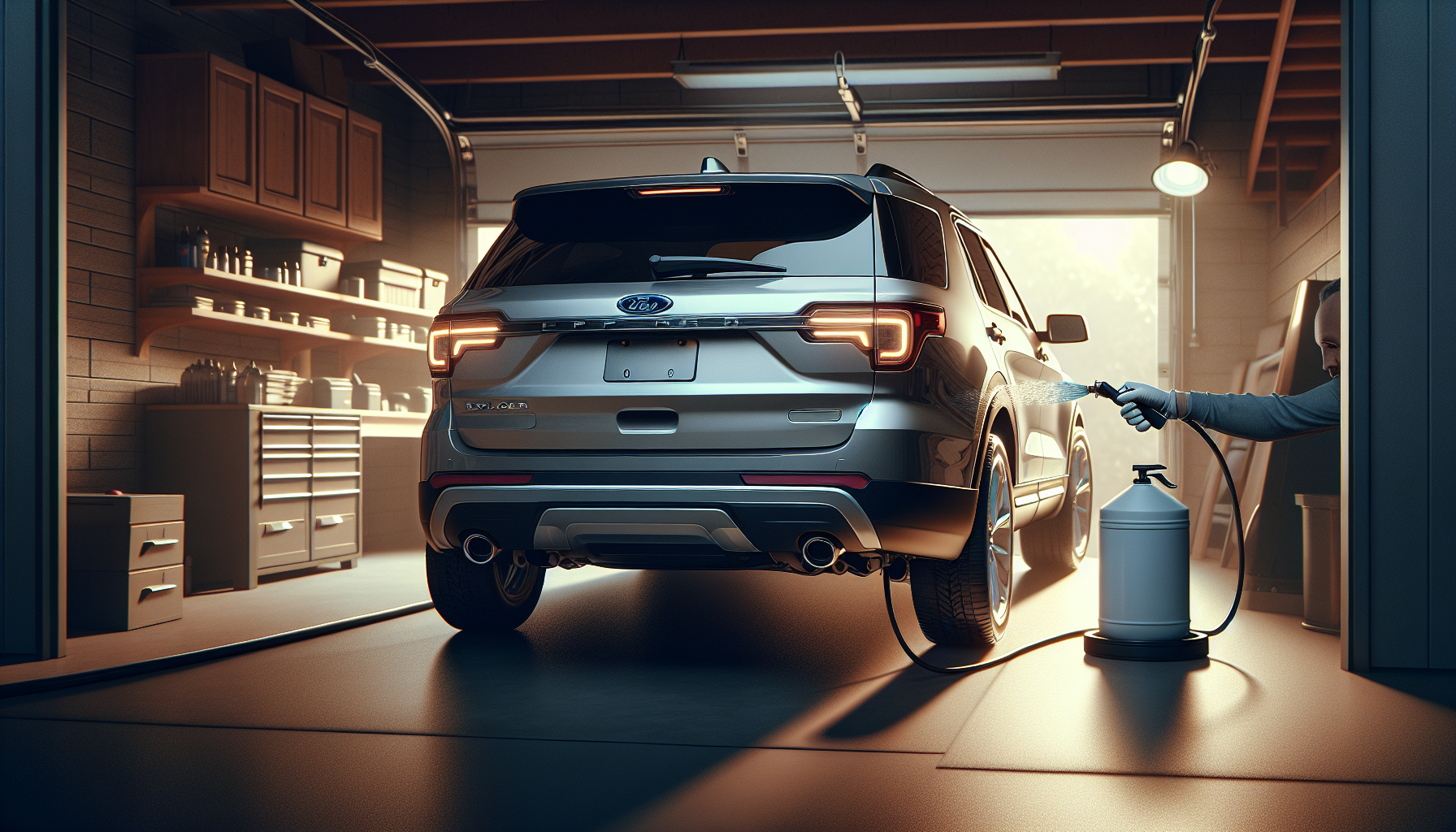
You’re backing out of a parking spot, and suddenly you need to clear off that grimy rear window. You hit the washer button and… nothing. The wiper blade just smears dirt around. If your Ford Explorer’s rear window washer isn’t spraying, you’re dealing with one of the most common but annoying issues on these SUVs. The problem usually isn’t complicated, but it does require a bit of detective work to figure out where things went wrong.
Most often, you’re looking at a clogged nozzle, a disconnected hose somewhere under the vehicle, or occasionally a failed pump. The good news is that these are all things you can diagnose and fix yourself with basic tools and maybe 30 minutes of your time.
Common Causes
The rear washer system on a Ford Explorer is pretty simple. Fluid travels from the reservoir under the hood, through lines that run along the underside of the vehicle and up through the rear hatch, finally reaching the nozzle at the top of the rear window. When any part of that chain breaks down, you lose spray.
Clogged nozzle. This is the first thing to check because it’s the easiest fix. Dirt, dried washer fluid, or even small insects can block the tiny opening. If you live somewhere cold, ice can also freeze inside the nozzle during winter months.
Disconnected or cracked hose. The hoses running underneath your Explorer take a beating from road debris, temperature changes, and just age. They can crack, split, or pop off at connection points. On 2011-2019 Explorers especially, there’s a common failure point where the hose connects under the hood or near the rear hatch hinges.
Empty or low washer fluid. Sounds obvious, but sometimes the front washers work fine while the rear doesn’t spray because the fluid level is just low enough that the pump can’t pull fluid all the way to the back. The rear system requires more pressure than the front.
Failed check valve. Some Explorers have a check valve in the rear washer line that prevents fluid from draining back when not in use. If this valve fails or gets stuck, it can block flow completely.
Faulty pump. Less common, but if your Explorer has separate pumps for front and rear washers, the rear pump might have died. Some model years use a single pump with two outputs, others use dedicated pumps.
How to Diagnose the Problem
Start with the simplest checks first. Pop your hood and verify the washer fluid reservoir is actually full. Top it off if needed, then try the rear washer again.
Next, inspect the nozzle at the top of your rear window. Look closely at the small opening. Can you see any obvious blockage? Try activating the rear washer while someone watches the nozzle. Do you hear the pump running? Can you see any fluid trying to come out, even just a dribble?
If you hear the pump but see no fluid, grab a pin or thin wire. Carefully poke it into the nozzle opening to clear any debris. Be gentle so you don’t enlarge the hole, which would cause poor spray pattern later. Sometimes compressed air from a can works too.
This video shows how to diagnose washer system problems:
Still nothing? Time to check the hoses. Open your rear hatch and look along the top edge where the hatch meets the body. On most Explorers, you can see or feel the washer hose running through the rubber boot. Trace it back toward the body and feel for disconnections or cracks.
Now get under the vehicle. You’ll need to crawl underneath or put it on ramps if you want easier access. Follow the washer line from the reservoir toward the rear. Look for wet spots, which indicate a leak. Check all connection points where hoses meet T-fittings or other hoses. On 2013-2019 models, there’s often a disconnect point under the hood where the line splits between front and rear systems.
If everything looks connected and the nozzle is clear, pull the nozzle off the rear window (it usually pops out with some gentle prying) and have someone activate the washer while you watch the hose. Does fluid come out of the disconnected hose? If yes, the nozzle itself is the problem. If no, you’ve got a blockage or disconnection somewhere in the line.
How to Fix It
Clearing a clogged nozzle: Use a sewing needle, safety pin, or thin wire to poke through the nozzle opening. Work it around to break up any dried fluid or debris. Then run the washer while doing this to flush material out. If the nozzle is really caked up, remove it from the window and soak it in warm water for 20 minutes, then try clearing it again.
Reconnecting or replacing hoses: If you found a disconnected hose, just push it firmly back onto the fitting. If it won’t stay, the hose end might be stretched out. Cut off half an inch of hose to get fresh material, then reconnect. For a more secure hold, you can use a small zip tie around the connection point.
Cracked or split hoses need replacement. Measure the diameter (usually 3/16 inch or 1/4 inch) and buy windshield washer hose from any auto parts store. It’s cheap, like $5 for several feet. Cut out the damaged section and use a small barbed connector to join the new piece in.
This video demonstrates fixing washer line leaks on Ford Explorers:
Replacing the check valve: If you’ve located a failed check valve (it looks like a small plastic cylinder inline with the hose), cut it out and either replace it with a new valve or just connect the hoses directly with a barbed fitting. Some people skip the check valve entirely without issues, though you might hear a brief delay when activating the rear washer as fluid fills the line.
Testing the pump: This requires a bit more work. Disconnect the rear washer hose at the reservoir and put the end in a cup. Activate the rear washer. If fluid pumps into the cup, your pump works fine and the problem is downstream. If nothing happens but you hear a motor, the pump might be clogged or the reservoir pickup screen is blocked. If you hear nothing, the pump is likely dead or you’ve got an electrical issue.
When to See a Mechanic
Most rear washer issues are DIY-friendly. But there are times when professional help makes sense.
If you’ve ruled out nozzles, hoses, and fluid level but still get nothing, you might have an electrical problem with the pump or switch. Tracing wiring and testing relays requires a multimeter and some electrical knowledge. A mechanic can diagnose this quickly.
If the washer hose runs through complex body panels that require significant disassembly, you might prefer paying someone rather than pulling apart interior trim pieces. This is rare for rear washer lines but can happen if the line breaks inside the rear hatch where it’s not easily accessible.
Pump replacement itself isn’t hard, but accessing it can be tricky depending on your Explorer’s year. Some reservoirs are easy to reach, others require removing wheel well liners or other components. If you’re not comfortable with that level of disassembly, let a shop handle it.
Estimated Repair Costs
| Repair | DIY Cost | Shop Cost |
|---|---|---|
| Clean clogged nozzle | $0 | $30-50 |
| Replace washer hose section | $5-15 | $80-150 |
| Replace rear washer nozzle | $10-25 | $60-100 |
| Replace check valve | $8-15 | $75-120 |
| Replace washer pump | $25-60 | $120-250 |
These are ballpark figures. Dealer prices run higher than independent shops. Labor costs vary by region, but most shops charge 0.5 to 1.5 hours of labor for washer system repairs.
Prevention Tips
Use quality washer fluid, not plain water. Water promotes algae growth and mineral deposits that clog nozzles. It also freezes in winter, which can crack hoses and damage pumps. Spend the extra couple bucks on actual washer fluid with cleaning agents and antifreeze.
Run your rear washer regularly, even if you don’t need it. Once a week, give it a quick spray. This keeps fluid flowing through the lines and prevents dried buildup in the nozzle. Stagnant fluid is more likely to leave deposits.
If you live where winters are harsh, switch to winter-formula washer fluid before temperatures drop. The extra antifreeze protection prevents ice blockages in those long rear lines.
When washing your Explorer, take five seconds to clear debris from around the rear washer nozzle. Dirt and leaves accumulate in that area at the top of the window, and they can work their way into the nozzle opening.
Check your washer fluid level monthly. Keeping the reservoir full ensures adequate pressure reaches the rear system. It also means you’ll notice leaks sooner, before they strand you with a dirty window.
Final Thoughts
A non-working rear washer seems like a minor annoyance until you actually need it. Then it becomes a visibility and safety issue. The fixes are usually simple and cheap enough that there’s no reason to live with a broken system. Start with the nozzle, check your hoses, and you’ll likely have it working again in under an hour. Even if you end up needing a new pump, it’s still one of the more manageable repairs on a Ford Explorer.

Leave a Reply