
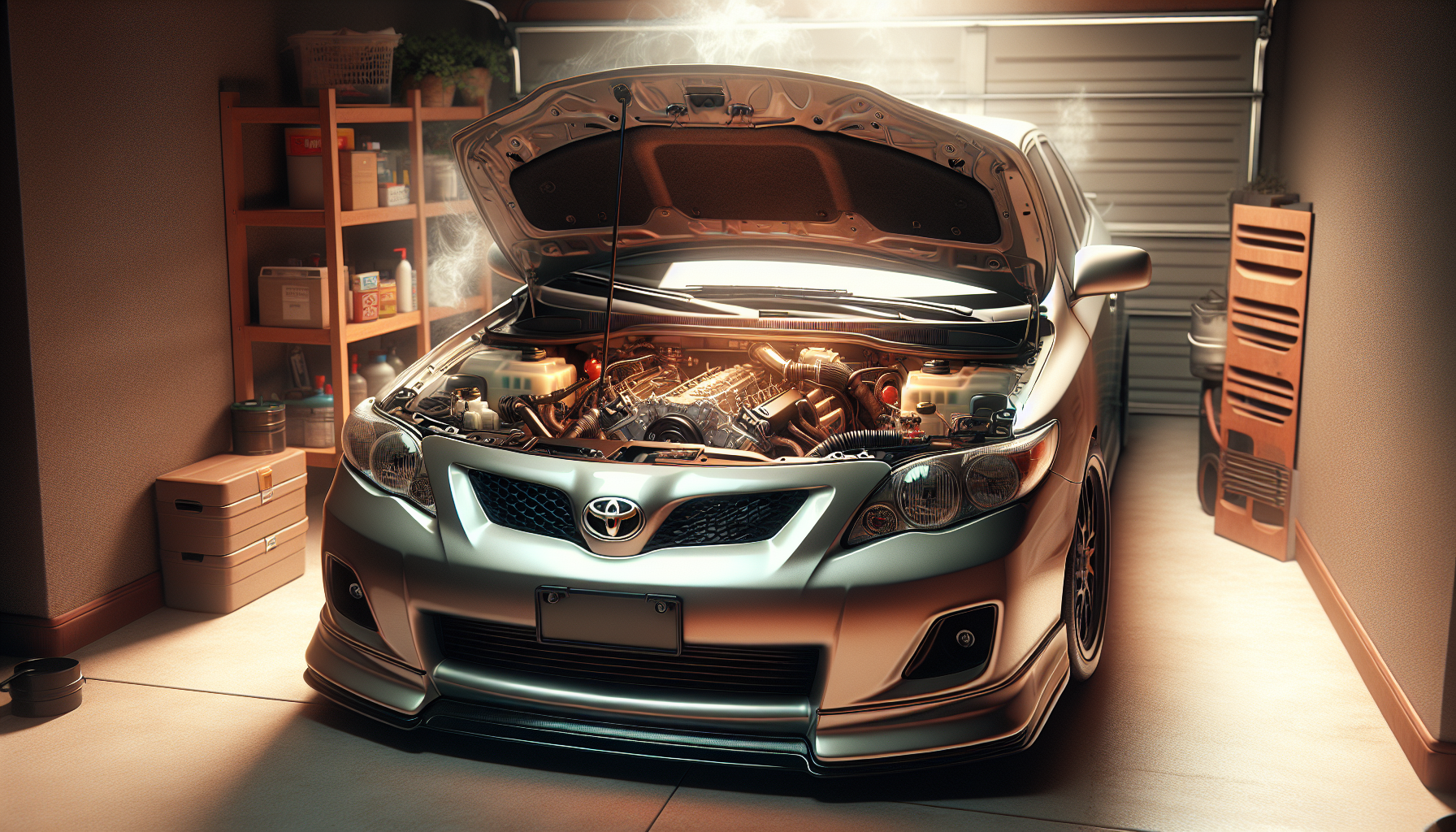
If you’ve been catching whiffs of burning oil coming from your Toyota Corolla’s engine, you’re not alone. This is one of those problems that starts as a minor annoyance but can quickly turn into something that makes every drive stressful. The smell usually means oil is leaking onto hot engine components where it burns off, creating that distinctive acrid odor that seeps through your vents or gets worse when you park.
Most Corolla owners dealing with this issue are looking at anything from a minor gasket leak to something more serious like worn piston rings. The good news is that many causes are fixable without tearing the whole engine apart, and even the tougher ones are manageable if you catch them early.
Common Causes
Burning oil smell rarely means your engine is about to explode, but it does mean something needs attention. Here’s what usually causes it in Corollas.
Valve Cover Gasket Leak
This is probably the most common culprit, especially on Corollas with higher mileage. The valve cover gasket sits at the top of your engine and seals the valve cover to the cylinder head. Over time, heat cycles cause it to harden and crack. When it fails, oil seeps out and drips onto the exhaust manifold. Since the exhaust gets incredibly hot, even a few drops create a noticeable smell. On many Corolla models from 2003-2013, this gasket tends to fail around 100,000 miles.
Oil Spills During Service
Sometimes the answer is embarrassingly simple. If you recently changed your oil or had it serviced, oil may have spilled on the engine block or exhaust. It takes a few heat cycles to burn off completely, so you might smell it for a day or two after service. Check around the oil filter and drain plug area for fresh oil residue.
PCV System Issues
The Positive Crankcase Ventilation system recycles combustion gases back into the intake. When the PCV valve sticks or the hoses crack, pressure builds up in the crankcase and can force oil past gaskets. This creates leaks that weren’t there before. On Corollas, a failing PCV valve sometimes causes oil to accumulate in the intake manifold, which eventually burns when it gets pulled into the combustion chamber.
Oil Pan Gasket Leak
Less common but worth checking. The oil pan gasket can fail and leak oil onto the subframe or exhaust components underneath. You won’t always see oil on your driveway because it burns off before it drips, but you’ll definitely smell it.
Worn Piston Rings or Valve Seals
This is the scenario nobody wants to hear about. When piston rings wear out or valve seals deteriorate, oil gets past them and burns inside the combustion chamber. You’ll usually notice blue smoke from the exhaust along with the smell, plus your oil level will drop between changes. Corollas are generally reliable, but higher-mileage engines (over 150,000 miles) can develop this issue, especially if oil changes were skipped.
How to Diagnose the Problem
Before you start replacing parts, spend 20 minutes figuring out where the oil is actually coming from. Misdiagnosing this wastes money and time.
Visual Inspection
Pop the hood when the engine is cold and look for obvious oil residue. Check the valve cover seam where it meets the cylinder head. If you see oil accumulation or a wet, grimy area, that’s your leak. Shine a flashlight from different angles because oil can travel along the block before dripping.
Look at the oil filter and drain plug area. Fresh oil here usually means recent service spillage. Check underneath the car with a flashlight for oil on the exhaust pipes or catalytic converter.
The Paper Test
Place a large piece of cardboard under the engine overnight. In the morning, check for oil spots. This tells you if oil is actually dripping or just burning off from engine surfaces. No spots but still smelling oil? The leak is probably small and burning off completely.
Check Your Oil Level
Pull the dipstick and see where you’re at. If you’re losing noticeable oil between changes (more than half a quart every 1,000 miles), you’ve got either an external leak or internal consumption from worn rings or seals. Keep track of how much oil you’re adding over a few weeks.
Smoke Check
Start the car and watch the exhaust. Blue or gray smoke, especially on startup or acceleration, means oil is burning inside the engine. That points to piston rings or valve seals rather than an external leak.
This video explains several common causes of oil burning and how to identify them:
How to Fix It
Once you’ve identified the source, here’s how to tackle the most common fixes. Some are straightforward, others require patience and a free Saturday.
Replacing the Valve Cover Gasket
If this is your problem, you’re in luck because it’s one of the easier fixes. You’ll need a new valve cover gasket (get the OEM Toyota part, it lasts longer), a socket set, and maybe a torque wrench. The job takes about 1-2 hours for a first-timer.
Remove any components blocking access to the valve cover. On most Corollas, you’ll need to disconnect the air intake and maybe move some wiring harnesses. Remove the bolts holding the valve cover down (they’re usually 10mm), lift off the cover, scrape away the old gasket material completely, install the new gasket, and torque the bolts back down in the correct sequence (check your service manual for the pattern). Don’t overtighten or you’ll crush the new gasket.
Cleaning Up Oil Spills
If you’ve confirmed it’s just residual oil from service, spray engine degreaser on the affected areas (with the engine cold), let it sit for 10 minutes, then rinse with water. Be careful around electrical components. After cleaning, run the engine to dry it off. The smell should disappear within a drive or two.
Replacing the PCV Valve
This is cheap and takes about 15 minutes. The PCV valve on most Corollas is located on or near the valve cover, connected by a rubber hose. Pull it out, shake it. If it doesn’t rattle, it’s stuck and needs replacing. A new one costs around $10-15. While you’re at it, inspect the PCV hoses for cracks and replace them if they’re brittle.
Oil Pan Gasket Replacement
This one is more involved because you need to get under the car and possibly drop the subframe or exhaust. If you’re comfortable working underneath and have jack stands, it’s doable. Drain the oil, remove the oil pan bolts, drop the pan, clean both mating surfaces thoroughly, install the new gasket with a thin layer of RTV sealant, and torque the bolts in a crisscross pattern. Plan for 3-4 hours if you’re doing it yourself for the first time.
Addressing Internal Oil Consumption
If you’ve got worn piston rings or valve seals, your options narrow. Some people have success with high-mileage oil additives or switching to a slightly thicker oil (like going from 5W-30 to 10W-30), which can reduce consumption temporarily. This isn’t a fix, just a band-aid.
This video shows a method that might help reduce oil consumption without major repairs:
For a real fix, you’re looking at either a top-end rebuild (replacing valve seals) or a full engine rebuild/replacement. That’s usually not worth it unless the car has sentimental value or is otherwise in excellent condition.
When to See a Mechanic
Some situations call for professional help, and there’s no shame in recognizing when you’re in over your head.
If you’ve got oil pan gasket issues and don’t have the tools or space to work safely under the car, take it to a shop. Working under a car that isn’t properly supported is dangerous, full stop.
When you’re seeing blue smoke and losing significant oil but the car is still running well, get a compression test and leakdown test done. These tell you definitively whether you’ve got ring or valve seal issues. A shop charges around $100-150 for both tests, and that information is worth having before you decide whether to invest in repairs.
If you’ve replaced the obvious gaskets but still smell burning oil, a mechanic can do a dye test. They add fluorescent dye to your oil, run the engine, then use a UV light to trace exactly where the leak is coming from. Sometimes oil leaks from places you just can’t see without the right equipment.
Any time you’re uncomfortable with a repair or don’t have the proper tools, calling a pro makes sense. A botched valve cover gasket job can lead to oil leaking into spark plug tubes, which creates misfires and other headaches.
Estimated Repair Costs
Here’s what you’re looking at if you pay someone versus doing it yourself. Prices vary by location and shop, but these are reasonable ballpark figures.
| Repair | DIY Cost | Shop Cost |
|---|---|---|
| Valve Cover Gasket | $30-60 | $200-400 |
| PCV Valve Replacement | $10-20 | $80-150 |
| Oil Pan Gasket | $40-80 | $300-600 |
| Engine Degreasing | $10-15 | $50-100 |
| Valve Seal Replacement | $200-400 (parts only) | $800-1,500 |
| Piston Ring Replacement | Not recommended DIY | $1,500-3,000+ |
Labor costs are where shops make their money. A valve cover gasket that takes you two hours might take a pro 45 minutes, but you’re still paying for an hour of labor at $100-150/hour depending on your area.
Prevention Tips
Keeping your Corolla from developing oil leaks and consumption issues comes down to basic maintenance and good habits.
Change your oil on schedule. Corollas aren’t picky about brand, but they do need fresh oil. Heat and time degrade oil, which increases wear on seals and rings. Stick to the interval in your owner’s manual (usually 5,000-10,000 miles depending on whether you use conventional or synthetic).
Use the right oil weight. Don’t get creative with oil viscosity unless you have a specific reason. The engineers who designed your engine specified a weight that balances protection and efficiency. Using the wrong weight can increase wear or cause seal problems.
Watch for leaks early. Once a month, take 30 seconds to peek under the hood and look for fresh oil. Catching a weeping gasket before it becomes a full leak saves money and prevents the headache of oil burning onto hot components.
Replace the PCV valve as preventive maintenance around 80,000-100,000 miles. It’s cheap insurance against pressure buildup that can blow out gaskets.
Don’t ignore small oil leaks. That “I’ll deal with it later” approach leads to low oil levels, which increases engine wear and makes everything worse. Top off your oil when needed and fix leaks when they’re small.
Final Thoughts
A burning oil smell from your Corolla’s engine is annoying but usually fixable without breaking the bank. Most cases trace back to a leaking valve cover gasket or similar external leak that you can handle in an afternoon. Even if you’re dealing with something more serious like internal consumption, knowing what you’re up against helps you make an informed decision about whether to repair or move on.
Start with the simple stuff. Check for obvious leaks, verify your oil level, and rule out the easy fixes before assuming the worst. Corollas are tough cars that respond well to basic maintenance. Fix the leak, keep up with oil changes, and your engine should give you plenty more miles.


Leave a Reply