
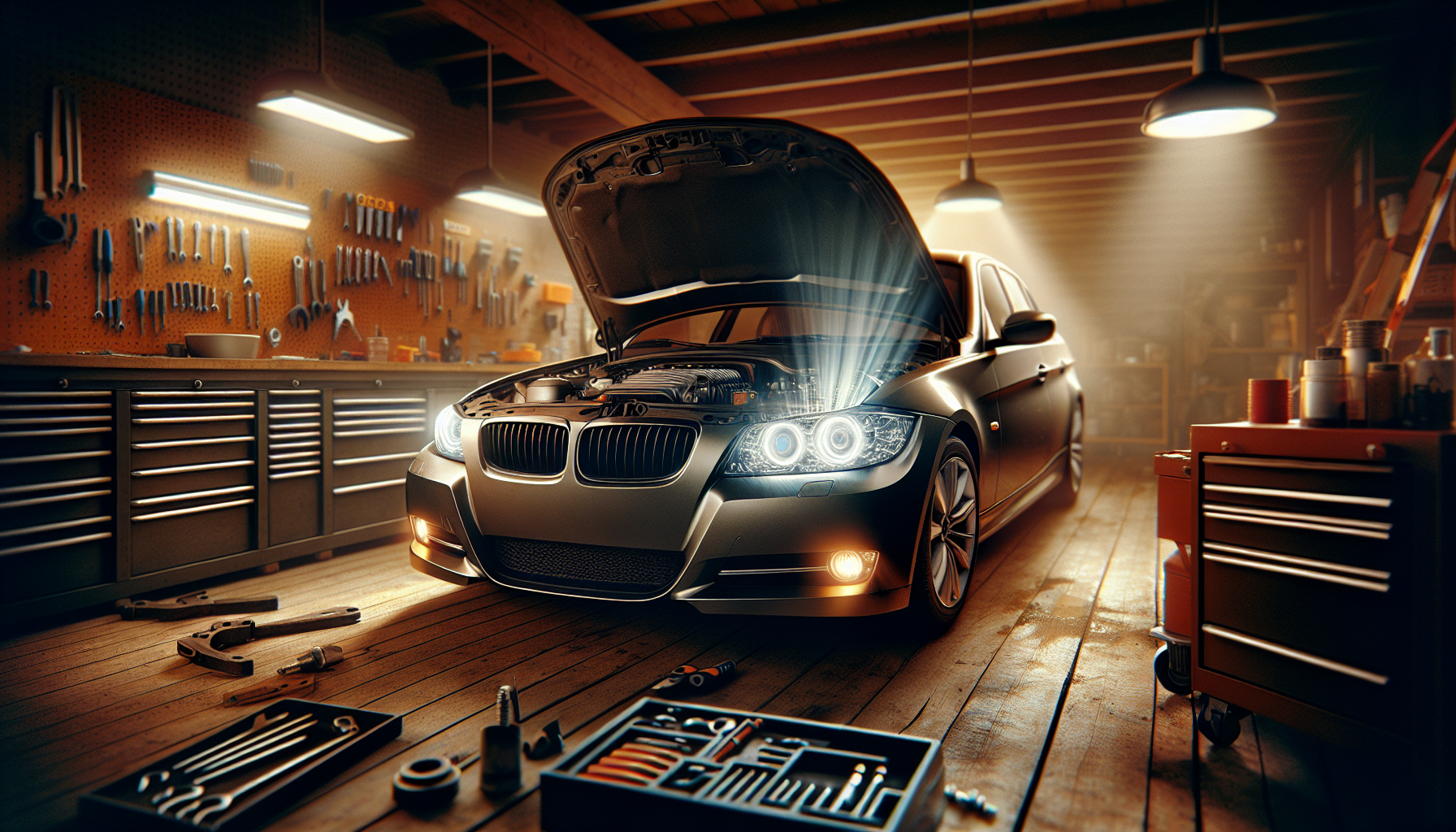
If you’ve seen the dreaded “Adaptive Headlight Malfunction” warning pop up on your BMW 3 Series dashboard, you’re not alone. This is one of the most common issues E90, E92, and F30 owners face, and it usually happens at the worst possible time. The adaptive headlight system (also called AFS or Adaptive Front-lighting System) is supposed to swivel your headlights based on steering angle and speed, but when something goes wrong, you get stuck with a yellow warning light and headlights that won’t move.
The good news? This problem is often fixable without dropping a fortune at the dealer. Sometimes it’s a simple calibration issue, other times it’s a worn motor or faulty module. Let’s break down what causes this malfunction and how to fix it yourself.
Common Causes
The adaptive headlight system relies on several components working together, and any one of them can trigger the error. Here’s what usually goes wrong:
- Stepper motor failure: These small motors inside each headlight assembly control the swiveling motion. They wear out over time, especially on higher-mileage cars. You’ll often hear a clicking or grinding noise from the headlight when this happens.
- AFS control module issues: Each headlight has its own control module that can fail or lose its calibration. Moisture damage is common since these modules sit right behind the headlight housing.
- Sensor problems: The system uses your steering angle sensor and vehicle speed sensor to determine where the headlights should point. If either sensor fails or sends bad data, the whole system throws an error.
- Low voltage or battery issues: Weak batteries or charging system problems can cause the adaptive headlights to malfunction. The motors need adequate voltage to operate correctly.
- Wiring and connector corrosion: The connectors behind the headlights can corrode, especially if you’ve had any water intrusion issues. This interrupts the signal to the motors.
How to Diagnose the Problem
Before throwing parts at the problem, you need to figure out what’s actually wrong. Here’s how to narrow it down:
Step 1: Check for fault codes. You’ll need an OBD2 scanner that can read BMW-specific codes. A generic code reader won’t cut it here. BimmerCode, Carly, or INPA are popular options that work with your phone or laptop. Look for codes in the AFS module specifically.
Step 2: Listen to the headlights. Turn on your ignition (engine doesn’t need to be running) and listen carefully near each headlight. You should hear a brief whirring sound as the system initializes. If you hear clicking, grinding, or nothing at all, that headlight’s motor is likely dead.
Step 3: Test the movement. With the car on and headlights activated, turn the steering wheel slowly from lock to lock. Watch if the headlights move. If one side works and the other doesn’t, you’ve isolated which side has the problem.
Step 4: Check your battery voltage. Use a multimeter to verify your battery is putting out at least 12.4 volts with the engine off, and 13.5-14.5 volts with the engine running. Low voltage will cause all sorts of electrical gremlins, including AFS errors.
Step 5: Inspect the connectors. Pop the hood and look at the back of each headlight assembly. Check the connectors for any green corrosion or moisture. If you find corrosion, that’s likely your culprit.
This video walks through the diagnostic process and how to clear errors:
How to Fix It
Once you’ve diagnosed the issue, here are the fixes ranked from easiest to most involved:
Reset and recalibrate the system: Sometimes the AFS modules just need a reset. If you have BimmerCode or a similar tool, you can clear the fault codes and run the AFS initialization procedure. This takes about 30 seconds and costs nothing. The system will recalibrate itself and the error might disappear. Worth trying before spending any money.
Fix corroded connections: If you found corrosion during your inspection, disconnect the affected connector, spray it with electrical contact cleaner, and let it dry completely. You can also use dielectric grease to prevent future corrosion. Reconnect everything and see if the error clears.
Replace the stepper motor: If one headlight motor is dead, you can replace just the motor without buying a whole new headlight assembly. The motors are available aftermarket for $50-150 each. You’ll need to remove the headlight assembly, open it up (usually requires baking it in the oven at low temp to soften the sealant), swap the motor, and reseal it. This is doable for intermediate DIYers but takes patience.
Replace the AFS control module: These modules are located on the back of each headlight. You can buy replacements for $100-200 each. The swap is fairly simple once you have the headlight out. After installation, you’ll need to code the new module to your car using BimmerCode or similar software.
This video shows the complete process for replacing an adaptive headlight control module:
Address sensor issues: If your steering angle sensor needs recalibration, most shops can do this for $50-100. You can also try it yourself with the right software by turning the steering wheel lock to lock while the car runs the calibration routine.
When to See a Mechanic
Some situations call for professional help. If you’re getting multiple fault codes from different systems, that suggests a bigger electrical problem that needs proper diagnosis with factory-level scan tools. If you’ve replaced the obvious parts and still have the error, a shop with BMW experience can dig deeper into wiring issues or computer problems you might miss.
Also, if you’re not comfortable removing headlight assemblies or dealing with vehicle coding, don’t force it. The headlights on these cars aren’t cheap to replace if you break the mounting tabs or crack a lens. An independent BMW specialist will charge way less than the dealer and can handle this repair in an hour or two.
Estimated Repair Costs
| Repair Type | DIY Cost | Shop Cost |
|---|---|---|
| Software reset/recalibration | $0-50 (if you buy the app) | $100-150 |
| Stepper motor replacement (one side) | $50-150 | $300-500 |
| AFS control module (one side) | $100-200 | $400-600 |
| Steering angle sensor calibration | $0-50 | $100-200 |
| Complete headlight assembly replacement | $300-800 (aftermarket) | $800-2000 |
BMW dealers will charge significantly more across the board, often double these prices. Unless you have warranty coverage, an independent shop is the smarter choice.
Prevention Tips
You can’t prevent wear and tear completely, but these steps will help your adaptive headlights last longer:
Keep your battery healthy. A weak battery puts extra strain on all electrical components, including the AFS motors. If your battery is more than 5 years old, consider replacing it before it causes problems.
Address water leaks immediately. If you notice condensation inside your headlights, fix it right away. Moisture kills the control modules and corrodes connections. Check your headlight seals and the rubber gasket on the back cover.
Don’t ignore warning lights. Running the system with a malfunction can cause additional damage. If one motor is struggling, it can overheat and take out the control module too.
When washing your car, avoid high-pressure water directly at the headlights and engine bay. Water can work its way into places it shouldn’t be.
Final Thoughts
The adaptive headlight malfunction on BMW 3 Series cars looks scarier than it actually is. Most of the time, you’re dealing with a failed motor or module that costs a couple hundred bucks to fix yourself. Start with the free stuff—reset the system, check your connections, make sure your battery is good. If that doesn’t work, scan for codes to pinpoint which component failed.
The E90 and E92 generations are particularly prone to this issue as they age, so if you own one of these cars, consider it routine maintenance rather than a catastrophic failure. Budget a few hours on a weekend and you can knock this out without involving a shop at all.
Leave a Reply