
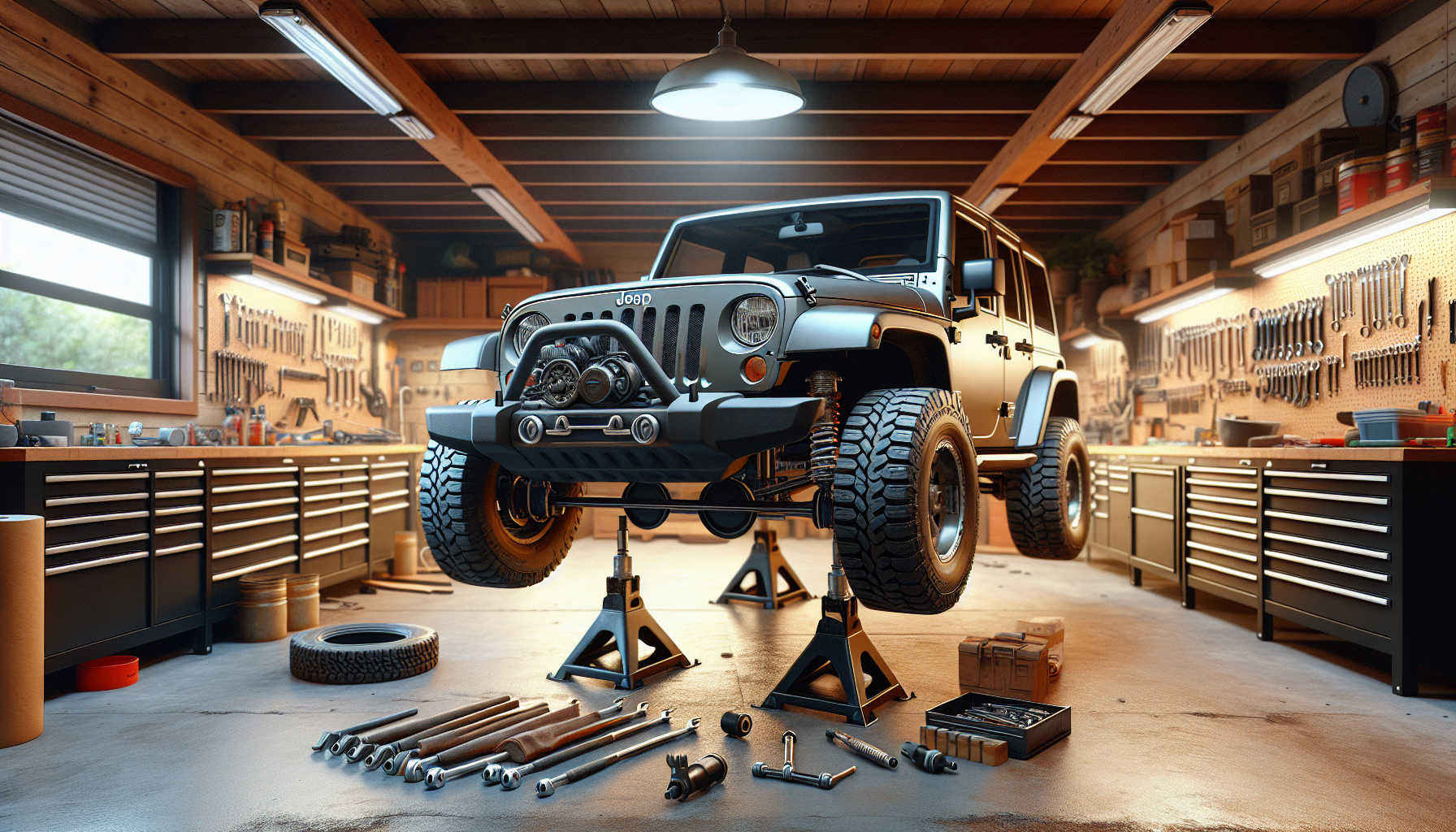
If you’ve experienced death wobble in your Jeep Wrangler, you know exactly how terrifying it is. You’re cruising down the highway at 55-65 mph, hit a bump or pothole, and suddenly your entire front end starts shaking violently. The steering wheel jerks back and forth so hard you can barely hold on. Your first instinct is panic, but the good news is that death wobble is fixable once you understand what’s causing it.
Death wobble happens when your front suspension components start oscillating rapidly after hitting a bump. It’s not a single part failure—it’s the result of worn or loose components allowing play in the system. When everything’s tight and working properly, a bump gets absorbed. When there’s excessive play, that energy turns into a violent harmonic vibration that feeds on itself.
Common Causes
Death wobble almost always comes down to worn steering and suspension components. The solid front axle on Wranglers is especially prone to this because all the components are connected. When one part wears out, it puts extra stress on everything else.
Track bar and track bar bushings are the most common culprits. The track bar connects your axle to the frame and keeps it centered. If the bushings are shot or the mounting bolts are loose, your axle can shift side-to-side. Even 1/8 inch of play here can trigger death wobble. Check both ends—the frame-side bushing and the axle-side bushing both wear out.
Tie rod ends and drag link wear is another major cause. These connect your steering wheel to the wheels themselves. When the ball joints inside wear out, they develop play. You might not notice it during normal driving, but at highway speeds that tiny bit of slop turns into a nightmare. The drag link connects your steering box to the tie rod, and if either end is worn, you’re asking for trouble.
Ball joints take a beating on Wranglers, especially if you’ve got bigger tires or do any off-roading. Upper and lower ball joints both need to be tight. Worn ball joints let the knuckle move around more than it should, which amplifies any wobble that starts.
Control arm bushings are often overlooked. Both upper and lower control arms have rubber bushings that deteriorate over time. Once the rubber tears or gets too soft, the arms can move excessively. Factory rubber bushings typically last 60,000-80,000 miles before they’re toast.
Steering stabilizer isn’t usually the root cause, but a worn-out stabilizer won’t dampen the wobble once it starts. Think of it as a band-aid—it can mask symptoms but won’t fix the underlying problem. If your stabilizer is leaking or feels soft, replace it, but don’t expect it to cure death wobble on its own.
Tire balance and alignment can also contribute. Out-of-balance tires create vibrations that can trigger death wobble if other components are marginal. Larger aftermarket tires make this worse because they’re heavier and harder to balance perfectly.
How to Diagnose the Problem
Park on level ground and get someone to help you. You need to check for play in every steering and suspension component.
Step 1: Check the track bar. Crawl under the front of your Jeep and grab the track bar with both hands. Try to move it up and down, and side to side. There should be zero play. Check both mounting points carefully. Look at the bushings—if they’re cracked, torn, or the rubber is bulging out, they’re done. Make sure the bolts are torqued properly (120 lb-ft for most Wranglers).
Step 2: Inspect tie rod ends. Grab each front tire at 3 and 9 o’clock and try to wiggle it side to side while watching the tie rod ends. Have your helper turn the steering wheel slightly back and forth while you watch for play in the tie rod ends and drag link. Any movement in the joints themselves means they need replacement.
Step 3: Check ball joints. Jack up the front end so the tires are off the ground. Grab each tire at 12 and 6 o’clock and try to rock it. Watch the ball joints closely. Any clunking or visible movement means they’re worn. This is easier with the weight off them.
Step 4: Examine control arm bushings. Use a pry bar to check for movement in the control arm bushings. The arms should pivot smoothly but not have excessive play. Look for torn rubber or separation between the bushing and its mounting sleeve.
Step 5: Test drive carefully. Find an empty stretch of road where you can safely test. Get up to 50-55 mph and gently swerve or hit a bump. If death wobble starts, firmly but smoothly slow down—don’t slam the brakes. The wobble usually stops below 45 mph. Note when it happens because this helps identify the cause.
This video walks through the diagnostic process and shows you what to look for:
How to Fix It
Start with the most worn components first. Don’t just throw parts at it randomly—fix what’s actually broken.
Replace the track bar and bushings. If your track bar bushings are worn, you can replace just the bushings or get a complete track bar assembly. For a stock Wrangler, OEM-style replacements work fine. If you’ve lifted your Jeep, get an adjustable track bar to maintain proper geometry. When installing, make sure everything is torqued to spec and use thread locker on the bolts.
Replace tie rod ends and drag link. These are sold individually or as complete assemblies. If one end is bad, replace them all—they wear at similar rates. Get quality parts here; cheap tie rod ends will wear out fast. Moog and Dynatrac make solid options. You’ll need to get an alignment after replacing these.
Install new ball joints. This job requires a ball joint press or a shop with the right tools. If you’re handy, you can rent the tool and do it yourself. Press out the old joints and press in new ones. Spicer/Dana and Moog are good brands. While you’re in there, inspect the knuckles for wear.
Replace control arm bushings. You can press out the old bushings and install new rubber ones, or upgrade to polyurethane bushings for better longevity. Polyurethane is stiffer and lasts longer but transmits more road noise. For a daily driver, stick with quality rubber bushings.
Upgrade the steering stabilizer. Once you’ve fixed the root causes, install a new steering stabilizer. Bilstein makes excellent stabilizers for Wranglers. Some people run dual stabilizers for extra dampening, especially with larger tires. Again, this won’t fix death wobble by itself, but it helps prevent it from starting.
Balance and rotate tires. Get your tires professionally balanced, especially if they’re larger aftermarket tires. Some shops have road-force balancing machines that do a better job with big tires. If your tires are cupped or worn unevenly, that’s a sign your alignment has been off or your suspension was already worn.
When to See a Mechanic
If you’re not comfortable working under your Jeep or don’t have the tools, take it to a shop that specializes in Jeeps or 4x4s. Death wobble diagnosis requires experience to spot worn components, and a general mechanic might miss the real problem.
Ball joint replacement requires a press and some muscle. Unless you have the equipment, this is a job for a shop. Same goes for alignment—you need professional equipment to set toe, caster, and camber correctly.
If you’ve replaced all the common wear items and still have death wobble, something else is going on. Bent axle housing, damaged steering box, or frame damage can all cause similar symptoms. A 4×4 specialist can check for these issues.
Estimated Repair Costs
| Component | DIY Cost | Shop Cost |
|---|---|---|
| Track bar with bushings | $80-$200 | $200-$350 |
| Tie rod ends (complete set) | $100-$250 | $300-$500 |
| Ball joints (all four) | $150-$300 | $500-$800 |
| Control arm bushings (complete) | $100-$200 | $400-$600 |
| Steering stabilizer | $50-$150 | $150-$250 |
| Alignment | N/A | $80-$150 |
| Complete death wobble overhaul | $500-$900 | $1,500-$2,500 |
These costs vary depending on your Wrangler model (JK, TJ, YJ, JL) and whether you’ve got aftermarket modifications. Lifted Jeeps with bigger tires tend to cost more because they need heavier-duty parts.
Prevention Tips
Regular inspection is your best defense. Crawl under your Jeep every few months and check for play in steering and suspension components. Catch wear early and you can replace one part instead of rebuilding the entire front end.
If you’re lifting your Jeep or installing bigger tires, do it right. Cheap lift kits with poor geometry cause accelerated wear. Get an alignment after any suspension work. Proper alignment reduces stress on components and helps them last longer.
Torque everything properly. Those track bar bolts need to be tight—hand-tight doesn’t cut it. Use a torque wrench and follow the specs in your service manual. Loose bolts allow movement that shouldn’t be there.
Drive sensibly. Yeah, Wranglers are built for off-roading, but slamming into potholes at highway speeds beats up your suspension. Slow down for rough patches and your components will thank you.
Use quality parts when replacing components. That $30 track bar on eBay won’t last 10,000 miles. Stick with known brands like Moog, Spicer, Bilstein, and Rough Country. The money you save on cheap parts gets spent twice when they fail early.
Here’s a detailed guide on preventing death wobble before it starts:
Final Thoughts
Death wobble is scary but fixable. Most cases come down to worn track bar bushings, tie rod ends, or ball joints. Start your diagnosis with a thorough inspection of every steering and suspension component. Fix what’s worn, torque everything properly, and get an alignment. Your Wrangler will drive smooth again.
Don’t ignore death wobble or try to band-aid it with just a new steering stabilizer. Find the root cause and fix it properly. Your safety depends on it, and so does everyone else on the road.


Leave a Reply