
A Silverado badge does not tell you which cover or running boards to buy. Cab style, bed length, model year and the actual body family are separate pieces of the application. Write them down before shopping, especially when an online listing uses only ‘short bed’ or a trim name.
This guide covers the U.S. 2014–2018 Silverado 1500 body generation and uses Chevrolet’s 2017 brochure for representative cab/box combinations. It is not an HD application guide. The 2019 Silverado LD carryover also needs its own cab and box check; it should not be confused with the newer 2019 Silverado 1500 body.
Start with the cab, not the trim badge
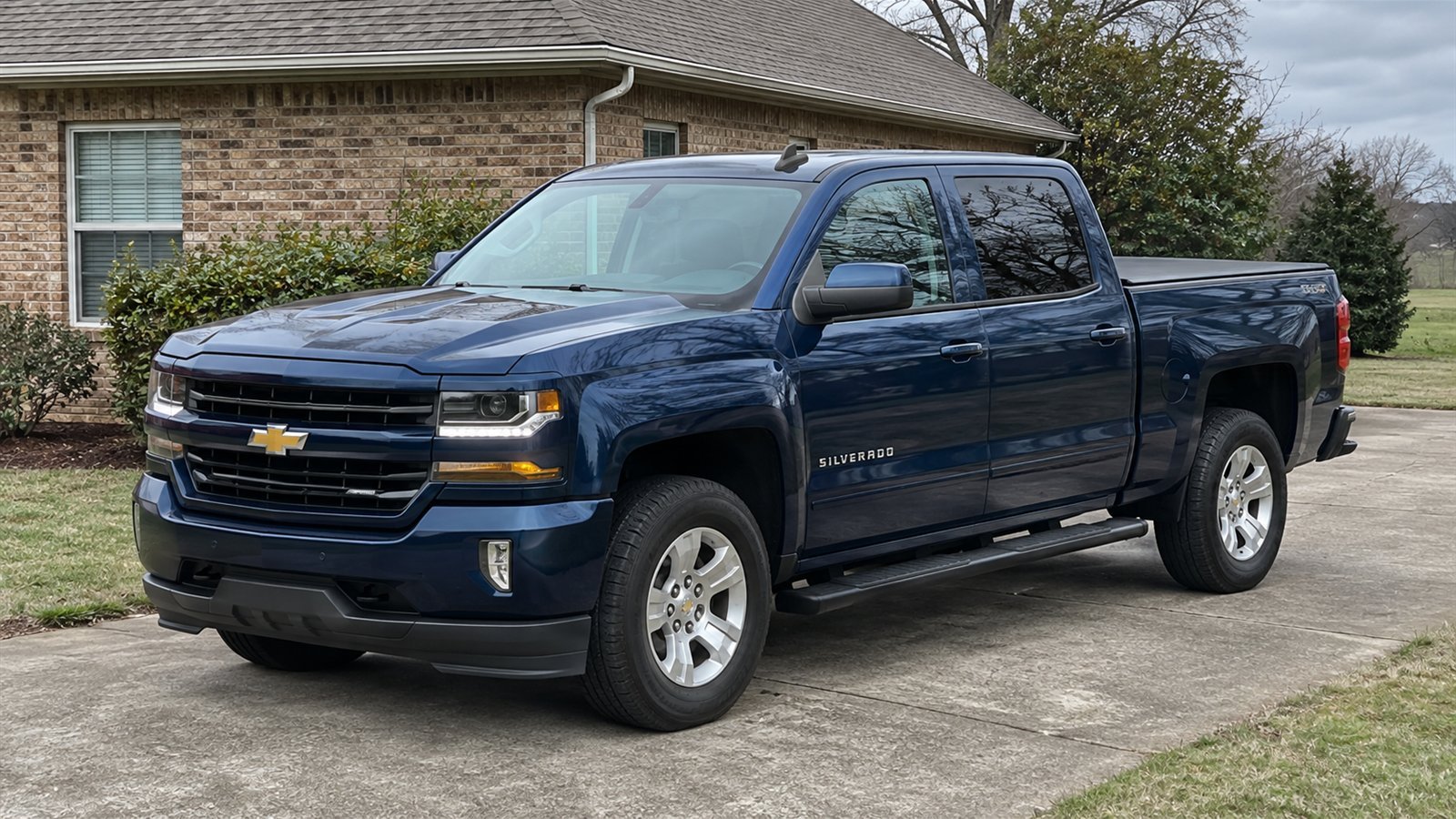
Regular Cab has a single front seating area and two main doors. Double Cab adds a rear seating area with visibly smaller rear doors than a Crew Cab. Crew Cab has the larger rear passenger area and fuller-size rear doors. Look at the actual truck rather than relying on an advertisement’s abbreviated description.
Door count alone is not enough to distinguish the two four-door cabs in this generation. Compare rear-door proportions and confirm the original configuration through reliable vehicle records. A step advertised for Crew Cab is not automatically the same length or application as a Double Cab step.
Trim labels such as WT, LT and LTZ describe equipment, not the cab and bed by themselves. A grille badge, replacement tailgate or appearance change is a weak way to identify the underlying application.
Use the box measurement as a separate identifier
| Representative 2017 configuration | Brochure cargo-bed length at floor | Common nominal description |
|---|---|---|
| Crew Cab short box | 69.3 inches | About 5 ft 8 in |
| Crew Cab standard box | 78.9 inches | About 6 ft 6 in |
| Double Cab standard box | 78.9 inches | About 6 ft 6 in |
| Regular Cab standard box | 78.9 inches | About 6 ft 6 in |
| Regular Cab long box | 97.8 inches | About 8 ft |
These are brochure dimensions, not instructions to round a measurement into an accessory fit. Suppliers may describe the same nominal box differently. Match their specific Silverado year/body/application list and follow their stated measuring method.
A Crew Cab does not automatically mean the shortest bed, and a Double Cab is not just another name for Crew Cab. Keep the two fields separate on your shopping notes. Check your exact model year’s documentation before applying the representative table to an unusual configuration.
Measure the truck before ordering a bed accessory
With the truck parked and the bed accessible, follow the accessory maker’s measuring instructions. A common reference is the inside front wall to the inside of the closed tailgate, but the supplier’s specified reference points control. Do not measure from the outside cab, overall vehicle length or an open tailgate edge.
Record the number and take a photograph of the setup. Note a drop-in liner, rail caps, a toolbox, bed-rail equipment and anything else that affects clamps or available space. A cover or liner can change what you can reach or measure.
If the result does not clearly match an application, stop and ask the supplier. A tape measure and a question cost less than trying to make the wrong cover fit. Do not trim or force a product whose application remains uncertain.
Compare options on Amazon: Browse easy-to-read tape measures
Choose steps by cab and attachment arrangement
Running boards follow the cab, so the rear door and step length matter. A bed measurement does not tell you where cab mounts are located. Use the model year, 1500 body and cab type, then check the actual mounting area and the product instructions.
Look for corrosion, damage, existing equipment or previous modifications that may affect installation. A supplied bracket is not proof that the truck’s attachment area is sound. Have a qualified installer assess anything questionable before ordering around a photograph.
The shopping search below intentionally specifies the representative Crew Cab. If your truck is Double Cab or Regular Cab, change the application rather than selecting the first result labeled Silverado.
Compare options on Amazon: Compare Crew Cab-specific running boards
Choose covers and mats by the measured box
A bed cover, rubber mat and some storage systems are tied to the box dimensions and installed rail equipment. A cab label alone is not enough. Add the measured box and exact model year to the query, then read the manufacturer’s fit list.
The short-box search is only a discovery tool. Verify any 2014–2018, 2019 LD, HD or newer-body exclusions before purchasing. Similar-looking wheel openings and shared marketing names do not establish interchangeable bed hardware.
Compare options on Amazon: Browse the older-body short-box cover application
Keep the 2019 body change visible in your notes
For the newer body, our 2019–present Silverado styling gallery is explicitly a 2019-and-later Silverado 1500 gallery. Its pictured truck and accessory applications are different from the 2014–2018 truck discussed here. Use the generation boundary to prevent a styling image from becoming an accidental parts list.
A model-year lookup can help establish identity, but it does not replace the physical cab and box check. When buying a used truck, compare original records with the actual vehicle, particularly if panels, badges or bed equipment have been changed.
Make a five-line shopping note
- Exact model year and Silverado 1500 body family.
- Regular Cab, Double Cab or Crew Cab.
- Measured box length and the supplier’s matching nominal application.
- Installed liner, rail caps, cover, toolbox or other mounting equipment.
- The accessory maker’s exact part number and any stated exclusions.
Keep the note and a few useful photographs on your phone. It is a simple way to compare listings consistently and ask a supplier a precise question. The purpose of identifying the truck is to reduce guesswork before money is spent, not to make a near-match accessory seem suitable.
Leave a Reply