
You do not need a rooftop tent or a heavily modified pickup to try a camping weekend. A sensible first setup starts with somewhere legal to camp, a sleeping arrangement suited to the weather and a small collection of equipment you can pack and unpack easily. Keep the truck useful for the rest of the week.
This is a frontcountry planning guide for established campgrounds, not an off-road route plan or a promise that any truck bed is a suitable sleeping space. The images show generic layout concepts. Choose equipment for your actual dimensions, the people traveling and the conditions at the site.
Choose the campsite before choosing more equipment
Check reservations, vehicle access, tent-space dimensions and the rules for the place you plan to visit. Read current weather, fire restrictions, food-storage requirements and any restrictions on vehicle sleeping. A pickup does not turn a closed road or an undesignated turnout into a campsite.
For a first outing, a maintained campground with suitable facilities makes it easier to learn what you actually need. Plan an arrival time that leaves daylight for setup. Tell someone your destination and expected return, and have a practical alternative if the conditions or site are unsuitable.
Option 1: keep a normal ground tent beside the truck
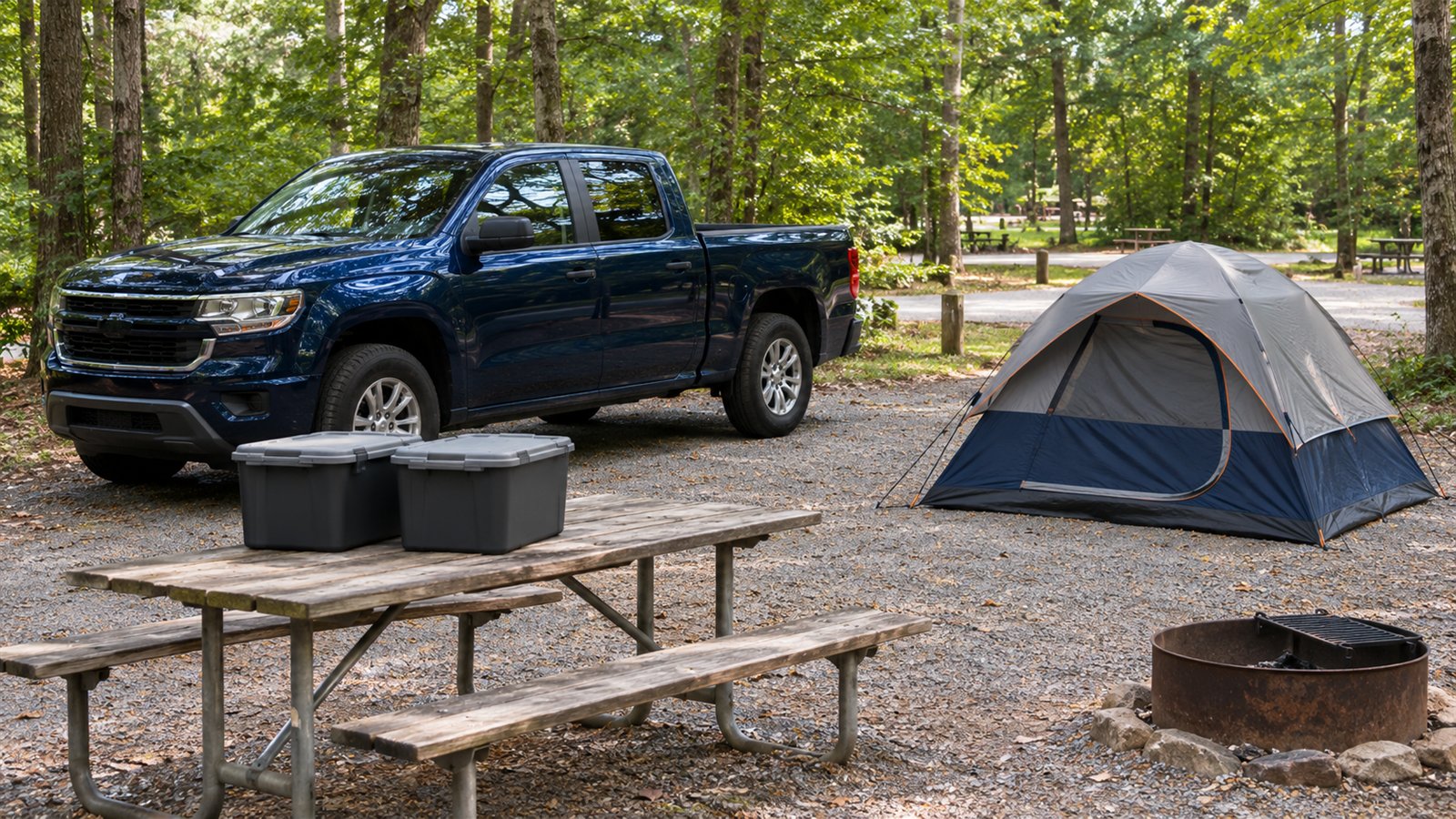
A freestanding ground tent leaves the truck bed available for transport and avoids making the sleeping arrangement dependent on a rack. Compare the tent’s floor dimensions with your sleeping pads, not just its advertised person count. Choose weather protection and ventilation for the trip you are actually taking.
Practice setting it up at home. Check the poles, stakes and packed size, and learn the rainfly arrangement before arriving in wind or fading light. Use the designated tent area, protect drainage paths and avoid extending your camp into vegetation.
The truck can carry the equipment without becoming the center of the sleeping system. This also lets you keep a camp organized when the vehicle needs to leave the site, subject to the campground’s occupancy rules.
Compare options on Amazon: Compare compact freestanding tents · Browse sleeping pads
Option 2: use an existing suitable camper shell
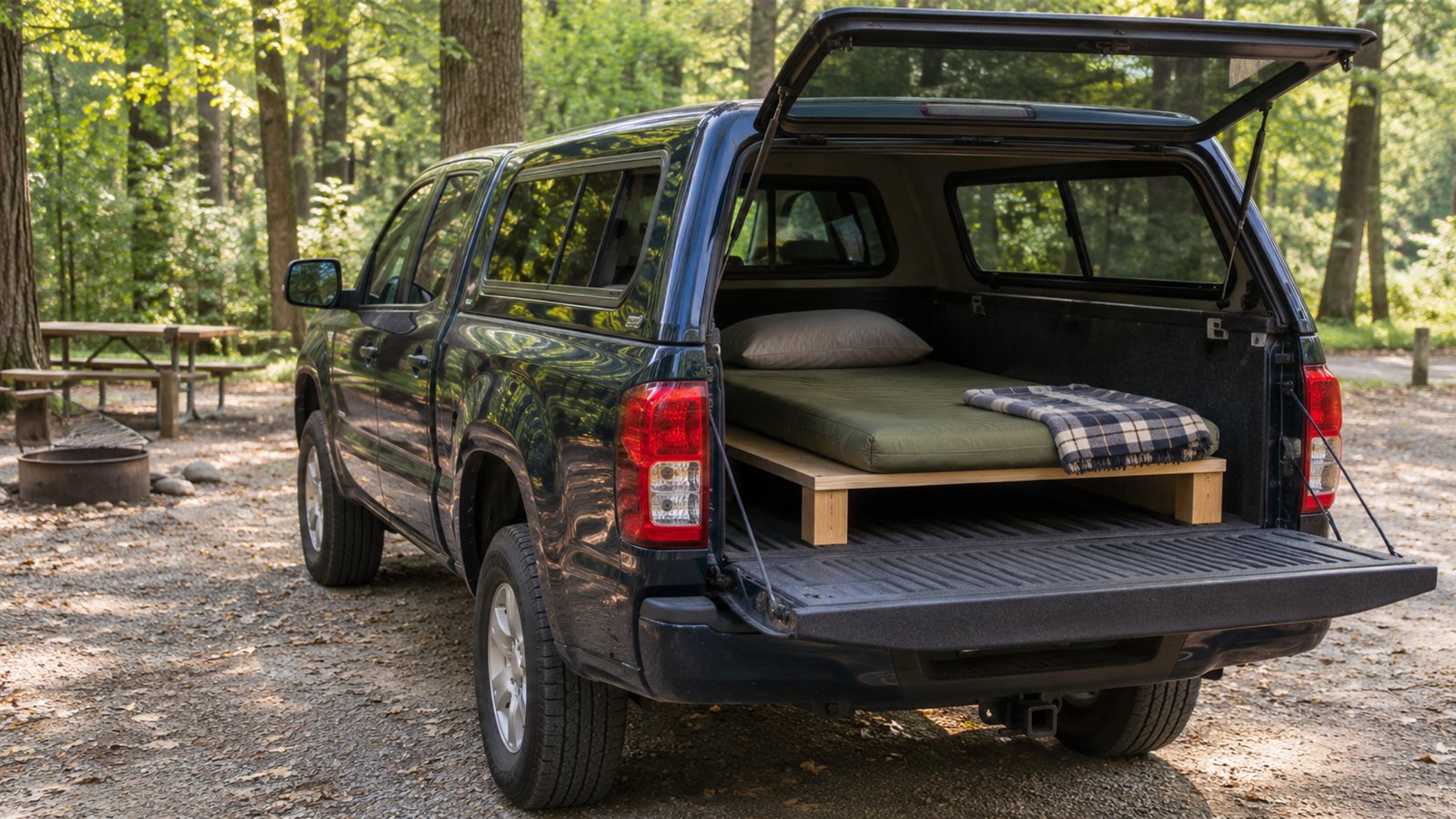
If you already own a suitable shell, measure the enclosed bed before buying a mattress or making a platform. Wheel housings, a sloping shell and the closed tailgate can reduce usable space. Lie down in the planned arrangement at home rather than assuming a nominal bed length describes the sleeping surface.
Any platform needs a suitable design, stable support and an appropriate travel-securement plan. Keep access and a usable exit clear. Account for the weight of the shell, platform, equipment and passengers within the vehicle’s actual loading limits.
Ventilation, condensation, temperatures and weather remain important. A closed shell is not a purpose-built heated camper. Do not idle the truck to heat a sleeping space, and do not operate a fuel-burning stove, lantern, heater or grill inside the bed enclosure, cab or tent.
Compare options on Amazon: Browse compact bed sleeping pads · Compare removable gear totes
Pack a small kit that comes out in a few pieces
Separate sleeping equipment, ordinary camp equipment and food-handling supplies so that a wet item does not contaminate the entire load. Use manageable containers with outside dimensions that fit the bed and your lifting ability. Keep frequently needed items accessible without unloading everything at a roadside stop.
Secure the load appropriately for travel. A lidded tote, rubber mat or closed tonneau is not itself a complete cargo-restraint method. Leave time to check the straps and vehicle loading before departure rather than discovering that the packed setup blocks a latch or rear view.
For a modest visual reference, the open-bed adventure concept in our Tacoma styling gallery shows a restrained truck rather than a heavily loaded expedition build. Its rack illustration is optional inspiration, not required camping equipment or a certified carrying system.
Keep cooking outside and separate from sleeping
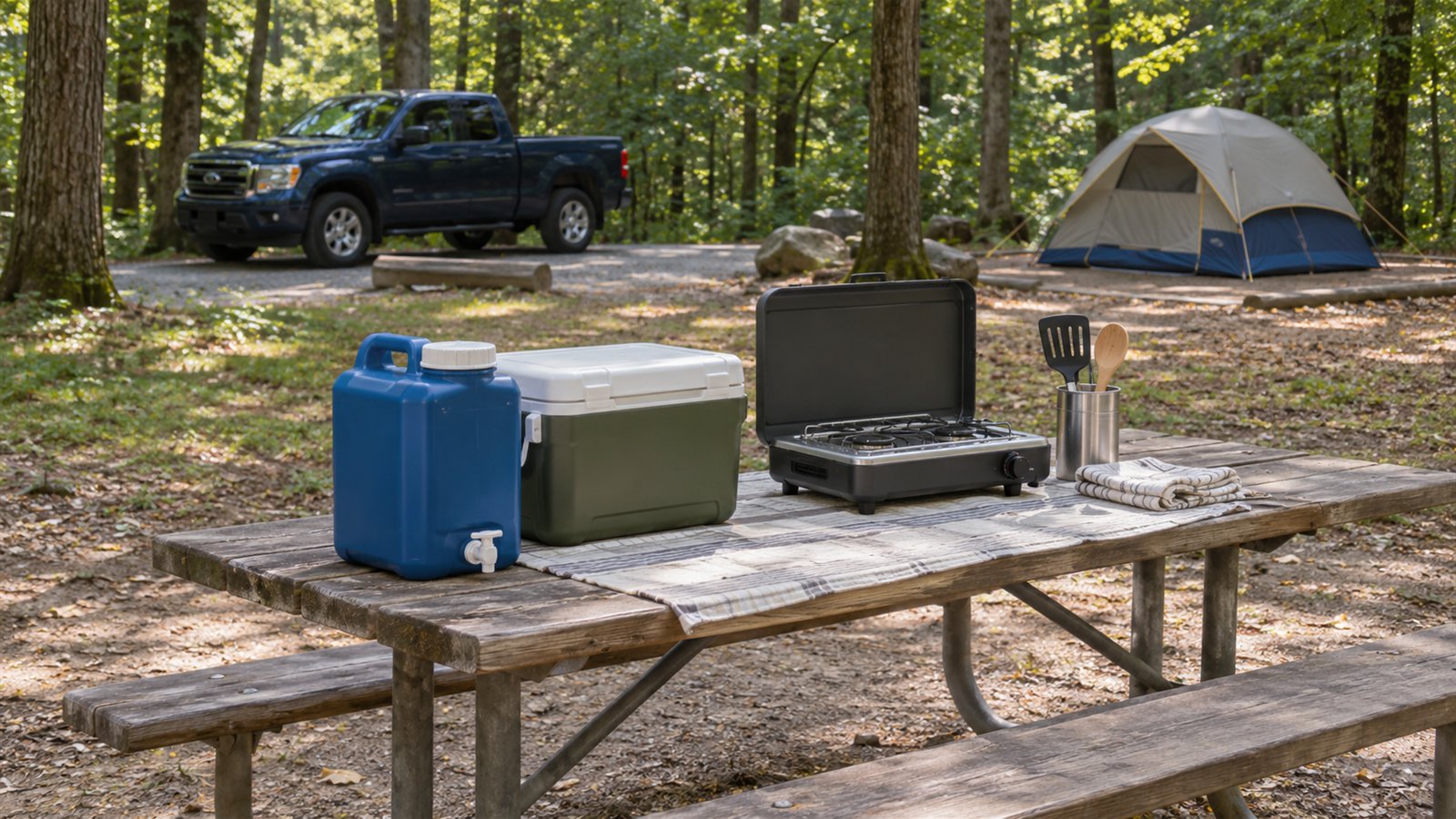
Use an appropriate outdoor cooking area and follow the stove’s instructions and the site’s current restrictions. Keep combustion equipment away from enclosed spaces and flammable materials. The CPSC warns that camping stoves, heaters and lanterns can cause carbon-monoxide poisoning in tents, campers and vehicles.
The illustration shows an unlit stove on an outdoor table; it is not a clearance diagram. Do not use the bed, cab or tent as a sheltered cooking room, even if a window or flap is open. Select a stable permitted location and follow the equipment’s specified clearances.
A cooler and water container can make a simple meal convenient during active use, but they do not settle overnight food storage. Follow the campground’s food and wildlife rules before deciding where anything scented will stay.
Compare options on Amazon: Browse compact camp cookware · Compare drinking-water containers
Food storage depends on the campground
The National Park Service specifically cautions against treating a pickup bed as food storage in bear country. Requirements can include campground lockers or approved bear-resistant containers, and scented toiletries, rubbish and cooking equipment can matter as well as food.
Do not assume a closed cooler, tonneau or shell satisfies those requirements. Read the rules for your destination and use the prescribed storage location. Keep food and scented items out of the sleeping tent, and clean up promptly after meals.
Run a complete trial before the first night away
- Set up the tent or test the actual sleeping surface and exit.
- Check every container’s position, lid movement and travel securement.
- Confirm weather, reservations, access, food-storage and fire rules.
- Pack drinking water, appropriate clothing, lighting and essential personal supplies.
- Choose a separate permitted outdoor cooking location.
- Have a plan to leave or change arrangements if the conditions are unsuitable.
After the trip, note what you actually used and what was awkward. Add one improvement at a time. A setup that is quick to pack, comfortable enough for the planned conditions and easy to put away is a better starting point than buying an elaborate collection before your first weekend.
Leave a Reply