
An organized truck bed should make an ordinary Tuesday easier, not just look good at a campsite. The useful change is often a small one: a place for groceries beside the tailgate, a case that keeps tools together, or a mat that makes loose equipment easier to manage. Start with what you carry every week, then leave room for the larger loads that made you buy a pickup.
These ten concepts use a 2018-style F-150 SuperCrew with a nominal 5.5-foot bed. The 2015–2020 generation also includes other cab and bed combinations. Measure your own box and check installed liners, rail caps, cleats and cover hardware before ordering. The images explain layouts, not tested installations or exact products. Amazon searches help you compare similar accessories; the individual application and mounting instructions determine fit.
1. Start with a removable bed mat
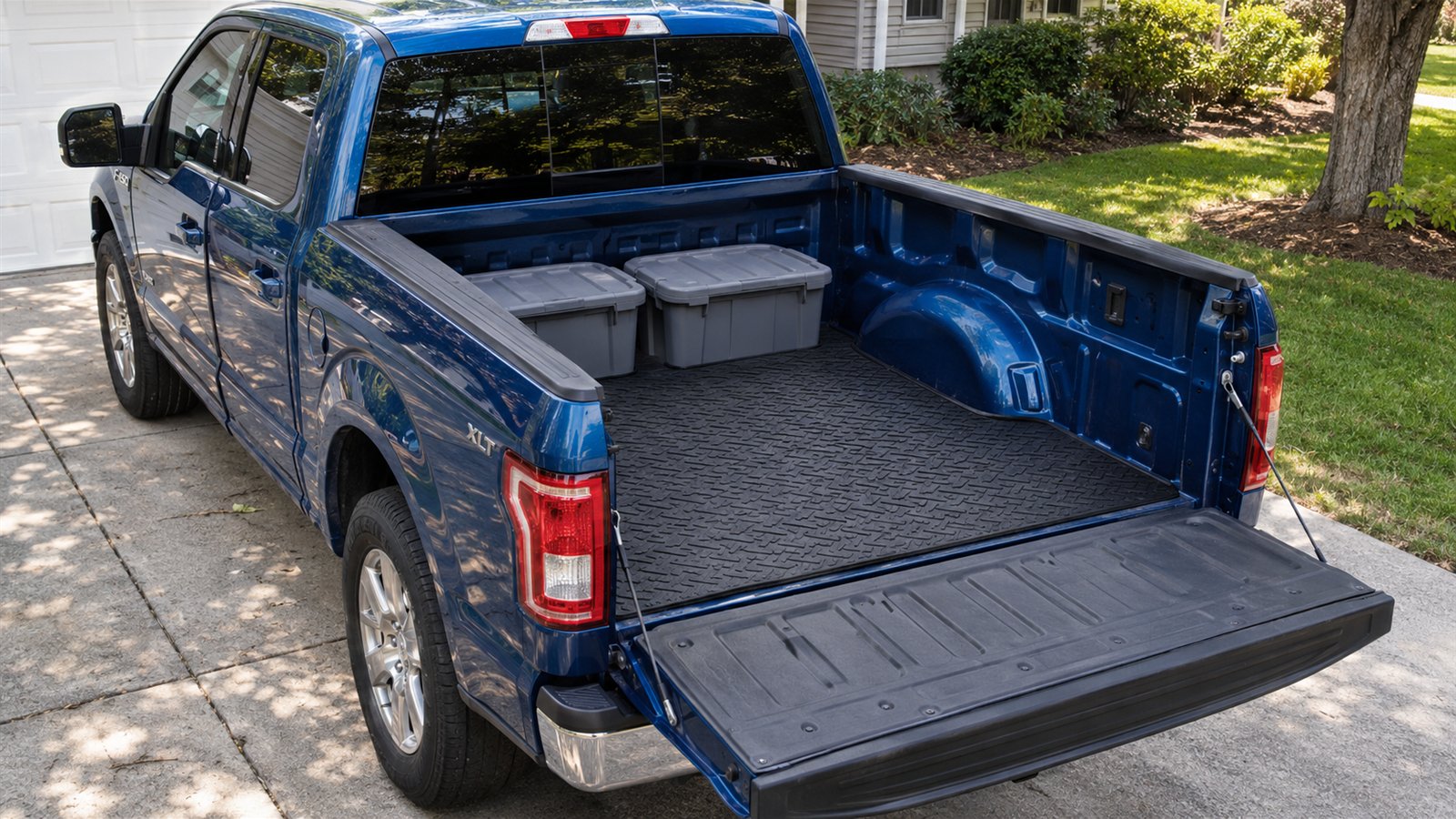
A plain rubber mat gives the bed one consistent surface without committing you to a permanent storage system. It suits an owner who alternates between closed bins, dirty garden equipment and an otherwise empty box. Choose a bed-specific shape that clears the wheel housings and lets the tailgate operate normally.
Treat the mat as a surface layer, not a cargo restraint. It does not establish that a toolbox or cooler will stay put during braking. Check the maker’s cleaning method, whether it can be lifted out easily, and how moisture beneath it will be handled. Keep factory drainage paths clear.
Compare options on Amazon: Compare short-bed rubber mats
2. Make a small tailgate-accessible zone
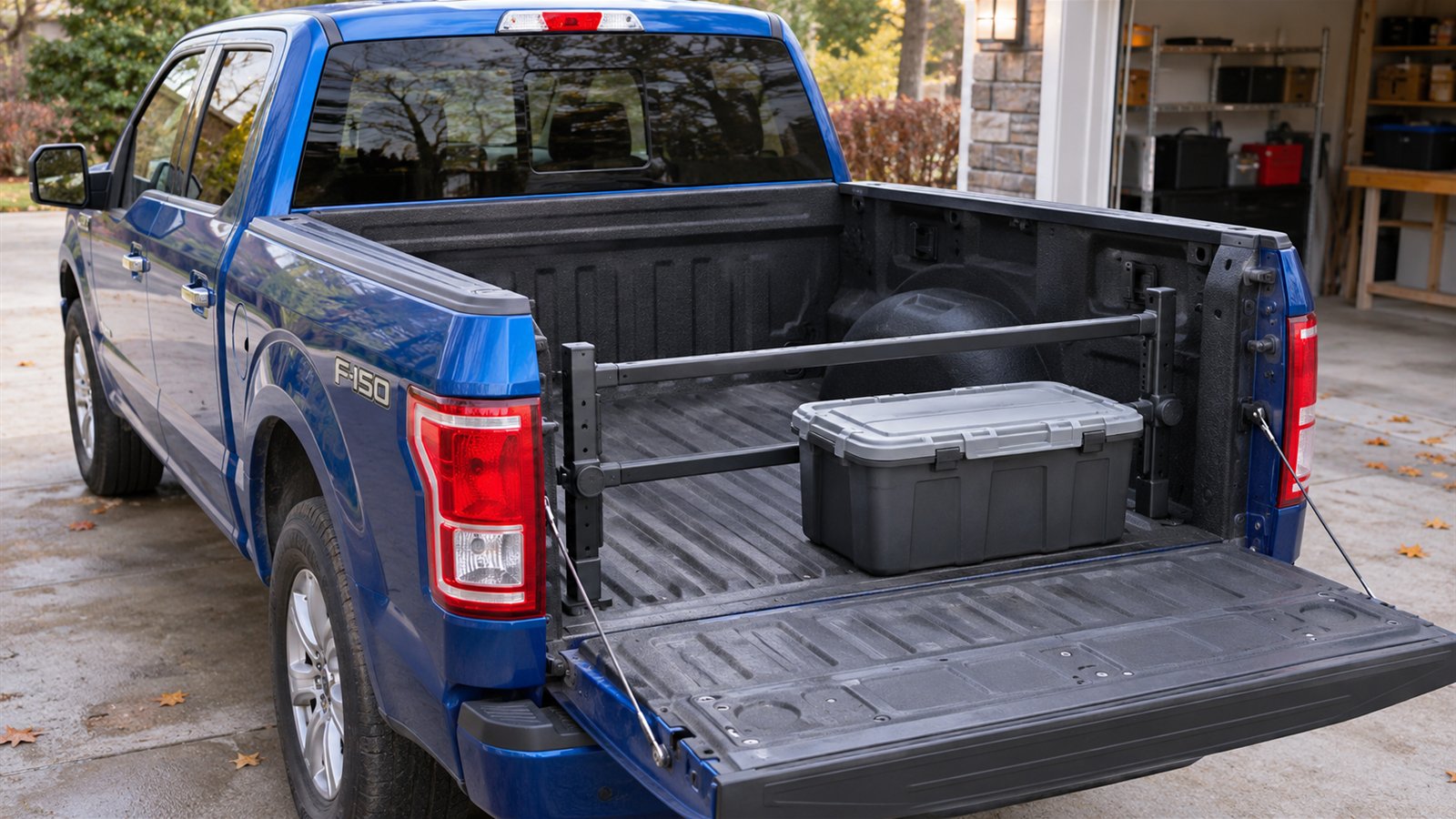
A transverse divider can keep frequently used items near the rear of the box, where you can reach them without climbing inside. This is useful for a grocery tote or a small work bag, while the forward section remains available for occasional larger cargo.
Check which bed or rail arrangement the divider actually uses. A pressure bar, factory-rail divider and bolted partition are different products with different limitations. A divider that helps organize stationary cargo is not automatically a rated securement system.
Compare options on Amazon: Browse adjustable bed dividers
3. Give light shopping bags their own net
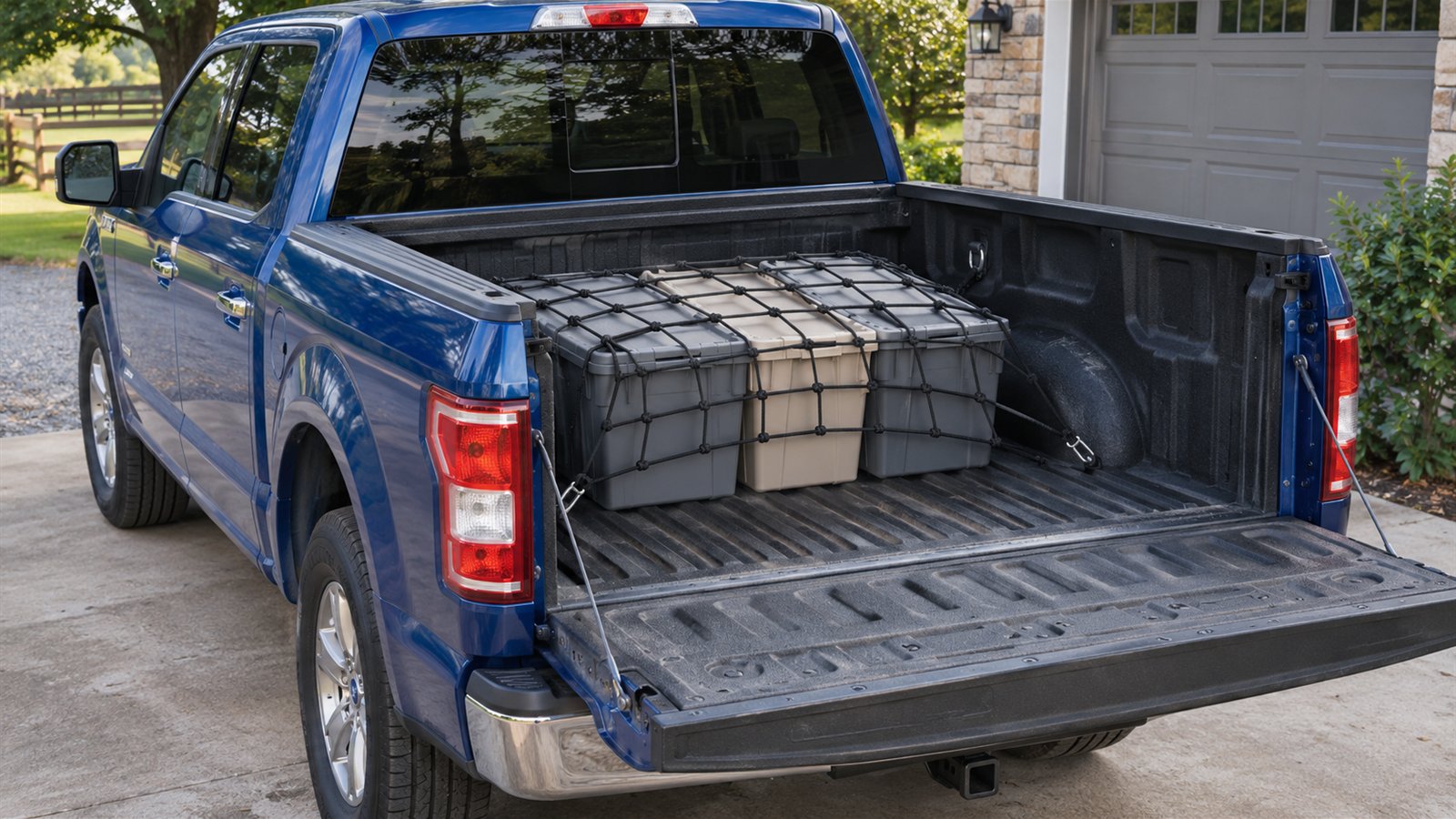
A cargo net is a modest addition when the real problem is a few light bags scattering across an otherwise empty bed. Look at the size of the openings, the shape of the hooks and whether the net can be put away without becoming a tangled bundle.
Use only attachment points and loads approved for the product. Stretchy organizer nets are not substitutes for properly rated straps on heavy equipment. Keep fragile or weather-sensitive purchases in a suitable protected area rather than assuming a net or bed cover makes them safe.
Compare options on Amazon: Compare pickup cargo nets
4. Group equipment into matching closed totes
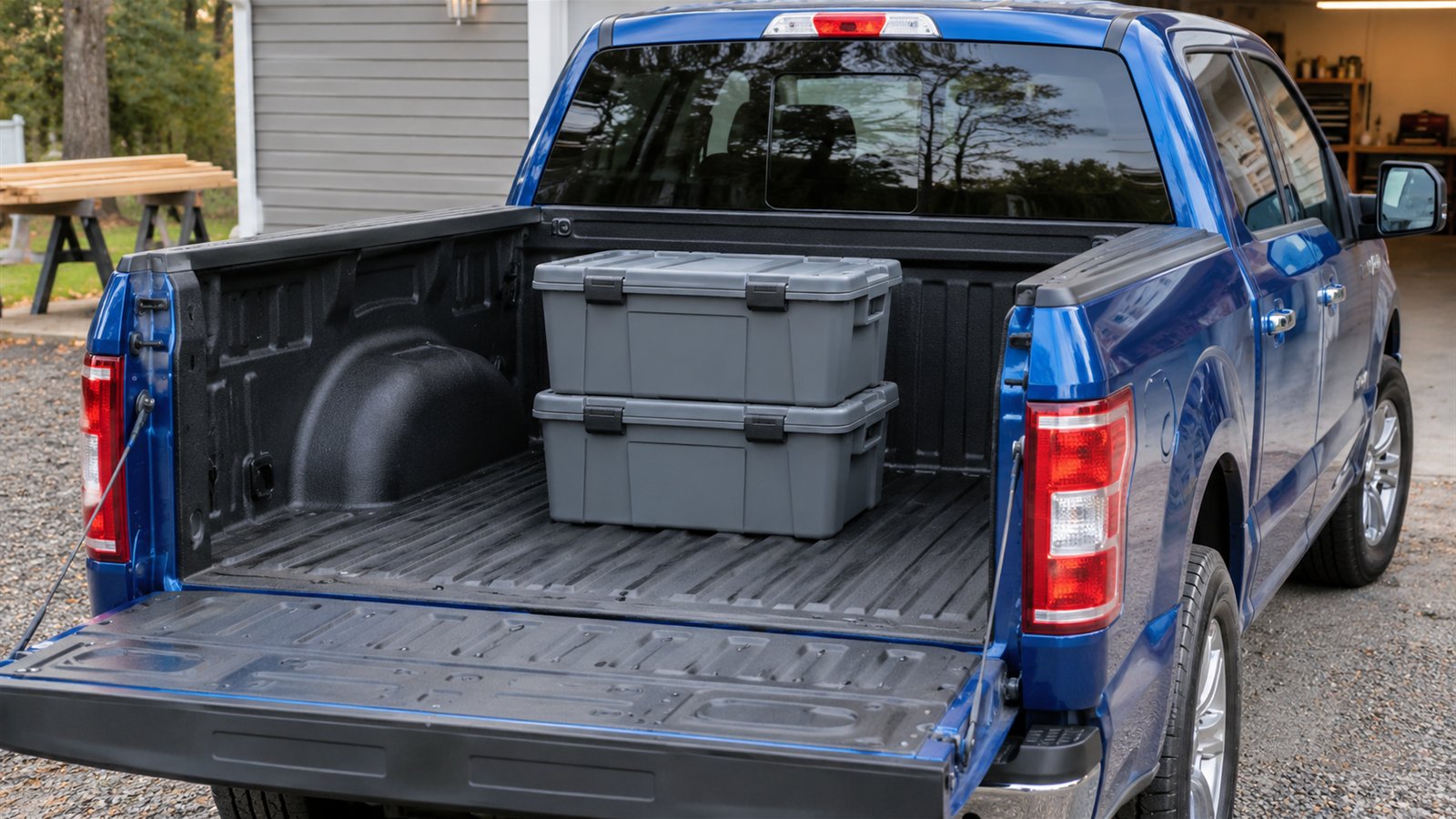
Two manageable totes can be more useful than one enormous box. Separate everyday equipment from occasional supplies so that you can remove a complete category at home. Matching footprints make it easier to arrange them around wheel housings and understand how much floor remains.
Check the outside dimensions, handles and lid swing rather than relying on the advertised capacity alone. Weather resistance and lockability vary. Plan an approved restraint method, and do not assume a stackable lid is designed to hold another loaded tote while traveling.
Compare options on Amazon: Browse latching gear totes
5. Use the space beside a wheel housing
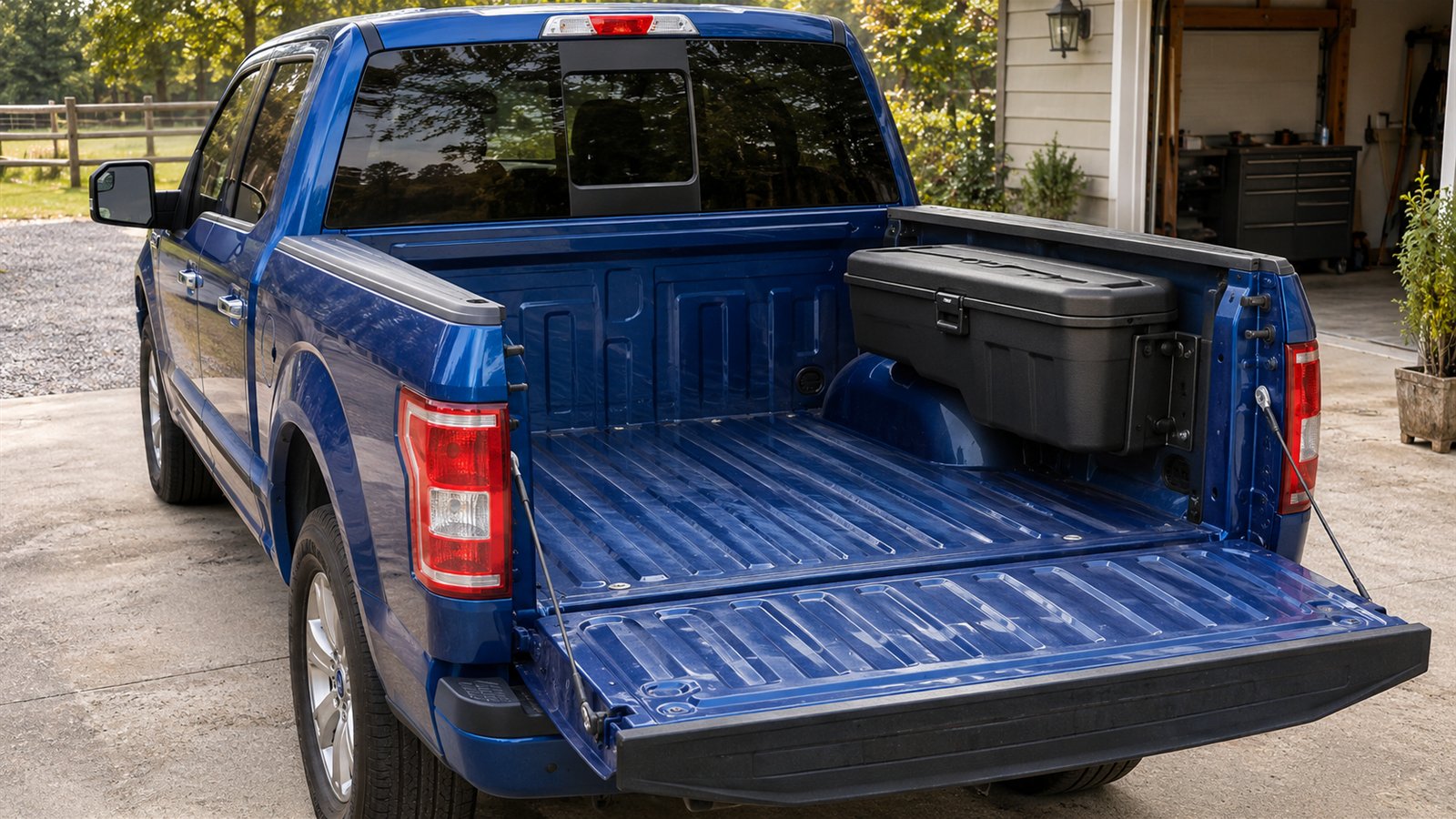
A wheel-well storage box can put small items beside the bed rather than across its full width. A swing-out design may bring the opening closer to the tailgate, but that convenience depends on the actual hinge, latch and surrounding equipment.
Ask whether the application matches your bed, liner and installed cover. Check drilling requirements and clearance throughout the movement, not only with the lid closed. Keep the box within its stated carrying limit and verify that it latches securely before driving.
Compare options on Amazon: Find model-specific swing-out boxes
6. Choose a low crossover toolbox
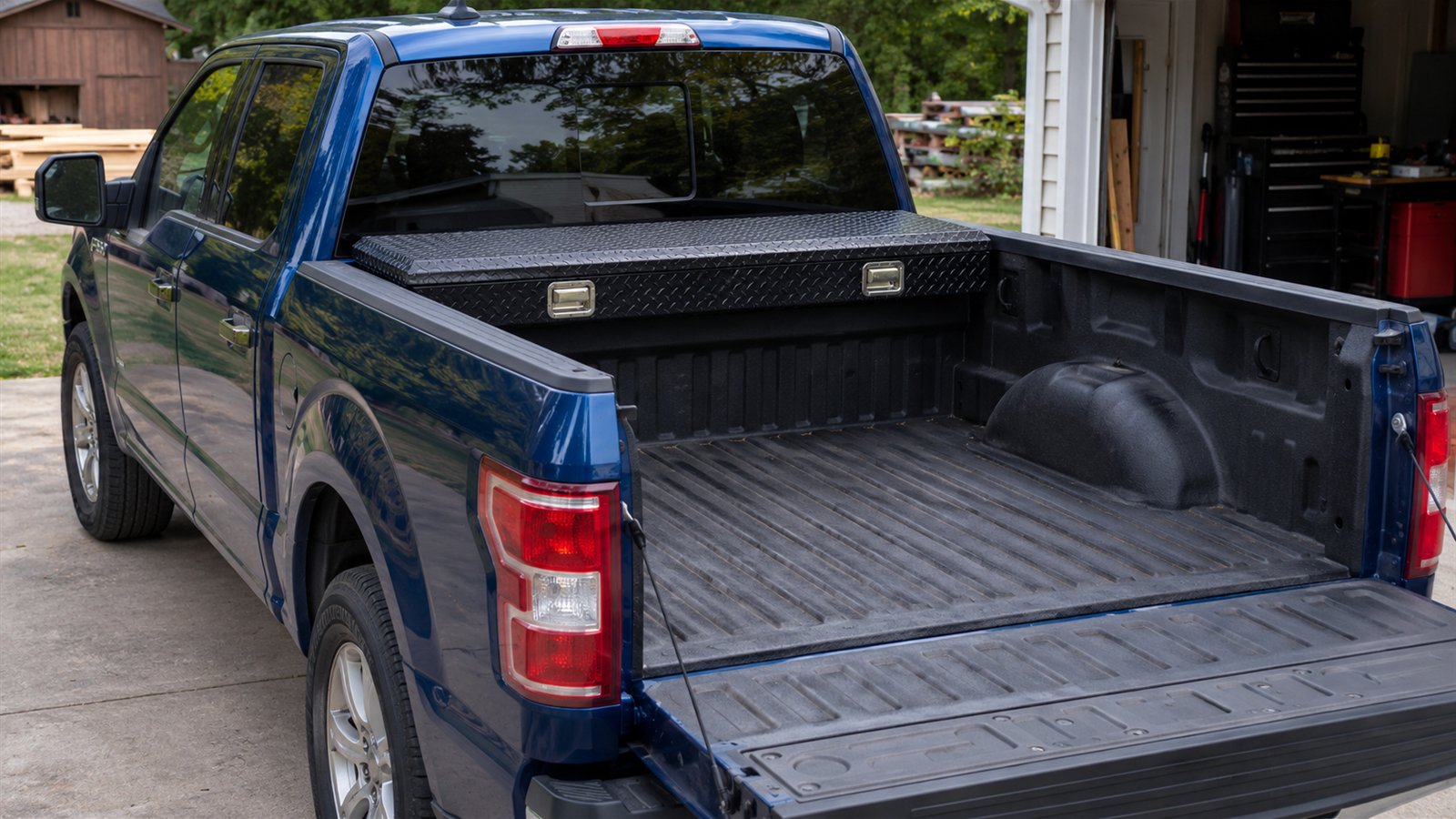
A crossover box gives tools a dedicated home behind the cab while preserving an open section below and behind it. A low lid is visually quieter and can preserve more rearward view than a tall box, although actual visibility depends on the truck and box.
Measure the rail-to-rail span, lid sweep and the space needed by your cover or rack. Compare usable internal dimensions, not just the exterior width. A toolbox can create a convenient storage location without making a particular theft-resistance or weather-sealing promise.
Compare options on Amazon: Compare low-profile crossover boxes
7. Keep small accessories in a removable rail-side bag
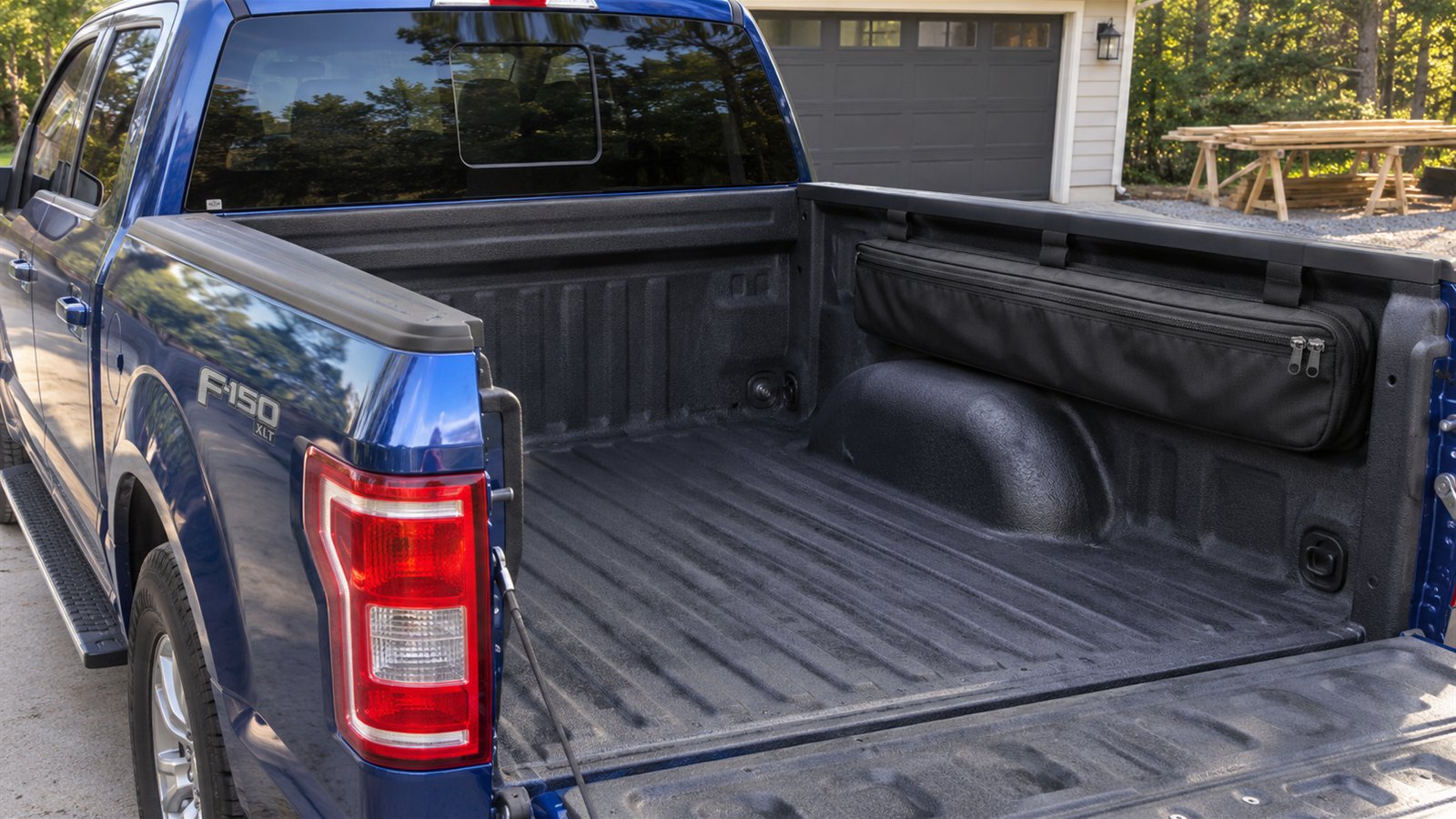
A small zippered organizer can gather gloves, a measuring tape and similar light items that otherwise disappear between larger boxes. A removable bag is easy to bring indoors when you need its contents elsewhere.
Confirm how it attaches and what the maker allows it to carry. Keep it away from latches, sharp edges, drainage and moving cover hardware. Do not hang heavy equipment from a convenient-looking strap or treat soft fabric storage as weatherproof unless its specification supports that use.
Compare options on Amazon: Browse soft bed organizer bags
8. Make a portable job kit
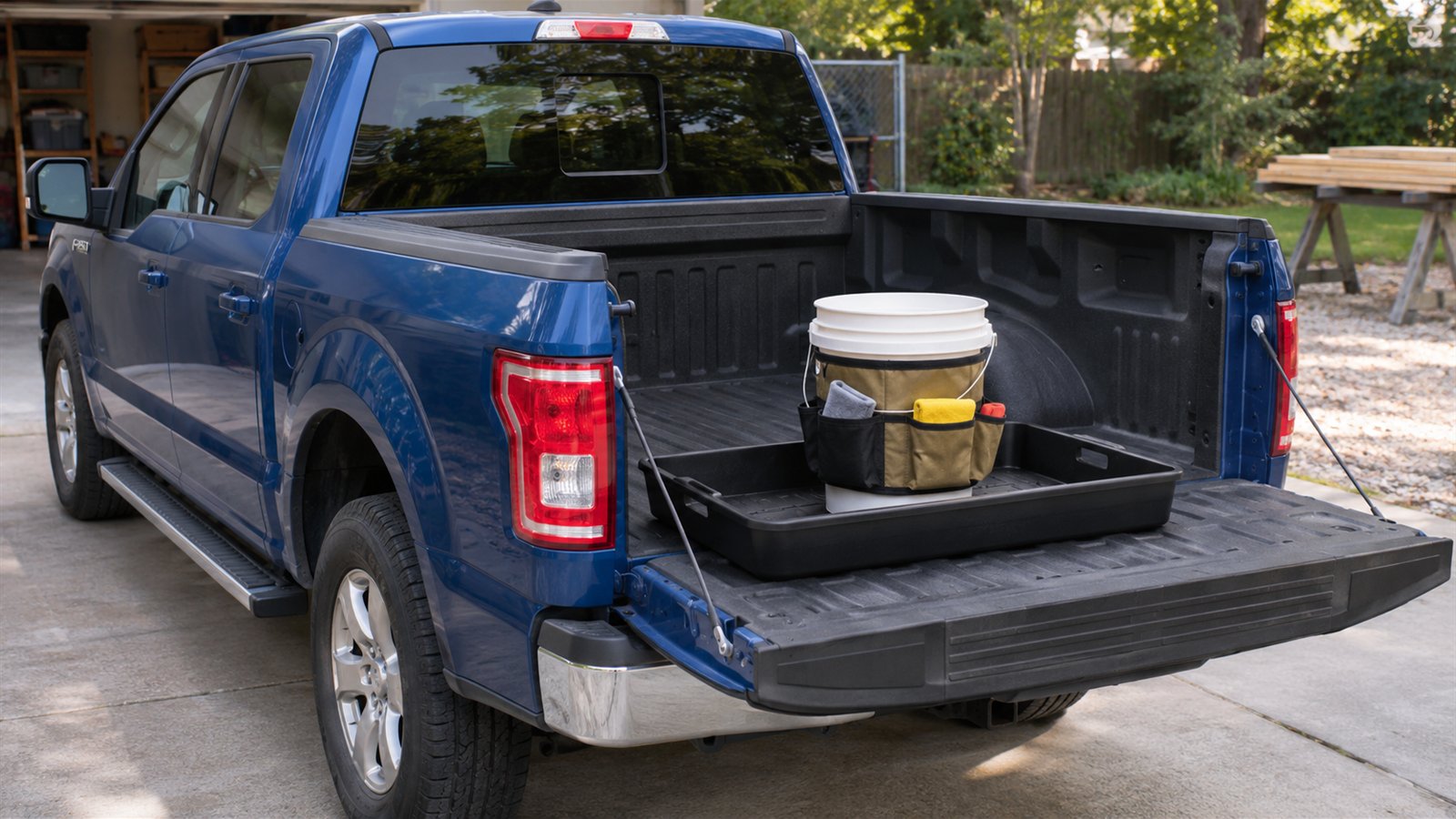
A bucket organizer or small portable tote suits someone who carries the same hand tools from truck to work area. The advantage is the whole kit coming with you, rather than a collection of loose pieces spread across the tailgate.
Size the kit so that you can lift it comfortably, close or contain sharp tools, and secure it separately for travel. The tailgate image shows a parked working arrangement. It is not a suggested driving position or a statement about the tailgate’s carrying capacity.
Compare options on Amazon: Compare bucket tool organizers
9. Preserve an aisle for longer cargo
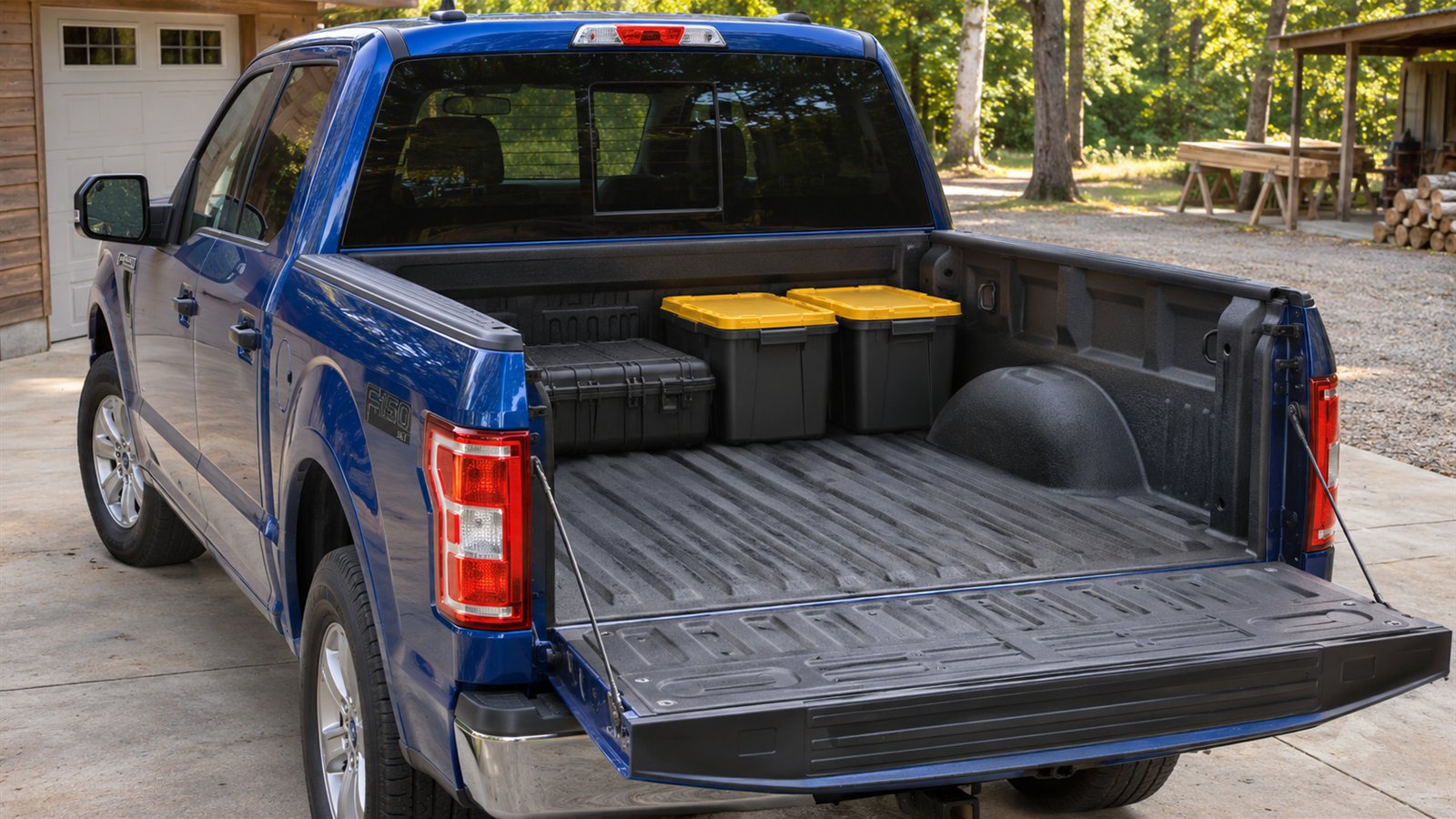
Storage becomes frustrating when it occupies every useful loading path. Before buying a large permanent system, lay out your regular bins and leave a clear route for the longer objects you actually carry. A narrow closed case may suit this better than a wide drawer assembly.
Think about the entire loading and unloading movement. A box that fits when empty can still block a handle, tailgate latch or cover rail. Long cargo needs its own appropriate securement plan; an empty aisle simply preserves flexibility.
Compare options on Amazon: Browse portable gear cases
10. Build two removable kits instead of one permanent build
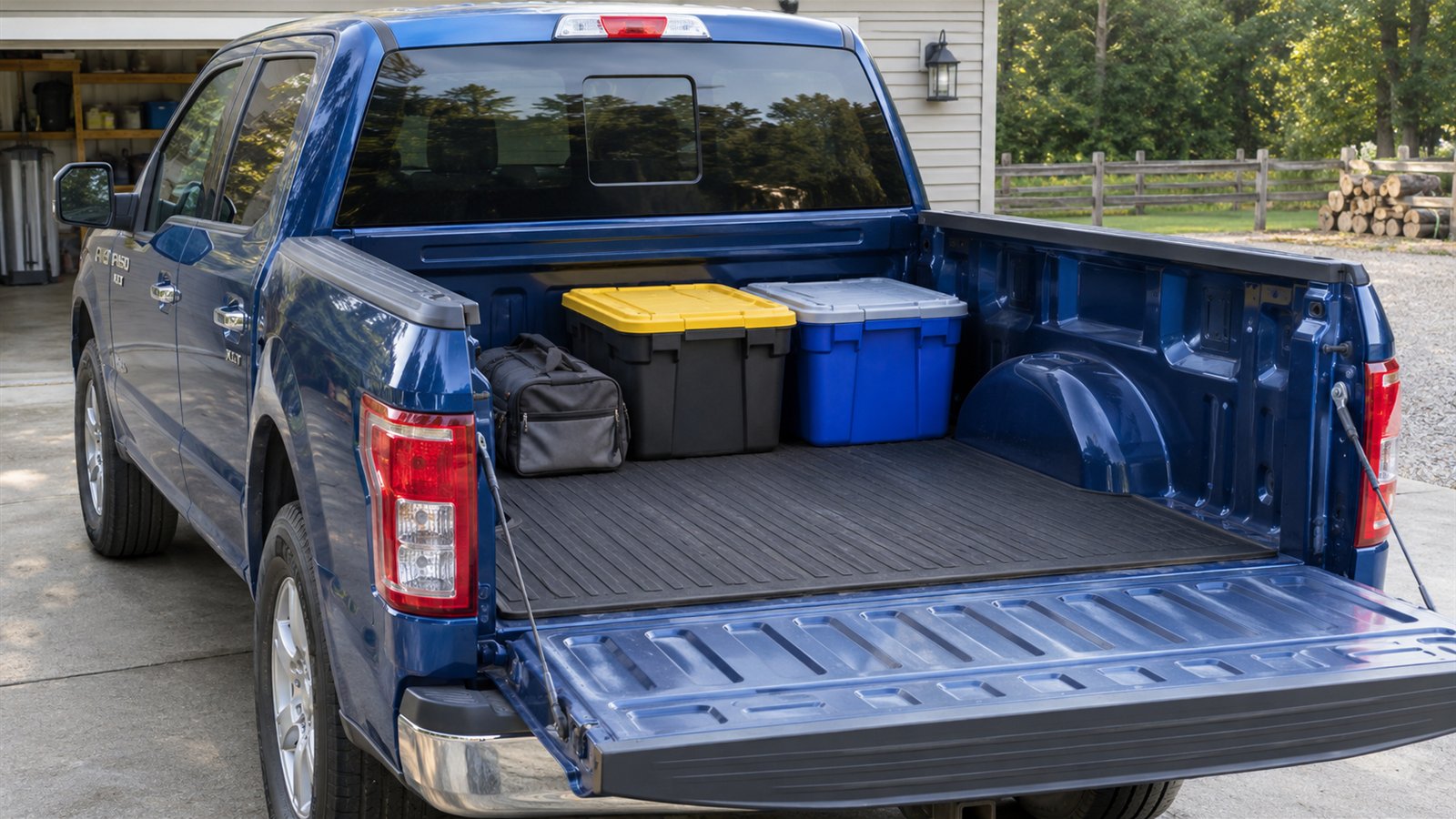
An everyday tote and a separate weekend tote make a useful final layout. Keep the daily box small, then add the second only when needed. You avoid carrying the full camping or hobby setup through every commute.
Label the containers, check their contents periodically and remove wet equipment promptly. Leave valuable or sensitive items out of an unattended open bed. The goal is a repeatable routine with fewer misplaced objects, not a box filled with organizers that themselves become clutter.
Compare options on Amazon: Compare compact labeled storage bins
Check the layout before adding a cover or rack
Use cardboard footprints or the bins you already own to test a layout first. Open every lid, lower the tailgate and account for anything mounted near the cab. Follow the Ford owner’s manual for cargo securement and vehicle loading, then follow each accessory maker’s mounting and load instructions.
For the exterior side of the same decision, our 2015–2020 F-150 styling gallery shows how covers, toolboxes and racks change the truck’s overall appearance. Choose the storage arrangement you need before choosing the look around it.
Leave a Reply