
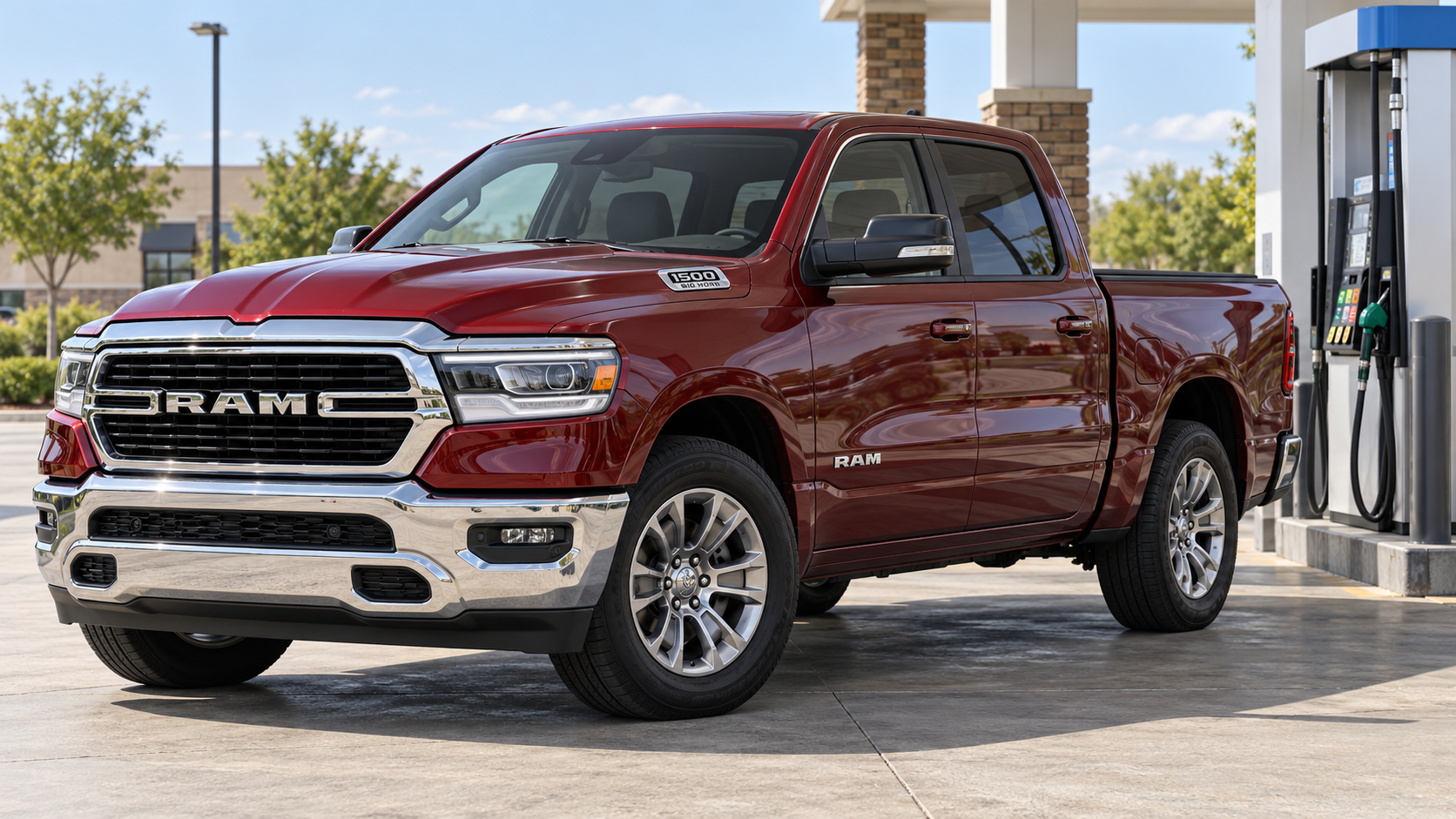
The Ram 1500 does not have one universal gas-tank size. For example, the 2024 Ram 1500 offers 23-, 26-, and 33-gallon tanks, depending on configuration. The older-body 2023 Ram 1500 Classic lists 26- and 32-gallon tanks.
The most reliable way to identify yours is to check the original window sticker or have a Ram dealer look up the factory equipment using your VIN. The amount you pump during a normal fill-up cannot reliably identify the tank.
Ram 1500 Fuel-Tank Sizes
These U.S.-market examples illustrate the differences. All capacities below are in U.S. gallons.
| Truck | Factory tank sizes |
|---|---|
| 2024 Ram 1500, newer body style | 23, 26, or 33 gallons |
| 2023 Ram 1500 Classic, older body style | 26 or 32 gallons |
| 2026 Ram 1500 | Up to 33 gallons available |
These examples are not a complete year-by-year fitment chart. Confirm the equipment on your particular truck rather than assuming another Ram with the same engine has the same tank.
How to Identify Your Tank
1. Check the Original Window Sticker
Look through both the standard-equipment and optional-equipment sections for a fuel-tank description. Read the entire sticker: a larger optional tank may replace the standard tank listed elsewhere.
2. Ask for the Factory Equipment Record
If the sticker is missing or unclear, give a Ram dealer your VIN and ask which fuel tank the truck was built with. Specify whether it is a Ram 1500 or a Ram 1500 Classic.
The VIN helps retrieve the truck’s equipment record; a basic VIN decoder that identifies only the engine and cab may not show the tank option.
3. Check for Previous Modifications
Factory records describe the original equipment. If a previous owner installed a replacement or larger tank, check the installation paperwork and tank identification with a qualified shop.
Why Doesn’t It Take the Full Rated Capacity at the Pump?
A fill-up replaces the fuel you have used. It does not measure the tank’s total capacity unless the tank was completely empty—which is not a useful way to test it.
For example, adding 25 gallons to a truck documented as having a 33-gallon tank does not prove the wrong tank was installed. Fuel remaining before the stop accounts for part of the difference.
Ram instructs owners to stop when the nozzle shuts off and avoid topping off. Do not keep squeezing fuel in to reach the capacity printed in the specifications.
Does a Larger Tank Improve MPG?
A larger tank primarily increases the distance available between fuel stops. It does not inherently make the engine more efficient.
As a simple illustration, at an assumed 18 mpg, an
Leave a Reply