
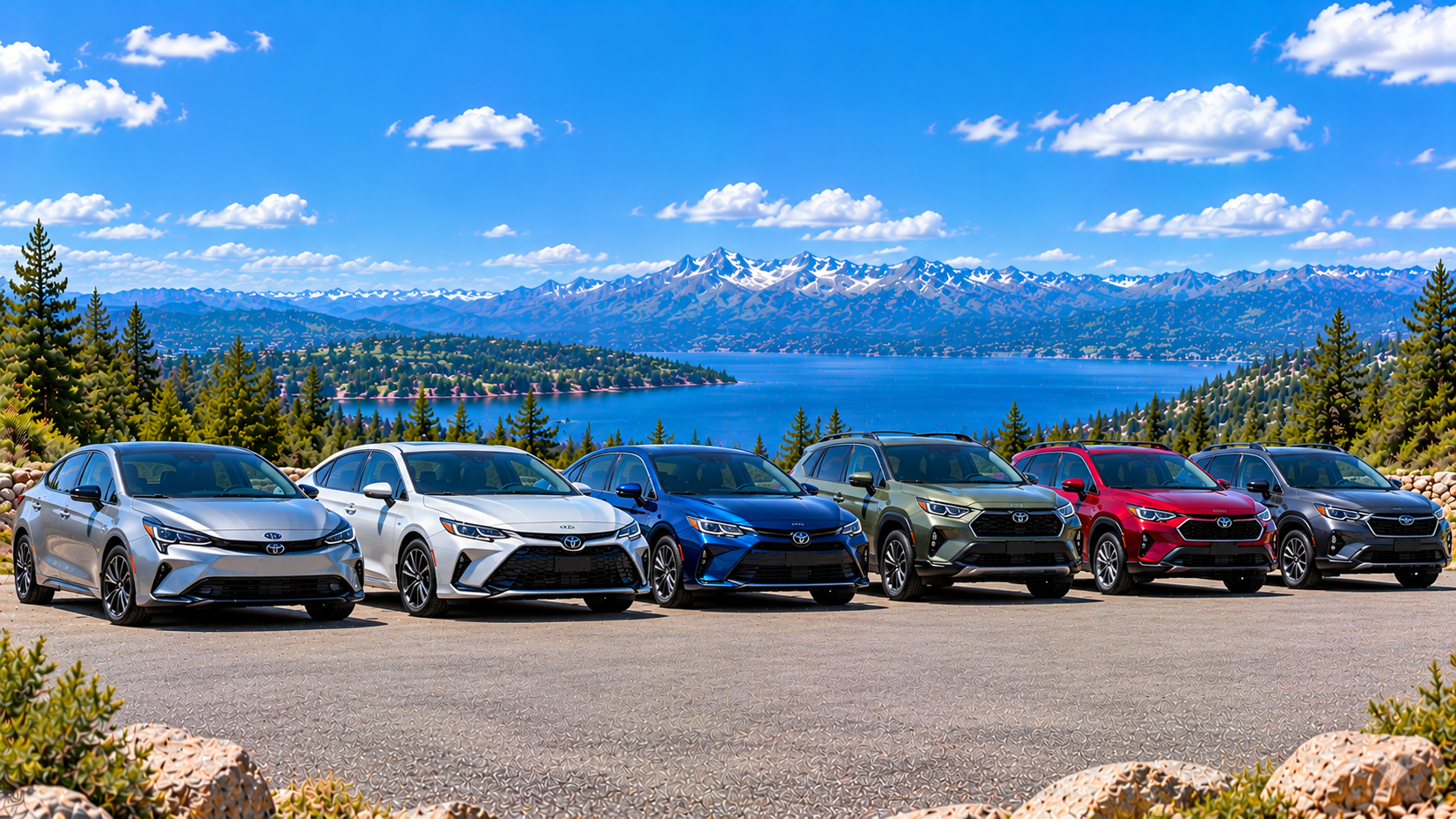
Hatchbacks offer something that conventional sedans cannot: a large rear opening that makes it easier to load luggage, groceries, sports equipment, and other bulky cargo. Many also have folding rear seats, giving drivers surprising versatility in a compact vehicle.
And some are exceptionally fuel-efficient. The 2026 Toyota Prius leads the hatchback category with an EPA-estimated 57 MPG combined. The Honda Civic Hatchback Hybrid follows at 48 MPG, while the Toyota Corolla Hatchback is the most efficient gasoline-only model at 35 MPG.
Below, we rank the leading 2026–2027 hatchbacks by fuel economy, compare hybrid and gasoline versions, and calculate how much each costs to fuel over 15,000 miles.
Every Hatchback Ranked by MPG (2026–2027)
The ranking uses the most fuel-efficient published 2026 configuration for each model. Where 2027 figures are available, they may differ. All ratings are EPA estimates for U.S.-market vehicles.
| Rank | Hatchback | Powertrain | City | Highway | Combined |
|---|---|---|---|---|---|
| 1 | 2026 Toyota Prius LE | Hybrid | 57 | 56 | 57 |
| 2 | 2026 Honda Civic Hatchback Hybrid | Hybrid | 50 | 45 | 48 |
| 3 | 2026 Honda Prelude | Hybrid liftback coupe | 46 | 41 | 44 |
| 4 | 2026 Toyota Corolla Hatchback SE | Gasoline | 32 | 41 | 35 |
| 5 | 2026 Honda Civic Hatchback Sport | Gasoline | 30 | 38 | 34 |
| 6 (tie) | 2026 Acura Integra | Gasoline | 29 | 37 | 32 |
| 6 (tie) | 2026 MINI Cooper Hardtop | Gasoline | Varies | Varies | Up to 32 |
| 8 | 2026 Kia K4 Hatchback | Gasoline | 28 | 34 | 30 |
| 9 | 2026 Mazda3 Hatchback | Gasoline | 26 | 34 | 29 |
| 10 | 2026 Subaru Impreza | Gasoline, AWD | Varies | Varies | Up to 29 |
| 11 | 2026 Volkswagen Golf GTI | Turbo gasoline | Varies | Varies | Up to 27 |
| 12 | 2026 Volkswagen Golf R | Turbo gasoline, AWD | Varies | Varies | 25 |
| 13 | 2026 Toyota GR Corolla | Turbo gasoline, AWD | Varies | Varies | Up to 24 |
Figures refer to the highest-rated qualifying configuration of each model. The Prelude is included as a two-door liftback with a rear cargo hatch. Some manufacturers distinguish liftbacks from traditional hatchbacks. Plug-in hybrids and fully electric cars are excluded because their MPGe ratings are not directly comparable with gasoline MPG. This comparison covers leading models rather than every trim and performance variant.
1. Toyota Prius — 57 MPG Combined
2026 EPA MPG: 57 city / 56 highway / 57 combined
The Toyota Prius is the clear fuel-economy leader among conventional hatchbacks.
Its 2.0-liter hybrid powertrain combines a gasoline engine with electric motors, producing 194 horsepower in front-wheel-drive form.
The Prius achieves its highest fuel-economy rating in the LE FWD configuration. More expensive trims with larger wheels and available AWD have lower ratings.
Despite its emphasis on efficiency, the current Prius accelerates much more confidently than older generations. Its hatchback cargo opening also makes it practical for everyday errands and road trips.
The main drawback is the sloping roofline, which limits rear headroom and the height of some cargo items.
Best for: Drivers who want maximum MPG and practical hatchback cargo access.
2. Honda Civic Hatchback Hybrid — 48 MPG Combined
2026 EPA MPG: 50 city / 45 highway / 48 combined
The Honda Civic Hatchback Hybrid offers an excellent combination of fuel economy, acceleration, and interior practicality.
Its two-motor hybrid system produces 200 horsepower, giving it considerably stronger performance than many conventional compact economy cars.
Both the Sport Hybrid and Sport Touring Hybrid hatchback configurations achieve 48 MPG combined.
The Civic’s rear hatch opens into a generous cargo area, and the folding rear seats provide flexibility for carrying longer items.
Compared with the Prius, the Civic has a more conventional seating position and a sportier driving feel.
Best for: Drivers who want excellent MPG without sacrificing acceleration or everyday versatility.
3. Honda Prelude — 44 MPG Combined
2026 EPA MPG: 46 city / 41 highway / 44 combined
The revived Honda Prelude is a hybrid coupe with a rear liftback, giving it a place in this comparison despite its sportier design.
It uses a 200-horsepower two-motor hybrid system related to the Civic Hybrid’s powertrain.
Its 44-MPG combined rating is unusually good for a vehicle designed around driving enjoyment.
However, the Prelude is more expensive and less practical than a conventional four-door hatchback. Its rear seats are small, and its sporty styling limits passenger flexibility.
Best for: Drivers who want a distinctive hybrid coupe with useful fuel economy.
4. Toyota Corolla Hatchback — 35 MPG Combined
2026 EPA MPG: 32 city / 41 highway / 35 combined
The Toyota Corolla Hatchback is the most fuel-efficient gasoline-only hatchback in this ranking.
Its 2.0-liter four-cylinder engine produces 169 horsepower and is paired with a continuously variable automatic transmission.
The SE trim achieves the highest fuel-economy rating at 35 MPG combined. Other trims with larger wheels return lower figures.
The Corolla Hatchback offers a compact footprint, responsive steering, and a relatively affordable entry point.
Its main compromise is cargo capacity. Although the rear hatch makes loading easier, the cargo area is smaller than those of some competing hatchbacks.
Best for: Buyers who want a fuel-efficient hatchback without the added complexity or purchase cost of a hybrid powertrain.
5. Honda Civic Hatchback — 34 MPG Combined
2026 EPA MPG: 30 city / 38 highway / 34 combined
The gasoline-powered Honda Civic Hatchback achieves 34 MPG combined in Sport trim.
Its 2.0-liter four-cylinder engine produces 150 horsepower and is paired with a continuously variable transmission.
The Civic has a roomy cabin, practical cargo area, and composed handling.
Compared with the Civic Hybrid, the gasoline model sacrifices 14 MPG combined but carries a lower starting price.
Drivers who cover relatively few miles annually may find the gasoline version sufficient. High-mileage commuters will generally benefit more from the hybrid’s substantially lower fuel consumption.
Best for: Buyers seeking a spacious, practical compact hatchback at a lower initial price than the hybrid.
6. Acura Integra — 32 MPG Combined
2026 EPA MPG: 29 city / 37 highway / 32 combined for the CVT
The Acura Integra is a premium compact liftback with a large rear cargo opening.
Its turbocharged 1.5-liter four-cylinder engine produces 200 horsepower.
With the continuously variable transmission, the Integra achieves 32 MPG combined.
A six-speed manual transmission is also available, although it returns lower MPG. The high-performance Integra Type S is considerably less efficient.
The Integra stands out for its balance of upscale features, responsive handling, and useful cargo space.
Best for: Drivers who want a sporty premium hatchback with reasonable fuel economy.
7. MINI Cooper Hardtop — Up to 32 MPG Combined
The MINI Cooper Hardtop offers distinctive styling and compact dimensions that make it particularly convenient in crowded urban areas.
The standard Cooper emphasizes efficiency and nimble handling, while more powerful Cooper S and John Cooper Works versions prioritize performance.
The most efficient configurations achieve approximately 32 MPG combined.
Both two-door and four-door Hardtop versions are available, although rear-seat and cargo space remain limited compared with larger hatchbacks.
Best for: City drivers who value compact dimensions, styling, and an engaging driving experience.
8. Kia K4 Hatchback — 30 MPG Combined
2026 EPA MPG: 28 city / 34 highway / 30 combined for the 2.0-liter configuration
The Kia K4 Hatchback adds a new option to the compact hatchback market.
Its standard 2.0-liter four-cylinder engine produces 147 horsepower, while an available turbocharged engine delivers considerably more power.
The most efficient version achieves 30 MPG combined.
The K4 Hatchback offers a roomy interior and contemporary technology features. It is worth considering for buyers who want a conventional gasoline hatchback with more space than some smaller competitors.
The turbocharged GT-Line Turbo is rated at 28 MPG combined, so the extra performance carries a modest efficiency penalty.
Best for: Buyers wanting a spacious, modern compact hatchback with a conventional gasoline engine.
9. Mazda3 Hatchback — 29 MPG Combined
2026 EPA MPG: 26 city / 34 highway / 29 combined for the efficient naturally aspirated FWD configuration
The Mazda3 Hatchback emphasizes styling, cabin quality, and responsive handling rather than maximum fuel economy.
Its naturally aspirated 2.5-liter engine produces 191 horsepower.
The most efficient hatchback configuration achieves approximately 29 MPG combined, while AWD and turbocharged versions use more fuel.
The Mazda3’s upscale interior and composed driving dynamics make it attractive to buyers who want a more refined compact car.
However, its sloping rear design and relatively small windows may make it feel less spacious than the Civic.
Best for: Drivers who prioritize cabin quality and driving enjoyment over the highest MPG.
10. Subaru Impreza — Up to 29 MPG Combined
The Subaru Impreza is unusual among compact hatchbacks because AWD is standard.
Its boxer four-cylinder engine and symmetrical AWD system make it appealing to drivers who regularly encounter rain, snow, or mountain roads.
The most efficient 2026 configurations achieve approximately 29 MPG combined, with ratings varying by engine and trim.
Although the Impreza cannot match the fuel economy of a Prius or Civic Hybrid, it provides AWD without requiring buyers to move into an SUV.
Best for: Drivers who want a compact hatchback with standard AWD.
11. Volkswagen Golf GTI — Up to 27 MPG Combined
The Volkswagen Golf GTI is a performance-oriented hatchback rather than an economy car.
Its turbocharged 2.0-liter four-cylinder engine produces 241 horsepower and delivers strong acceleration.
The GTI achieves approximately 27 MPG combined in its efficient configuration.
It offers a useful combination of everyday practicality and performance, with a roomy hatchback cargo area and responsive handling.
Best for: Drivers who want a practical performance car and are willing to accept higher gasoline consumption.
12. Volkswagen Golf R — 25 MPG Combined
The Volkswagen Golf R adds AWD and considerably more power to the Golf formula.
Its turbocharged 2.0-liter engine produces 328 horsepower, making it one of the quickest compact hatchbacks available.
The Golf R achieves approximately 25 MPG combined.
Although it uses substantially more gasoline than the leading hybrids, its performance and AWD traction appeal to enthusiasts.
Best for: Drivers seeking a high-performance AWD hatchback.
13. Toyota GR Corolla — Up to 24 MPG Combined
The Toyota GR Corolla is a specialized performance hatchback with a turbocharged three-cylinder engine and AWD.
Its engine produces 300 horsepower, and its suspension and drivetrain are designed for spirited driving.
The most efficient configurations achieve approximately 24 MPG combined.
That makes the GR Corolla much less efficient than the standard Corolla Hatchback, but fuel economy is not its primary purpose.
Best for: Enthusiasts who want rally-inspired AWD performance in a compact hatchback.
Which Gasoline-Only Hatchback Gets the Best MPG?
Among conventional gasoline models, the Toyota Corolla Hatchback leads at 35 MPG combined.
| Gasoline Hatchback | Best Combined MPG |
|---|---|
| Toyota Corolla Hatchback | 35 |
| Honda Civic Hatchback | 34 |
| Acura Integra | 32 |
| MINI Cooper Hardtop | 32 |
| Kia K4 Hatchback | 30 |
| Mazda3 Hatchback | 29 |
| Subaru Impreza | 29 |
| Volkswagen Golf GTI | 27 |
The Corolla and Civic are the strongest choices for buyers who want good gasoline efficiency without purchasing a hybrid.
The MINI and Integra offer different driving experiences, while the Impreza stands out for standard AWD.
Which Hatchback Gets the Best Highway MPG?
The Toyota Prius achieves 56 MPG highway, making it the most efficient hatchback for long-distance driving in this comparison.
The Honda Civic Hatchback Hybrid follows at 45 MPG highway.
Among gasoline-only hatchbacks, the Toyota Corolla Hatchback SE achieves 41 MPG highway, while the Honda Civic Hatchback Sport reaches 38 MPG.
For drivers who spend most of their time on freeways, highway MPG may be more useful than the combined figure when estimating gasoline expenses.
How Much Does Each Hatchback Cost to Fuel?
Assume 15,000 miles annually and gasoline priced at $3.50 per gallon.
| Hatchback | MPG | Gallons / Year | Annual Cost |
|---|---|---|---|
| Toyota Prius | 57 | 263 | $921 |
| Honda Civic Hatchback Hybrid | 48 | 313 | $1,094 |
| Honda Prelude | 44 | 341 | $1,193 |
| Toyota Corolla Hatchback | 35 | 429 | $1,500 |
| Honda Civic Hatchback Gasoline | 34 | 441 | $1,544 |
| Acura Integra / MINI Cooper | 32 | 469 | $1,641 |
| Kia K4 Hatchback | 30 | 500 | $1,750 |
| Mazda3 / Subaru Impreza | 29 | 517 | $1,810 |
| Volkswagen Golf GTI | 27 | 556 | $1,944 |
| Volkswagen Golf R | 25 | 600 | $2,100 |
| Toyota GR Corolla | 24 | 625 | $2,188 |
Annual costs are illustrative estimates based on 15,000 miles divided by combined MPG, multiplied by $3.50. Actual costs depend on gasoline prices, driving conditions, and fuel requirements. Premium-fuel vehicles may cost more than shown.
At these assumptions, the Prius costs approximately $921 annually to fuel, while the gasoline Corolla Hatchback costs $1,500.
That represents approximately $579 in annual gasoline savings, or $2,895 over five years.
However, the Prius generally costs more to purchase, so buyers should compare total ownership costs rather than fuel economy alone.
Hybrid vs. Gasoline Hatchbacks: Is the Upgrade Worth It?
The Honda Civic offers a useful comparison because it is available as both a conventional gasoline hatchback and a hybrid.
The gasoline Civic Hatchback achieves 34 MPG combined, while the Civic Hatchback Hybrid achieves 48 MPG.
At 15,000 miles annually and $3.50 per gallon:
- The gasoline Civic uses approximately 441 gallons, costing $1,544.
- The Civic Hybrid uses approximately 313 gallons, costing $1,094.
- The hybrid saves approximately $450 annually in gasoline.
If the hybrid costs $3,000 more to purchase, it would take approximately 6.7 years to recover that difference through gasoline savings alone.
That estimate excludes resale value, financing, insurance, maintenance, and equipment differences.
Drivers covering 20,000 miles or more annually may recover the additional purchase cost sooner. Drivers covering only 5,000 miles annually will see much smaller savings.
Which Hatchback Has the Most Cargo Space?
A hatchback’s fuel economy is only part of its appeal. The rear cargo opening and folding seats can make a compact car surprisingly useful.
The Honda Civic Hatchback offers one of the roomiest cargo areas in the compact class, with approximately 24.5 cubic feet behind the rear seats.
The Acura Integra also provides a large liftback opening and approximately 24.3 cubic feet of cargo space.
The Toyota Corolla Hatchback has a smaller cargo area, while the Prius’s sloping roof limits the height of bulky objects.
Drivers who frequently carry large boxes, strollers, bicycles, or other equipment should compare cargo dimensions and hatch-opening shapes rather than relying only on published cubic-foot measurements.
Which Hatchbacks Offer AWD?
AWD is relatively uncommon among compact hatchbacks, but several models offer it.
- Toyota Prius: Available electronic AWD with excellent fuel economy.
- Subaru Impreza: Standard symmetrical AWD.
- Mazda3 Hatchback: AWD available on selected trims.
- Volkswagen Golf R: Standard performance-oriented AWD.
- Toyota GR Corolla: Standard performance-oriented AWD.
The Prius AWD is the strongest choice for buyers who prioritize gasoline efficiency. The Impreza offers a more conventional gasoline-powered alternative.
The Golf R and GR Corolla are intended primarily for driving enthusiasts, not buyers seeking the lowest fuel costs.
What Happened to the Mitsubishi Mirage?
The Mitsubishi Mirage was once one of the most fuel-efficient gasoline-only hatchbacks sold in the United States.
However, Mitsubishi discontinued the Mirage for the U.S. market, with no 2025 model planned. It is therefore excluded from this 2026–2027 new-car comparison.
Used Mirages may still appeal to drivers seeking inexpensive transportation and low gasoline consumption, but they are no longer part of the current new-hatchback lineup.
Frequently Asked Questions
What is the most fuel-efficient hatchback in 2026?
The 2026 Toyota Prius LE FWD achieves 57 MPG combined, making it the most fuel-efficient conventional hybrid hatchback in this comparison.
What gasoline-only hatchback gets the best MPG?
The 2026 Toyota Corolla Hatchback SE achieves 35 MPG combined and 41 MPG highway.
How efficient is the Honda Civic Hatchback Hybrid?
The 2026 Honda Civic Hatchback Hybrid achieves 50 MPG city, 45 MPG highway, and 48 MPG combined.
Does the Toyota Corolla Hatchback come as a hybrid?
The U.S.-market 2026 Corolla Hatchback uses a conventional gasoline engine. The Corolla Hybrid sold in the United States is a sedan, not the Corolla Hatchback.
Which hatchbacks have AWD?
The Toyota Prius, Subaru Impreza, Mazda3 Hatchback, Volkswagen Golf R, and Toyota GR Corolla offer AWD configurations.
Are hatchbacks cheaper to fuel than SUVs?
Often, but not always. Hatchbacks are generally smaller and lighter, which can improve fuel economy. However, an efficient hybrid SUV may use less gasoline than a performance-oriented hatchback.
Bottom Line
The 2026 Toyota Prius is the clear winner for hatchback fuel economy at 57 MPG combined.
The Honda Civic Hatchback Hybrid follows at 48 MPG and offers an excellent balance of acceleration, passenger space, and cargo practicality.
For buyers who prefer a conventional gasoline engine, the Toyota Corolla Hatchback leads at 35 MPG combined, followed by the gasoline Honda Civic Hatchback at 34 MPG.
The Acura Integra, MINI Cooper, Mazda3, and Kia K4 Hatchback offer alternatives with different strengths in styling, comfort, equipment, and driving experience.
Buyers seeking AWD can consider the Prius or Subaru Impreza, while enthusiasts may prefer the Volkswagen Golf R or Toyota GR Corolla despite their higher fuel consumption.
The right choice ultimately depends on how much cargo space, performance, traction, and fuel economy matter to you.
Sources and Methodology
This ranking compares selected U.S.-market 2026 conventional gasoline and non-plug-in hybrid hatchbacks and liftbacks. Models are ranked using the highest published combined EPA MPG for their most efficient qualifying configurations.
Because some 2027 ratings remain unavailable, 2026 data is used as the primary benchmark. Buyers should verify the exact model-year, trim, drivetrain, and wheel configuration before purchasing.