
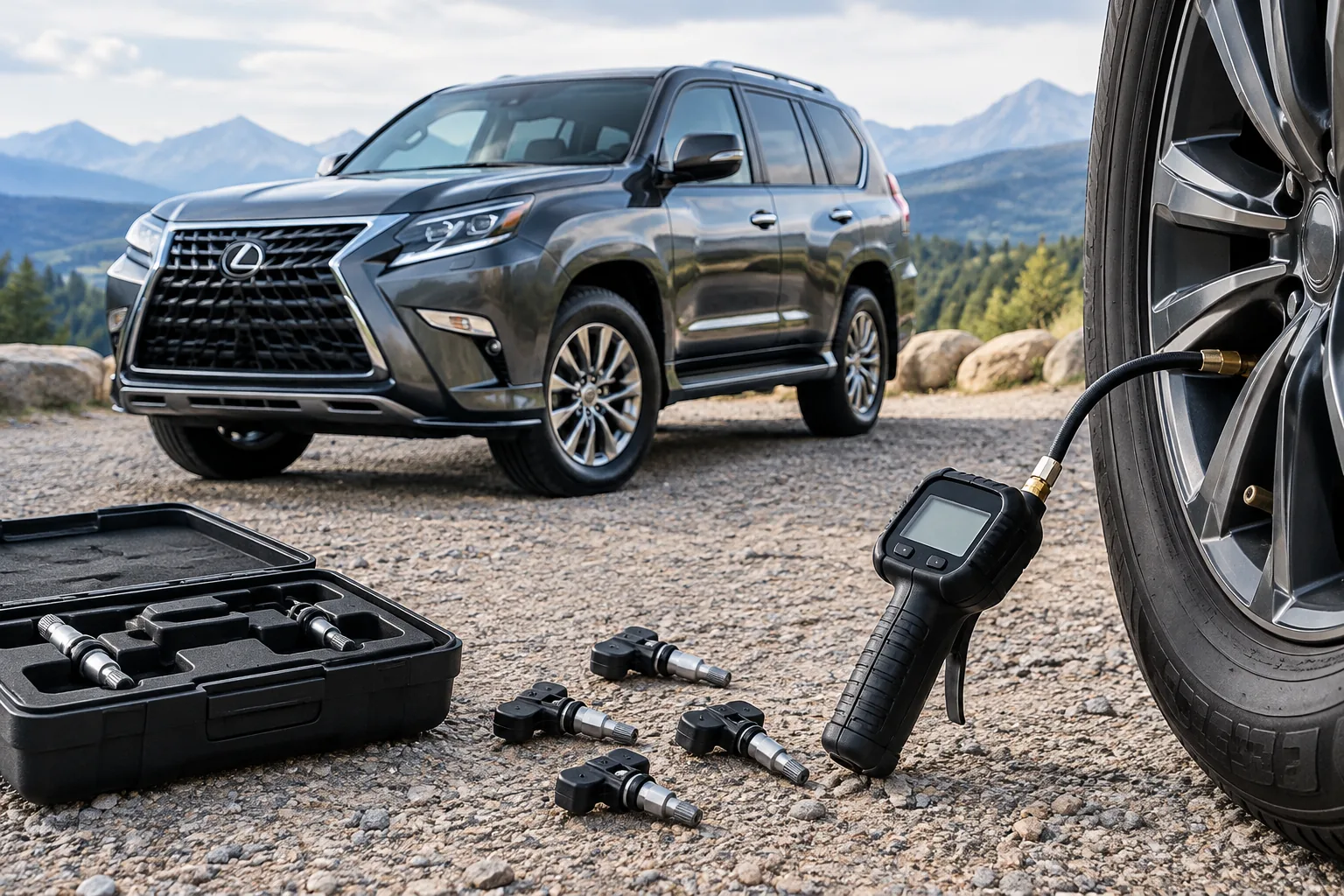
When the tire pressure light comes on in your Lexus GX, don’t start by hunting for a reset. Check all four tires with a gauge when they’re cold, compare the numbers to the placard, and look for a reason one of them lost air. In most cases the light is telling you something true, and clearing it without fixing the cause just brings it back.
This guide covers what the light means, how to check pressures properly, how a low-pressure warning differs from a system malfunction, and when a tire shop needs to get involved. Procedures vary by generation, so the owner’s manual for your exact truck is the final word on menu names and buttons.
First, Check Cold Pressures Against the Placard
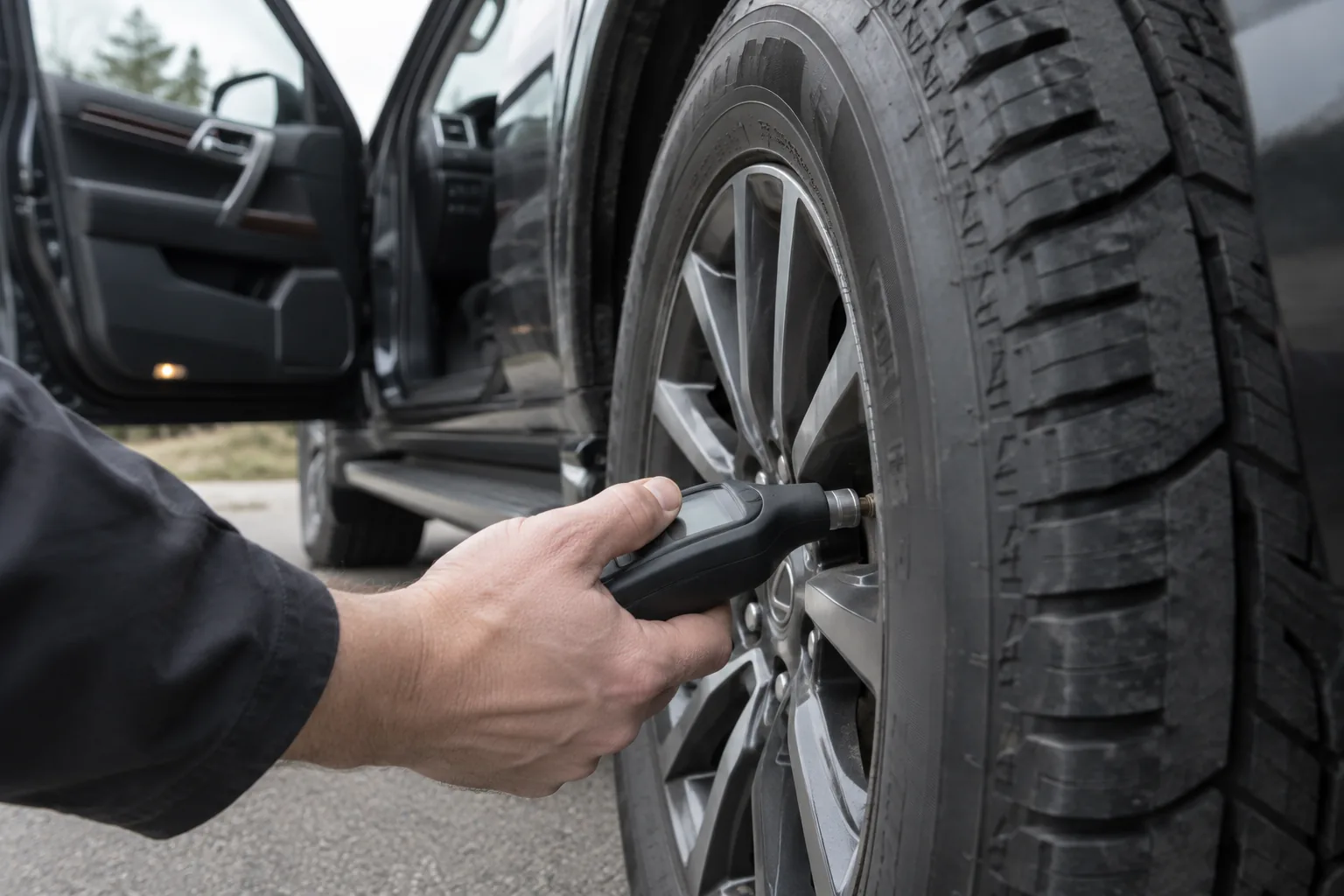
Start with the tire and loading information placard, usually on the driver’s door jamb. That’s the pressure Lexus recommends for your tire size, not the maximum number molded into the tire sidewall. Use the placard value as your target.
Measure when the tires are cold, meaning the truck has sat for a few hours or has barely been driven. Warm tires read higher and can fool you into thinking a low tire is fine. Temperature swings matter too, since pressure drops roughly 1 psi for every 10 degrees F the air cools. A cold morning can be enough to trip the light.
- Check every tire with a trusted gauge, not just the one you suspect.
- Inflate any low tire to the placard value.
- Look over each tire for a nail or screw, damage near the sidewall, and a loose or damaged valve stem.
- Recheck pressures after a day or two. A tire that drops again has a slow leak, and the light is doing its job.
Check the spare too. Whether your GX’s spare is monitored by the system depends on the generation and equipment, so confirm in the manual.
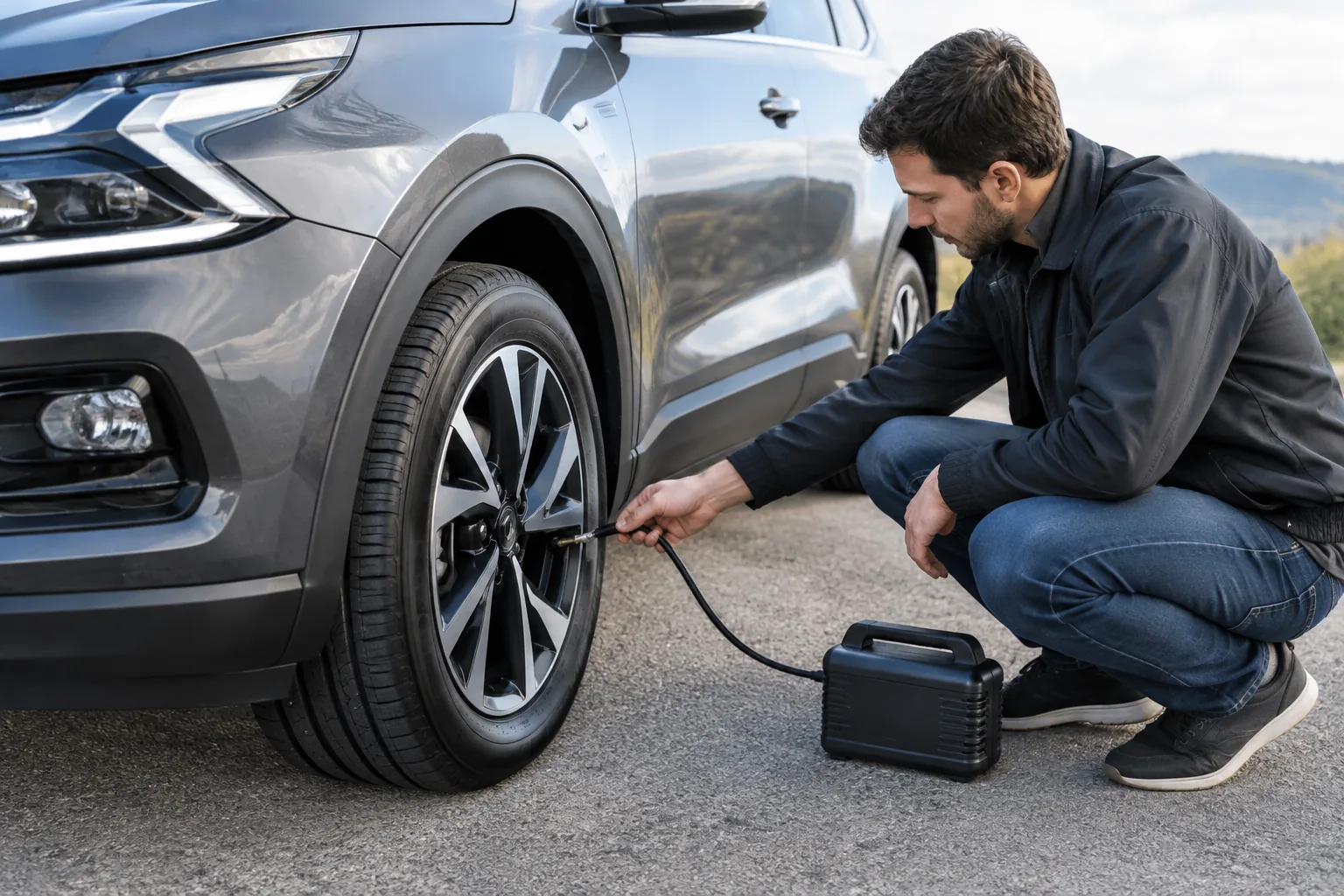
If you don’t have a reliable inflator at home, a portable tire inflator with a digital pressure gauge makes it easy to set cold pressures to the placard number. Its only job here is getting the air right. It won’t reset or relearn anything. A basic gauge is also on our list of must-have tools for every DIY car owner.

Portable Tire Inflator with Digital Pressure Gauge
Handy for topping off to the door-jamb placard pressure at home, though it is only an air tool and does not reset or program the TPMS.
Low Pressure Warning vs. Malfunction Indication
The light can mean two different things, and the fix depends on which one you have. On many Toyota and Lexus vehicles, a steady light signals low pressure in one or more tires. A light that flashes for about a minute at startup and then stays on typically signals a system malfunction. Confirm that behavior in your manual’s tire pressure warning section, since details can differ by model year.
- Steady light: Treat it as low pressure. Check cold pressures, inflate to the placard, and look for leaks.
- Flashing, then steady: The system may not be reading one or more sensors. Adding air won’t fix that, and it points toward a sensor, ID registration or system fault.
A malfunction indication is also a good reason to stop trusting the light as a leak detector. The system may not warn you about a real low tire until it’s repaired.
Reset, Initialize, Relearn: Know Which One You Need
These terms get lumped together, and mixing them up leads to wasted effort. Direct monitoring, which uses a pressure sensor inside each wheel, is what the GX 460 and the newer GX 550 use. Older GX 470 trucks may differ, so check whether your model year has a monitoring system and how it works.
Pressure initialization
This tells the system what “normal” pressure is after you’ve set the tires to the placard value. Some Lexus and Toyota vehicles have a dedicated reset switch for this, and others use a display menu. Some may clear the light on their own after you correct the pressures and drive. Don’t assume a button exists on your truck. Look up the exact procedure and menu name in the owner’s manual for your model year.
Sensor activation and ID registration (relearn)
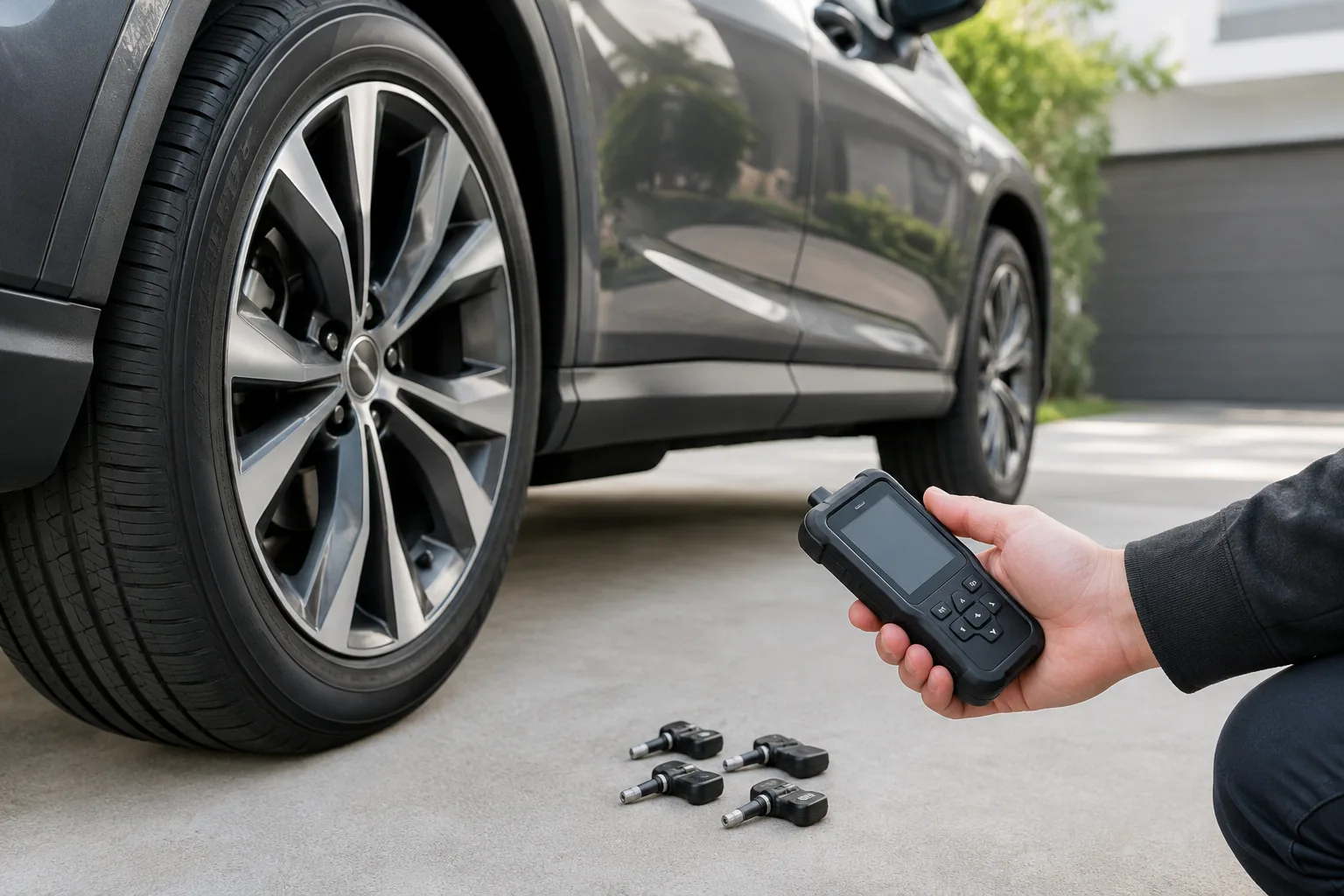
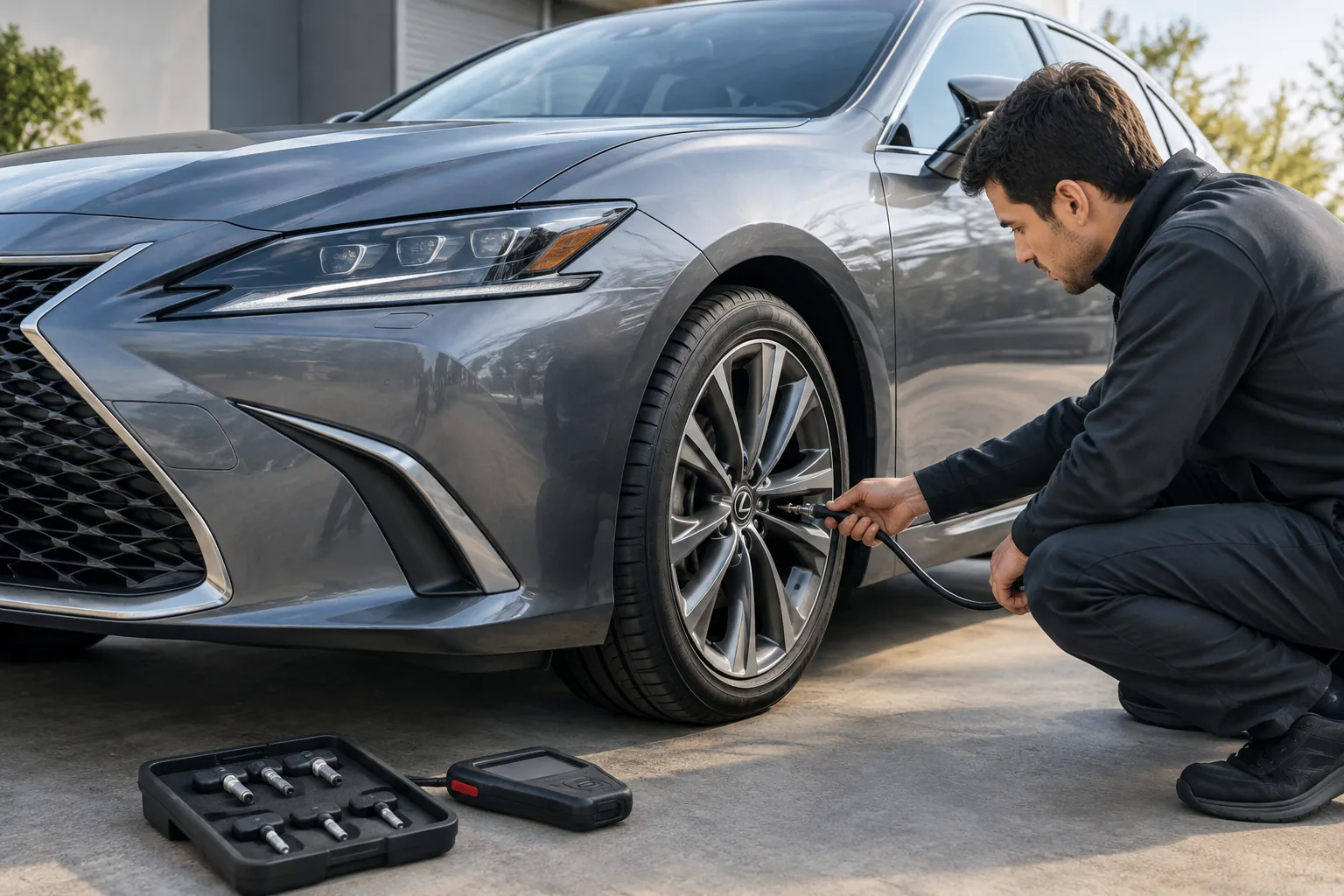
Each direct sensor has a unique ID, and the truck has to know which IDs belong to it. This matters after a sensor is replaced or if you swap to a separate set of wheels, such as winter or off-road wheels with their own sensors. Registration typically needs a compatible TPMS tool or scan tool, which is why it’s usually shop work. Some sensors also need to be woken or activated by a tool before they can be read.
Sensor programming
Replacement sensors may need to be programmed or matched to the vehicle, depending on the type. A basic OBD2 code reader can’t do this. It might show a stored code, but it generally can’t register sensor IDs or program sensors. If you’re buying sensors, ask the shop what they use, and don’t buy a cheap reader expecting it to relearn them.
Tire rotation
Whether a rotation needs any TPMS step depends on the system on your truck. Some systems don’t track which wheel is which and need nothing after a rotation. Others do display individual tire positions and may need a procedure. Check the maintenance section of your owner’s manual rather than guessing. Rotation by itself shouldn’t trigger a relearn on a system that doesn’t track locations, but your manual will say for sure.
Common Sensor and Fault Causes
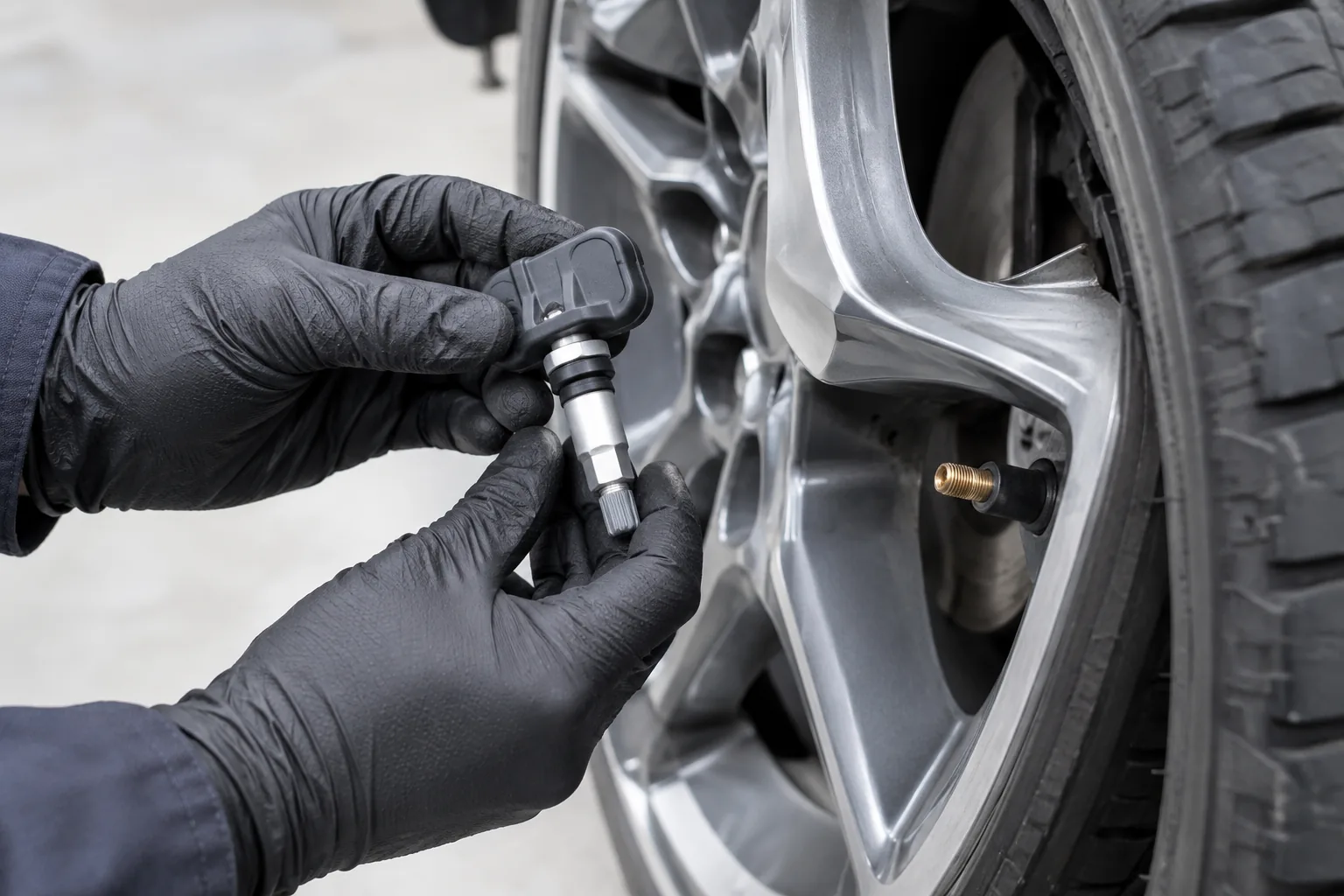
If the pressures are correct and the light still shows, or it flashes at startup, these are the usual suspects:
- Dead sensor battery: Direct sensors run on a built-in battery, generally not replaceable. They wear out with age, and when one fails the whole sensor is typically replaced.
- Unregistered sensor: A new tire or wheel setup was installed and the IDs weren’t registered.
- Damaged sensor or valve stem: Common after a tire change or curb strike. A leaking valve stem can also cause a steady low-pressure warning.
- Wrong sensor type: Aftermarket or mismatched sensors may not be compatible with your truck.
- Wheel swaps: A second set of wheels without sensors, or with unregistered ones, will confuse the system.
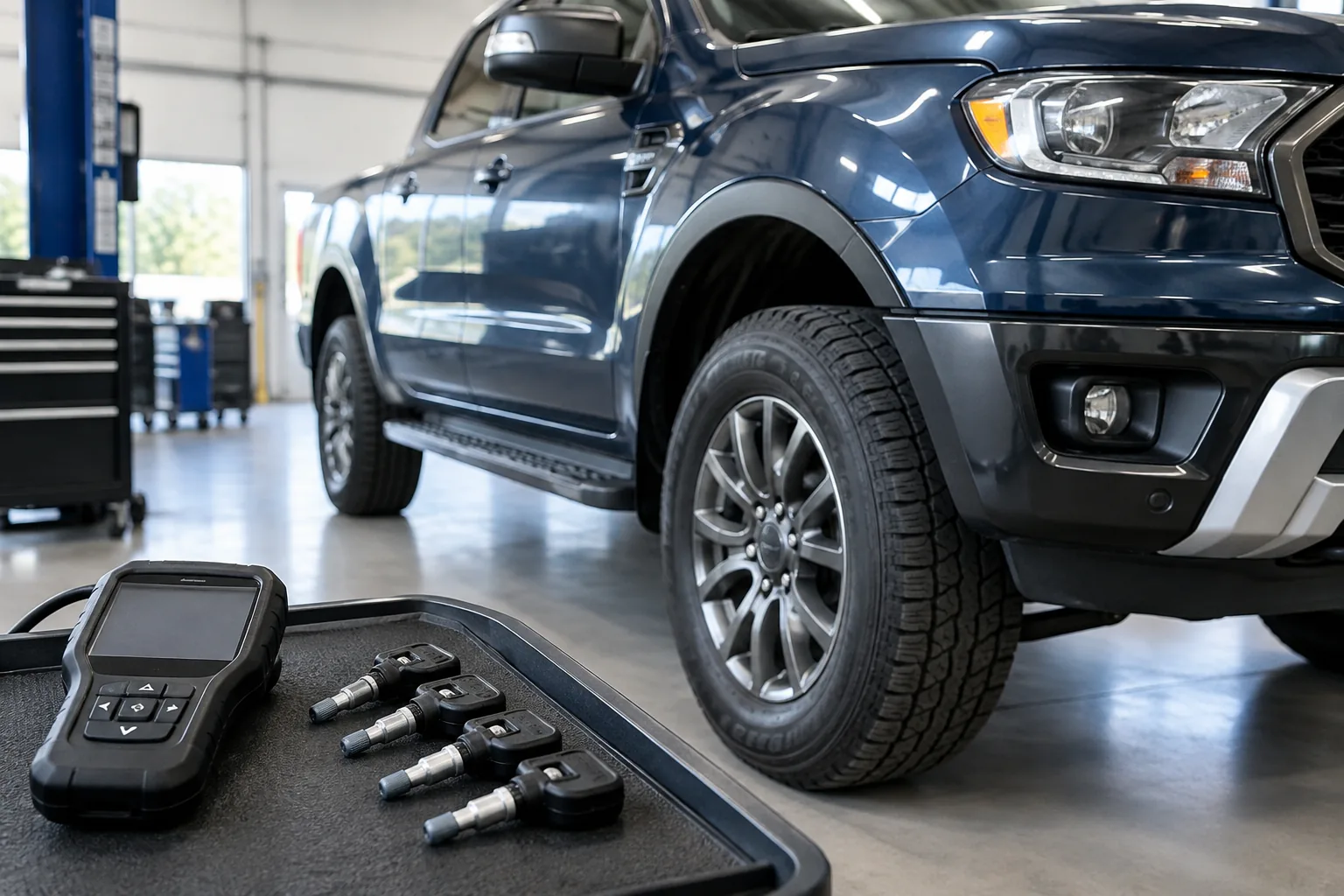
Fault diagnosis is a shop job. A tech can read which sensor isn’t reporting, check its signal, and register or replace it with the right equipment. Tell them if the light flashes at startup and when it started, such as right after new tires.
FAQ
Why is my Lexus GX tire pressure light on when the tires look fine?
Tires can be 5 psi or more low without looking flat, and cold weather can push them under the threshold overnight. Check all four with a gauge when cold and compare to the door-jamb placard. If the pressures are correct, a steady light is worth a second look for a slow leak, and a flashing-then-steady light points to a system problem.
Can I reset the TPMS light on my GX myself?
Maybe, but only after the pressures are right. Some models use a reset switch or a display menu for initialization, and some may clear on their own. The exact method depends on your generation and equipment, so check the owner’s manual for the correct procedure. Sensor ID registration after replacements usually needs a shop tool.
Will an OBD2 scanner fix a TPMS fault?
A basic OBD2 reader can’t program or register TPMS sensors. It may show a code, which can help narrow down a problem, but the repair typically needs a compatible TPMS tool or a tire shop that has one.
Most of the time, the answer is simpler than a reset: correct the cold pressures, find any leak, and see if the light behaves like a warning or a fault. If it still won’t clear, take it to a shop with the right equipment.
Leave a Reply